





What is an RFT Wallet?
An RFT wallet serves as your digital gateway to interacting with the RFT token ecosystem. Since RFT operates on the EVM (Ethereum Virtual Machine) blockchain, you require a wallet that is fully compatible with smart contract standards and decentralized application (DApp) protocols. An RFT wallet is not just a storage vessel; it is an interface that allows you to sign transactions, manage your private keys, and interact with DeFi protocols directly on the blockchain.
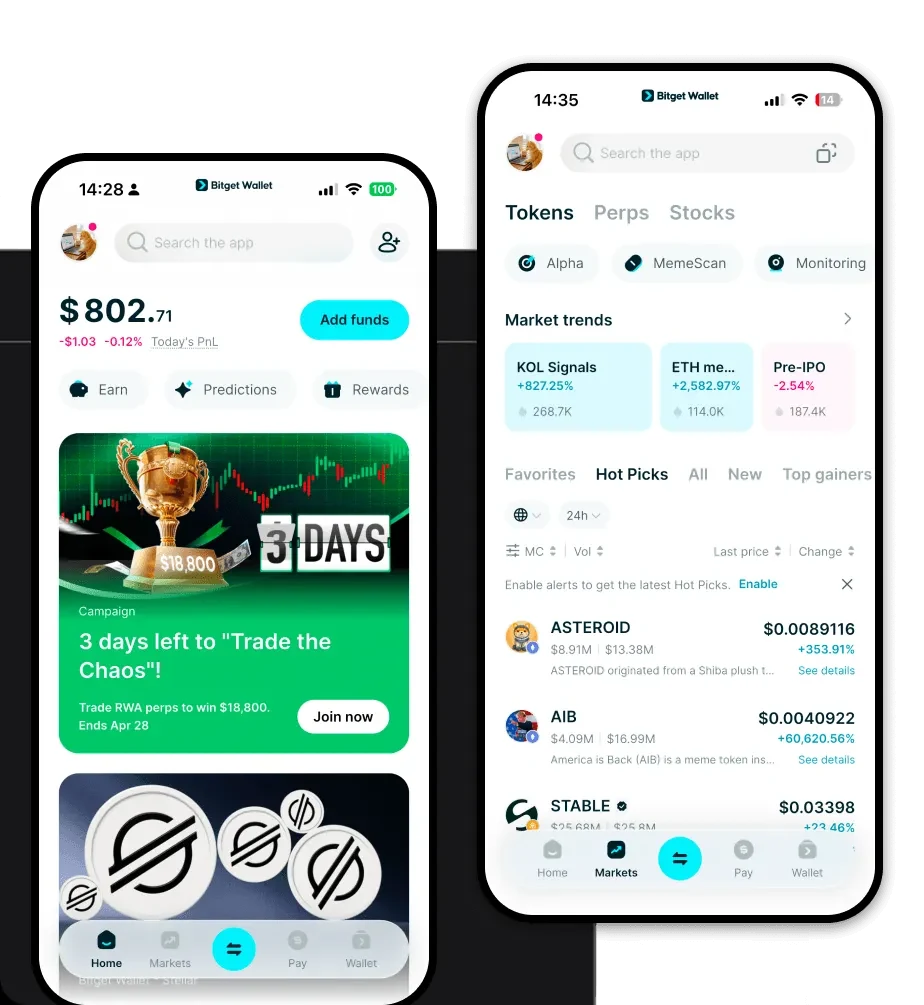
Are you looking for a reliable and secure crypto wallet for your RFT? Bitget Wallet will be your best choice. Trusted by 40 million users, you can freely explore Web3 on Bitget Wallet. Start your journey now!
Download Bitget RFT Wallet
Accessing your RFT tokens should be seamless regardless of your device. To get started, you can download Bitget Wallet, which offers a unified experience across iOS, Android, and browser extensions. Unlike centralized exchanges, Bitget Wallet is a self-custodial solution, meaning you retain full control over your private keys and recovery phrases at all times. With multi-chain support, it acts as a comprehensive hub, allowing you to manage your RFT alongside hundreds of other tokens without switching applications.
Why Choose Bitget RFT Wallet?
- Native EVM Compatibility: Designed specifically for the Ethereum Virtual Machine, Bitget Wallet ensures instant connectivity with RFT-based smart contracts, offering a frictionless experience when interacting with DeFi protocols.
- Advanced Decentralized Liquidity: Benefit from an integrated DEX aggregator that sources the best liquidity pools, ensuring you get optimal execution prices for your RFT trades.
- Smart Contract Automation: Seamlessly execute complex on-chain interactions with automated transaction signing, reducing the risk of manual errors during DeFi operations.
- Cross-Chain Interoperability: Easily bridge your RFT or other assets across different chains, breaking down the silos between EVM networks and beyond.
- Institutional-Grade Security: Backed by a $300 million protection fund, Bitget Wallet provides robust layers of security to protect your assets from malicious threats.
How to Create an RFT Wallet
- Download the Bitget Wallet application from the official website or your device's app store.
- Select 'Create a New Wallet' and securely back up your 12-word mnemonic phrase; never share this with anyone.
- Set a strong password for your local device to ensure that only you can authorize transactions from the app.
- Once the wallet is initialized, navigate to the asset management section and select 'Add Token' to search for the RFT contract address if it does not appear automatically.
- Your wallet is now ready to receive, send, and interact with RFT on the EVM network.
What Can You Do With an RFT Wallet?
Holding RFT in a secure, non-custodial wallet unlocks the full potential of its DeFi ecosystem:
- Trading on Decentralized Exchanges: Use your RFT wallet to swap tokens directly on major DEXs, benefiting from self-custody and avoiding the limitations of centralized order books.
- Providing Liquidity: Deposit your RFT into decentralized liquidity pools to help facilitate market operations, earning transaction fees as a reward for your contribution.
- Staking for Rewards: Lock your RFT tokens into smart contracts to support network security and earn yield, effectively growing your holdings passively over time.
- Governance Voting: Participate in the decision-making process of the RFT ecosystem by using your wallet to cast votes on improvement proposals directly through the DAO interface.
How RFT Wallets Are Different from Other Crypto Wallets
Not all crypto wallets are built the same. Because RFT is an EVM-based token, using a specialized wallet like Bitget is vastly different from using wallets designed for UTXO-based chains like Bitcoin. In an EVM environment, your wallet utilizes an 'account-based model,' which tracks your balance and nonce (a counter to prevent replay attacks) rather than tracking individual unspent transaction outputs. Furthermore, an EVM-focused wallet like Bitget manages 'gas fees' dynamically, allowing you to adjust your transaction priority to ensure your RFT trades go through during periods of high network congestion. This stands in stark contrast to wallets on networks with different resource models, where you might need to manage CPU or RAM resources rather than ETH-based gas.
