1. What is a ROUTE Wallet?
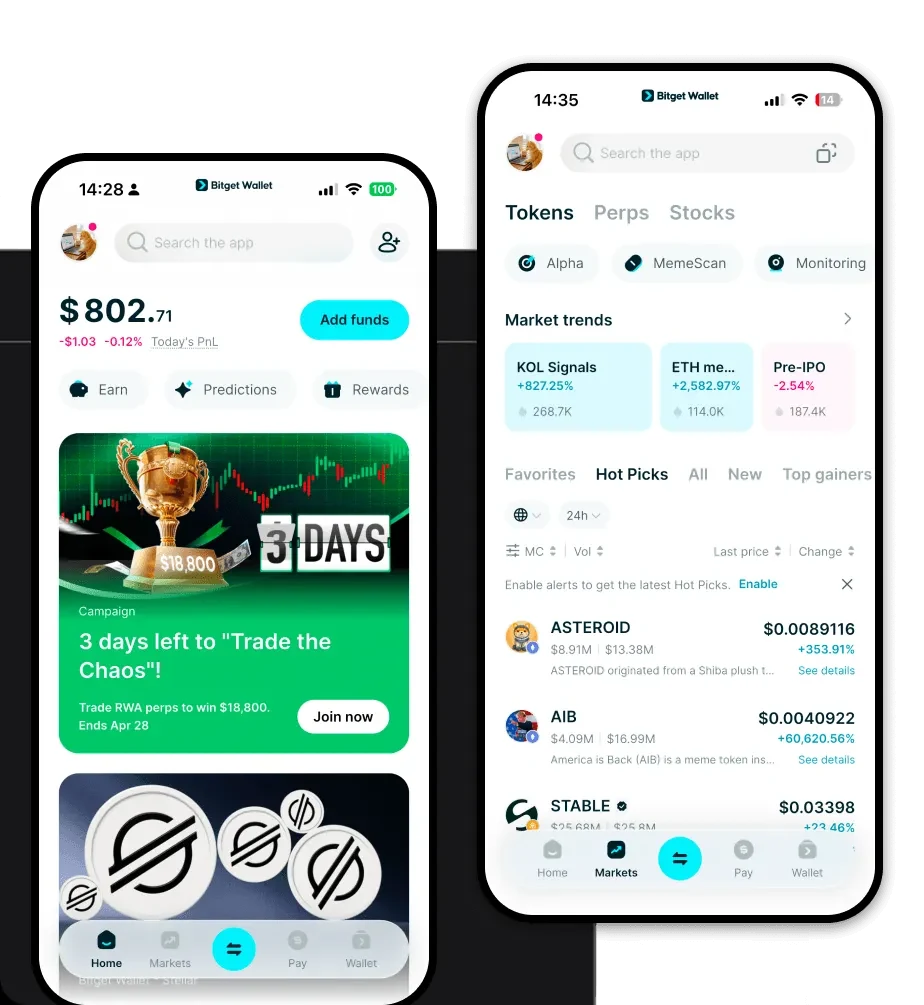
A ROUTE wallet is a specialized digital interface that allows you to store, manage, and interact with your ROUTE tokens securely. Because ROUTE operates within the EVM (Ethereum Virtual Machine) ecosystem, it requires a wallet that is fully compatible with Ethereum-based standards, enabling seamless connectivity with decentralized applications (dApps) and smart contracts. Are you looking for a reliable and secure crypto wallet for your ROUTE? Bitget Wallet will be your best choice. Trusted by 40 million users, you can freely explore Web3 on Bitget Wallet. Start your journey now!
2. Download Bitget ROUTE Wallet
Getting started with the right tools is essential for your Web3 journey. Rather than relying on multiple fragmented applications, Bitget Wallet provides a unified, self-custodial experience that keeps you in complete control of your private keys. Whether you are using an iPhone, an Android device, or a desktop browser, you can access the full suite of features seamlessly.
Bitget Wallet supports over 130 public chains, ensuring that your ROUTE holdings are always accessible across a vast ecosystem of networks. To begin your journey, you can download Bitget Wallet directly to your preferred device. Once installed, you can import your existing wallet or create a new one to start managing your ROUTE assets with professional-grade security.
3. Why Choose Bitget ROUTE Wallet?
As an infrastructure-focused asset, ROUTE demands a wallet that understands the complexities of EVM ecosystems. Bitget Wallet is engineered to provide superior performance for infrastructure tokens through the following advantages:
- EVM Ecosystem Mastery: Built specifically to handle the nuances of EVM chains, ensuring that ROUTE transactions are processed with optimal speed and compatibility.
- Advanced Liquidity Aggregation: By tapping into hundreds of DEXs, the wallet ensures you get the best rates when swapping ROUTE, reducing slippage significantly.
- Seamless Cross-Chain Interoperability: Effortlessly move your assets across different blockchain environments without needing to navigate complex manual bridging processes.
- Gasless Transaction Capabilities: Leverage innovative features that allow for smoother interaction with dApps, reducing the friction often associated with network fees.
- Decentralized Routing Protocol Integration: The wallet is optimized to work in tandem with decentralized routing protocols, ensuring your transactions are always routed through the most efficient paths available on-chain.
4. How to Create a ROUTE Wallet
Setting up your wallet is a straightforward process designed for both beginners and experienced users:
Step 1: Visit the official Bitget Wallet website or your device's app store and download Bitget Wallet.
Step 2: Open the app and select 'Create a Wallet'. Ensure you are in a private environment.
Step 3: Back up your mnemonic phrase (seed phrase). Write it down on paper and store it securely; never share this phrase with anyone, as it is the master key to your ROUTE assets.
Step 4: Once the wallet is set up, navigate to the asset list and select 'Add Token' to search for ROUTE. Toggle it on to make it visible on your main dashboard.
Step 5: Click on the ROUTE token to view your receiving address. You can now copy this address or scan the QR code to deposit your tokens from an exchange or another wallet.
5. What Can You Do With a ROUTE Wallet?
Owning ROUTE is just the beginning. With a powerful wallet like Bitget, you can actively participate in the ecosystem:
- Cross-chain asset bridging: Utilize the wallet's built-in bridge features to move your ROUTE assets between different EVM-compatible chains efficiently.
- Liquidity providing: Connect to decentralized exchanges directly through the dApp browser to add your ROUTE to liquidity pools, earning fees in the process.
- Governance voting: Participate in the future of the protocol by using your wallet to cast votes on improvement proposals directly through the project’s governance portal.
- Staking for protocol rewards: Lock your ROUTE tokens within the wallet’s interface to earn yield and contribute to the overall security and stability of the network.
- Paying cross-chain transaction fees: Use the wallet’s integrated routing features to handle complex fee structures, ensuring your cross-chain transfers are settled without manual intervention.
6. How ROUTE Wallets Are Different from Other Crypto Wallets
When managing ROUTE, it is important to distinguish between wallet types. Unlike older Bitcoin-style wallets that use the UTXO model, a ROUTE wallet uses an account-based model common to EVM chains. This means your wallet balance is stored as a simple state, similar to a bank account balance, which simplifies the process of interacting with complex smart contracts.
Furthermore, because ROUTE is an infrastructure-heavy asset, you need a wallet that handles gas fees dynamically. While some basic wallets force you to guess gas prices, Bitget Wallet provides real-time gas estimation, ensuring your transactions are prioritized correctly during periods of high network congestion. By choosing a wallet built for the EVM ecosystem, you gain access to faster transaction finality and a wider array of dApp integrations compared to generic, multi-asset storage tools.