





What is a journal Wallet?
A journal wallet is a digital interface designed to securely store, send, and receive your journal tokens. Built on the EVM (Ethereum Virtual Machine) ecosystem, the journal token operates within a highly interoperable environment that powers the vast majority of decentralized finance applications. Because journal is an EVM-compatible asset, you need a wallet that understands the intricacies of contract addresses, gas fees, and token standards like ERC-20.
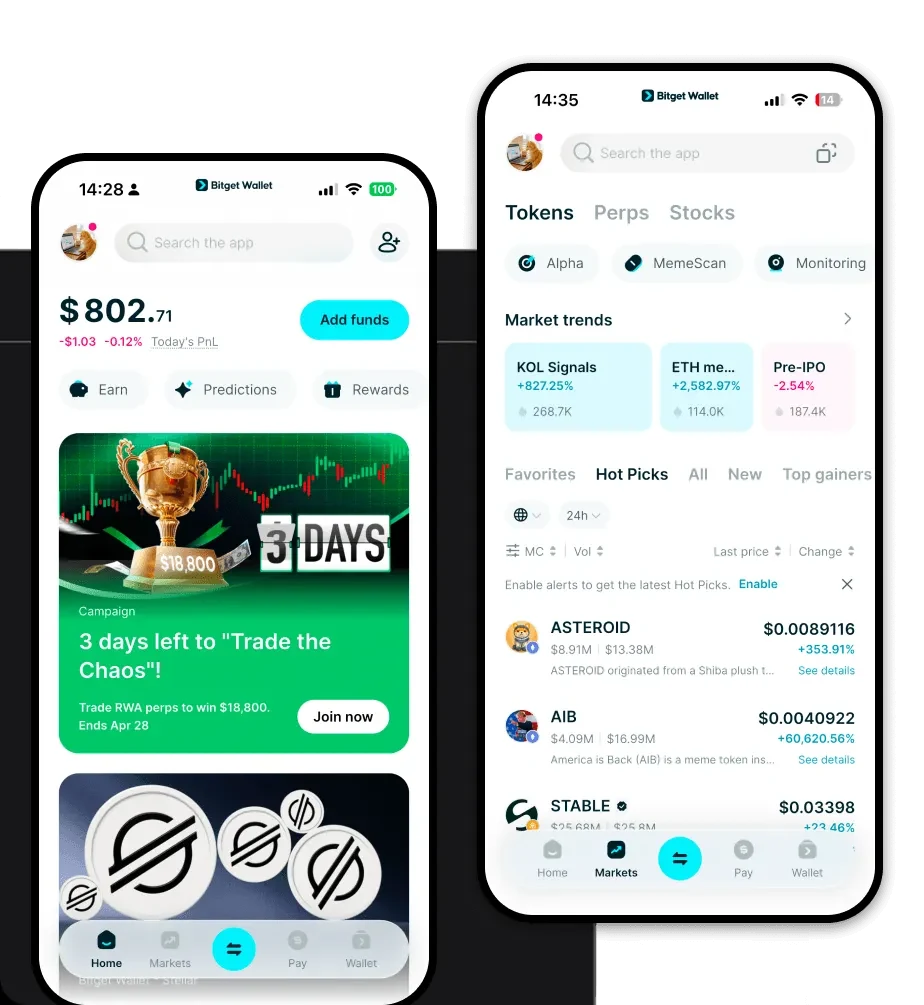
Are you looking for a reliable and secure crypto wallet for your JOURNAL? Bitget Wallet will be your best choice. Trusted by 40 million users, you can freely explore Web3 on Bitget Wallet. Start your journey now! By using a dedicated interface like Bitget Wallet, you ensure that your assets are not only stored safely but are also ready to interact with the broader blockchain ecosystem.
Download Bitget journal Wallet
Getting started with your digital assets requires a robust tool. To begin, you can download Bitget Wallet to access a comprehensive Web3 gateway. This application is designed to be user-centric, offering seamless support across iOS, Android, and browser extensions. Unlike centralized exchanges, Bitget Wallet provides true non-custodial security, meaning you maintain complete control over your private keys and seed phrases at all times. With its multi-chain support, you aren't just limited to one network; you can manage your journal tokens alongside assets from over 130 other mainstream blockchains, all within a single, unified interface.
Why Choose Bitget journal Wallet?
- EVM Ecosystem Optimization: Benefit from native compatibility with Ethereum-based standards, ensuring your journal transactions are processed efficiently with accurate gas fee estimations.
- Advanced Security Infrastructure: Access a platform backed by a $300 million user protection fund, providing an extra layer of defense against malicious DApps and unauthorized access.
- Smart DEX Aggregation: Leverage integrated liquidity pools that aggregate hundreds of DEXs, ensuring you get the best possible slippage and pricing when swapping your journal tokens.
- Seamless DApp Connectivity: Enjoy a frictionless experience when interacting with DeFi protocols, NFT marketplaces, and Web3 games directly through the built-in browser.
How to Create a journal Wallet
Setting up your wallet is a straightforward process designed for both beginners and power users:
- Download and Install: Visit the official website or your device's app store to download Bitget Wallet.
- Create a New Wallet: Open the app and select 'Create a Wallet.' You will be prompted to set a strong password for your device.
- Backup Your Seed Phrase: This is the most critical step. Write down your 12-word recovery phrase on paper and store it in a secure, offline location. Never share this with anyone.
- Verify Your Setup: Follow the on-screen prompts to confirm your seed phrase, ensuring you have recorded it correctly.
- Add Your Asset: Once in the main dashboard, use the 'Add Tokens' feature and search for 'journal' to make it visible in your asset list.
What Can You Do With a journal Wallet?
Bitget Wallet transforms your journal tokens from static assets into active tools within the Web3 economy:
- Asset Storage: Keep your tokens safe using non-custodial architecture, ensuring that you are the sole owner of your private keys.
- Token Swapping: Utilize the built-in swap feature to instantly exchange your journal tokens for other assets across multiple chains with minimal slippage.
- NFT Management: View, store, and transfer your NFTs directly within the wallet, with full metadata support for your digital collectibles.
- Web3 DApp Interaction: Connect your wallet to your favorite decentralized applications to participate in governance, liquidity mining, or gaming without leaving the app.
- Portfolio Tracking: Monitor the real-time value of your journal holdings and overall net worth across all connected chains in a single, intuitive dashboard.
How journal Wallets Are Different from Other Crypto Wallets
Choosing the right wallet for journal requires understanding the specific needs of EVM assets. Unlike wallets designed for UTXO chains (like Bitcoin), which focus on transaction inputs and outputs, a journal wallet functions on an Account-based model. This means your balance is tied to your public address rather than a collection of unspent outputs. Furthermore, because journal operates on the EVM, you must account for gas fees paid in the network's native currency (e.g., ETH or BNB). Bitget Wallet excels here by providing a 'Gas-Free' or 'Gas-Optimized' experience, utilizing smart routing to ensure your transactions are not only fast but also cost-effective, a stark contrast to basic wallets that often leave users to manage high, fluctuating network fees manually.
