





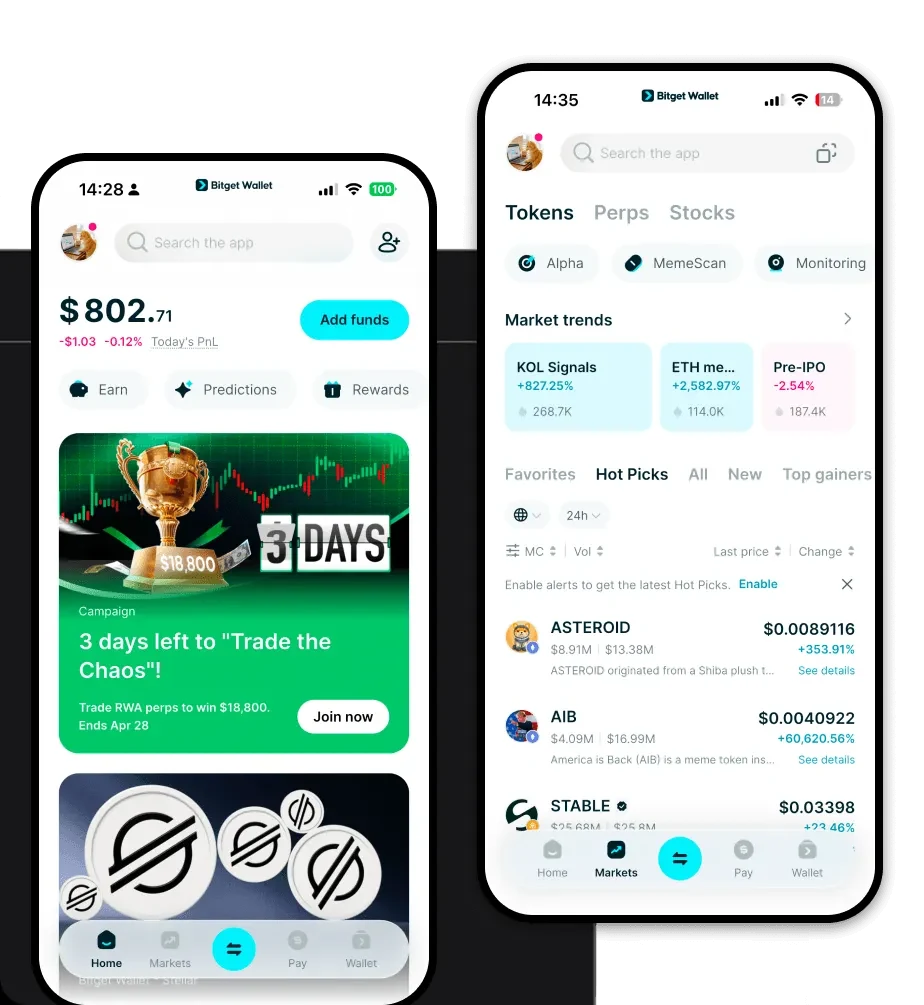
1. What is a Facecard Wallet?
A Facecard wallet is a specialized digital interface designed to interact with the Facecard asset, which operates on the EVM (Ethereum Virtual Machine) blockchain. Facecard is a digital asset often associated with NFT or community-based projects. Bitget Wallet serves as a secure platform to manage, store, and explore Facecard-related Web3 assets, providing users with a reliable interface to interact with the token and its ecosystem.
Because Facecard functions within an EVM environment, your wallet acts as a gateway to decentralized applications, NFT marketplaces, and smart contract interactions that define the token's ecosystem. It is not just a place to hold tokens; it is your digital passport for participating in community governance and asset utility.
2. Download Bitget Facecard Wallet
Getting started with your digital assets requires a reliable and versatile tool. Bitget Wallet stands out by offering a seamless experience across multiple platforms, ensuring you never miss an opportunity within the EVM ecosystem. Whether you prefer managing assets on the go or through your desktop, the application is designed to be user-friendly while maintaining top-tier security standards.
You can download Bitget Wallet to access a comprehensive suite of features, including full support for iOS, Android, and browser extensions. By choosing a self-custodial solution, you retain complete ownership of your private keys and seed phrases, ensuring that your Facecard assets remain under your exclusive control at all times.
3. Why Choose Bitget Facecard Wallet?
Selecting the right wallet is crucial when navigating the complexities of NFT-centric tokens and EVM-compatible ecosystems. Bitget Wallet offers distinct advantages tailored to these specific needs:
- EVM Compatibility: Seamlessly interact with any decentralized application or NFT marketplace built on Ethereum, BNB Chain, or Polygon without switching interfaces.
- Advanced NFT Management: View, trade, and manage your digital collectibles directly within the wallet interface, specifically optimized for high-fidelity asset display.
- Robust Security Architecture: Benefit from a dedicated user protection fund and advanced encryption protocols that safeguard your assets against unauthorized access.
- Community-Driven Support: The wallet is built to prioritize the features that matter most to community-driven projects, including fast transaction broadcasting and real-time market tracking.
4. How to Create a Facecard Wallet
Setting up your wallet is a straightforward process designed to get you ready for the Web3 landscape in minutes:
Step 1: Download and install the Bitget Wallet application from the official website or your device's app store.
Step 2: Launch the app and select 'Create a New Wallet.' Ensure you are in a private environment where no one can view your screen.
Step 3: Carefully back up your recovery phrase (seed phrase). Write it down on paper and store it in a secure, offline location; never share this with anyone.
Step 4: Verify your recovery phrase by entering the words in the correct order as prompted by the app.
Step 5: Once set up, your EVM-compatible address is ready. You can now import or receive Facecard tokens directly to this address.
5. What Can You Do With a Facecard Wallet?
A Facecard wallet empowers you to go beyond simple holding. Here is how you can actively engage with your assets:
- NFT Trading: Easily connect your wallet to top-tier NFT marketplaces to buy, sell, or list your Facecard-related digital collectibles.
- Asset Holding: Securely store your tokens in a self-custodial environment, giving you peace of mind that your investments are safe from centralized exchange risks.
- Wallet Management: Organize your portfolio, track the current market value of your holdings, and manage multiple sub-accounts for different community projects.
- Web3 Exploration: Use the integrated DApp browser to visit project websites, participate in community voting, or claim rewards directly from the Facecard ecosystem.
6. How Facecard Wallets Are Different from Other Crypto Wallets
Not all crypto wallets are created equal, especially when dealing with EVM-based tokens like Facecard. Unlike wallets designed for the UTXO model (like Bitcoin), which focus on individual transaction inputs and outputs, Bitget Wallet leverages the account-based model of the EVM. This allows for complex interactions with smart contracts and decentralized applications that UTXO wallets simply cannot handle.
Furthermore, because Facecard operates on the EVM, your wallet must efficiently handle 'Gas' fees—the transaction costs paid to network validators. Bitget Wallet optimizes these transactions by providing real-time fee estimations and the ability to adjust gas settings, ensuring your transactions are processed at the speed you require. While some wallets are purely for storage, a dedicated EVM wallet like Bitget is designed for high-frequency interaction, providing the necessary infrastructure to manage your digital assets with precision.
