





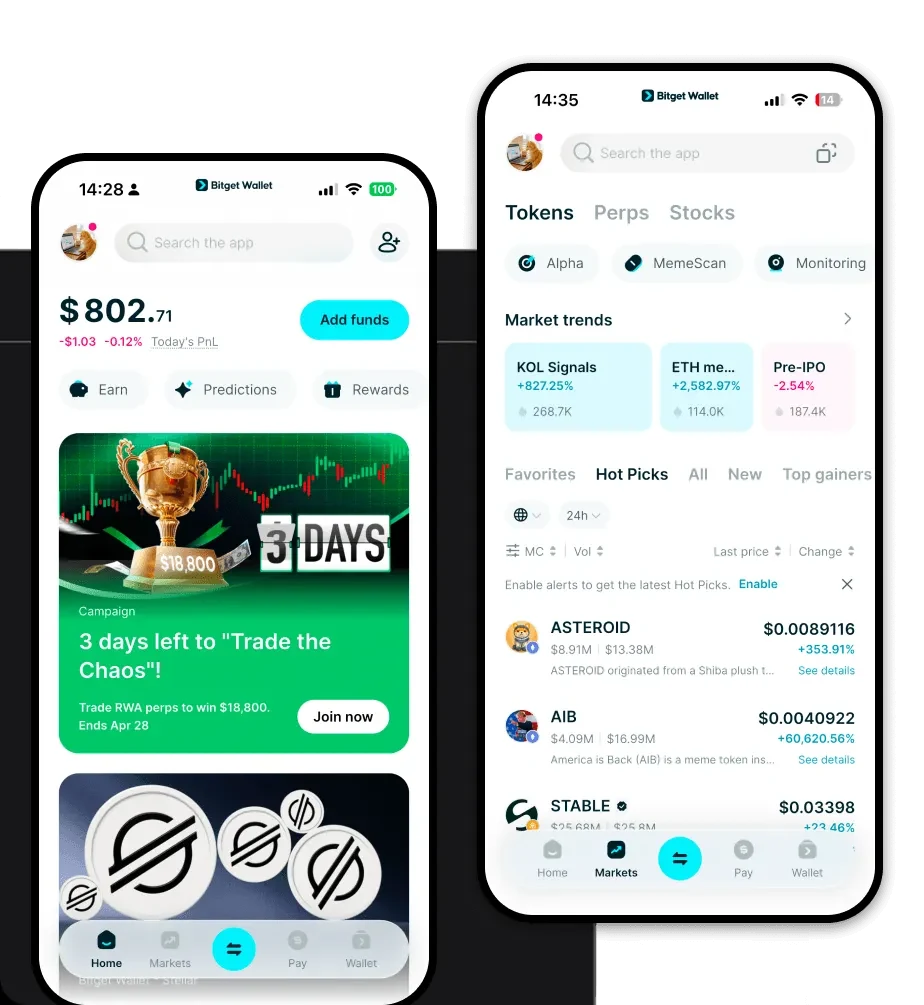
What is a dfig Wallet?
A dfig wallet is a specialized digital interface designed to securely hold, manage, and interact with dfig tokens on the blockchain. Because dfig operates on the EVM (Ethereum Virtual Machine) network, it requires a wallet that is fully compatible with the Ethereum ecosystem's technical standards. Bitget Wallet serves as this critical gateway, providing the infrastructure needed to interface with dfig smart contracts.
DFIG is a digital asset that can be securely stored and managed using Bitget Wallet. It enables users to participate in the broader Web3 ecosystem, leveraging the wallet's reliable infrastructure and trusted security features. By utilizing a non-custodial approach, Bitget Wallet ensures that you, the user, maintain full control over your private keys while interacting with the dfig ecosystem.
Download Bitget dfig Wallet
To start managing your dfig assets effectively, you need a tool that bridges the gap between complex blockchain protocols and user-friendly interaction. Bitget Wallet is designed for this purpose, offering a unified experience across mobile and desktop platforms. Whether you are using an iOS device, an Android smartphone, or a browser extension on your computer, you can access your funds anywhere.
The wallet provides true self-custody, meaning your assets are not held by a third party, but remain under your direct control. With built-in support for over 130+ blockchains, it simplifies the management of your portfolio. To get started, you can download Bitget Wallet today to set up your secure dfig environment.
Why Choose Bitget dfig Wallet?
Choosing the right wallet for an EVM-based asset like dfig is about balancing security with functional depth. Bitget Wallet is engineered to handle the specific needs of DeFi users:
- EVM Compatibility: Seamlessly interact with dfig contracts without the friction often found in fragmented wallet ecosystems, ensuring a native experience.
- Advanced Smart Contract Security: The wallet features robust protection mechanisms to identify malicious contracts and prevent unauthorized interactions, which is vital for DeFi participants.
- High Liquidity Aggregation: Bitget Wallet aggregates hundreds of DEXs, ensuring that when you trade dfig, you are accessing the best possible liquidity pools for minimal slippage.
- Cross-Chain Interoperability: Easily move your dfig assets across different chains via integrated bridges, allowing for fluid capital movement without leaving the app.
- Decentralized Governance Integration: Participate directly in dfig governance voting processes through the wallet’s intuitive DApp browser, keeping you connected to the protocol's future.
How to Create a dfig Wallet
Creating a wallet for your dfig assets on Bitget is straightforward. Follow these five steps to secure your account:
- Install the App: Download the official Bitget Wallet app from the website or your device's app store.
- Create a New Wallet: Open the app and select 'Create a Wallet.' You will be prompted to set a strong, unique password for the app interface.
- Backup Your Seed Phrase: The app will generate a 12-word recovery phrase. Write this down on paper—never store it digitally—as it is the only way to recover your dfig funds if your device is lost.
- Add dfig: Once the wallet is set up, use the 'Manage Tokens' feature to search for the dfig contract address or enable it if it is already indexed, ensuring it appears on your home screen.
- Receive Funds: Click on the dfig token icon and select 'Receive' to view your public wallet address, which you can use to deposit tokens from exchanges or other wallets.
What Can You Do With a dfig Wallet?
Owning dfig tokens is only the first step; the true utility lies in how you use the token within the DeFi ecosystem. With Bitget Wallet, you can maximize your holdings through the following activities:
- Staking: Lock your dfig tokens directly through the wallet interface to earn rewards, helping to secure the network while generating passive income.
- Trading on Decentralized Exchanges: Use the built-in swap feature to trade dfig for other tokens instantly, leveraging the wallet’s aggregation technology for optimal pricing.
- Providing Liquidity: Deposit dfig into liquidity pools on decentralized exchanges to facilitate trades, earning a share of the transaction fees generated by the protocol.
- Governance Voting: Engage in the decision-making process of the dfig ecosystem by casting your votes on improvement proposals directly from your wallet.
- Yield Farming: Deploy your dfig into various yield farming strategies to compound your returns, taking advantage of the wallet's secure connection to major DeFi protocols.
How dfig Wallets Are Different from Other Crypto Wallets
Because dfig is an EVM-based asset, it relies on the Ethereum account model, which differs significantly from UTXO-based chains like Bitcoin. Unlike Bitcoin wallets that manage unspent transaction outputs, a dfig wallet manages account-based balances and smart contract states. This allows for complex programmable logic, such as DeFi lending or automated yield farming, which is not natively possible on UTXO chains.
Furthermore, since dfig operates on EVM chains, transaction fees are paid as 'Gas' to incentivize network validators. Bitget Wallet optimizes this process by providing real-time gas fee estimations and allowing users to adjust their transaction speed, ensuring you never overpay for network congestion. This level of control is essential for managing high-frequency DeFi activities like yield farming or governance voting, where timing and cost efficiency are paramount.
