





What is a DATA Wallet?
A DATA wallet serves as your personal gateway to the Data Center Coin ecosystem. Because DATA is built on the EVM (Ethereum Virtual Machine) blockchain, it requires a wallet that adheres to standard token protocols, ensuring that your assets are compatible with the broader Ethereum-based DeFi landscape. Understanding the nature of your token is the first step toward responsible management. To be precise, Data Center Coin (DATA) is an experimental community-driven token inspired by HealthRanger (Mike Adams)'s commentary on data centers and artificial consciousness. It focuses on themes of decentralized computing, AI ethics, and digital sovereignty, operating as a grassroots project without centralized team management.
Download Bitget DATA Wallet
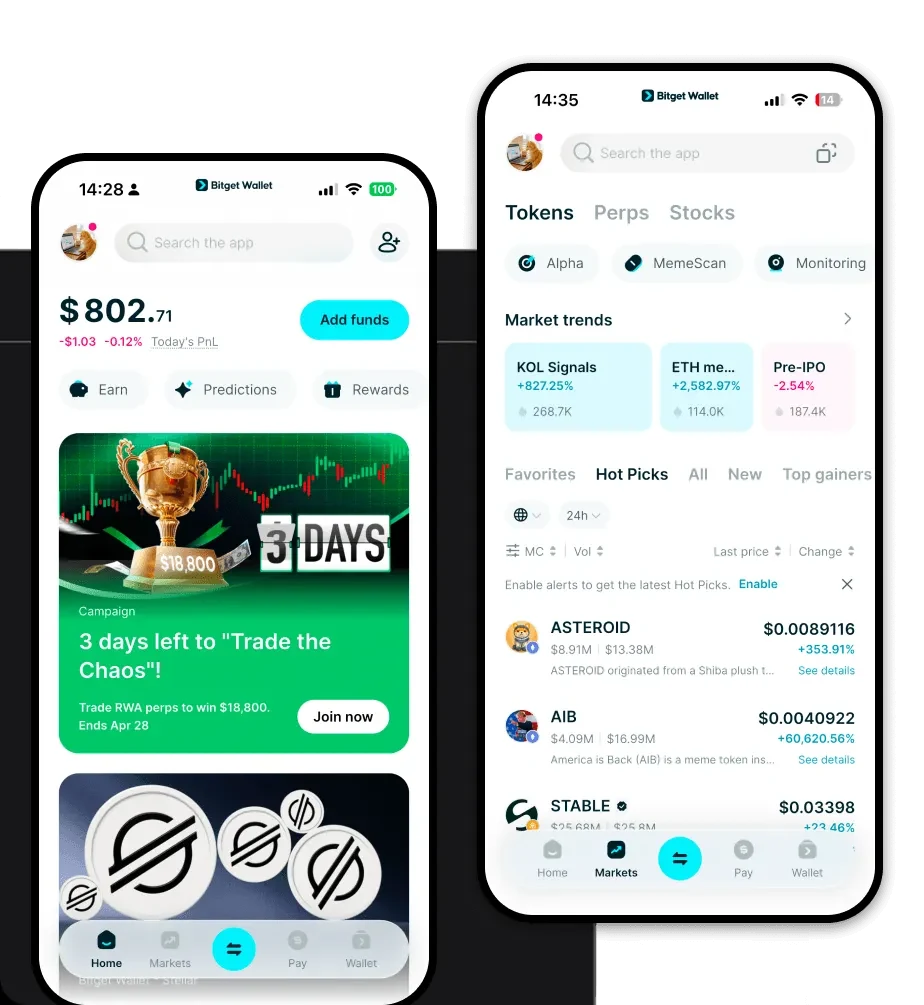
To safely manage your holdings, you should download Bitget Wallet. This application is designed to offer a seamless bridge between your assets and the Web3 world. Unlike centralized exchanges that hold your keys for you, this wallet provides full self-custody, ensuring that you—and only you—have control over your private keys. The platform is highly versatile, offering native applications for iOS and Android, as well as a robust browser extension for desktop users. With its extensive support for over 130 public chains and millions of distinct tokens, it provides a unified environment where you can manage your DATA alongside your entire crypto portfolio with ease.
Why Choose Bitget DATA Wallet?
When dealing with community-driven meme projects on the EVM, your choice of wallet impacts your efficiency and security. Here is why Bitget Wallet is the preferred choice for DATA holders:
- EVM Compatibility: As a native EVM-compatible wallet, it allows you to interact with DATA smart contracts directly, ensuring accurate balance tracking and seamless transaction execution.
- Optimized Gas Fee Management: The built-in gas tracker monitors network congestion in real-time, helping you execute swaps or transfers when fees are at their lowest, which is crucial for active traders.
- Enhanced Security Infrastructure: With a $300 million user protection fund, Bitget Wallet provides a high-security environment that protects your DATA from malicious dApps and common digital vulnerabilities.
- Aggregated DEX Access: You can trade your tokens across hundreds of decentralized exchanges and cross-chain bridges within the app, eliminating the need to connect your wallet to multiple risky external websites.
- Intuitive Asset Management: The dashboard is specifically designed for the modern user, providing clear insights into your portfolio performance and easy access to community governance tools.
How to Create a DATA Wallet
Setting up your wallet is a straightforward process designed for maximum security. Follow these steps to get started:
Step 1: Visit the official website or your app store to download Bitget Wallet for your mobile device or desktop browser.
Step 2: Launch the application and select the 'Create a New Wallet' option to begin generating your unique wallet address.
Step 3: Carefully record your seed phrase. This is the master key to your funds; write it down on paper and store it in a secure, offline location. Never take a screenshot or share this with anyone.
Step 4: Verify your setup by entering the seed phrase as prompted by the application to ensure you have backed it up correctly.
Step 5: Once your wallet is ready, navigate to the asset management section, select the EVM chain, and add the DATA contract address to your token list to begin tracking your balance.
What Can You Do With a DATA Wallet?
Your wallet is more than just a storage vessel; it is a tool for active participation in the DATA movement. Here is how you can use it:
- Speculative trading: Use the integrated DEX aggregator to swap ETH or stablecoins for DATA, taking advantage of the liquidity found across various decentralized markets.
- Community participation: Connect your wallet to community-driven forums or platforms that require cryptographic verification, allowing you to prove your stake in the project.
- Governance discussion: Engage in decentralized voting processes by signing messages or executing transactions that signal your support for specific proposals within the DATA grassroots model.
- Digital sovereignty advocacy: By self-custodying your assets in your own wallet, you are practicing the very digital sovereignty that the project champions, ensuring your financial autonomy remains intact.
How DATA Wallets Are Different from Other Crypto Wallets
It is important to understand the technical nuances of your wallet. Unlike wallets designed for Bitcoin, which use a UTXO (Unspent Transaction Output) model, a DATA wallet is built on an Account-based model. This means your balance is tracked as a single, cumulative total associated with your address, much like a traditional bank account. Additionally, because DATA is an EVM token, you are responsible for paying gas fees in the chain's native currency (such as ETH) to process any transaction. While other wallets might focus on different metrics like Solana's high-speed throughput or EOS's resource staking, a DATA wallet is specifically optimized for smart contract interactions, DeFi interoperability, and the unique requirements of the EVM ecosystem.
