





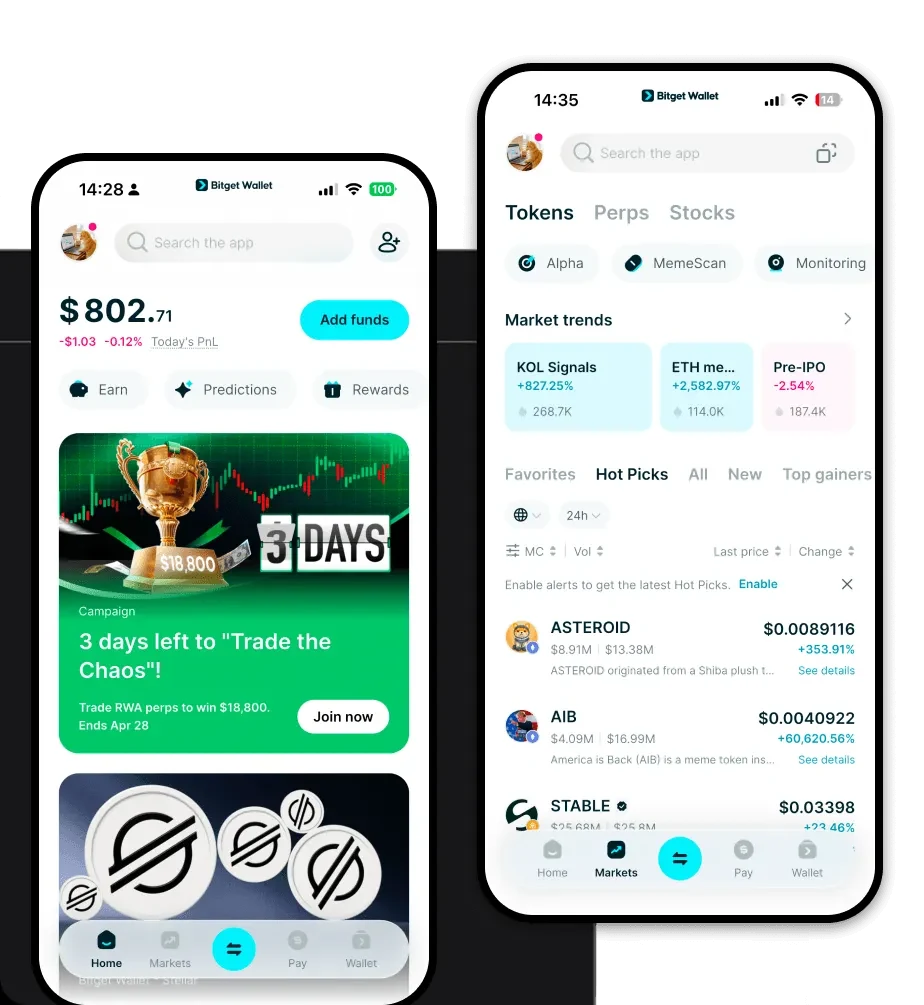
1. What is an ALE Wallet?
An ALE wallet is a digital interface designed to securely store, manage, and interact with ALE tokens, which operate on the EVM (Ethereum Virtual Machine) blockchain. Because ALE is built on EVM infrastructure, it requires a wallet that is fully compatible with Ethereum-based standards, allowing for seamless interaction with smart contracts and decentralized applications. ALE is a digital asset supported by Bitget Wallet, a platform trusted by 40 million users for secure Web3 exploration and asset management.
2. Download Bitget ALE Wallet
To effectively manage your assets, you need a robust interface that bridges the gap between complex blockchain protocols and user-friendly experience. We recommend Bitget Wallet for its comprehensive support for EVM chains and its intuitive design. When you download Bitget Wallet, you gain access to a non-custodial solution, meaning you retain full ownership of your private keys and seed phrases. Whether you are using a desktop browser extension, an iOS device, or an Android smartphone, the wallet offers a unified experience across all platforms. Bitget Wallet simplifies the management of your portfolio by providing real-time tracking of your ALE holdings alongside thousands of other tokens, ensuring you never miss a market move.
3. Why Choose Bitget ALE Wallet?
Choosing the right wallet for ALE is critical, especially when participating in DeFi activities. Bitget Wallet stands out for several key reasons:
- Native EVM Compatibility: Designed specifically for EVM chains, it ensures that your ALE transactions are processed with full smart contract support and minimal friction.
- Advanced Smart Money Tracking: Gain insights into market trends by monitoring high-liquidity pools and whale movements directly within the app.
- Built-in DEX Aggregator: Access deep liquidity by automatically routing your trades through hundreds of decentralized exchanges, ensuring you get the best price for your ALE.
- Robust Security Architecture: With a $300 million user protection fund and advanced MPC (Multi-Party Computation) technology, your assets are shielded against common vulnerabilities.
- Seamless Cross-Chain Interoperability: Easily bridge your assets across different chains without leaving your wallet, allowing you to move value wherever the DeFi opportunities are highest.
4. How to Create an ALE Wallet
Creating your Bitget Wallet to store ALE is a straightforward process designed to keep your assets secure from the start:
Step 1: Visit the official Bitget Wallet website or your app store to download the application.
Step 2: Open the app and select 'Create a New Wallet'. Make sure you are in a private location.
Step 3: Back up your mnemonic phrase (seed phrase) immediately. Write it down on paper and store it in a secure, offline location—never take a screenshot or store it digitally.
Step 4: Verify your seed phrase in the app to confirm your backup is correct. Once verified, your wallet is active and ready to receive ALE.
Step 5: To add ALE, select 'Add Token' in the asset dashboard, search for the ALE contract address, and toggle it on to view your balance.
5. What Can You Do With an ALE Wallet?
Owning an ALE wallet opens up a world of DeFi functionality. Here is how you can maximize your utility:
- Trading on decentralized exchanges: Use the built-in DEX aggregator to swap ALE for other assets instantly, taking advantage of deep liquidity pools.
- Staking for rewards: Lock your ALE tokens into approved staking protocols directly via the DApp browser to earn passive yields on your holdings.
- Providing liquidity in pools: Become a liquidity provider by depositing your ALE into decentralized pools, earning a share of the transaction fees generated by the protocol.
- Governance voting: Participate in the development of the ALE ecosystem by using your tokens to cast votes on decentralized governance proposals.
- Portfolio management in Web3 wallets: Monitor your total net worth, historical transaction data, and asset performance all within the unified Bitget Wallet interface.
6. How ALE Wallets Are Different from Other Crypto Wallets
Unlike simple custodial exchanges, an ALE wallet using the EVM model offers a fundamentally different experience. Because ALE operates on an account-based model, you are interacting directly with the blockchain state. This means you must manage your 'gas fees'—the native coin required to pay for transaction processing. Bitget Wallet optimizes this by suggesting optimal gas settings, ensuring your transactions are confirmed quickly without overpaying. Furthermore, unlike UTXO-based wallets (like Bitcoin) that focus on transaction outputs, your ALE wallet tracks your token balance as a state variable in a smart contract, allowing for complex DeFi operations that UTXO chains cannot natively support.
