How to Trade Crypto Prediction Markets: Understanding YES/NO Contracts, Pricing, and Probability Signals
How to trade crypto prediction markets is not simply about betting on an event — it is about trading a price that represents the probability the market assigns to a specific outcome. When you choose YES or NO, you are taking a position based on the collective expectations of other participants.
More specifically, crypto prediction markets allow you to trade YES/NO contracts tied to real-world events such as elections, sports matches, crypto price milestones, or cultural and entertainment developments. Contract prices typically range from $0 to $1 and reflect implied probability. For example, a price of $0.60 suggests a 60% estimated likelihood of the event occurring. If you buy at $0.40 and the outcome is correct, each contract settles at $1; if you are wrong, you lose the capital invested. The edge, therefore, does not come from emotion, but from the ability to interpret probabilities, reassess market pricing, and manage execution costs efficiently.
So how can you participate in a structured and secure way? Bitget Wallet provides a practical gateway to Web3 interaction — enabling efficient asset management and seamless access to decentralized prediction markets.
In this article, we will break down contract structures, explain how to convert prices into probabilities, compare different platform models, and guide you step by step on how to participate in prediction markets using Bitget Wallet.
Key Takeaways
- How to trade crypto prediction markets is about trading a price that represents probability — not making an emotional bet.
- YES/NO contracts function like probability shares: prices typically range between $0 and $1, and price ≈ implied probability
- When learning how to trade crypto prediction markets, don’t focus only on being “right or wrong.” You must optimize fees, spreads, slippage, and liquidity depth, because these factors can completely erode your edge even if your prediction is correct.
What are Crypto Prediction Markets?
Crypto prediction markets are exchanges for forecasting outcomes—but the key is that they behave more like trading venues than sportsbooks. You buy and sell positions whose prices move as information changes, with payouts tied to a clear resolution rule (often an oracle finalizes the result).
How do crypto prediction markets differ from traditional sportsbooks?
In sportsbooks, odds are set by a bookmaker and you wager against the house. In crypto prediction markets, prediction market trading is typically peer-to-peer: traders collectively set the price by buying and selling.
A simple way to internalize the difference:
- Sportsbook: fixed-ish odds, house margin, limited price discovery
- Prediction market: continuous repricing, market-driven probability, tradable positions
Example: if a YES share trades at $0.60, the market is roughly pricing a 60% implied probability. If new information arrives (injury news, polling changes, protocol updates), the price can shift quickly—creating opportunities to enter, hedge, or exit before the event resolves.
Sportsbooks vs prediction markets
| Feature | Traditional Sportsbook | Crypto Prediction Market |
| Price setting | Bookmaker | Traders (market-based) |
| “Odds” behavior | Mostly fixed | Continuously reprices |
| Main action | Place a wager | Trade a position |
| Exit flexibility | Usually limited | Often possible to sell/cash out early |
| Key skill | Picking winners | Pricing probability + execution discipline |

Source: windailysports.com
What topics are most traded in crypto prediction markets in 2026?
Most high-volume markets cluster around topics where people feel informed—or where news flow is intense:
- Politics: elections, appointments, policy outcomes
- Sports: match results, tournament winners, season awards
- Crypto milestones: price levels by dates, ETF decisions, protocol launches
- Culture/entertainment: award winners, box office outcomes, major public events
The practical edge is not “being smarter than everyone,” but being better informed in a narrow domain. If you follow one league obsessively, you’ll often react faster than generalists. If you track one chain ecosystem daily, you’ll notice catalysts sooner than casual traders.
How Do YES/NO Contracts Create Probability Signals?
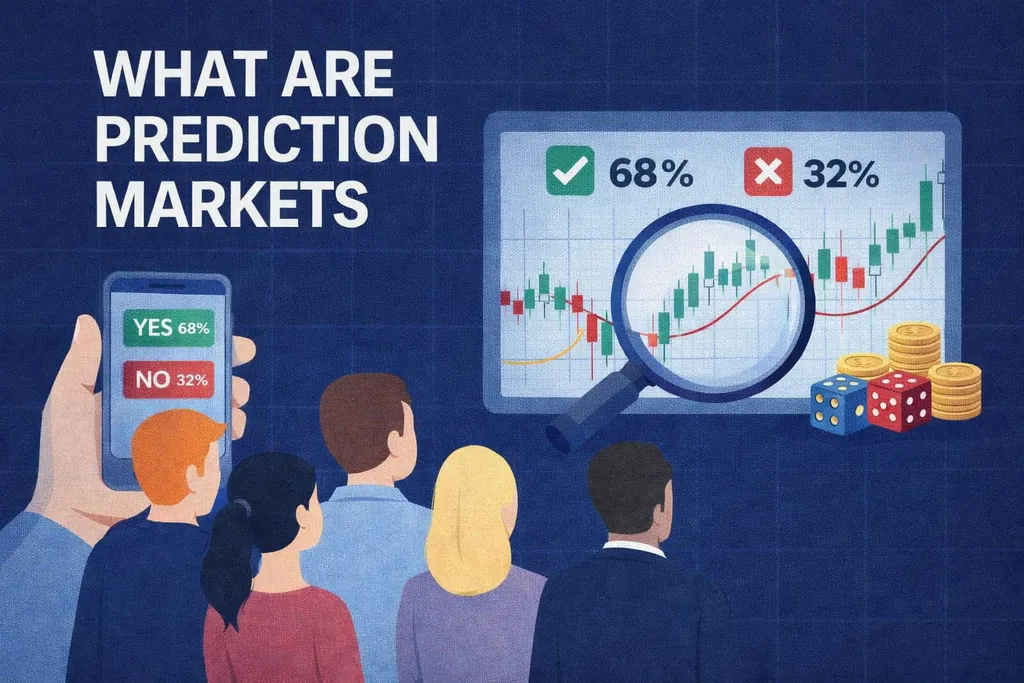
YES/NO contracts turn uncertainty into a tradable price. The market price is not “truth”—it’s a live consensus estimate influenced by information, liquidity, and positioning. That’s why understanding mechanics matters as much as being directionally right.
Source: newyorkcityservers.com
What does a YES token mean in a prediction market trade?
A YES position means you profit if the outcome happens. In many crypto prediction markets, shares are priced between $0 and $1, and a correct share settles at $1.
Micro-example (classic $1 settlement model):
- You buy 100 YES shares at $0.40 → you pay $40
- If YES resolves true → you receive $100
- Gross profit → $60 (before fees)
This is the cleanest mental model for how to trade crypto prediction markets: your entry price sets your break-even probability. If you paid $0.40, you’re effectively saying “the real probability is higher than 40%.”
What does a NO token mean in prediction market trading?
A NO position profits if the event does not happen. Practically, NO is how traders express skepticism or hedge exposure.
Two ways NO is commonly used:
- Direct view: you believe the market is overconfident on YES
- Risk control: you already hold YES somewhere else and want protection
The key advantage versus “betting and waiting” is that you can often exit early: if probability shifts in your favor, you may sell/cash out before resolution to lock gains or reduce risk.
How do traders convert contract price into implied probability fast?
In $0–$1 binary contract prediction markets, the conversion is extremely straightforward because:
Contract price ≈ Implied probability
Since a binary contract pays $1 if the event happens and $0 if it doesn’t, the market price directly reflects the probability being assigned to that outcome.
Quick examples:
- $0.25 ≈ 25%
- $0.60 ≈ 60%
- $0.85 ≈ 85%
Prices move on information + liquidity. News changes beliefs; liquidity changes how easily the price can adjust. When you’re learning how to trade crypto prediction markets, treat price as a signal—then validate with your own research before sizing a position.
What Platform Choices Shape Access, Settlement, Regulation?
Crypto prediction markets generally fall into two structural models:
- Wallet-integrated Web3 prediction markets, and
- US-regulated derivatives-style prediction trading.
Your choice changes custody, settlement currency, contract format, fees, and legal availability—so platform structure is not a footnote; it’s part of your trading edge.

Source: npr.org
1. Wallet-Integrated Web3 Prediction Market Model
This model connects a wallet signer to a trading interface. The general flow looks like:
- Connect wallet (signer) → 2) deposit/bridge funds → 3) buy YES/NO → 4) manage/cash out → 5) claim/withdraw.
Common characteristics:
- An account may be created automatically on first deposit in some implementations
- Settlement often uses stablecoins on a specific network (USDC variants are common)
- Contracts are often $0–$1 probability shares
- Resolution is typically oracle-based, with transparent on-chain settlement
- Liquidity is market-driven and may thin out near expiry
Because access varies by location, jurisdiction restrictions can be significant. If you’re evaluating how to trade crypto prediction markets in this model, treat “availability” as a first filter before you even analyze a market.
CTA Button: For seamless access to prediction markets, Bitget Wallet lets you securely manage stablecoins and connect smoothly to on-chain platforms across multiple networks.
2. US-Regulated Derivatives Prediction Trading Model
This model is closer to a traditional regulated derivatives product:
- Typically uses a fully collateralized USD cash account
- Contracts may have $1 or $10 value structures
- Maximum loss is generally known upfront (you can only lose what you pay to open the position, plus fees)
- Supports standard order types like market orders and limit orders
- Operates within defined trading hours and may include scheduled maintenance windows
- Availability can be restricted (for example, some products are US-only)
This approach can appeal to traders who prioritize regulatory clarity and standardized contract specs. If you’re comparing models, the keyword to keep in mind is CFTC regulated prediction trading—because the oversight framework changes product design and access conditions.
3. Structural Comparison Framework for Platform Selection
Choosing a platform is mostly about: custody preference, jurisdiction, contract size, and how much liquidity risk you can tolerate.
| Platform Model | Wallet-Integrated Web3 | US-Regulated Derivatives App |
| Account Setup | Wallet signer | In-app USD account |
| Custody Model | Self-custody | Platform custody |
| Settlement Asset | Stablecoin (on-chain) | USD cash |
| Contract Structure | $0–$1 probability shares | $1 / $10 contracts |
| Fee Structure | Trading fees + possible gas | Per-contract fees |
| Regulatory Scope | Jurisdiction-dependent | Often US-limited |
| Best For | Crypto-native users | Compliance-focused traders |
Platform structure defines your operational constraints — from fees and liquidity to settlement mechanics — and directly affects how effectively you can trade crypto prediction markets. That’s why choosing the right platform is critical.
What fees, slippage, liquidity risks affect trade outcomes most?
In practice, realized returns often depend less on being “right” and more on execution quality. Fees, slippage, and liquidity can quietly erase your edge—especially if you trade frequently or size too large in thin markets.
| Factor | Fees | Slippage | Liquidity Risks |
| Cost Structure Model | Percentage or per-contract (platform-dependent) | Execution friction from price moving during fill | Structural constraint: may prevent entry/exit |
| Execution Price Impact | Raises break-even threshold | Worse fill price vs expectation | Wider spreads, partial fills, or no quotes |
| Return Compression Effect | Reduces net payout | Shrinks upside margin | Can trap capital into bad timing |
| Exposure Sensitivity | High turnover amplifies prediction market fees | Large orders amplify slippage | Oversized positions magnify exit risk |
| Mitigation Framework | Pre-calc net ROI after fees | Prefer limit orders when volatile | Choose higher-volume markets; plan exits early |
Two practical rules that immediately improve how to trade crypto prediction markets:
- If you can’t quantify your full execution cost before entering — including platform fees, spread, and realistic slippage under your order size — your position sizing is premature. Trading without cost clarity means you’re calculating edge on a distorted base.
- If liquidity appears sufficient but the contract is approaching expiry, assume conditions can deteriorate rapidly. As resolution nears, order books can thin, spreads can widen, and exit flexibility can disappear — especially if positioning becomes one-sided.
What Risk Management Rules Fit Crypto Prediction Markets Best?
Even when max loss is defined, consistent performance requires disciplined capital allocation and operational security. Risk management is what keeps a good idea from becoming an account-ending drawdown.
- Position Sizing Control: Keep each trade small (often 1–5% of capital) until you prove an edge. Cap total exposure per event so one outcome can’t dominate your portfolio.
- Execution Cost Monitoring: Include prediction market fees, spreads, and liquidity and slippage tolerance in prediction markets in your break-even math before clicking confirm.
- Liquidity-Aware Entry Strategy: Avoid thin markets near expiry, reduce size when volume drops, and don’t rely on “I’ll exit later” as a plan.
- Operational Security Discipline: Use strong passwords, enable 2FA where applicable, verify official links, and avoid unknown approvals. Self-custody users should be extra careful with signatures and permissions.
- Regulatory Compliance Screening: Platform availability varies by jurisdiction; don’t try to route around restrictions. If a service is not available where you live, treat that as non-negotiable.
If you want to master how to trade crypto prediction markets over time, measure yourself on process metrics (cost control, sizing, exit planning), not just win rate.
How Can Bitget Wallet Help You Trade Crypto Prediction Markets Safely On-Chain?
Bitget Wallet does not directly operate prediction markets. Instead, it acts as a secure gateway that enables you to participate safely and efficiently in on-chain prediction platforms.
With its built-in Web3 browser, Bitget Wallet allows seamless connection to decentralized apps (dApps) directly inside the app — including prediction-market platforms. This eliminates the need for external extensions or complex setup, making access smoother while maintaining self-custody control.
Beyond simple connectivity, Bitget Wallet provides several features that enhance operational safety and capital efficiency:
-
Self-Custody Security
You control your private keys and assets. Funds remain in your wallet, not on a centralized platform.
-
Integrated Web3 dApp Browser
Direct, seamless connection to prediction-market dApps without switching apps or exposing keys to unknown interfaces.
-
Cross-Chain Asset Management
Move USDT/USDC and other assets across major networks to access liquidity wherever markets are active.
-
Stablecoin Management + Earn Tools
Store stablecoins securely and optionally access eligible products offering up to 10% APY, keeping idle capital productive between trades.
-
Security Monitoring Tools
Features like contract risk alerts and transaction review help reduce the risk of interacting with malicious contracts.
Bitget Wallet functions as infrastructure — not the market itself — helping you manage capital, control custody, and connect smoothly to prediction-market ecosystems.
How to Participate in Prediction Markets Step by Step Using Bitget Wallet?
Step 1: Create a wallet
- If you don't have a wallet, download Bitget Wallet app now.
- Register with your phone number or email, verify quickly and you can use it right away.
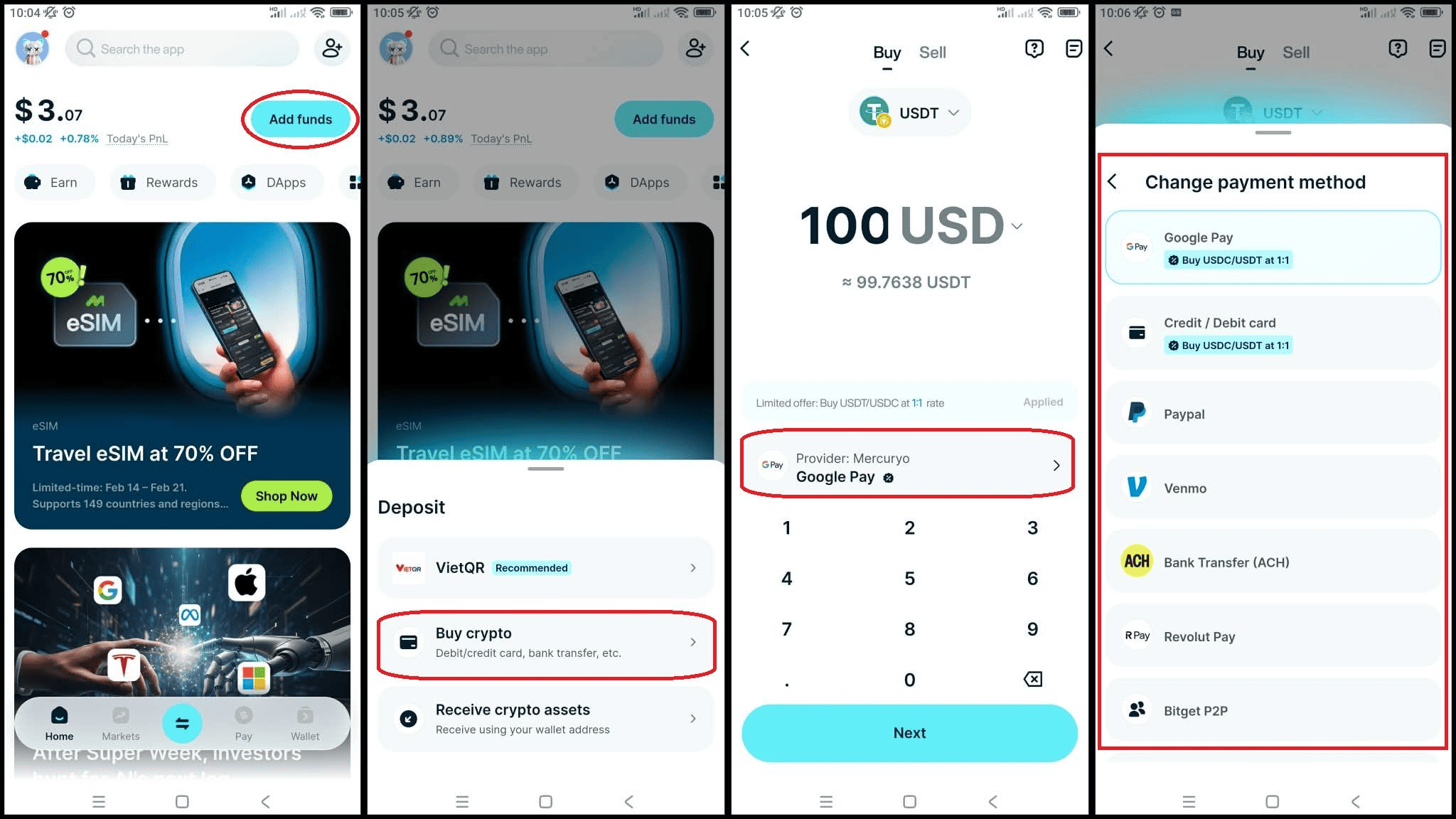
Step 2: Deposit money into your wallet
Once you have finished your wallet, you just need to deposit money into it. You can:
- Transfer coins from other wallets: Send BTC, ETH or any coin you have from an external wallet.
- Buy directly with a card: Use a bank card or credit card to buy USDT or ETH right in the app and then exchange it for USDC.
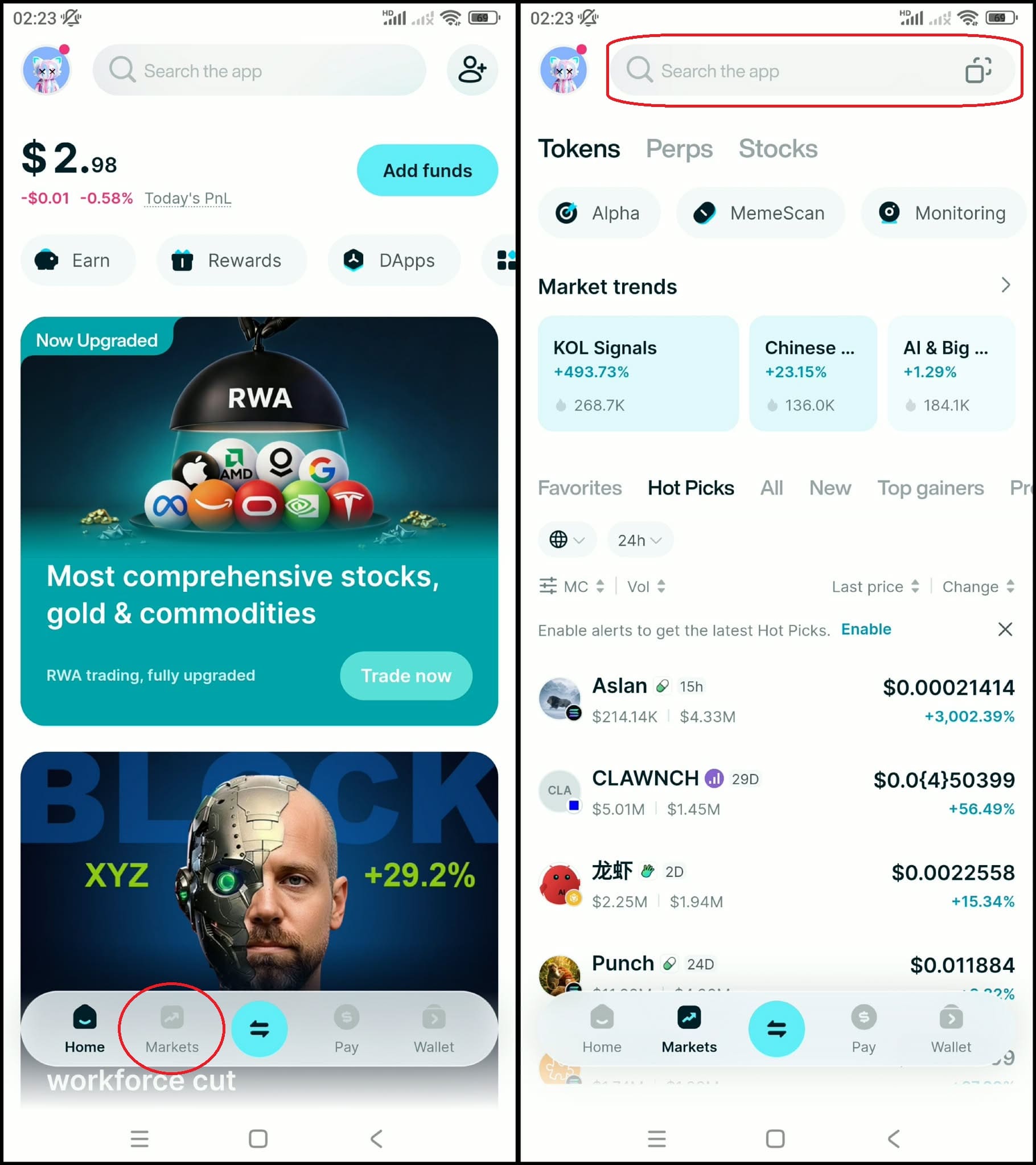
Step 3: Open the Built-in Web3 Browser
Inside the app, go to the “Markets” section and use the search bar at the top to access Web3 dApps directly.
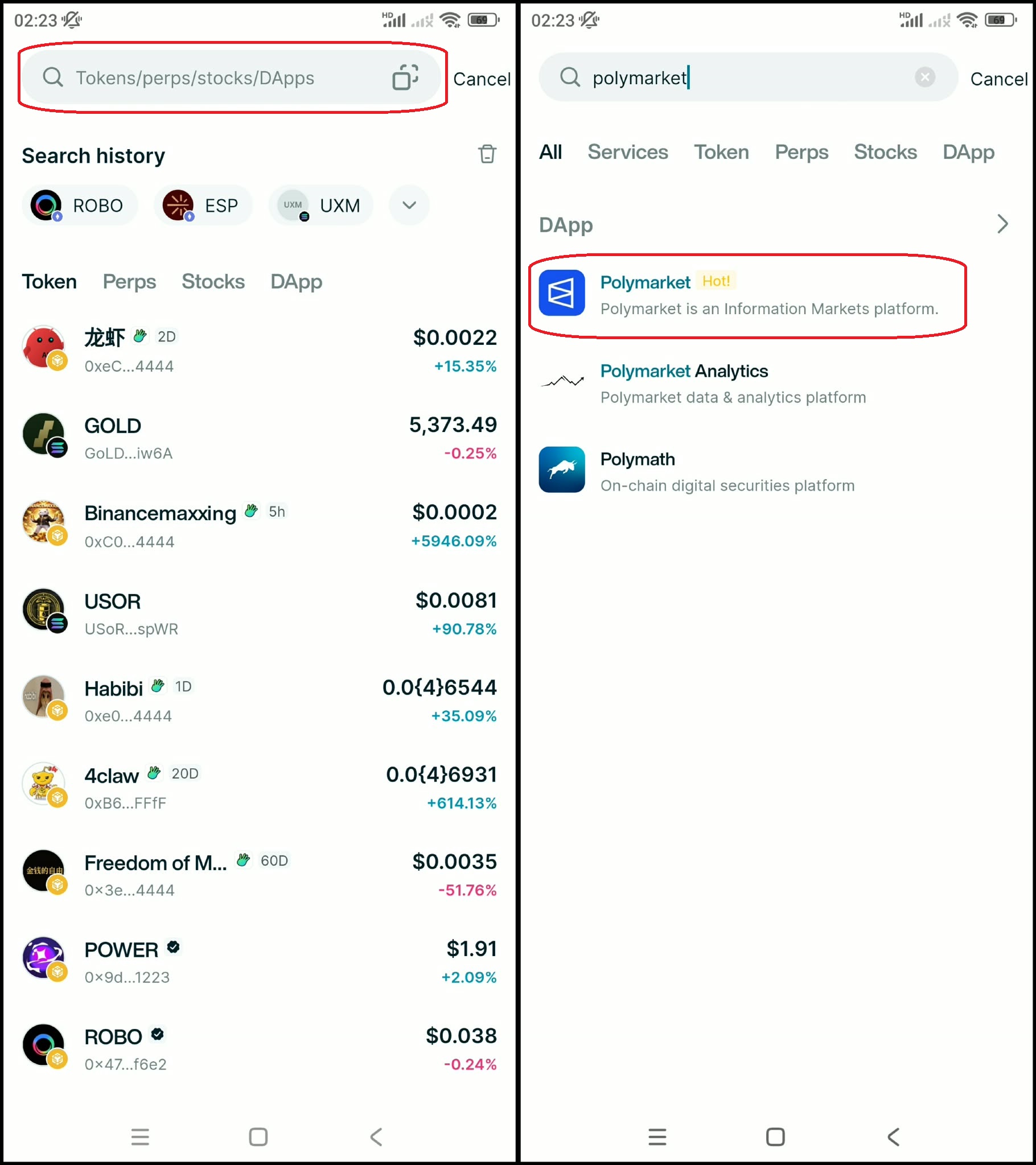
Step 4: Find a Prediction Market Platform
Enter the name of the platform (for example, type “Polymarket” in the search bar) and select it when it appears. This allows you to open the prediction-market interface within the wallet environment.
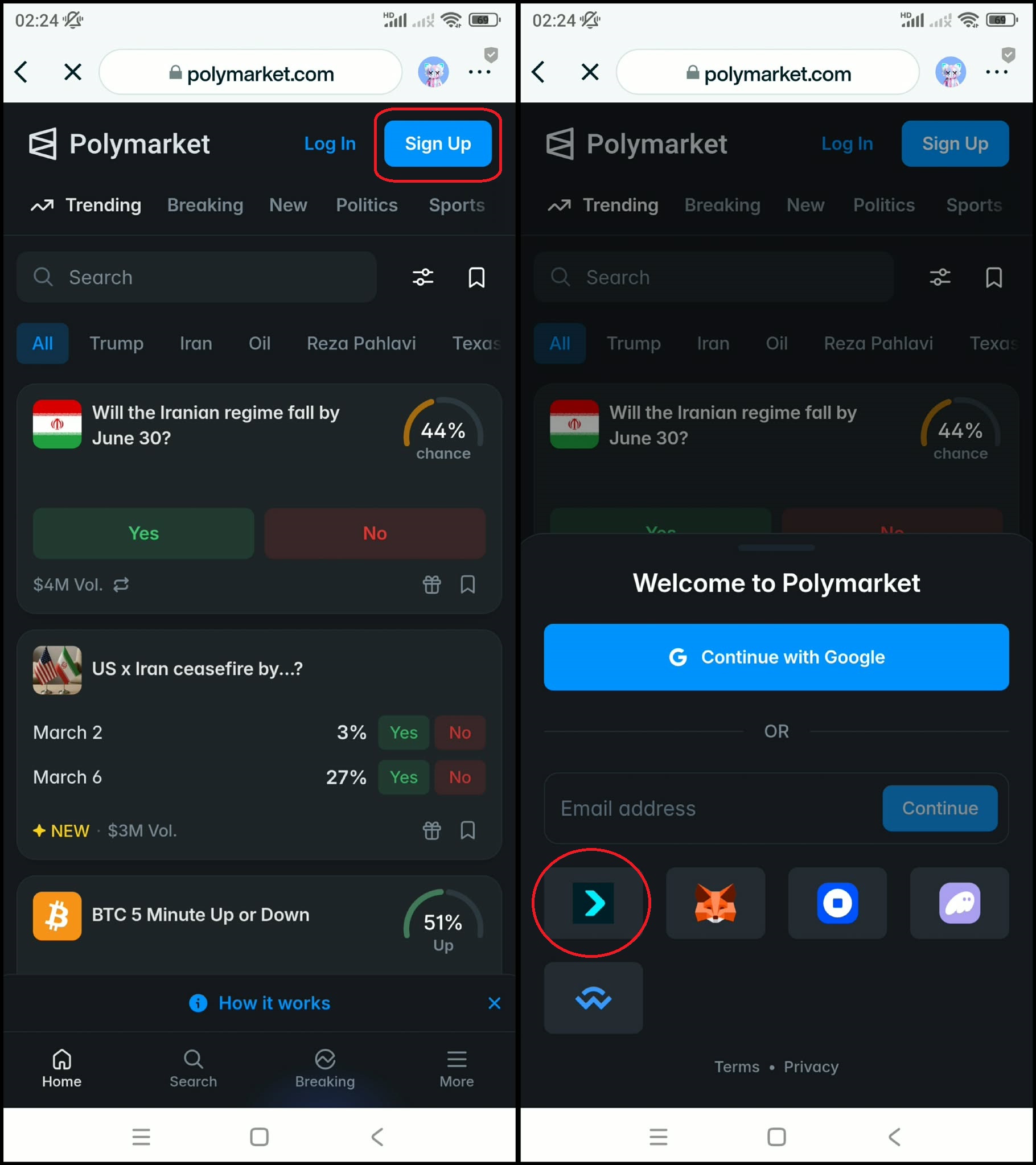
Step 5: Connect Your Wallet
Approve the wallet connection request securely inside the app. Always review the connection prompt before confirming.
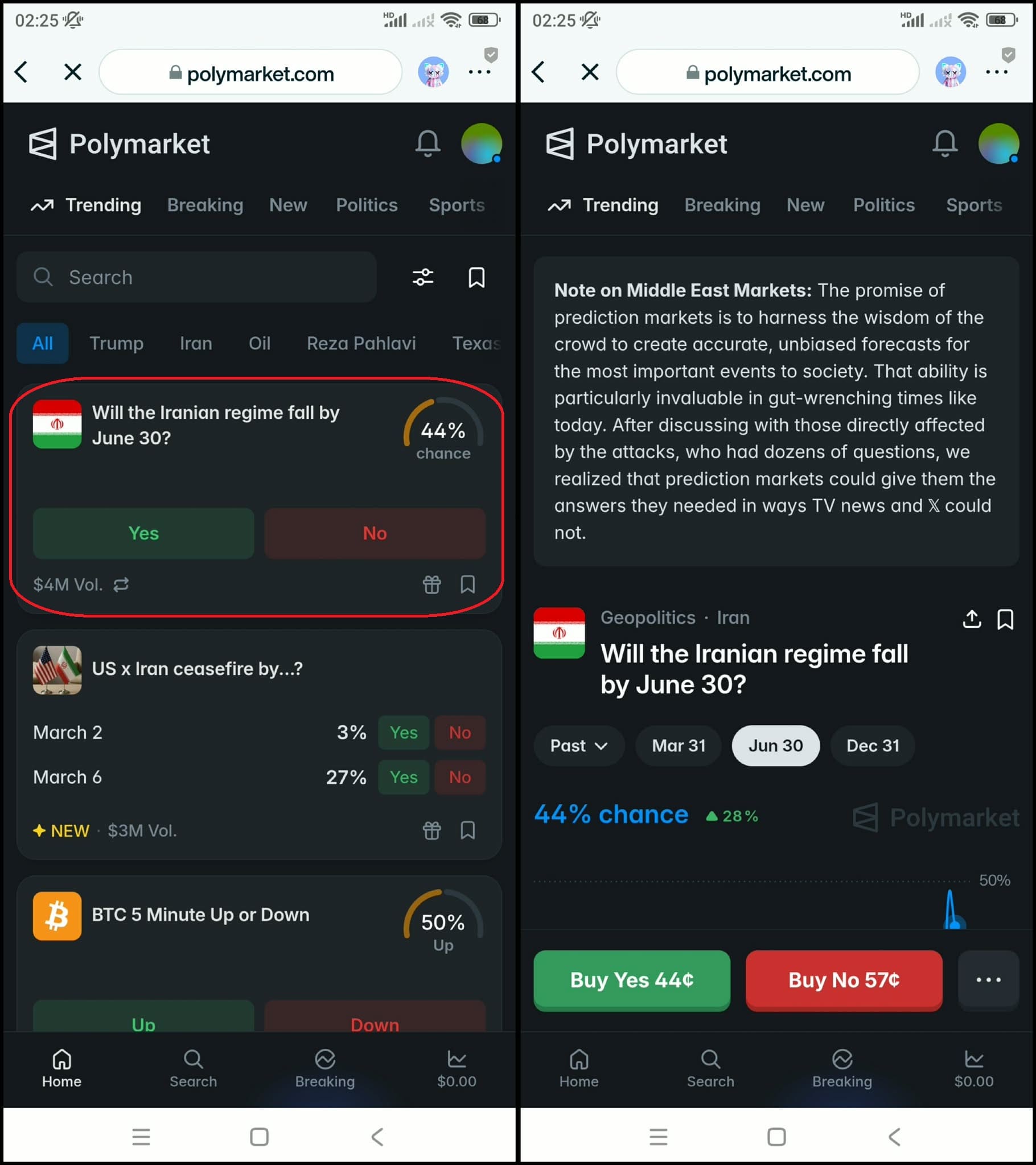
Step 6: Choose a YES/NO Contract
Browse available markets, review contract pricing, implied probability, liquidity depth, and trading fees before entering a position.
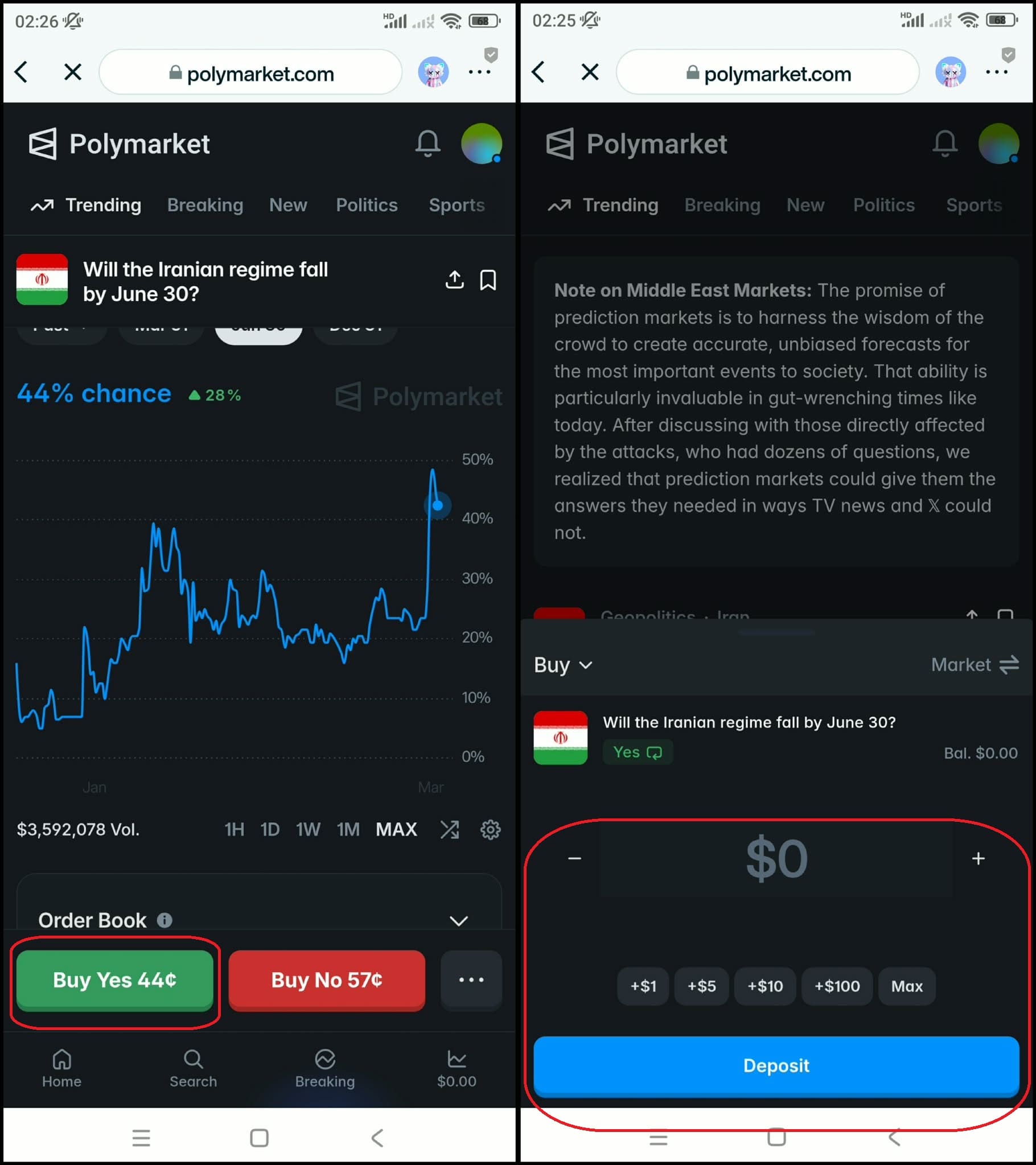
Step 7: Execute and Monitor Your Position
Place your trade, track price movements, and manage your exit timing based on liquidity conditions and cost considerations.
With just a few structured steps, you can securely access and participate in on-chain prediction markets while maintaining full control of your assets.
Secure your capital, stay cross-chain ready, and connect seamlessly to prediction-market dApps with Bitget Wallet. Download Bitget Wallet today and participate with confidence.
Related Reading on World Cup Prediction Markets Trading
If you're exploring World Cup prediction markets — from understanding how yes-no contracts work to evaluating legality and risk management — these guides will help you trade event-based probabilities more strategically.
🔹 Understanding Prediction Market Basics
- What Is a Prediction Market in Crypto and How Blockchain-Based Prediction Markets Work
- What Is a Yes No Market: How Investors Trade Probabilities Using Yes-or-No Contracts
🔹 World Cup Prediction Market Strategy
- World Cup Prediction Market: Complete Guide to Trading the 2026 World Cup
- FIFA World Cup Odds 2026: How to Bet on the World Cup 2026 Winner?
- World Cup Predictions 2026: Who Will Win Based on Power Rankings and Market Trends
- World Cup Odds 2026: How Prediction Markets Compare with Traditional Betting Lines
- World Cup Dark Horses 2026: Underrated Teams That Could Shock the Tournament
- United States in the World Cup Prediction Market: Can the Golden Generation Outperform the Odds?
🔹 Legal & Risk Considerations
- Is Prediction Market Legal: US Federal vs State Laws Explained
- What You Need to Know About Prediction Market Before You Bet
Conclusion
How to trade crypto prediction markets ultimately comes down to disciplined probability pricing and controlled execution. Treat each contract as a tradable probability instrument: translate price into implied probability instantly, assess whether the market is mispricing the outcome, and only size up after accounting for total execution cost — including fees, spread, slippage, and liquidity depth. Because platform structure and settlement mechanics define your true risk exposure, execution discipline is just as critical as prediction accuracy.
For traders entering this fast-expanding prediction market landscape, Bitget Wallet — with direct connectivity to Web3 dApps, enabling seamless access to prediction-market platforms — provides practical infrastructure for on-chain participation. It combines secure stablecoin storage, frictionless cross-chain capital mobility, and eligible stablecoin products offering up to 10% APY, helping keep idle capital productive between trades. Stay capital-efficient, cross-chain ready, and seamlessly connected to prediction-market dApps with Bitget Wallet.
Download Bitget Wallet today to stay competitive and move with confidence in this rapidly trending prediction market cycle.
Sign up Bitget Wallet now - grab your $2 bonus!
FAQs
1. How to trade crypto prediction markets safely as a beginner?
Start with markets you actually understand, size small, and assume execution friction matters. Track fees, watch liquidity before entering, and avoid “all-in” positions near expiry. Only trade money you can afford to lose, and build a repeatable process before increasing size.
2. What does “priced between $0 and $1” mean in YES/NO contracts?
It means the contract price acts like implied probability. If YES trades at $0.70, the market is pricing roughly a 70% chance the outcome happens. If the event resolves true, a typical YES share settles at $1; if false, it settles at $0.
3. How is unrealized P&L different from realized P&L?
Unrealized P&L is the estimated gain/loss if you exited right now based on current prices. Realized P&L is what you actually lock in after you cash out, sell, or the market resolves. Cashing out converts unrealized P&L into realized results.
4. How to participate in prediction markets?
Use Bitget Wallet to securely store stablecoins and connect directly to Web3 dApps. With seamless cross-chain access, you can interact with prediction-market platforms quickly and efficiently, keeping your capital secure and ready when opportunities emerge.
5. Is prediction market trading legal where I live?
It depends on your jurisdiction and the platform’s terms. Some products are restricted in specific regions, and regulated apps may only serve certain countries. Always check the platform’s availability rules and your local regulations—do not attempt to bypass restrictions.
Risk Disclosure
Please be aware that cryptocurrency trading involves high market risk. Bitget Wallet is not responsible for any trading losses incurred. Always perform your own research and trade responsibly.