How to Read Prediction Odds: A Beginner’s Guide to Market Probability
How to read prediction odds means converting market prices into implied probabilities. In prediction markets, a YES price like $0.60 suggests the market believes the event has about a 60% chance of happening. Understanding this relationship helps beginners quickly interpret odds and compare market expectations.
Currently, many new users often confuse payout with probability, even though the two are closely related. In particular, many people still don’t know how to read prediction odds or where to interpret them correctly.
In this article, we'll explain everything from how to read Prediction Odds, comparing them to the odds formatted in sportsbooks, guiding you on how to convert prices into implied probabilities, to how you can participate and how to easily read Prediction Odds through Bitget Wallet.
Key Takeaways
- How to Read Prediction Odds means understanding that market prices reflect the crowd’s current estimate of an event’s probability.
- Learning to interpret price as probability is the core skill when practicing how to read prediction odds in modern prediction markets.
- Different formats like YES prices, decimal odds, and American odds all help traders understand how to read prediction odds across platforms.
What Are Prediction Odds?
Prediction odds are market-based indicators that show how likely traders believe a specific event is to happen and what potential return is available if that belief is wrong. In prediction markets, odds are often expressed as prices or percentages that reflect the collective expectations of participants.
- Implied probability: Market price converted into the probability of an event occurring.
- Potential payout: Lower probability outcomes usually offer higher returns.
- Market signal: Odds reflect current sentiment, liquidity, and available information.

Source: theinformation.com
How to Read Prediction Odds in 3 Steps?
How to Read Prediction Odds means interpreting the market price as the probability of an event and using that estimate to evaluate potential risk, reward, and market expectations.
-
Check the market price or odds format.
Identify how the market presents the odds. Prediction markets often show a contract price (such as $0.60) or a percentage indicating the estimated probability.
-
Convert the price into implied probability.
A contract priced at $0.65 usually means the market estimates a 65% probability that the event will happen.
-
Compare the market estimate with your own expectation.
Traders decide whether to participate by comparing the market’s implied probability with their own assessment of the event’s likelihood.
Prediction Odds Example?
A clear real-world example of prediction odds can be seen on the prediction market platform Polymarket, where traders buy YES or NO contracts on real-world events such as elections, sports results, or economic decisions.
For instance, imagine a market asking:
“Will Candidate A win the 2028 U.S. presidential election?”
Suppose the market currently shows the following prices:
- YES share price: $0.65
- NO share price: $0.35
In prediction markets, contract prices range from $0 to $1, and the price directly represents the market’s estimated probability of that outcome. A price of $0.65 implies a 65% probability that the event will occur.
| Trade Entry | Trader buys 100 YES shares at $0.65 | Total cost = $65 |
| If the candidate wins the election | Each share settles at $1 | Total payout = $100 |
| Profit calculation | Profit = $35 | |
| If the candidate does not win | YES shares settle at $0 | Loss = $65 investment |
How to Convert Odds to Implied Probability?
Convert prediction odds into implied probability by translating the market price or odds into a percentage that represents the market’s estimated chance of an outcome occurring. Understanding this helps beginners compare market expectations more clearly and judge whether a prediction market price looks reasonable or potentially mispriced.
What Is the Formula for Converting Prediction Market Price Into Probability?
In most binary prediction markets, the formula for converting a contract price into probability is very simple:
Implied probability = market price × 100
Because prediction market contracts usually trade between $0 and $1, the price itself directly reflects the market’s estimated probability of an event occurring.
| $0.25 | 25% |
| $0.37 | 37% |
| $0.50 | 50% |
This direct mapping is a major reason many beginners find prediction market odds easier to understand than sportsbook odds.
How Do Traders Evaluate Market Probability Versus Personal Estimate?
Experienced traders do not stop at simply reading the market’s implied probability. Instead, they compare the market estimate with their own personal probability estimate based on research, news, and analysis.
| Event A | 40% | 50% | Market may undervalue outcome |
| Event B | 65% | 60% | Market may overprice outcome |
| Event C | 55% | 55% | Market appears balanced |
If you buy YES at $0.65, your break-even logic is simple: the trade only makes sense if you believe the true probability is higher than 65%.
This is the practical side of how traders use prediction odds. Still, remember that market prices reflect collective belief, not certainty, and crowd pricing can stay wrong longer than beginners expect.
Source: topbetpredict.com
What Does a YES Price Mean in a Prediction Market?
A standard YES contract settles at $1.00 if the event happens and $0.00 if it does not. This simple settlement structure makes prediction market prices relatively easy to interpret.
Suppose you buy YES at $0.40. The market is roughly saying the event has a 40% chance of happening.
- Your max loss is $0.40, because that is what you paid.
- Your max profit is $0.60, because the contract settles at $1.00 if correct.
This is a useful prediction odds example because it demonstrates the full logic behind prediction market pricing: a lower price reflects lower market confidence, but also creates larger upside if the market estimate turns out to be wrong.
What Does a NO Price Mean in the Same Market?
A NO contract works in reverse. It settles at $1.00 if the event does not happen. So if YES is trading near $0.40, NO is often near $0.60.
In live markets, YES and NO do not always add up perfectly to $1.00 because of spreads, fees, and order-book imbalance. Still, they usually stay close enough for beginners to understand the broad probability picture.
| YES Share Price | Implied Probability | Max Profit if Correct | Max Loss if Wrong |
| $0.10 | 10% | $0.90 | $0.10 |
| $0.25 | 25% | $0.75 | $0.25 |
| $0.40 | 40% | $0.60 | $0.40 |
| $0.63 | 63% | $0.37 | $0.63 |
| $0.80 | 80% | $0.20 | $0.80 |
Cheaper contracts offer bigger upside, but the market also considers them less likely to happen.
What Are the Three Main Types of Betting Odds?
How to Read prediction odds becomes even easier when you also understand the three main betting odds formats used by sportsbooks. These formats look different, but they all describe the same underlying probability.
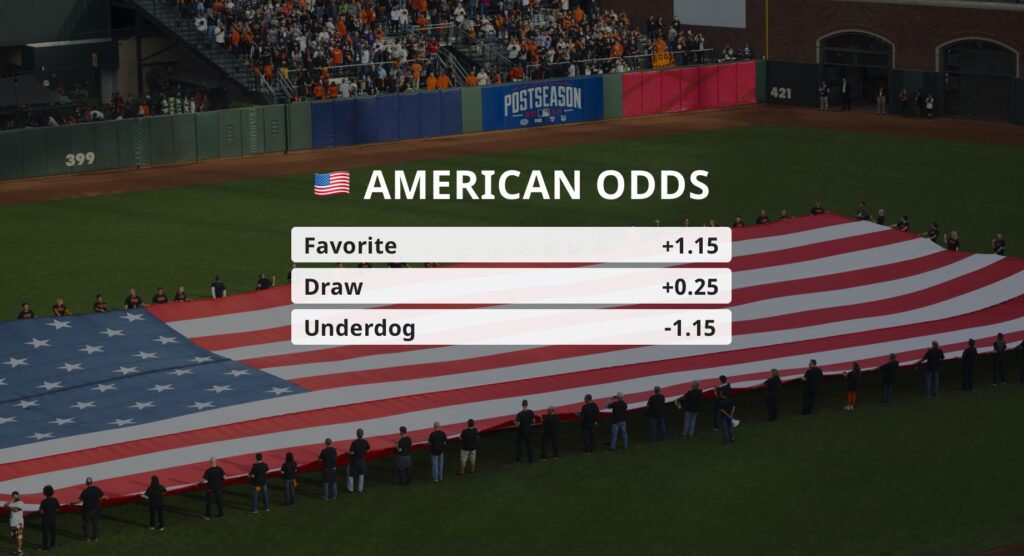
1. American Odds
Source: sbo.net
American odds are common in the United States and are widely used by sportsbooks to display betting lines. Positive odds, such as +200, show the profit you would earn on a $100 stake. Negative odds, such as -150, show how much you need to stake in order to win $100 in profit.
In simple terms, the plus or minus sign indicates whether the team or outcome is considered an underdog or a favorite by the market.
- +200 = 33.33% implied probability
- -150 = 60.00% implied probability
Because of this structure, favorites usually carry minus signs, meaning they are more likely to occur but offer smaller returns, while underdogs carry plus signs, reflecting lower probability but larger potential payouts.
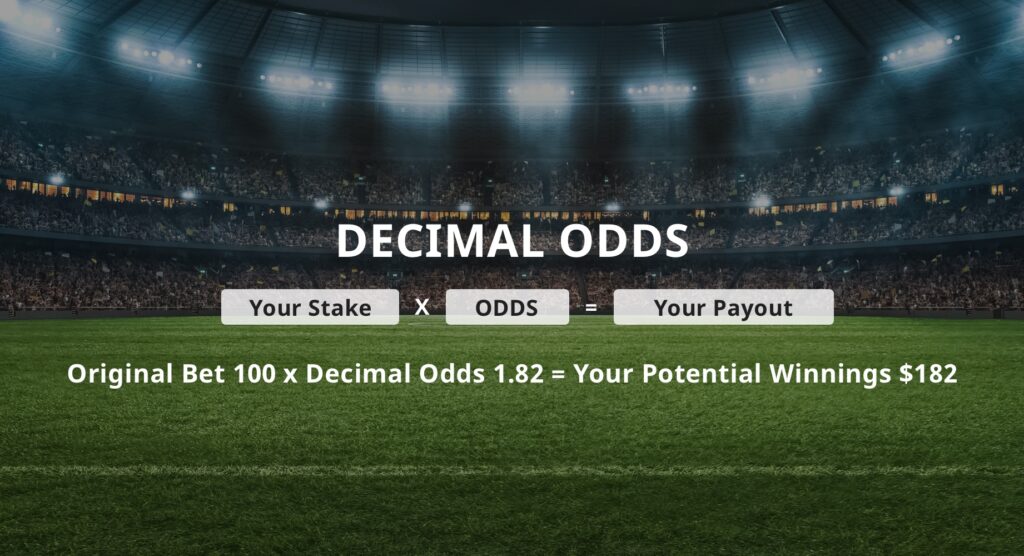
2. Decimal Odds
Source: sbo.net
Decimal odds are commonly used in Europe, Canada, and Australia. Instead of focusing on profit alone, they show the total return for every $1 staked, including the original wager.
Many beginners find decimal odds easier to understand because the calculation is straightforward and the odds appear as a single number rather than positive or negative values.
1÷Decimal Odds=Implied Probability
For example:
- 2.00 = 50%
- 1.50 = 66.67%
- 3.50 = 28.57%
To convert prediction odds to probability when using decimal odds, divide 1 by the decimal odds. The result gives the implied probability expressed as a percentage.
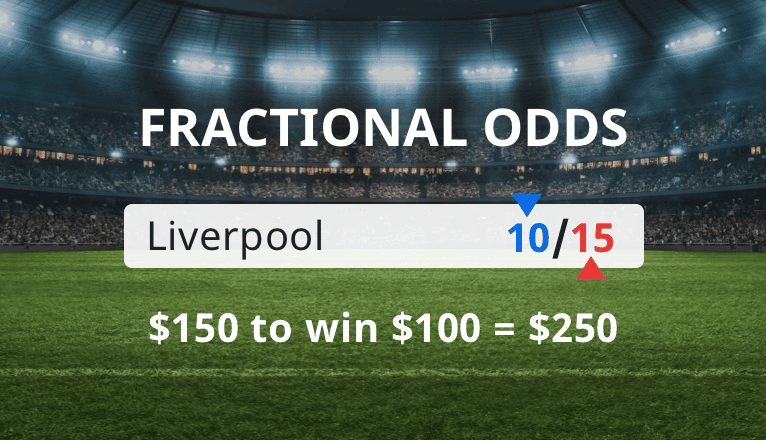
3. Fractional Odds
Source: sbo.net
Fractional odds are traditionally used in the United Kingdom and Ireland, especially in horse racing markets. They express the profit relative to the original stake, written as a fraction.
For example:
- 2/1 means a bettor would win $2 profit for every $1 staked, plus the original stake back if the bet wins.
- 1/2 means a bettor would win $1 profit for every $2 staked, indicating a strong favorite because the potential profit is smaller than the stake.
Fractional odds can also be converted into probability using the formula:
denominator / (numerator + denominator).
This allows traders and bettors to compare fractional odds with other formats more easily.
4. Overview of the Three Main Types of Betting Odds
Based on the comparisons above, we can summarize the three major betting odds formats in the table below.
| Outcome Probability | American Odds | Decimal Odds | Fractional Odds |
| 50.00% | +100 / -100 | 2.00 | 1/1 |
| 40.00% | +150 | 2.50 | 3/2 |
| 33.33% | +200 | 3.00 | 2/1 |
| 66.67% | -200 | 1.50 | 1/2 |
| 75.00% | -300 | 1.33 | 1/3 |
Different formats may look different, but they all describe the same probability and payout relationship.
How to Convert Prediction Odds Into Implied Probability?
Convert prediction odds into implied probability by translating the market price or odds into a percentage that represents the market’s estimated chance of an outcome occurring. Understanding this helps beginners compare market expectations more clearly and judge whether a prediction market price looks reasonable or potentially mispriced.
What Is the Formula for Converting Prediction Market Price Into Probability?
In most binary prediction markets, the formula for converting a contract price into probability is very simple:
Implied probability = market price × 100
Because prediction market contracts usually trade between $0 and $1, the price itself directly reflects the market’s estimated probability of an event occurring.
| Market Price | Implied Probability |
| $0.25 | 25% |
| $0.37 | 37% |
| $0.50 | 50% |
This direct mapping is a major reason many beginners find prediction market odds easier to understand than sportsbook odds.
How Do Traders Evaluate Market Probability Versus Personal Estimate?
Experienced traders do not stop at simply reading the market’s implied probability. Instead, they compare the market estimate with their own personal probability estimate based on research, news, and analysis.
| Scenario | Market Estimate | Personal Estimate | Interpretation |
| Event A | 40% | 50% | Market may undervalue outcome |
| Event B | 65% | 60% | Market may overprice outcome |
| Event C | 55% | 55% | Market appears balanced |
If you buy YES at $0.65, your break-even logic is simple: the trade only makes sense if you believe the true probability is higher than 65%.
This is the practical side of how traders use prediction odds. Still, remember that market prices reflect collective belief, not certainty, and crowd pricing can stay wrong longer than beginners expect.
What Should Beginners Check When Reading Prediction Odds?
How to Read prediction odds correctly involves more than simply converting price into probability. Beginners also need to consider several market mechanics that affect how trades are executed and how reliable a price signal actually is.
When evaluating prediction odds, it is helpful to check the following factors:
-
Market price:
Look beyond the headline number. A single displayed price may not reflect the full trading range or current order-book activity.
-
Fees and spreads:
Transaction fees and the difference between the bid price and ask price can significantly affect the real cost of entering or exiting a position.
-
Liquidity:
Market depth matters. In thin or low-liquidity markets, prices may move quickly and may not fully reflect a stable consensus among participants.
-
Contract rules:
Always review the settlement criteria carefully. Sometimes a market can resolve differently from what the event headline appears to suggest.
Understanding these mechanics helps beginners interpret prediction odds more accurately and avoid misreading market signals.
| Beginner Mistake | Why It Happens | Better Habit |
| Confusing price with certainty | Price looks precise | Treat price as probability, not fact |
| Ignoring spreads | Only headline price is visible | Check bid and ask before trading |
| Skipping rules | Focus stays on headline event | Read settlement criteria first |
| Overbetting | Confidence feels high | Size trades based on risk tolerance |
| Chasing headlines | Emotion overrides process | Compare news impact to current price |
By recognizing these common mistakes, beginners can develop better habits and approach prediction markets with a more disciplined and analytical mindset.
How to Access Prediction Markets Using Bitget Wallet?
How to Read prediction odds is only the first step for anyone exploring prediction markets. After understanding how market prices translate into probability and potential payout, users still need a secure way to access Web3 platforms where these markets operate.
Bitget Wallet can act as a practical gateway to prediction markets by allowing users to connect to decentralized applications, and interact with on-chain tools while maintaining full control of their assets through a non-custodial wallet. Instead of relying on centralized platforms to hold funds, users can review permissions carefully and access prediction market dApps directly from one secure environment.
The process of accessing prediction markets through Bitget Wallet is relatively straightforward. Below is a simple step-by-step workflow:
Step 1: Create a wallet
- If you don't have a wallet, download Bitget Wallet app now.
- Register with your phone number or email, verify quickly and you can use it right away.
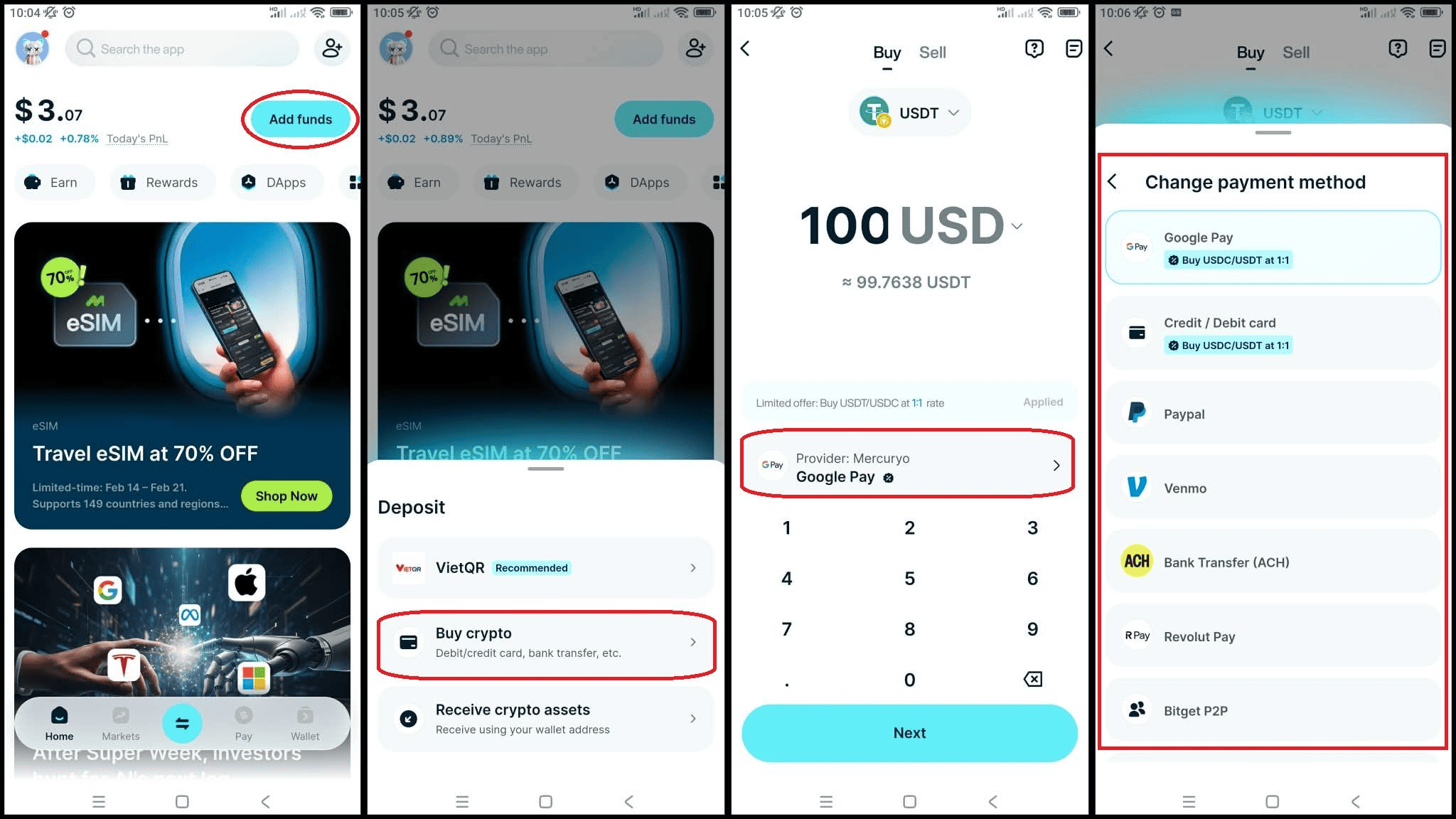
Step 2: Deposit money into your wallet
Once you have finished your wallet, you just need to deposit money into it. You can:
- Transfer coins from other wallets: Send BTC, ETH or any coin you have from an external wallet.
- Buy directly with a card: Use a bank card or credit card to buy USDT or ETH right in the app and then exchange it for USDC.
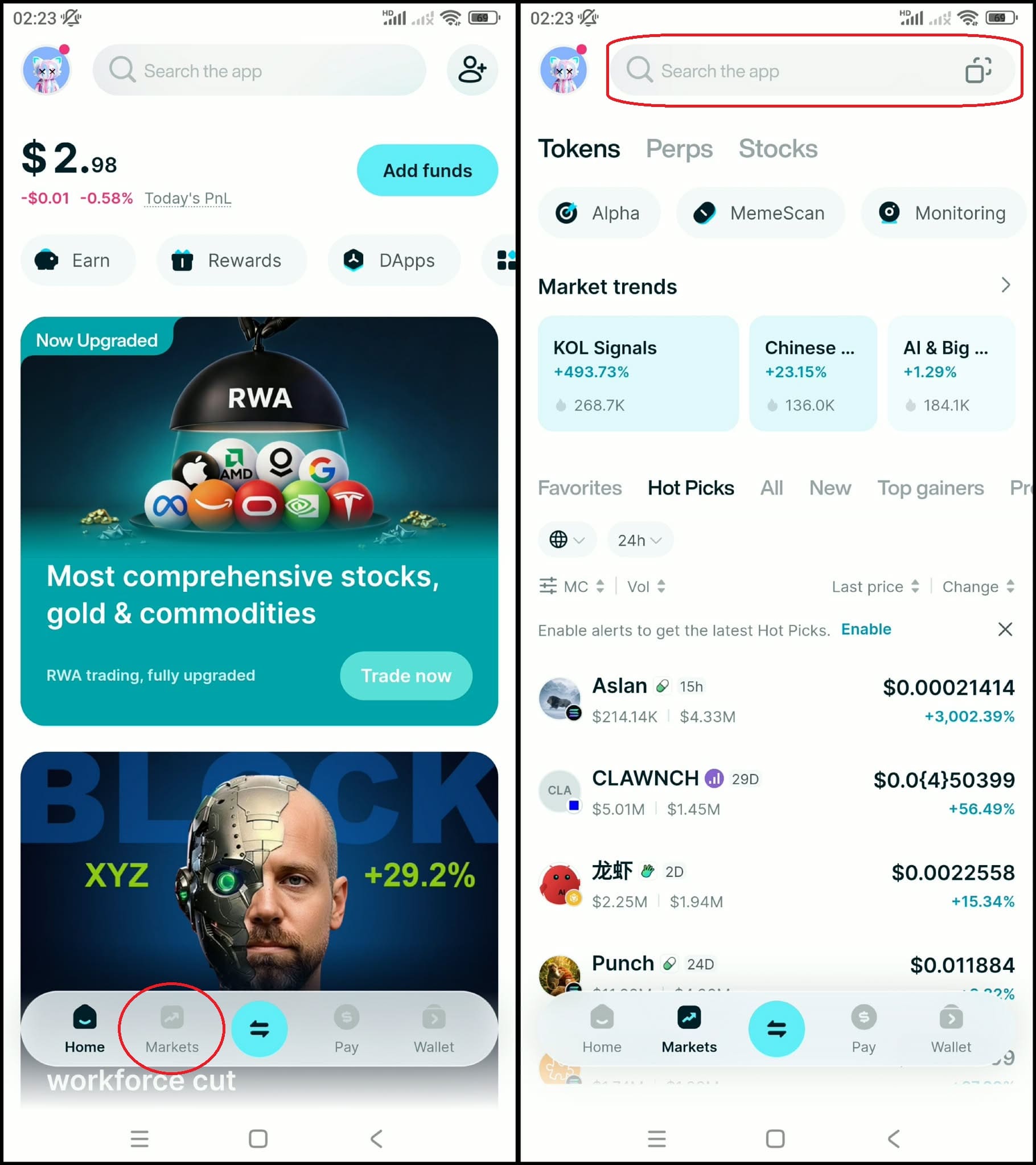
Step 3: Open the Built-in Web3 Browser
Inside the app, go to the “Markets” section and use the search bar at the top to access Web3 dApps directly.
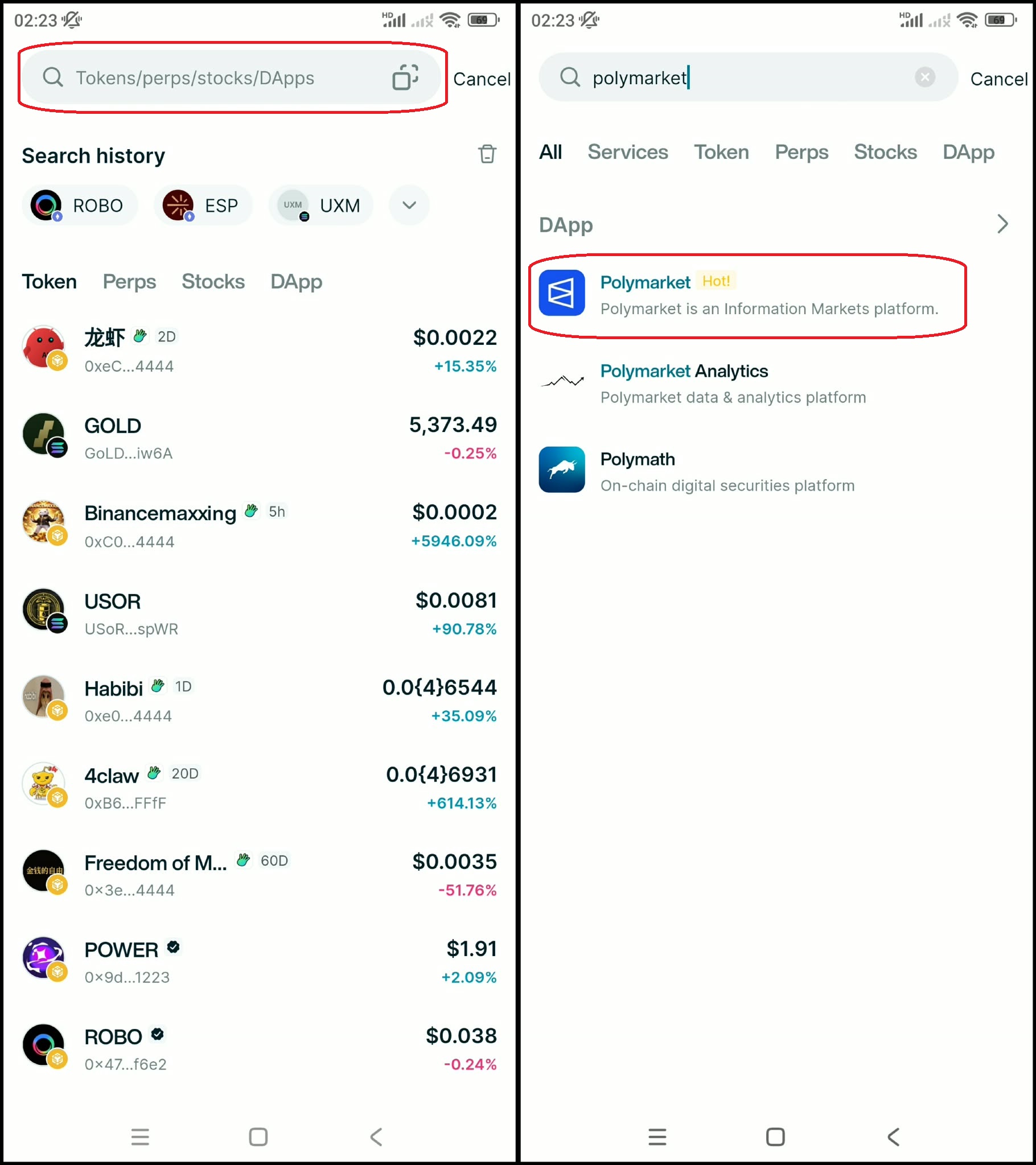
Step 4: Find a prediction market platform
Search for a prediction market platform such as Polymarket and open it directly inside the wallet’s Web3 interface.
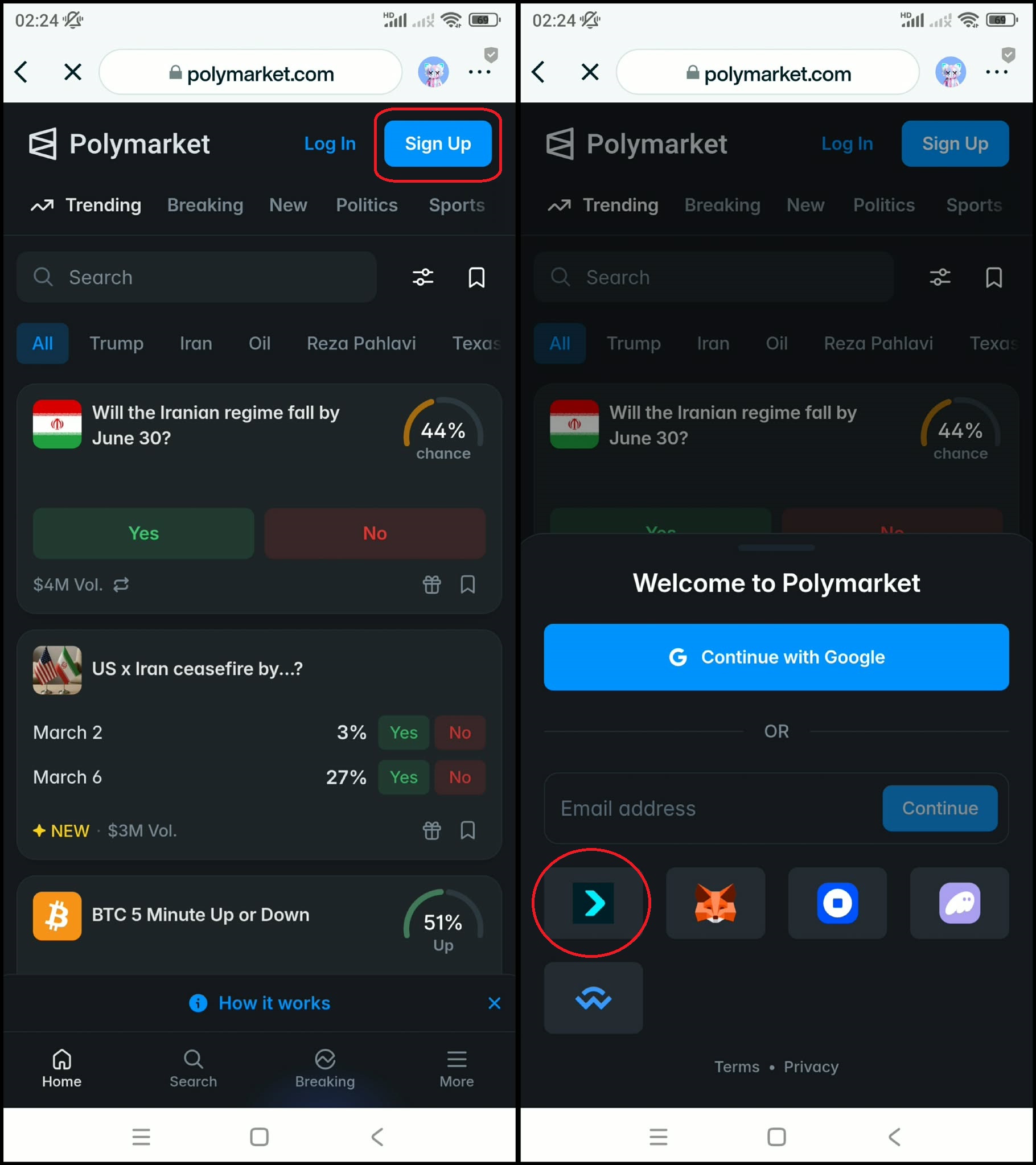
Step 5: Connect Your Wallet
Approve the wallet connection request securely inside the app. Always review the connection prompt before confirming.
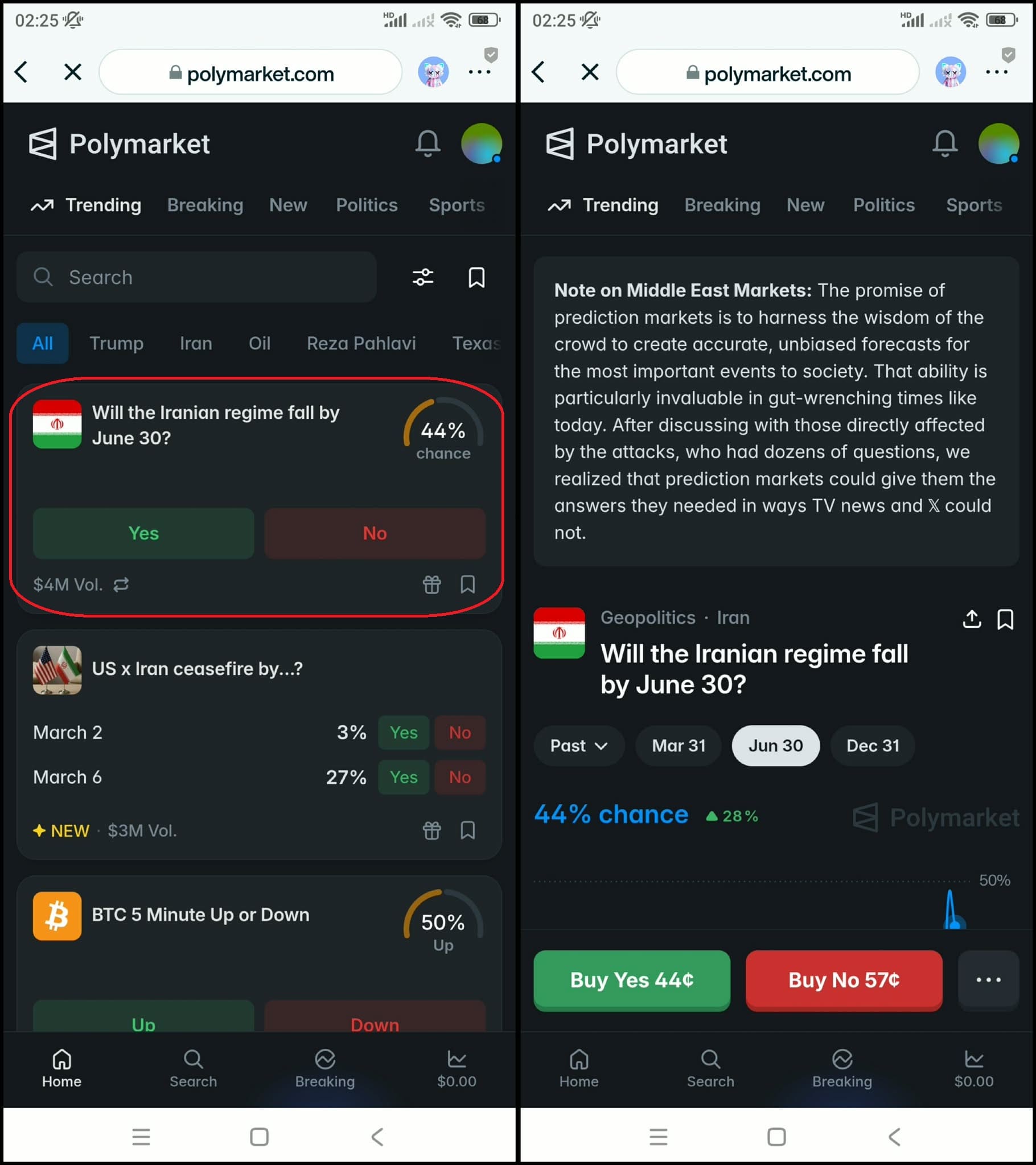
Step 6: Choose a YES/NO Contract
Browse available markets, review contract pricing, implied probability, liquidity depth, and trading fees before entering a position.
Step 7: Execute and Monitor Your Position
Place your trade, track price movements, and manage your exit timing based on liquidity conditions and cost considerations.
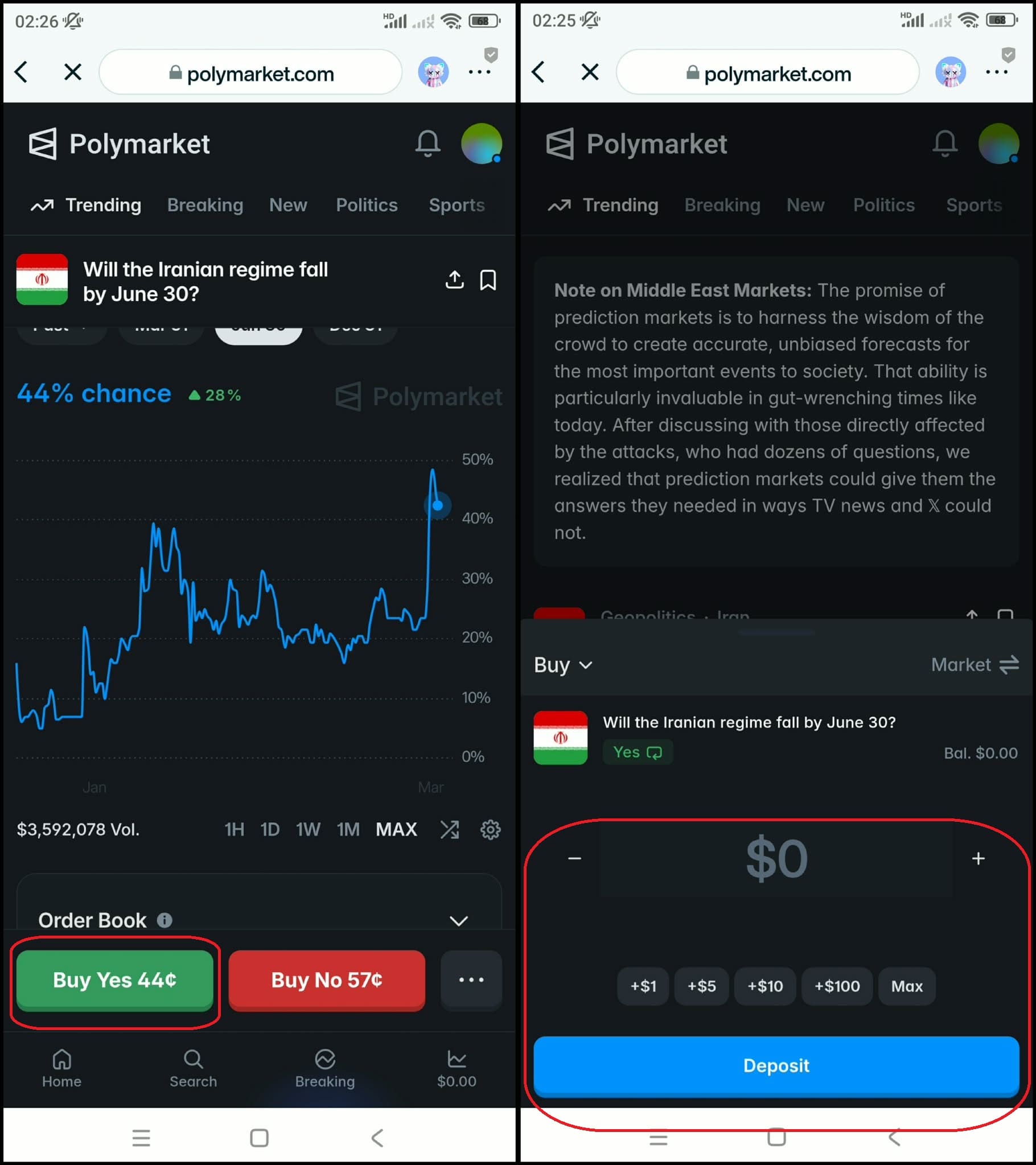
By following these steps, beginners can move from simply learning how to read prediction odds to actually observing how prices move in live prediction markets while maintaining full control of their assets through a self-custodial wallet.
Related Reading on Prediction Odds
Prediction odds are widely used in prediction markets to estimate the probability of real-world events. From understanding how market prices translate into probability to analyzing odds in major global events, the following guides explore how prediction odds work in theory and in practice.
🔹 Prediction Odds Fundamentals
- What Are Prediction Odds: A Beginner’s Guide to Understanding Market Probability
- How to Read Prediction Odds: A Beginner’s Guide to Market Probability
- Prediction Odds vs Betting Odds: What’s the Difference Between Prediction Markets and Sportsbook Odds?
🔹 Prediction Market Odds
🔹 Event-Specific Prediction Odds
- FIFA World Cup Odds 2026: How to Bet on the Winner
- United States World Cup Prediction Market: Can the Golden Generation Outperform the Odds?
- World Cup Odds 2026: Prediction Market vs Betting
Conclusion
How to Read prediction odds ultimately means translating market price into probability, risk, and potential payout. Once beginners understand share-price logic, implied probability, the relationship between different betting odds formats, and the common mistakes to avoid, prediction markets become much easier to interpret without confusing market belief with certainty.
To move from theory into real practice, Bitget Wallet can help users connect to Web3 prediction platforms, read prediction odds directly on-chain, and manage stablecoins through a secure non-custodial wallet. By combining market understanding with the right tools, beginners can analyze prediction markets more confidently and participate in Web3 ecosystems with greater control and flexibility.
Download Bitget Wallet now to start reading prediction odds with more confidence and access Web3 prediction platforms through a secure, self-custodial workflow!
Sign up Bitget Wallet now - grab your $2 bonus!
FAQs
1. How to read prediction odds?
Read prediction odds by treating the market price as an implied probability signal. In many prediction markets, a YES contract priced at $0.60 suggests the market sees roughly a 60% chance of that outcome.
2. Why can prediction market prices be wrong?
Prices reflect market belief, which can be distorted by low liquidity, fresh information, emotional trading, or crowd bias. That is why odds are signals, not guarantees.
3. How to read prediction odds?
Bitget Wallet can help users access Web3 prediction platforms where they can read prediction odds, analyze market probability, and interact with on-chain tools more conveniently through a non-custodial wallet experience. By connecting directly to dApps, users can monitor market prices, evaluate implied probabilities, and participate in prediction markets while maintaining full control of their assets.
4. How to read prediction odds via Bitget Wallet?
Bitget Wallet can help users access Web3 prediction platforms where they can read prediction odds, analyze market probability, and interact with on-chain tools more conveniently through a non-custodial wallet experience. By connecting directly to dApps, users can monitor market prices, evaluate implied probabilities, and participate in prediction markets while maintaining full control of their assets.
Risk Disclosure
Please be aware that cryptocurrency trading involves high market risk. Bitget Wallet is not responsible for any trading losses incurred. Always perform your own research and trade responsibly.