Kalshi vs Polymarket: Who Is the True King of the Prediction Market in 2026?
Kalshi and Polymarket are the two leading prediction market platforms in 2026, but they serve different audiences. Kalshi is a CFTC-regulated U.S. exchange, ideal for institutional and U.S.-based retail traders seeking legally compliant event contracts. Polymarket is a crypto-based prediction market platform, designed for global users who prefer borderless, low-fee trading with stablecoins.
The choice between Kalshi vs Polymarket depends on fees, liquidity, legality, and accessibility. While Kalshi prioritizes regulatory compliance and U.S. institutional participation, Polymarket emphasizes blockchain-based, globally accessible markets. Tools like Bitget Wallet help crypto-native users manage funds efficiently across platforms.
Another factor is how traders manage their funds before entering markets. Many crypto-native users store stablecoins in tools like Bitget Wallet to maintain control of assets and interact with blockchain-based platforms more efficiently.
In this guide, we compare Kalshi vs Polymarket across fees, liquidity, regulation, and event coverage to help traders understand which prediction market platform may be better suited to their needs in 2026.
Key Takeaways
- Kalshi vs Polymarket represent two different prediction market models: Kalshi operates as a regulated U.S. exchange, while Polymarket is a crypto-based global prediction market.
- Trading costs and liquidity differ: Kalshi emphasizes compliance and structured fee models, while Polymarket often offers lower trading fees and global liquidity.
- Platform choice depends on trader profile: U.S. traders seeking regulated markets may prefer Kalshi, while crypto-native users often favor Polymarket for global access and lower fees.
- Asset preparation matters: Many traders store stablecoins in tools like Bitget Wallet to maintain self-custody and quickly access on-chain prediction markets.
Which Platform Has Better Prediction Market Liquidity?
Liquidity — the ability to enter and exit trades quickly without affecting prices — is a key part of the Kalshi vs Polymarket comparison. Deeper liquidity generally means tighter spreads, lower slippage, and better execution for traders.
Polymarket Liquidity vs Kalshi Liquidity – What Do the Numbers Show?
Comparing Polymarket liquidity vs Kalshi liquidity shows that both platforms handle substantial trading volume and open interest, but they excel in different areas:
-
Order Book Depth:
Polymarket’s global markets often feature deep order books, particularly in political, macroeconomic, and crypto-focused prediction markets. Kalshi, on the other hand, shows strong depth in U.S.-centric markets, such as sports and economic events, though its overall order book is generally smaller than Polymarket’s global footprint.
-
Open Interest:
Polymarket maintains robust open interest across its active markets, supporting large positions. Kalshi has, at times, matched or exceeded Polymarket’s open interest in specific segments, especially U.S. sports and economic contracts, though overall market share fluctuates.
-
Global User Participation:
Polymarket benefits from a worldwide user base settled in USDC, enabling cross-border trading and continuous liquidity. Kalshi’s participation is primarily U.S.-based, focusing on institutions and retail traders under CFTC-compliant regulations.
Takeaway: Polymarket leads in global liquidity and cross-border access, while Kalshi excels in regulated, U.S.-focused markets with concentrated participation and predictable depth.
| Liquidity Factor | Polymarket | Kalshi |
| Order Book Depth | Generally deeper across global markets | Strong in regulated U.S. events |
| Open Interest | Historically robust with broad distribution | Competitive open interest in selected U.S. markets |
| 24H Trading Volume | Widely driven by global event activity | Often peaks around U.S. sports & economic releases |
| User Base | Global crypto-native participation | Primarily U.S. residents and institutions |
| Market Diversity | Broad range of experimental/global events | Focused and compliant market set |
| Liquidity Stability | Fluctuates with global sentiment | More predictable around regulated news events |
2. Does Liquidity Affect Slippage and Trade Execution?
Liquidity levels directly impact slippage (the difference between expected and executed prices) and overall execution quality:
- Execution quality: Polymarket’s deep participation usually results in relatively smoother fills, especially during high-volume political or crypto-oriented events. Kalshi’s execution quality shines in its most active U.S. markets, though less participation in certain markets can cause thinner books.
- Spread differences: Tighter bid-ask spreads — often a sign of deeper liquidity — are seen on Polymarket’s busiest markets. Kalshi’s spreads tighten significantly during major U.S. event periods, but can be wider in less-traded markets.
- Large order capacity: Polymarket’s global liquidity generally supports large positions without substantial price impact. Kalshi’s regulated structure attracts institutional players and can better support U.S.-sized institutional trades when volume is heavy.
Execution Factor Comparison
| Feature | Kalshi | Polymarket |
| Platform Type | Regulated U.S. exchange | Crypto-based prediction market |
| Regulatory Status | CFTC-approved DCM | Crypto-native, global access |
| Settlement Currency | USD (fiat) | Stablecoins (e.g., USDC) |
| Market Coverage | U.S. sports, economics, politics | Global political, cultural, crypto events |
| Liquidity | High in U.S. markets | High in global/crypto markets |
| Trading Fees | ~1–2% per contract | Mostly fee-free; ~0–1.5% taker fees |
| Accessibility | U.S. residents & institutions | Global users (subject to compliance) |
Kalshi Fees vs Polymarket Fees Comparison – Which Is Cheaper?
Understanding fees is critical for traders because even small differences can significantly impact profitability. Here’s how Kalshi and Polymarket differ in 2026 in terms of cost, structure, and revenue models
Which Users Benefit Most from Kalshi vs Polymarket?
Not all prediction market traders have the same priorities. Choosing the right platform depends on your location, trading style, and regulatory comfort. The table below summarizes which users are best suited for Kalshi or Polymarket, along with the reasons why each platform may meet their needs. User Type and Recommended Platform:
| User Type | Recommended Platform | Reason |
| U.S.-based retail traders | Kalshi | Regulated, legal certainty, familiar fiat settlement |
| Institutional investors | Kalshi | Compliance, predictable fees, U.S. market access |
| Crypto-native global traders | Polymarket | Borderless, low fees, wallet-based access |
| High-frequency traders | Polymarket | Low transaction cost, deep global liquidity |
| Event-focused casual traders | Either | Choose based on market type and jurisdiction |
2. Kalshi Fees vs Polymarket Fees Comparison – What’s the Real Cost?
When you stack Kalshi and Polymarket side-by-side, the difference in fee philosophy becomes clear: Kalshi’s regulated, fiat-friendly model costs more upfront — while Polymarket’s crypto-native, low-fee paradigm keeps trading costs extremely low for many ordinary users. Fee Comparison Table: Kalshi vs Polymarket
| Kalshi | Polymarket | |
| Trading Fees | ~1–2% of contract value; varies by market type and price spread | $0 trading fees on most markets; occasional ~1.5% on select rapid-fire/crypto events |
| Fee Structure Logic | Percentage of trade cost or spread; varied by price and contract | Near-zero base fees; maker/taker incentives |
| Maker Fee / Rebate | May reduce costs for high-volume maker orders | 0% maker fee enhances liquidity |
| Taker Fee | Standard trading fee applies | ~0–1.5% depending on event type |
| Deposit Fees | ACH: Free; Wire: Free/standard; Cards: ~2% or provider fee | Depends on on-ramp; occasional provider charges |
| Withdrawal Fees | Wire: $20–$25; ACH: Free; Crypto: Network fees | Gas fees + bridge provider fees |
| Gas Costs (Global) | N/A (fiat-first) | ~$0.01–$0.05 per blockchain transaction |
| Effective Monthly Cost Example | ~$425–$475 on ~$25k monthly volume | ~$52–$102 on ~$25k monthly volume |
3. What Is the Polymarket Revenue Model 2026?
Polymarket takes a very different approach, optimized for a crypto-native, global audience. Many markets are fee-free, creating an incentive for traders and liquidity providers alike.
-
Trading fees:
Most non-U.S. markets have zero trading fees, although specialized or rapid-fire events may charge a modest ~1.5% taker fee.
-
Blockchain-based costs:
Settlement occurs on-chain using USDC, so the main costs for users are network gas fees, typically around $0.01–$0.05 per transaction.
-
Liquidity incentives:
Maker/taker structures in select markets encourage deep order books and tighter spreads, which reduces effective costs for traders.
Source X
- On-chain structure: Since Polymarket settles trades on-chain (e.g., via USDC on a blockchain), the main costs for users are blockchain gas fees (usually around $0.01–$0.05) and any external bridge or on-ramp costs.
- Incentives for liquidity: Polymarket’s maker/taker model includes zero maker fees in many markets, which incentivizes market makers to post tight order books and contribute to deeper liquidity — helping with price execution and reducing effective spreads for regular traders.
What Makes Kalshi vs Polymarket the Center of the Prediction Market 2026 Debate?
The Kalshi vs Polymarket rivalry isn’t just about brand names — it reflects a bigger trend: toward a prediction market duopoly, with both platforms accounting for most volume and open contracts in the sector.
Source X
Why Is the Prediction Market Industry Expanding in 2026?
Prediction markets like Kalshi and Polymarket have gone mainstream as tools for crowd forecasting across politics, sports, macroeconomics, and niche cultural events. Their pricing – essentially probabilities – gives traders real-time insights into future outcomes
Reasons the Prediction Market Industry Is Growing in 2026:
- Massive surge in trading volume and participation: The global prediction market hit tens of billions of dollars in total volume as of 2025, reflecting a leap from relatively niche usage a few years earlier.
- Broader event coverage beyond elections: Markets now include sports, economics, geopolitics, and cultural outcomes — not just political forecasts.
- Recognition as real financial tools: Prediction markets are increasingly cited by analysts and integrated into financial workflows as real-time probability indicators, not just speculative bets.
→ Read more:
**What Is Kalshi ($KALSHI): Inside the CFTC-Licensed Exchange Bringing Real-World Events On-Chain**
Are Kalshi and Polymarket Becoming a Prediction Market Duopoly?
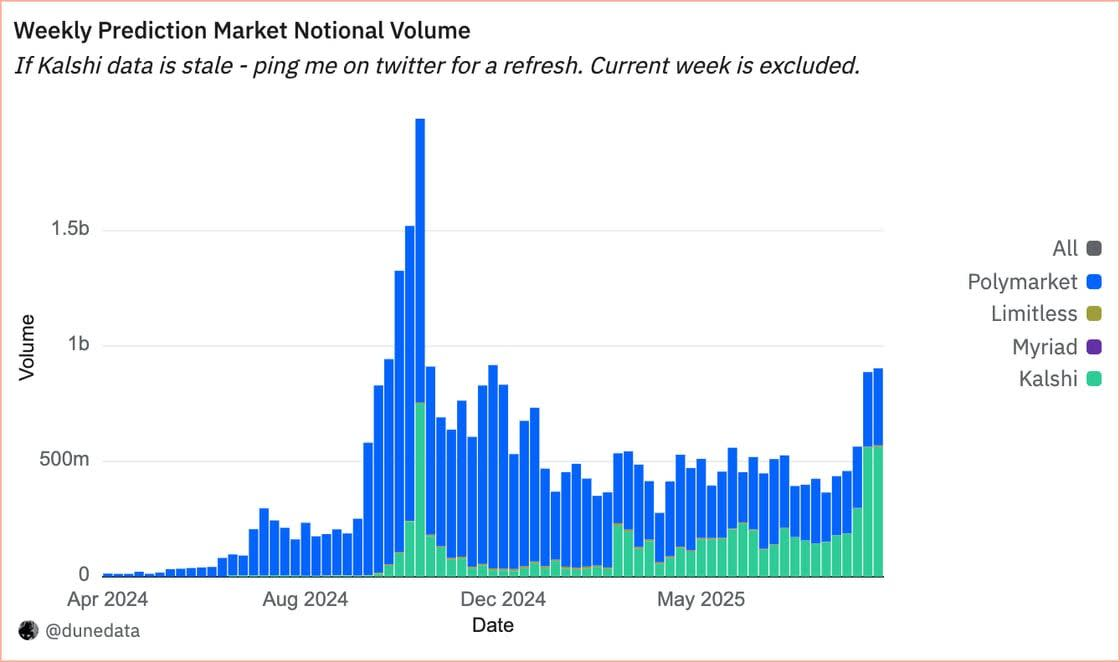
Evidence that Kalshi and Polymarket Dominate the Prediction Market:
- Huge combined market share: Kalshi and Polymarket together control a significant majority of total industry notional volume — roughly ~79% of global prediction market activity.
Source X
- Large user base and open interest: Both platforms boast over a billion dollars in open contracts and millions of users, far outpacing smaller competitors.
- Event-driven growth fuels duopoly dynamics: Both Kalshi and Polymarket see volume spikes around major events like sports seasons and political cycles, reinforcing their positions at the top.
- Duopoly structure still strengthening: Reports show that Kalshi and Polymarket together account for around 83–90% of tracked prediction market volume as of early 2026.
- Smaller competitors exist but lag behind: Other prediction market platforms are growing but hold far smaller shares of trading volume compared to the two giants.
- Strategic capitalization on niches: Kalshi’s regulatory U.S. focus and Polymarket’s global on-chain accessibility give each competitive edges in their preferred segments, but both still dominate overall.
How Does Regulation Impact Kalshi vs Polymarket in 2026?
Regulation now plays a central role in the Kalshi vs Polymarket narrative, shaping user access, legal clarity, and how these prediction markets expand — especially under evolving U.S. and state rules. While both platforms now operate under federal oversight, differences in regulatory status and state-level legal challenges continue to influence trader confidence and market growth.
What Does CFTC Approval Mean for Kalshi?
CFTC approval refers to Kalshi’s status as a Designated Contract Market (DCM) under the Commodity Futures Trading Commission (CFTC) — the same federal agency that regulates major futures and derivatives exchanges.
This designation means Kalshi must meet strict regulatory standards: regular audits, segregation of customer funds, anti-money-laundering (AML) and know-your-customer (KYC) compliance, minimum capital requirements, and ongoing reporting to federal regulators. Kalshi became the first prediction market platform to achieve this full CFTC approval, meaning its markets are legally sanctioned in most U.S. states and distinguishable from unregulated gambling platforms.
Source X
- Institutional credibility Because Kalshi operates under formal regulatory oversight, institutional investors — such as hedge funds or proprietary trading firms — can engage with greater confidence.
- Legal clarity in the U.S. CFTC approval gives U.S. residents legal certainty when trading on Kalshi, with clear tax reporting requirements (e.g., 1099 forms) and protections that unregulated offshore markets do not provide.
Is Polymarket Legal in the US 2026?
Regulatory uncertainty has been a defining part of Polymarket’s journey. Polymarket initially operated offshore without U.S. licensing, leading to a 2022 CFTC settlement that required the platform to pay a fine and block U.S. users to comply with regulation. However, in late 2025 Polymarket gained a form of CFTC federal approval via the acquisition of a registered derivatives exchange (QCEX), allowing it to offer event contracts in the U.S. through approved intermediaries and brokers.
This effectively made Polymarket federally legal again in 2026, though direct access is still restricted.
→ Read more: Is prediction market legal? — explanation of federal vs. state jurisdiction and what U.S. traders should know about legality in 2026. Are Prediction Markets Legal? A 2026 Regulatory Guide (Your Prediction Edge)
3. How Does Prediction Market Regulation Affect Growth?
Regulation has become one of the biggest pivots in the Kalshi vs Polymarket narrative — and it’s not just about legality, but also about access, enforcement, and how future growth is shaped under law. Both platforms now operate within a U.S. regulatory framework involving the Commodity Futures Trading Commission (CFTC), yet their access and legal stability differ significantly as of 2026.
According to recent data, Polymarket’s U.S. access remains restricted through an invite-only waitlist, while Kalshi continues operating under federal oversight across most states, albeit with legal challenges at the state level
- Institutional barriers: Regulatory frameworks either encourage or limit institutional participation. A clear federal designation — like Kalshi’s CFTC-regulated status — reduces legal uncertainty and allows traditional financial players to engage without excessive legal risk. Conversely, platforms without clear or direct regulatory backing can face obstacles attracting institutional capital.
- Capital flows: When prediction markets are deemed legally compliant and transparent, capital tends to flow more freely into them. Licensed platforms with compliance requirements can draw liquidity from banks, investment firms, and professional traders who might otherwise avoid unregulated markets due to legal risk.
- Political market implications: Regulatory scrutiny also extends into what types of markets platforms can offer. For example, fears of “gambling” classification or insider trading risk have prompted regulators and lawmakers to debate whether certain contracts — especially political or sensitive outcomes — should be allowed at all. These debates influence how platforms expand their offerings and how quickly new event types can be launched.
Who Offers Better Sports and Event Markets in 2026?
When it comes to sports, political, and macro event coverage, Kalshi and Polymarket reflect distinct approaches. Kalshi focuses on regulated U.S. sports, economic releases, and federally approved political contracts, while Polymarket caters to global political cycles, crypto-native markets, and culturally driven events for an international audience. Both offer event-based trading, but their scope, regulatory constraints, and accessibility differ significantly.
Kalshi emphasizes U.S.-centric markets like Super Bowl outcomes and election contracts under CFTC guidelines, providing legal clarity and concentrated liquidity. Polymarket, by contrast, supports broader and more experimental markets — from global elections to entertainment and viral trends — leveraging crypto-native, borderless participation.
Kalshi Sports Markets vs Polymarket Sports Markets
- Super Bowl markets Around the Super Bowl, Kalshi typically lists regulated event contracts tied to outcomes, spreads, or statistical thresholds — structured within CFTC guidelines. Liquidity tends to concentrate heavily around major U.S. sports championships. Polymarket also lists Super Bowl-related contracts but may expand into broader or more speculative angles, depending on global demand and compliance constraints.
- Election markets For U.S. elections, Kalshi operates within federal regulatory approval, offering structured political contracts where permitted. Political contracts remain a sensitive regulatory area, but Kalshi’s CFTC oversight provides clearer legal footing for U.S. traders. Polymarket historically dominated global election forecasting markets due to its crypto accessibility and international user base. However, U.S. user participation has been shaped by compliance restrictions.
- Cultural events: Polymarket typically leads in culturally driven and experimental markets — entertainment awards, global headlines, viral topics — because of its crypto-native flexibility and worldwide participation. Kalshi’s listings are narrower but curated for regulatory compliance and event clarity.
2. Which Platform Attracts a Larger Global User Base?
Polymarket’s infrastructure allows participation from users across multiple jurisdictions (subject to compliance rules). Because it is crypto-settled, users interact via wallets rather than traditional brokerage onboarding. This lowers geographic friction and encourages global participation.
Kalshi’s core strength is its U.S. regulatory approval, but that also narrows its primary user base to U.S. residents and institutions. While this enhances legal clarity, it limits international liquidity compared to Polymarket’s broader footprint.
→ Read more:
- World Cup Dark Horses 2026: Underrated Teams That Could Shock the Tournament
- World Cup Odds 2026: How Prediction Markets Compare with Traditional Betting Lines
What Does the Prediction Market Ecosystem Comparison Reveal?
Beyond fees and liquidity, ecosystem positioning matters. Partnerships, distribution channels, and infrastructure design shape long-term network effects. In 2026, Kalshi is building institutional distribution advantages, while Polymarket is strengthening crypto-native composability and wallet-driven growth.
Does the Kalshi Robinhood Partnership Create a Moat?
Kalshi’s distribution expanded significantly through integration with Robinhood.
- Distribution advantage: Robinhood’s retail brokerage base provides Kalshi exposure to millions of U.S. users already comfortable with financial derivatives.
- Retail accessibility: By embedding event contracts within a familiar trading interface, Kalshi reduces friction for mainstream retail investors. This partnership potentially creates a competitive moat through regulated retail distribution — something crypto-native competitors cannot easily replicate inside the U.S.
Is Polymarket’s Crypto-Native Infrastructure a Competitive Edge?
Polymarket’s architecture is built around decentralized rails.
- DeFi integration: Because it operates through stablecoins and blockchain settlement, Polymarket integrates naturally into broader DeFi ecosystems.
- Wallet-native interaction: Users connect non-custodial wallets instead of opening brokerage accounts. This lowers onboarding friction globally and supports pseudonymous trading (subject to compliance restrictions).
- Cross-chain compatibility: Crypto-native infrastructure enables flexible capital movement across ecosystems, which can enhance liquidity responsiveness during major global events.
In short, Kalshi’s moat is regulatory distribution. Polymarket’s moat is crypto composability and borderless access.
How Can You Safely Participate in Event-Based Markets Using Bitget Wallet?
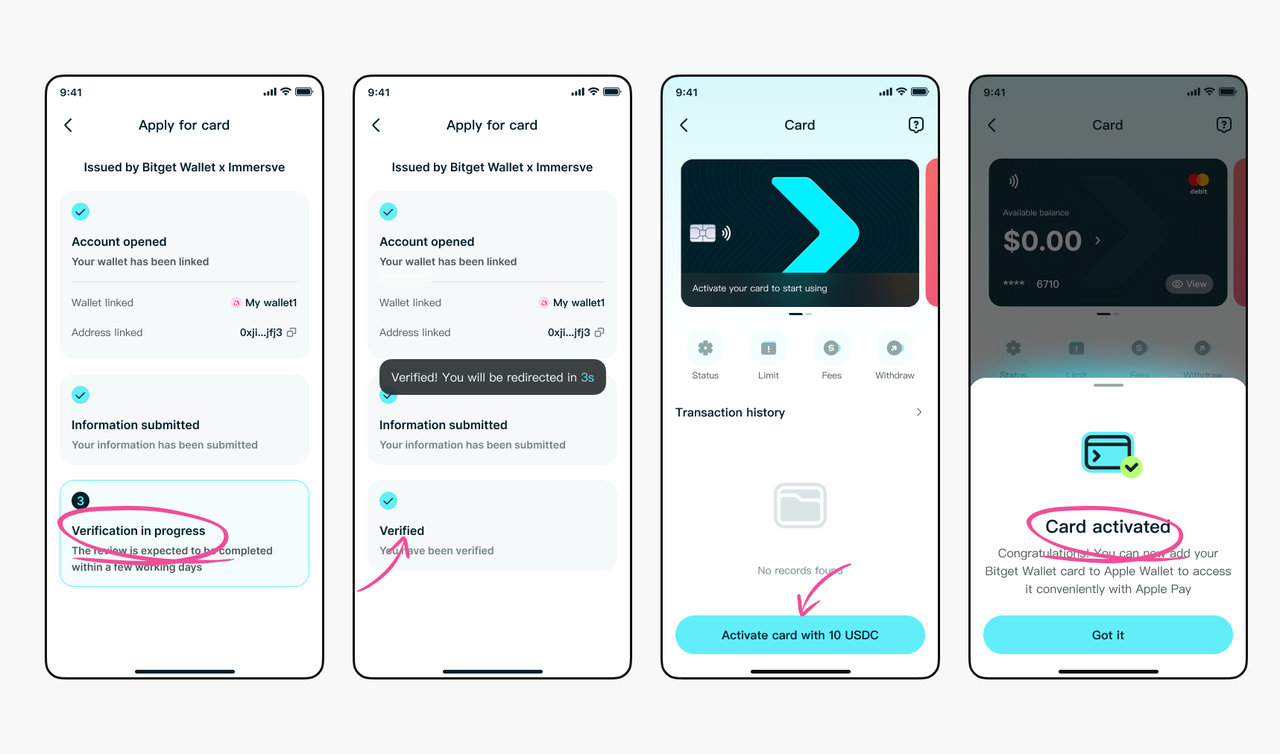
Regardless of the platform you choose, asset security is paramount. Using a non-custodial wallet like Bitget Wallet allows traders to maintain full control over stablecoins and interact with on-chain event markets securely. In prediction markets, where timing, liquidity access, and capital mobility are critical, self-custody provides both flexibility and protection.
Why Use a Non-Custodial Wallet for Prediction Markets? (Detailed Guide)
A non-custodial wallet lets you fully control your funds by managing the private keys yourself, which is essential for on-chain event markets. Your assets remain in your possession until you authorize transactions, reducing counterparty risk and allowing quick transfers between platforms. Blockchain settlement ensures transparency, with verifiable, auditable, and traceable transactions, giving you confidence and security when trading.
Read more: What Is a Prediction Market in Crypto and How Blockchain-Based Prediction Markets Work
How to Prepare Funds for Event-Based Trading
Proper preparation helps reduce friction when markets become active.
1. Stablecoin Storage Strategy
Before major events:
- Hold USDC or other supported stablecoins in Bitget Wallet
- Avoid last-minute on-ramp delays
- Keep a buffer for gas fees if interacting on-chain
Having capital pre-positioned ensures you can enter markets quickly without missing price movements.
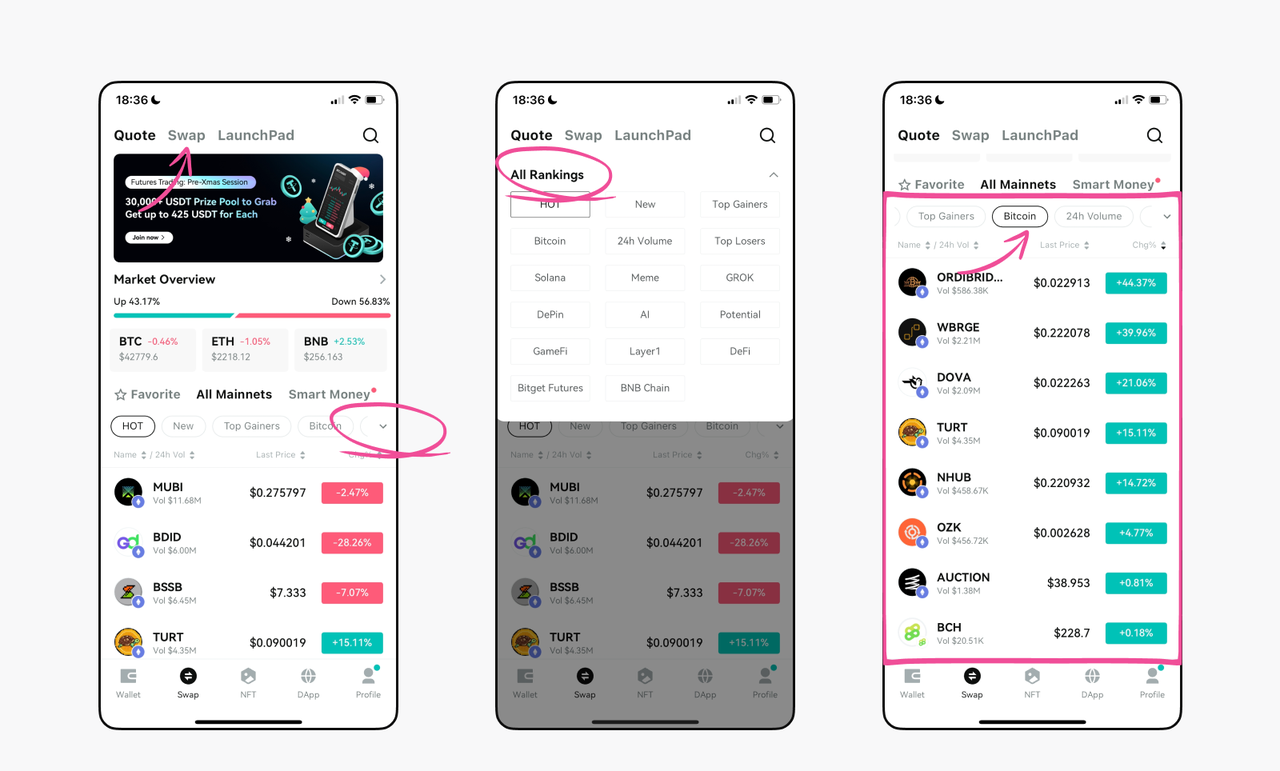
2. Using Swap Features Efficiently
Built-in swap tools allow flexible positioning.
- Convert between stablecoins if liquidity shifts
- Rebalance exposure between assets
- Avoid unnecessary transfers to centralized platforms
Efficient swapping improves capital agility during fast-moving global events.
3. Risk Management Framework
Prediction markets can be volatile and sentiment-driven.
Consider the following principles:
- Allocate only a percentage of your total capital
- Diversify across unrelated event categories (sports, macro, political)
- Avoid concentrating risk in a single binary outcome
- Predefine profit-taking and loss limits
Responsible capital allocation helps maintain sustainability in event-driven trading environments.
→ Read more:
Best Prediction Market Platforms in 2026: Top Sites for Crypto, Sports, & Events
Sign up Bitget Wallet now - grab your $2 bonus!
CONCLUSION
Kalshi vs Polymarket represents two distinct visions of the 2026 prediction market landscape. Kalshi focuses on regulatory certainty, U.S. compliance, and institutional access, leveraging CFTC oversight, structured fee models, and partnerships with retail brokers to provide a legally secure framework for traders. In contrast, Polymarket thrives on decentralization, global liquidity, and crypto-native infrastructure, offering borderless participation, lower fees, and wallet-based access for international users.
Liquidity and trading dynamics differ by geography and market type. Polymarket’s global user base often generates higher notional volumes and deeper liquidity in international and crypto-focused markets, while Kalshi’s regulated platform supports institutional involvement and reliable access to U.S.-based events. Fee models also vary: Polymarket typically offers lower trading costs, appealing to high-frequency or global traders, whereas Kalshi’s fee-inclusive structure aligns with compliance and fiat settlement needs.
Ultimately, the choice between Kalshi and Polymarket depends on trader jurisdiction, risk tolerance, and trading style. To participate safely and efficiently, traders should manage assets securely, maintain capital control, and pre-position funds — for example, storing USDC or stablecoins in Bitget Wallet ensures non-custodial control and readiness for fast-moving, event-driven markets.
By understanding each platform’s strengths, traders can strategically engage with prediction markets in 2026 while maintaining both security and flexibility.
Sign up Bitget Wallet now - grab your $2 bonus!
FAQs
1. Is Kalshi vs Polymarket the biggest rivalry in the prediction market 2026?
Yes. Kalshi vs Polymarket has become the defining rivalry in the prediction market 2026 landscape because they represent two different models: regulated US prediction markets under CFTC oversight versus crypto-native, global on-chain markets. Their differences in regulation, liquidity, and fees shape how traders choose between them.
2. Is Polymarket legal in the US in 2026?
Polymarket is not fully accessible to US users due to regulatory restrictions. While it operates as a crypto-based platform globally, US prediction markets fall under CFTC supervision, which currently favors platforms like Kalshi. Traders in the US must check compliance before participating.
3. Which has better liquidity and lower fees: Kalshi or Polymarket?
Polymarket often offers lower trading fees and deeper liquidity in global political or crypto-driven markets, while Kalshi tends to provide stronger liquidity in regulated US events such as economic data releases and major sports contracts. The better choice depends on your location, trading volume, and risk preference.
Risk Disclosure
Please be aware that cryptocurrency trading involves high market risk. Bitget Wallet is not responsible for any trading losses incurred. Always perform your own research and trade responsibly.