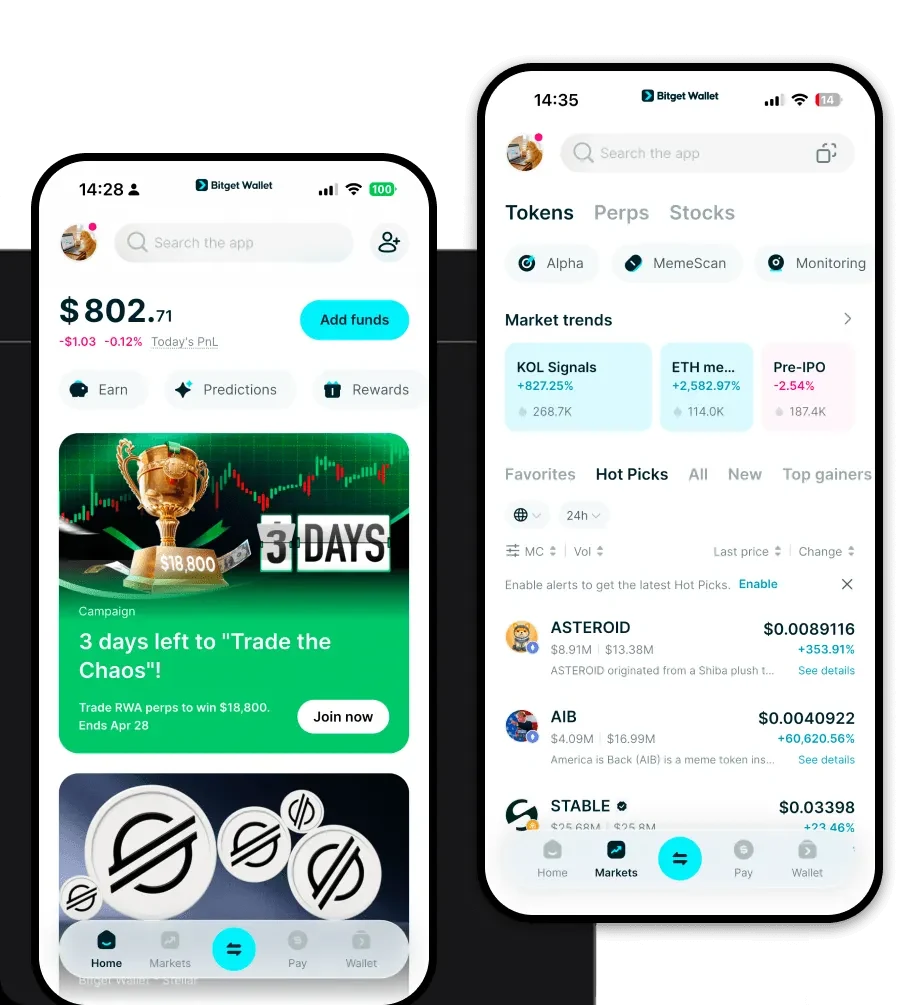


What is a Aleph Wallet? Aleph.im is a decentralized cloud computing network that provides decentralized databases (including file storage), computation, and a DID framework to dApps and protocols across different blockchains. It aims to bridge the gap between decentralized and centralized cloud services. Because Aleph operates as a cross-chain infrastructure project, it is not tied to a single chain but rather functions across the broader crypto ecosystem. An Aleph wallet is essentially a digital interface that allows you to interact with the Aleph.im network, store your ALEPH tokens, and participate in the decentralized cloud computing economy. Unlike traditional centralized cloud storage, using an Aleph wallet ensures that you retain full control over your digital assets while interacting with decentralized infrastructure services. Download Bitget Aleph Wallet When looking for the best wallet for aleph, security and accessibility are paramount. The Bitget Wallet offers a comprehensive solution for managing your tokens across multiple chains. It provides a non-custodial environment, meaning you maintain complete ownership of your private keys at all times. Whether you prefer mobile or desktop usage, the Bitget aleph wallet app is available for iOS and Android, and as a browser extension, ensuring you can manage your infrastructure assets wherever you go. To get started, you can download Bitget Wallet (https://web3.bitget.com/zh-CN/wallet-download) and set up your secure account in minutes. The platform supports a vast array of assets, making it an ideal hub for users who need to bridge the gap between their infrastructure investments and their daily trading activities. Why Choose Bitget Aleph Wallet? Selecting the right wallet for your infrastructure tokens requires careful consideration of features that support complex network interactions. Bitget Wallet stands out for several reasons: - Cross-Chain Interoperability: Bitget Wallet is engineered to handle tokens that exist across various blockchain environments, providing a seamless experience for managing cross-chain assets without constant switching. - Enhanced Security Infrastructure: With a robust user protection fund exceeding 300 million USD, Bitget provides a high-security environment for holding valuable infrastructure tokens like ALEPH. - Intuitive DApp Integration: The built-in DApp browser allows you to connect directly to the Aleph.im ecosystem, making it easier to manage computing resources and databases. - High-Performance Indexing: The wallet is optimized to handle the indexing requirements of infrastructure-heavy projects, ensuring your transaction history and balances are always updated in real-time. - Multi-Asset Management: Beyond just ALEPH, the wallet supports millions of tokens, allowing you to consolidate your entire crypto portfolio into one secure application. How to Create a Aleph Wallet Creating your wallet is a straightforward process designed for both beginners and experienced users: 1. Download the App: Visit the official website to download Bitget Wallet for your preferred device. 2. Create a New Wallet: Open the app and select 'Create a Wallet' to generate a new set of mnemonic phrases. 3. Secure Your Backup: Write down your recovery phrase and store it in a safe, offline location; never share this with anyone. 4. Set a Strong Password: Create a unique, complex password to secure your local wallet access on your device. 5. Add ALEPH Token: Once your wallet is set up, use the search function to add ALEPH to your dashboard so it appears in your main asset list. What Can You Do With a Aleph Wallet? Owning an Aleph wallet opens up a variety of utility-based interactions within the infrastructure space: - Staking for network nodes: Users can utilize their ALEPH tokens to participate in staking for network nodes, thereby contributing to the security and consensus of the Aleph.im ecosystem. - Paying for computing resources: The wallet allows for seamless transactions when paying for specific computing resources required to run applications within the decentralized cloud network. - Governance voting: Token holders can engage in governance voting directly through the wallet, influencing the future development and protocol upgrades of the Aleph network. - Decentralized dApp hosting: The wallet interface supports the management of decentralized dApp hosting, ensuring your applications remain accessible and censorship-resistant. - Managing cross-chain data indexing: Users can actively manage their cross-chain data indexing preferences, a critical function for maintaining the flow of information across different blockchain environments. How Aleph Wallets Are Different from Other Crypto Wallets Aleph wallets, when optimized for infrastructure tokens, differ significantly from standard wallets. While a standard wallet might simply focus on token transfers and basic DeFi swaps, an Aleph-capable wallet must handle complex interactions with decentralized cloud services. Because Aleph.im operates as a cross-chain protocol, the wallet must manage assets across different blockchain standards, which requires sophisticated interoperability features. Unlike wallets designed for simple UTXO-based coins like Bitcoin, which focus on cold storage and basic transfers, an Aleph wallet acts as an operational dashboard for your cloud computing resources. It balances the need for high-speed transaction execution with the complex requirements of infrastructure management, such as node staking and data indexing, making it a more versatile tool for advanced users.