





What is a poly Wallet?
A poly wallet is a secure digital interface designed to interact with the EVM (Ethereum Virtual Machine) ecosystem, allowing users to store, transfer, and manage their poly tokens. Since poly operates on an EVM-compatible chain, it is essential to use a wallet that supports the specific technical standards of this architecture. Are you looking for a reliable and secure crypto wallet for your poly? Bitget Wallet will be your best choice. Trusted by 40 million users, you can freely explore Web3 on Bitget Wallet. Start your journey now! By functioning as a gateway to the broader Web3 landscape, a poly wallet ensures that you remain in total control of your private keys while interacting with decentralized applications and smart contracts.
Download Bitget poly Wallet
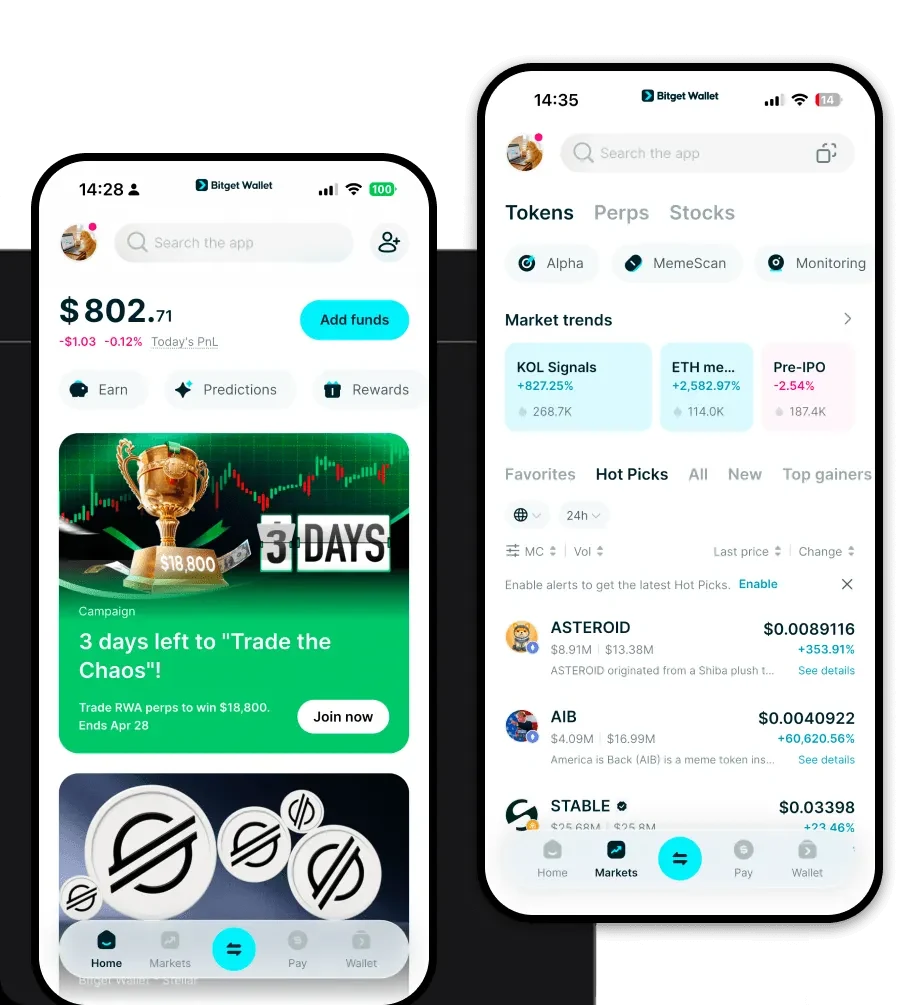
To begin managing your assets, you need a robust application that offers both functionality and security. Users can download Bitget Wallet across various platforms, including iOS, Android, and browser extensions. This multi-chain solution is designed for self-custody, meaning you—and only you—hold the keys to your funds. Unlike centralized exchanges, Bitget Wallet provides a non-custodial environment where you maintain full ownership of your poly tokens, ensuring that your digital assets are protected by your own secure recovery phrase.
Why Choose Bitget poly Wallet?
When choosing a wallet for your EVM-based assets, performance and infrastructure compatibility are paramount. Bitget Wallet stands out for several key reasons:
- EVM Compatibility: Designed specifically for seamless interaction with the entire EVM ecosystem, ensuring you can connect to any DeFi protocol without friction.
- Low Transaction Fees: Optimized for cost-efficiency, allowing you to execute trades and transfers without being burdened by excessive network costs.
- High Scalability: Built to handle high transaction volumes, ensuring that your experience remains smooth even during periods of heavy network congestion.
- Interoperability: Easily bridge and move assets between different chains, breaking down the silos that often plague decentralized finance.
- Rapid Block Confirmation: Experience near-instant feedback on your transactions, providing the speed required for time-sensitive trading decisions.
How to Create a poly Wallet
Getting started with your poly wallet is a straightforward process designed for both beginners and experienced users:
Step 1: Download and install the Bitget Wallet application from the official website or your preferred app store.Step 2: Open the app and select 'Create a New Wallet' to generate a unique set of private keys.Step 3: Carefully back up your seed phrase. This is the most critical step; store it in a secure, offline location.Step 4: Verify your seed phrase by entering the words in the requested order to confirm the backup is accurate.Step 5: Once set up, navigate to the asset list and add 'poly' to your dashboard to view your balance and transaction history.
What Can You Do With a poly Wallet?
Having a poly wallet opens up a world of possibilities within the decentralized infrastructure. Here is how you can utilize your assets:
- Trading on Decentralized Exchanges: You can swap your poly for other tokens directly through integrated DEXs, ensuring you always get the best market rates.
- Staking for Network Security: By participating in staking protocols, you contribute to the stability of the network while earning potential yield on your holdings.
- Paying Gas Fees: Use your poly to cover the necessary transaction fees required to execute smart contract operations across the network.
- Participating in Governance: Exercise your voting rights by participating in DAO governance proposals, directly influencing the future development of the project.
- Cross-Chain Asset Bridging: Move your assets across different blockchain networks easily, allowing you to maximize the utility of your tokens in various ecosystems.
How poly Wallets Are Different from Other Crypto Wallets
Not all wallets are built the same. While some wallets are designed for simple storage, a poly wallet—specifically one built for the EVM environment—is optimized for complex smart contract interactions. Unlike wallets designed for UTXO-based chains (like Bitcoin), which focus on simple transaction inputs and outputs, a poly wallet manages an account-based model. This allows for more sophisticated logic, such as DeFi yield farming and NFT minting. Furthermore, while some legacy wallets struggle with high gas fees, a high-performance EVM wallet like Bitget is engineered to provide a better user experience by managing gas estimations and network congestion more effectively, ensuring your transactions are processed quickly and affordably.
