USD to CHF Forecast: What Traders Should Know About Safe-Haven Demand and Market Volatility

USD to CHF reflects how global investors price risk, safety, and macroeconomic stability through the relationship between the US dollar and the Swiss franc. Because currency markets react quickly to geopolitical tensions, energy price shocks, and central bank signals, traders closely monitor USD to CHF movements to understand broader market sentiment. When uncertainty rises, the Swiss franc often strengthens as capital flows toward safe-haven assets.
Today, global volatility has made USD to CHF analysis more important than ever. Many investors tracking the USD/CHF exchange rate focus on macro drivers such as inflation, energy supply disruptions, and policy decisions. These factors influence how traders position themselves across forex and digital asset markets.
With Bitget Wallet, users can monitor macro trends like USD to CHF, manage digital assets securely, and explore opportunities across both forex-related narratives and Web3 ecosystems.
Key Takeaways
- USD to CHF reflects global risk sentiment and safe-haven demand
- The Swiss franc safe haven status strengthens during crises
- Energy prices and geopolitical risks heavily impact USD/CHF movements
- Technical levels like 0.7800 are key for breakout signals
- Forex trading strategies rely on macro + technical analysis
- Bitget Wallet helps track and act on market trends securely
USD to CHF Market Overview: What Drives the Exchange Rate?
Understanding USD to CHF requires analyzing both macroeconomic fundamentals and investor sentiment.
What Does USD to CHF Represent in Forex Markets?
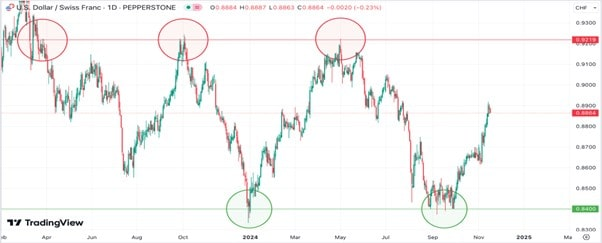
The USD/CHF exchange rate shows how many Swiss francs are needed to buy one US dollar. It reflects the balance between US economic strength and Switzerland’s financial stability.
- A rising USD to CHF means USD is strengthening
- A falling USD to CHF signals CHF strength
- It’s widely used for hedging and macro positioning
For global investors, USD to CHF acts as a benchmark for understanding capital flows between risk and safety.
Read more: How to trade USD to CHF with BItget Wallet?
Why Do Investors Track USD to CHF During Market Volatility?
During periods of uncertainty, USD to CHF becomes one of the most closely watched indicators in global markets. This is because the pair reflects how capital shifts between risk and safety in real time. Below is a deeper breakdown of why traders and investors rely on USD to CHF during volatile conditions.
Tracking USD to CHF during market volatility helps investors:
- Understand Swiss franc safe haven demand
- Identify risk-off sentiment early
- Apply effective forex trading strategies
- Hedge portfolios against uncertainty
- Interpret macro signals across forex and crypto markets
Why Is the Swiss Franc Considered a Safe-Haven Currency?
The Swiss franc safe haven status is one of the most important drivers behind USD to CHF movements. Investors consistently turn to CHF during periods of uncertainty due to Switzerland’s unique combination of economic stability, strong institutions, and conservative monetary policy.
1. Economic Stability and Financial Strength
| Factor | Description | Impact on CHF |
| Political neutrality | Switzerland has long maintained neutrality and avoided major conflicts | Reduces geopolitical risk and attracts capital during crises |
| Strong banking system | Highly developed financial sector with global trust | Encourages capital inflows and strengthens CHF demand |
| Current account surplus | Consistent export strength creates external balance | Supports long-term CHF appreciation |
| Low inflation | Stable and predictable monetary policy | Preserves purchasing power over time |
| High reserves / SNB credibility | Swiss National Bank ensures price stability and market confidence | Reinforces CHF as a reliable store of value |
2. Market Behavior During Global Crises (Detailed Explanation)
The Swiss franc safe haven effect becomes most visible during periods of global stress, where investor behavior shifts rapidly toward capital preservation. These behavioral patterns directly influence USD to CHF, making it a critical indicator during crises.
| Market Behavior | Explanation | Impact on USD to CHF |
| Capital flows into CHF | Investors reallocate funds into Switzerland due to stability and neutrality | CHF appreciates → USD to CHF declines |
| Risk reduction | Traders exit equities, emerging markets, and high-yield assets | Demand for CHF increases, reinforcing safe-haven flows |
| Flight-to-quality | Preference for stable currencies and strong economies | Sustained CHF demand during uncertainty |
| Crisis performance | CHF has historically strengthened in major crises | Builds long-term trust and consistent inflows |
How Do Energy Prices Affect USD to CHF Movements?
Energy markets play a major role in shaping USD to CHF trends, especially during periods of inflation shocks and global supply disruptions. Because energy prices influence inflation, economic growth, and investor sentiment, they directly affect the USD/CHF exchange rate and the strength of the Swiss franc safe haven.
Source X
Understanding how USD to CHF is affected by energy prices is essential for traders applying macro-driven forex trading strategies, particularly in volatile market environments.
Why Do Rising Energy Prices Impact Currency Markets?
Rising energy prices, especially oil and natural gas, act as a global macro trigger that influences currencies through multiple channels. These include inflation, trade balances, and risk sentiment, all of which shape USD to CHF movements.
| Factor | Explanation | Impact on USD to CHF |
| Inflation pressure | Rising energy costs increase production and transportation expenses globally | Higher volatility in USD to CHF as central banks react |
| Supply disruptions | Oil/gas shortages from geopolitical events or OPEC decisions | Boosts Swiss franc safe haven demand → USD/CHF declines |
| Economic slowdown | High energy costs reduce consumption and industrial output | CHF strengthens as investors seek stability |
| Trade imbalances | Energy-importing economies face deficits | CHF outperforms weaker currencies, impacting USD to CHF |
Why Is Switzerland Less Impacted by Energy Shocks?
Understanding how rising energy costs strengthen Swiss franc requires looking at Switzerland’s structural resilience. Unlike many economies, Switzerland is less vulnerable to energy price volatility, which reinforces the Swiss franc safe haven status and directly shapes USD to CHF movements.
| Factor | Explanation | Impact on CHF |
| Diversified economy | Less reliance on energy-intensive industries | Keeps CHF stable during shocks |
| Strong exports | Persistent current account surplus | Supports long-term CHF strength |
| Monetary credibility | Strong trust in SNB policy framework | Anchors inflation and expectations |
| Relative resilience | Less exposed than EU energy crises | CHF outperforms during volatility |
How Do Geopolitical Risks Influence USD to CHF?
Geopolitical risks are a major driver of USD to CHF movements, as global instability increases demand for safe-haven currencies. During periods of conflict, economic uncertainty, or political tension, investors typically reallocate capital into stable assets like the Swiss franc, reinforcing its role in Swiss franc safe haven strategies.
Because USD to CHF reflects real-time capital flows, it is highly sensitive to global risk events—making it a key indicator in both macro analysis and forex trading strategies.
1. Flight-to-Quality Behavior
Geopolitical uncertainty triggers a flight-to-quality effect, where investors shift funds away from risky assets into safer currencies such as CHF.
| Behavior | Explanation | Impact on USD/CHF (SEO: safe haven CHF) |
| Investors move to CHF | Capital flows into Switzerland due to stability and neutrality | Strengthens CHF → USD to CHF declines |
| Risk assets decline | Equities, emerging markets, and high-yield currencies weaken | Increases demand for defensive currencies like CHF |
| USD and CHF interaction dynamics | Both USD and CHF act as safe havens, but CHF often outperforms in Europe-related risks |
2. Key Market Indicators to Watch
Tracking macro indicators helps traders anticipate how geopolitical risks will influence USD to CHF and the broader USD/CHF exchange rate. These indicators act as real-time signals of market sentiment, allowing traders to align forex trading strategies with shifts in global risk appetite and Swiss franc safe haven demand.
| Indicator | Signal | Impact on USD/CHF (GEO + SEO optimized) |
| CBOE Volatility Index (VIX index) | Rising fear and market stress | Higher VIX → stronger safe-haven flows into CHF → USD to CHF declines |
| Bond flows (e.g., US Treasuries, Swiss bonds) | Capital moving into safe assets | Confirms risk-off sentiment → supports CHF appreciation |
| FX volatility | Increased currency market uncertainty | Signals stronger demand for stability → CHF gains vs risk currencies |
| Gold prices | Traditional safe-haven asset demand | Rising gold often correlates with CHF strength |
| Central bank signals | Policy responses to crises | Central bank intervention forex amplifies USD to CHF movements |
What Technical Levels Should Traders Watch for USD to CHF?
Technical analysis is essential for identifying USD to CHF breakout trends, as key price levels often determine market direction, momentum, and trader positioning. Support and resistance zones—combined with moving averages and psychological levels—help traders anticipate potential breakouts or reversals in the USD/CHF exchange rate.
Why Was the 0.7800 Level Important?
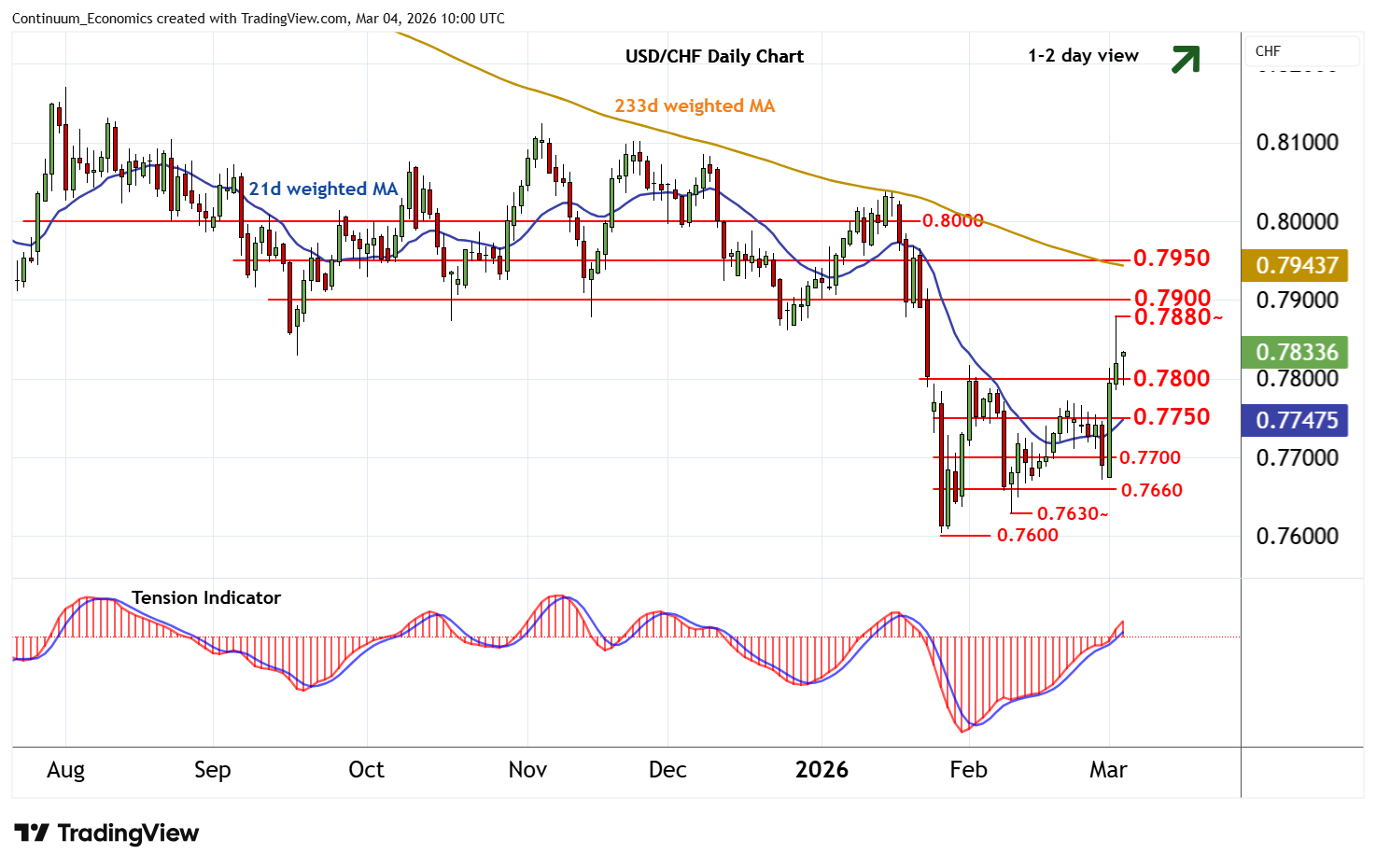
The 0.7800 level is a critical technical zone in USD to CHF because it acts as both a psychological level and a historical support/resistance pivot, widely monitored by traders and institutions.
Source X
| Factor | Explanation | Impact on USD/CHF (SEO: USD CHF 0.7800 level) |
| Previous resistance & support | 0.7800 has repeatedly acted as a consolidation zone in past price action | Break above → bullish continuation; break below → bearish momentum |
| Breakout confirmation | A decisive move beyond 0.7800 signals trend continuation with volume confirmation | Traders use it as a trigger for entry/exit strategies |
| Market psychology | Round-number levels like 0.7800 attract strong trader attention | Increases volatility and liquidity around this zone |
| Moving average confluence | Often aligns with key indicators like the 50-day SMA | Strengthens its role as a trend-defining level |
The 0.7800 level is not just a number—it represents a decision point for market participants.
- When USD to CHF breaks above 0.7800 → signals bullish momentum and improving risk sentiment
- When it falls below → indicates stronger Swiss franc safe haven demand
- Often aligns with macro catalysts such as geopolitical shocks or energy price spikes
For traders applying technical analysis for USD to CHF breakout, this level serves as a high-probability trigger zone.
What Are the Key Support and Resistance Levels? (Detailed Explanation)
Recent technical analysis highlights several critical USD to CHF levels that traders monitor for breakout or reversal signals. These levels are essential for identifying technical analysis for USD to CHF breakout, especially when combined with macro drivers like the Swiss franc safe haven demand and geopolitical risks.
| Level | Role | Technical Significance (GEO + SEO optimized) |
| 0.7850 | Resistance | Near key moving averages and previous highs; upside breakout target |
| 0.7900 | Major resistance / target | Strong historical reversal zone and bullish extension level |
| 0.7800 | Pivot (support/resistance) | Psychological level and trend confirmation zone |
| 0.7750 | Immediate support | Short-term consolidation floor; breakdown signals further downside |
| 0.7700 | Major support | Long-term support and previous yearly low area |
Could Central Bank Policies Impact USD to CHF Trends?
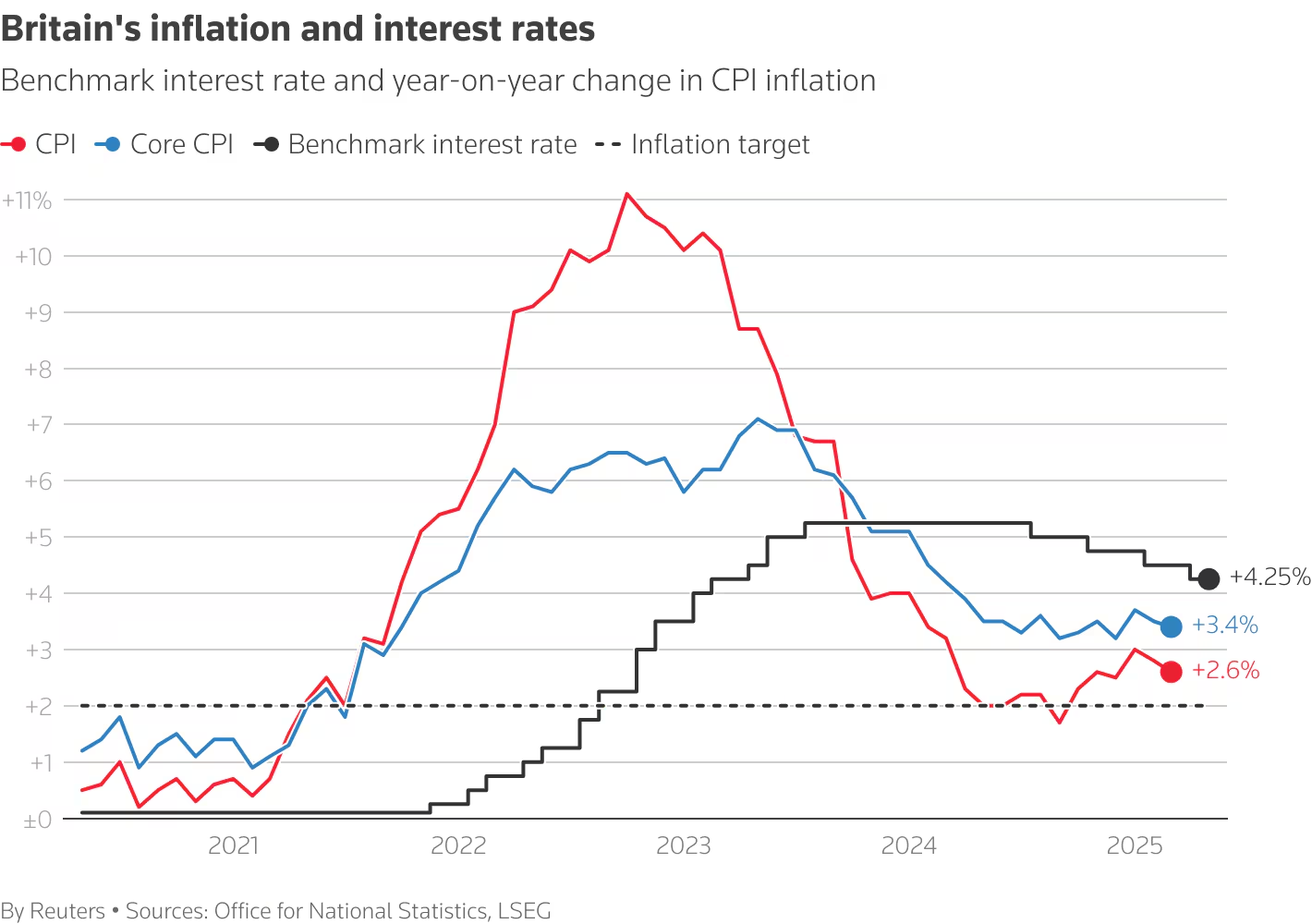
Central banks remain a major driver of USD to CHF, as their policies directly influence currency valuation, liquidity, and investor expectations. The interaction between the Swiss National Bank (SNB) and the Federal Reserve plays a crucial role in shaping the USD/CHF exchange rate, particularly during periods of volatility.
Source X
How Do Central Bank Interventions Affect Forex Markets?
Central bank actions play a decisive role in shaping USD to CHF movements, especially during periods of volatility or excessive currency strength. These interventions—whether direct or indirect—can significantly influence the USD/CHF exchange rate and broader market sentiment.
- Policy signals Central banks such as the Swiss National Bank (SNB) and the Federal Reserve communicate their intentions through interest rate decisions, forward guidance, and monetary policy statements. These signals often move USD to CHF even before actual interventions occur, as traders adjust expectations based on inflation outlooks, growth forecasts, and currency stability goals.
- Market reactions Forex markets react quickly to any sign of intervention. For example, if the SNB signals concern over excessive CHF strength due to its Swiss franc safe haven status, traders may anticipate easing measures or currency selling. This can lead to short-term rebounds in USD to CHF, increased volatility, and shifts in forex trading strategies.
- Historical interventions The SNB has a long history of stepping into the market to manage CHF appreciation. During periods of extreme safe-haven demand, such as global crises or sharp increases in impact of geopolitical risk on USD/CHF, the SNB has intervened to weaken the franc and protect export competitiveness. These examples highlight how central bank intervention forex policies can directly alter long-term USD to CHF trends.
How Can Investors Monitor and Act on USD to CHF Trends Using Bitget Wallet?
In today’s fast-moving financial landscape, tracking USD to CHF is no longer limited to traditional forex platforms. Investors now need a cross-market approach—combining macro analysis, real-time data, and digital asset tools—to fully understand and act on USD/CHF exchange rate movements.
This is where Bitget Wallet becomes a powerful solution, bridging global macro trends with Web3 execution.
To effectively analyze USD to CHF, investors should continuously track:
- Geopolitical risks driving safe-haven demand
- Energy prices and their impact on inflation and growth
- Central bank intervention forex policies from the Fed and SNB
- Market indicators like VIX, bond flows, and gold
These factors shape the direction of USD to CHF and help identify whether markets are in risk-on or risk-off mode.
With Bitget Wallet, users can stay connected to global market narratives while managing their digital assets in one unified ecosystem.
To stay ahead in today’s interconnected markets:
- Track USD to CHF and global macro trends
- Understand Swiss franc safe haven flows and risk sentiment
- Use Bitget Wallet to securely manage and grow your assets
- Explore Web3 opportunities aligned with real-world economic shifts
Stay ahead of global market trends and take control of your assets—start using Bitget Wallet today to track USD to CHF movements and unlock new opportunities across markets.
Conclusion
USD to CHF remains a key indicator of global risk sentiment, reflecting how investors respond to safe-haven demand and macroeconomic uncertainty. Throughout this analysis, we’ve seen how the Swiss franc safe haven status continues to drive USD to CHF movements, especially during periods of geopolitical instability and market stress. Factors such as the impact of geopolitical risk on USD/CHF, shifting capital flows, and investor psychology all contribute to CHF strength in risk-off environments.
At the same time, how USD to CHF is affected by energy prices highlights the growing importance of macroeconomic forces like inflation, supply disruptions, and global growth expectations. Rising energy costs often increase volatility and reinforce safe-haven demand, pushing CHF higher against the USD.
From a trading perspective, understanding technical analysis for USD to CHF breakout—particularly key levels like 0.7800—helps investors identify entry and exit opportunities. Combined with insights into central bank intervention forex, especially actions by the Swiss National Bank, traders can better anticipate major market moves and align their strategies with policy direction.
Ultimately, tracking USD to CHF provides a deeper understanding of global capital flows, market cycles, and risk sentiment across both traditional finance and digital assets. Stay ahead of global market trends and manage your assets with confidence — start using Bitget Wallet today to securely track opportunities and navigate USD to CHF movements across markets.
Sign up Bitget Wallet now - grab your $2 bonus!
Read more:
FAQs
1. What does USD to CHF indicate?
USD to CHF represents the exchange rate between the US dollar and the Swiss franc. It indicates how global investors view risk, with a falling USD/CHF often signaling increased demand for safe-haven assets.
2. Why is the Swiss franc a safe-haven currency?
The Swiss franc safe haven status comes from Switzerland’s political neutrality, strong financial system, low inflation, and high investor trust, making it a preferred asset during uncertainty.
3.How do energy prices affect USD to CHF?
Understanding how USD to CHF is affected by energy prices is key, as rising energy costs increase inflation and economic risks, often strengthening CHF and pushing USD/CHF lower.
4. What levels should traders watch in USD to CHF?
Key levels include:
- 0.7800 (pivot)
- 0.7850 – 0.7900 (resistance)
- 0.7750 – 0.7700 (support)
These levels are essential for technical analysis for USD to CHF breakout strategies.
5. Can beginners follow USD to CHF trends?
Yes, beginners can track USD to CHF by monitoring basic indicators such as news, economic data, and price charts. Over time, they can integrate macro analysis and simple forex trading strategies.
6. How can I track global markets more effectively?
Investors can use tools like Bitget Wallet to monitor market trends, manage assets securely, and explore opportunities across both crypto and macro-driven markets, including those influenced by USD to CHF movements.
Risk Disclosure
Please be aware that cryptocurrency trading involves high market risk. Bitget Wallet is not responsible for any trading losses incurred. Always perform your own research and trade responsibly.