What is XLM: How Stellar Powers Fast, Low-Cost Global Crypto Payments
What is Stellar (XLM)? Stellar (XLM) is a blockchain-based payment network designed to enable fast, low-cost cross-border transactions, focusing on improving global financial access rather than preserving cultural narratives. Built for real-world financial infrastructure, Stellar (XLM) connects banks, payment systems, and individuals through a decentralized network that allows value to move as easily as email. By combining efficient blockchain design with practical financial use cases, Stellar brings traditional payment systems into a faster, programmable digital environment.
With support from the Stellar Development Foundation and partnerships across fintech and remittance providers, Stellar (XLM) is shaping the future of digital payments while enabling users to transfer, tokenize, and exchange assets globally. More than just a token, XLM serves as a key component in liquidity bridging, transaction fee settlement, and stablecoin transfers, securing its role in real-world financial infrastructure rather than speculative ecosystems.
This article breaks down Stellar (XLM), covering how the network operates, its core payment-focused architecture, and its role in global finance. If you're looking to understand how XLM works on-chain, evaluate its utility beyond speculation, or analyze its position in the crypto market, this guide provides a clear and practical overview.
Looking to buy XLM or manage Stellar assets securely? Bitget Wallet enables self-custody storage, seamless swaps, and direct access to on-chain markets.
Key Takeaways
- Stellar (XLM) is a payments-focused blockchain, designed for fast, low-cost cross-border transactions rather than speculative token use cases.
- XLM is the native asset of the Stellar network, meaning it has no contract address and is used directly for fees, liquidity bridging, and transaction settlement.
- The network uses the Stellar Consensus Protocol (SCP), enabling near-instant transactions (~5 seconds) with extremely low fees (~0.00001 XLM).
- XLM plays a critical role in real-world financial infrastructure, supporting stablecoin transfers, remittances, and fiat on/off-ramps through Stellar “anchors.”
- Unlike memecoins or contract-based tokens, XLM’s value is tied to network usage and adoption, not short-term hype or narrative-driven trading cycles.
What Is Stellar (XLM): Overview and Key Features
Stellar (XLM) is a native utility asset on the Stellar, built to move value across borders with minimal cost and near-instant settlement. Unlike ERC-20 or SPL tokens, XLM operates directly at the protocol level, enabling asset transfers, liquidity routing, and network fee settlement without relying on smart contracts. The project is designed around real financial connectivity rather than speculative token design.
The project embodies the following core principles:
- Low-cost value transfer: transaction fees as low as ~0.00001 XLM
- Fast settlement: transactions confirmed in ~5 seconds
- Asset interoperability: supports fiat tokens, stablecoins, and cross-asset exchange via built-in DEX
Stellar (XLM) is used in remittance rails, stablecoin movement, and fiat on/off-ramp systems, where institutions and payment providers interact through “anchors” to issue and redeem assets on-chain. This structure allows seamless conversion between different currencies within a single network environment.

Source: X
Stellar (XLM) has recently gained momentum following major institutional and regulatory developments in 2026, including its classification as a digital commodity by U.S. regulators, which provides long-awaited legal clarity for institutional adoption. At the same time, asset managers like Amundi have launched $100 million tokenized funds on the Stellar network, while companies such as Zebec are building real-time payroll systems using stablecoins on Stellar. These developments highlight a clear shift toward real-world financial infrastructure, with growing enterprise usage and expanding tokenized asset activity on the network.
Stellar (XLM) Listing Details and Launch Date
1. Key Listing Information
Here are the important details about Stellar (XLM) listing:
- Exchange: Bitget
- Trading Pair: XLM/USDT
- Deposit Available: August 24, 2023, 07:00 (UTC)
- Trading Start: August 24, 2023, 11:00 (UTC)
- Withdrawal Available: August 25, 2023, 11:00 (UTC)
Don’t miss your chance to start trading Stellar (XLM) on exchanges and access one of the most established payment-focused crypto assets in the market.
- Please refer to the official announcement for the most accurate schedule.
2. Exclusive Campaigns and Rewards
To celebrate Stellar ecosystem activity, Bitget Wallet is launching special campaigns for Stellar (XLM):
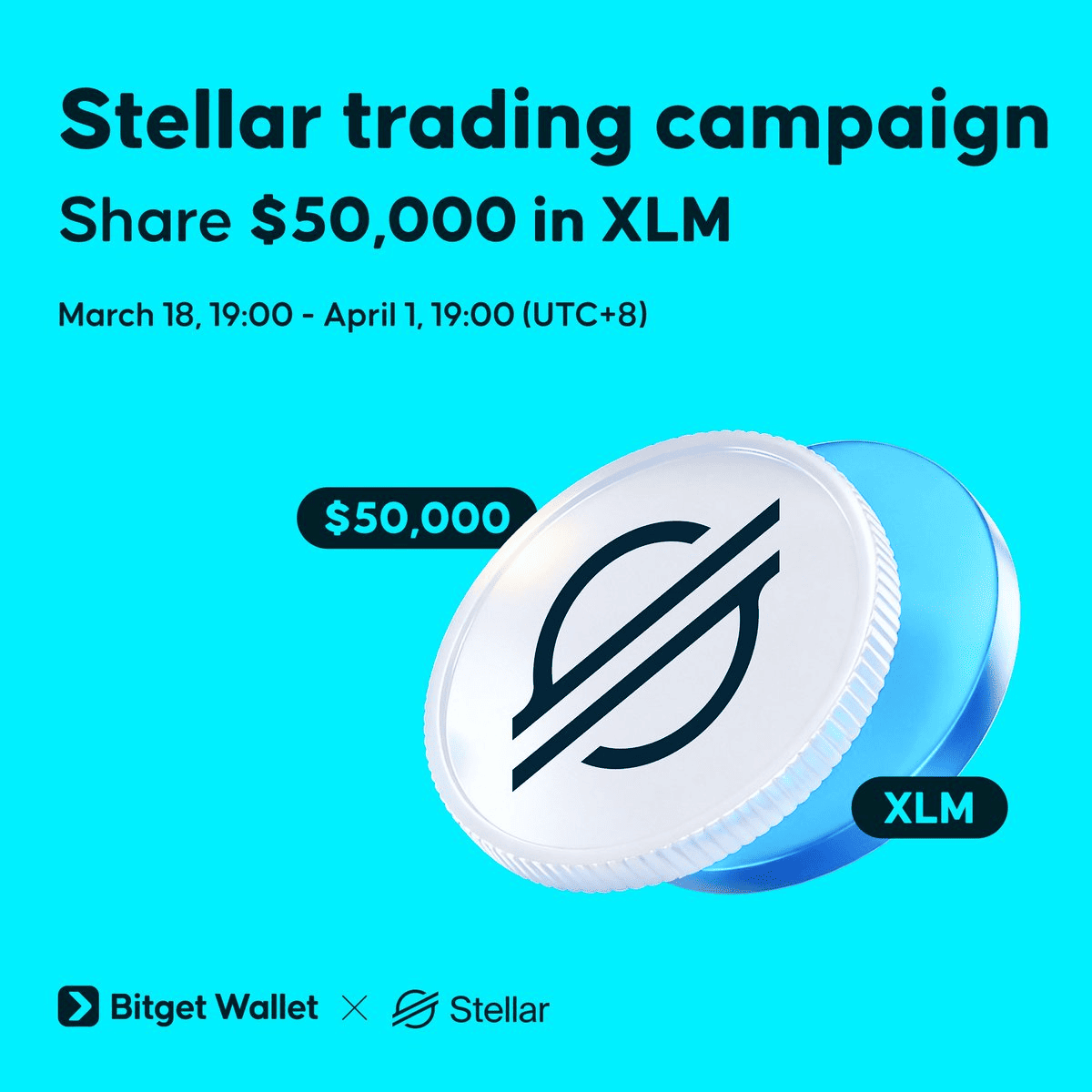
- $50,000 XLM Reward Campaign: Trade eligible Stellar ecosystem tokens and share a $50,000 XLM reward pool.
- Participation Requirement: Complete at least $20 in trading volume to qualify for rewards.
Source: Bitget Wallet
3. Campaign Highlights
- Low entry requirement: Start from just $20 trading volume
- Reward distribution: Incentives paid directly in XLM
- Seamless access: Participate through Bitget Wallet without needing complex setup
Take advantage of these exclusive offers to maximize your Stellar (XLM) holdings.
Stellar (XLM) Future Price Outlook: 2026 and Beyond
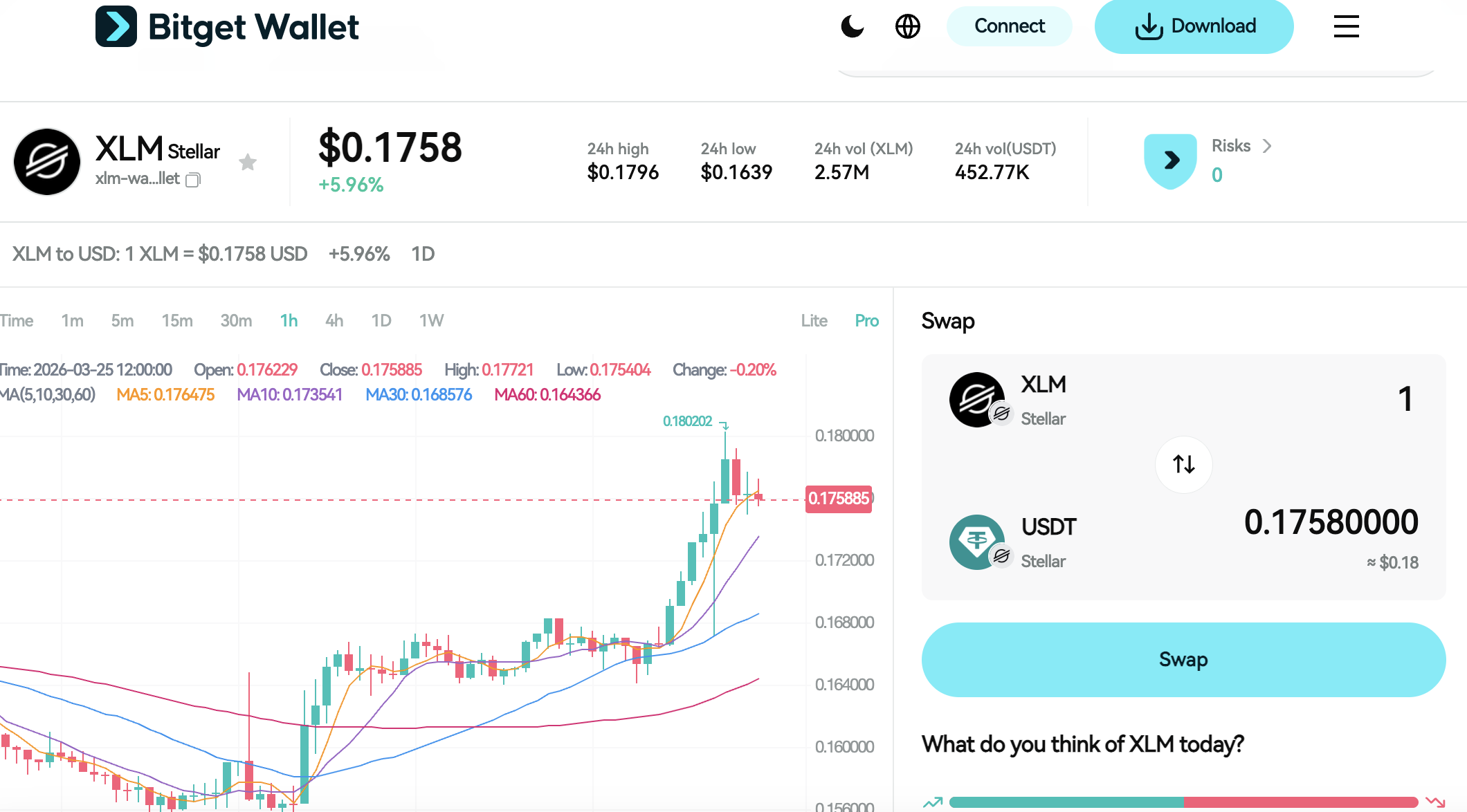
Market movements, network adoption, and macro crypto conditions influence a cryptocurrency’s price. As a long-established infrastructure asset, Stellar (XLM) is projected to trade within the $0.12–$0.35 range in 2026, with most forecasts clustering around $0.20–$0.30 under typical market conditions. If Stellar continues expanding its role in stablecoin transfers, on-chain settlement, and financial integrations, XLM has the potential to rise toward $0.40–$0.60 in a strong bullish cycle.
What Affects Stellar (XLM) Price?
Several factors influence the potential price trajectory of Stellar (XLM):
- Investor Sentiment: XLM price movements are closely tied to broader crypto market cycles rather than short-term hype, meaning capital inflows during bullish periods significantly impact price direction.
- Adoption & Demand: Increased usage of USDC and other assets on the Stellar network, along with growth in remittance and payment infrastructure, directly supports transaction volume and XLM demand.
- Regulatory Influence: Regulatory clarity around blockchain-based financial systems and cross-border transactions can strengthen institutional participation, while stricter policies may limit expansion in certain regions.
Future Price Prospects
If Stellar (XLM) continues its expansion within blockchain-based financial infrastructure and stablecoin ecosystems, increased network activity may support gradual price appreciation. As Stellar strengthens its role in real-world asset transfers and digital settlement systems, projections indicate its value could approach the $0.40–$0.60 range under favorable conditions. However, a thoughtful investment approach must take into account crypto market volatility, regulatory developments, and global economic trends.
Source: CoinCodex, CoinMarketCap, Yahoo Finance forecasts
Source: Bitget Wallet
Core Features of Stellar (XLM) and Why They Matter?
The standout features of Stellar (XLM) include:
1. Native Asset Model (No Smart Contract Dependency)
Unlike ERC-20 or SPL tokens, XLM is the built-in asset of the Stellar, meaning it operates directly at the protocol level. This eliminates reliance on smart contracts for basic transfers, reducing complexity, execution risk, and potential vulnerabilities. As a result, transactions are more predictable, faster to process, and less exposed to contract-related exploits commonly seen in other ecosystems.
2. Ultra-Low Fees and Fast Settlement
Stellar is optimized for efficiency, with transaction costs typically around 0.00001 XLM and confirmation times of approximately 3–5 seconds. This makes it suitable for high-frequency transfers, micropayments, and real-time financial applications. Compared to networks with higher gas fees, Stellar enables cost-efficient value movement at scale without compromising speed.
3. Built-In DEX and Asset Issuance System
Stellar includes a native decentralized exchange (DEX) and asset issuance framework at the protocol level. Through its “anchor” system, users and institutions can issue tokenized fiat (such as USDC) and trade directly on-chain using an orderbook model. This allows seamless conversion between different currencies and assets without needing external DeFi protocols, making Stellar a practical infrastructure layer for financial applications.
How Stellar (XLM) Operates and What Benefits It Delivers?
Stellar (XLM) is powered by a purpose-built blockchain architecture designed for fast settlement, low-cost transactions, and efficient asset transfer across different financial systems. Instead of relying on complex smart contract layers, Stellar focuses on protocol-level efficiency, enabling secure and predictable operations for payments, asset issuance, and on-chain exchange.
Key Technological Components
- Blockchain Network: Stellar operates on the Stellar, a public blockchain optimized for transferring value between users, institutions, and financial systems. It supports native asset issuance, allowing fiat-backed tokens (like USDC) and other assets to be created and exchanged directly on-chain through its built-in orderbook.
- Consensus Mechanism: Stellar uses the Stellar Consensus Protocol (SCP), a federated Byzantine agreement system that allows nodes to reach consensus without mining or staking. This model enables fast confirmation (~3–5 seconds), low energy consumption, and high reliability, making it suitable for real-time financial applications.
- Smart Contracts: Stellar does not rely on traditional smart contracts like Ethereum. Instead, it uses predefined protocol-level operations for transactions, multi-signature accounts, and asset control. This reduces attack surfaces and simplifies execution, prioritizing security and efficiency over programmability.
- Scalability Solutions: Stellar achieves scalability through lightweight transaction design and efficient consensus, supporting high transaction throughput with minimal fees (~0.00001 XLM). Its architecture is optimized for continuous transaction flow, enabling consistent performance without congestion-related cost spikes.
The Companies and Organizations Supporting Stellar (XLM)
| Section | Details |
| The Team | Led by the Stellar Development Foundation, a nonprofit organization founded by Jed McCaleb. The team focuses on building open financial infrastructure and expanding access to low-cost digital transactions worldwide. |
| The Vision | Focused on creating an open, efficient financial network, Stellar aims to connect traditional finance with blockchain systems, enabling seamless asset transfer, stablecoin usage, and cross-border settlement within a unified ecosystem. |
| Partnerships | Stellar collaborates with major institutions including IBM (Blockchain World Wire initiative), MoneyGram (cash-to-crypto services), and Circle (USDC issuance on Stellar), strengthening its role in payments, remittances, and tokenized financial services. |
Use Cases of Stellar (XLM)
Stellar (XLM) serves a variety of purposes, including:
- Cross-border transfers and remittances XLM enables near-instant value transfer between different currencies, allowing users and institutions to move funds globally with minimal fees compared to traditional systems.
- Stablecoin settlement and asset transfer Stellar supports stablecoins like USDC, where XLM is used as a bridge asset to facilitate efficient on-chain conversions and liquidity routing between fiat-backed tokens.
- On-chain asset exchange via built-in DEX Through Stellar’s native orderbook exchange, users can trade assets directly on-chain without external DeFi protocols, using XLM as a base trading pair for liquidity.
These applications highlight the practical value of $XLM in financial infrastructure, remittances, and digital asset settlement systems.
Stellar (XLM) Roadmap Explained: What’s Coming Next?
The roadmap for Stellar (XLM) reflects ongoing protocol development and ecosystem expansion rather than a fixed token-launch timeline. Based on publicly known priorities from the Stellar ecosystem, the expected direction for 2026 includes:
| Quarter | Roadmap |
| Q1 2026 | Continued rollout and adoption of Soroban smart contracts, expanding developer tools and early dApp integrations on Stellar. |
| Q2 2026 | Growth of stablecoin usage and tokenized assets (e.g., USDC expansion), alongside deeper integration with financial service providers and on/off-ramp systems. |
| Q3 2026 | Ecosystem scaling through institutional partnerships and payment infrastructure upgrades, improving network usability and transaction throughput. |
| Q4 2026 | Broader adoption of real-world asset tokenization and cross-border settlement solutions, strengthening Stellar’s role in blockchain-based financial infrastructure. |
These developments highlight the practical value of $XLM in financial infrastructure, stablecoin settlement, and on-chain asset transfer systems.
How to Buy Stellar (XLM) on Bitget Wallet?
Trading Stellar (XLM) is easy on Bitget Wallet. Follow these simple steps to get started:
Step 1: Create an Account
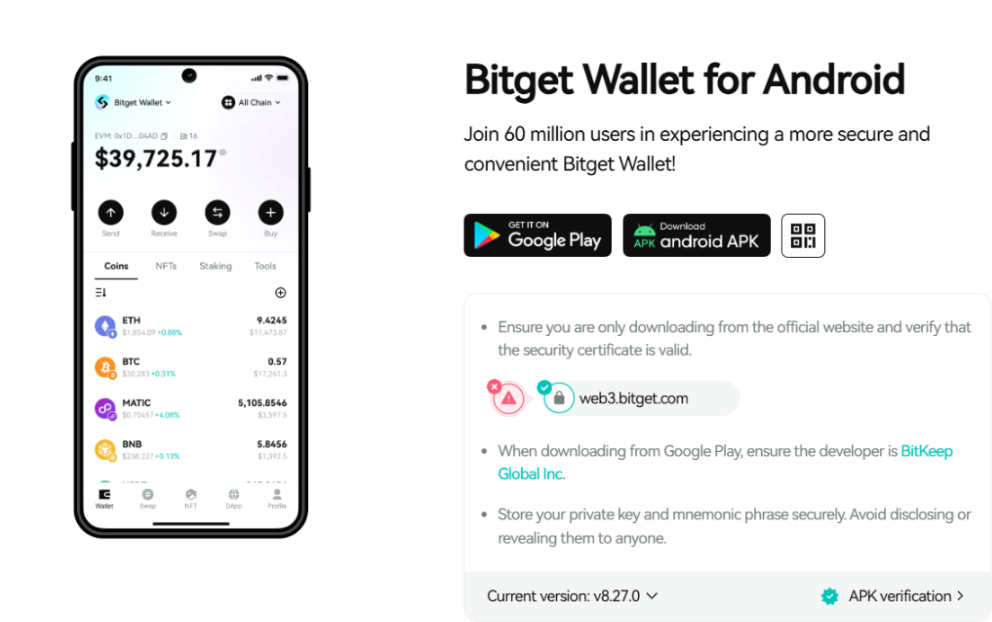
If you don't have an account, download the Bitget Wallet app. Sign up by providing the necessary information and verifying your identity.
Step 2: Deposit Funds
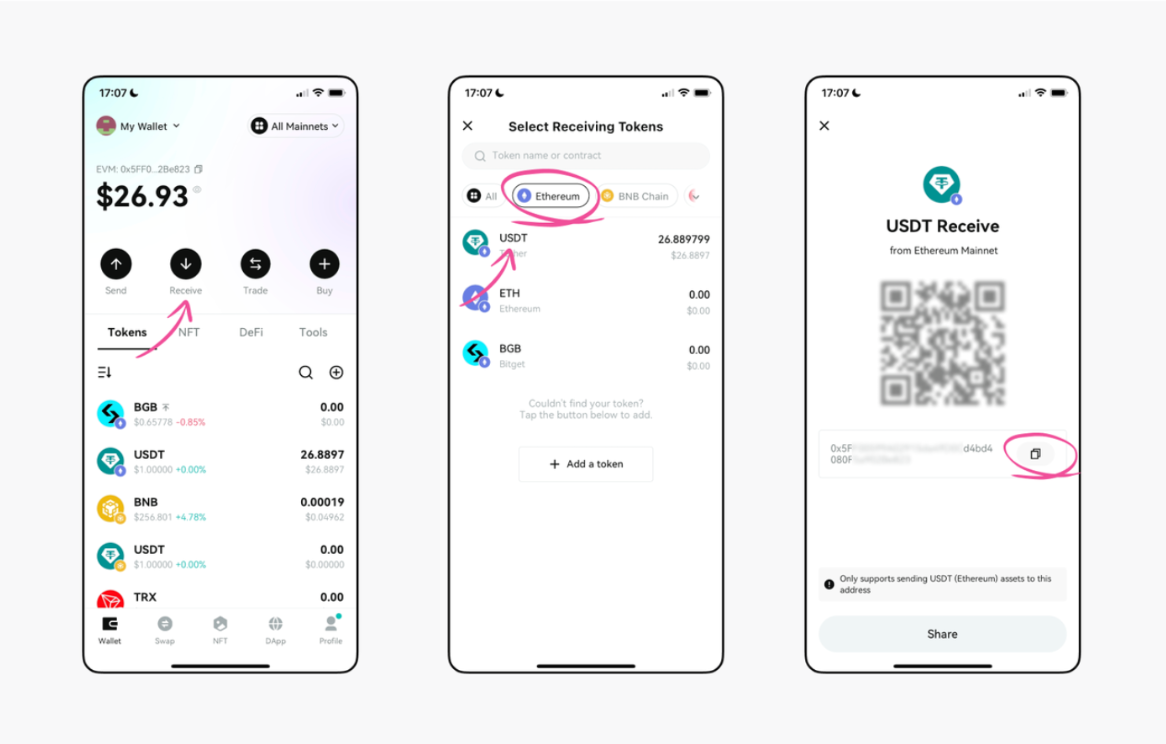
Once your account is set up, you need to deposit funds. You can do this by:
- Transferring Cryptocurrency: Send crypto from another wallet.
- Buying Crypto: Use a credit or debit card to purchase crypto directly on Bitget Wallet, ensuring you have enough funds for trading Stellar (XLM).
Step 3: Find Stellar (XLM)
In the Bitget Wallet interface, navigate to the market section. Use the search bar to find Stellar (XLM). Click on the token to view its trading page.
Since this token has not been listed yet, please refer to the final contract address provided by the project team after the token is officially listed.
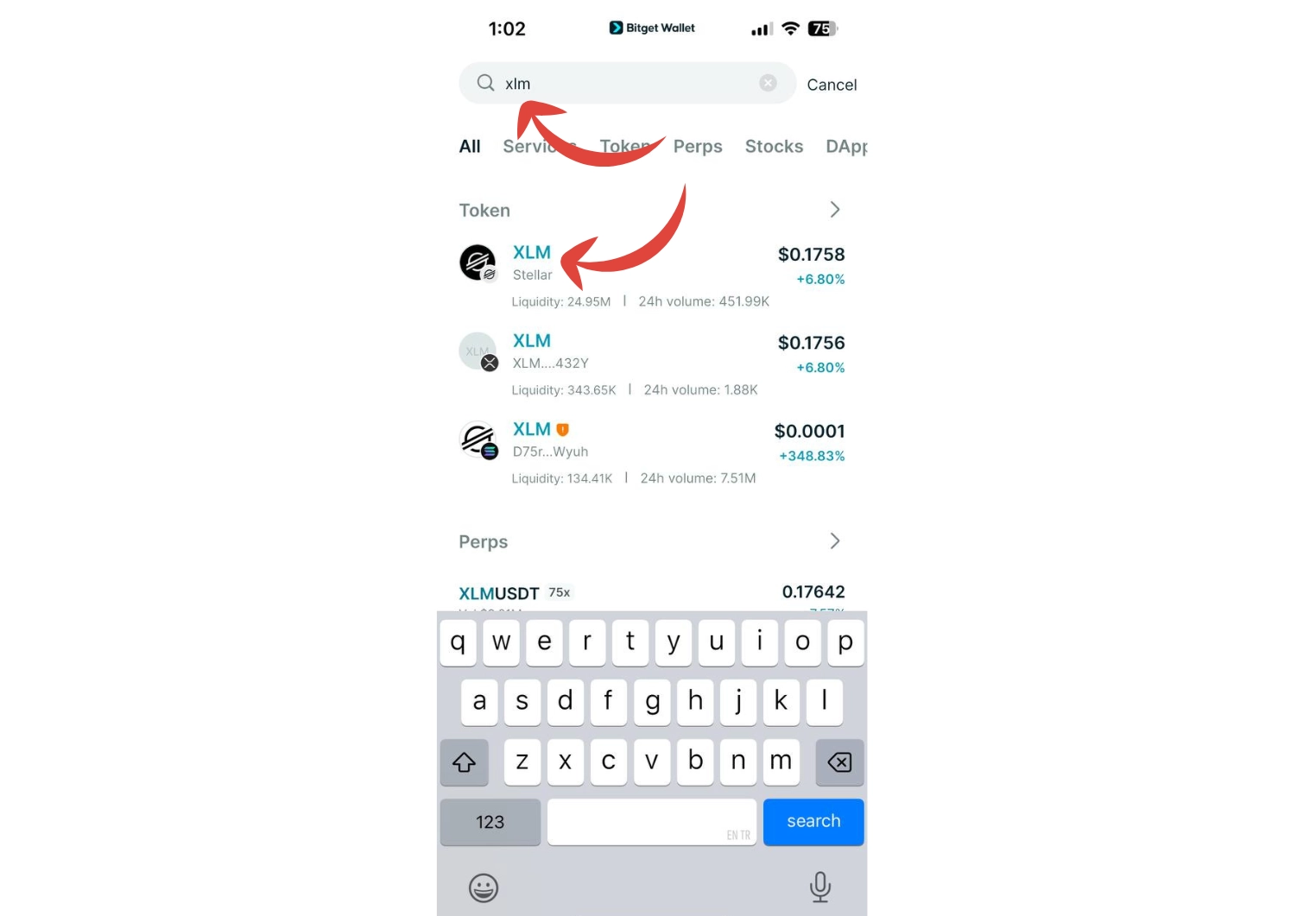
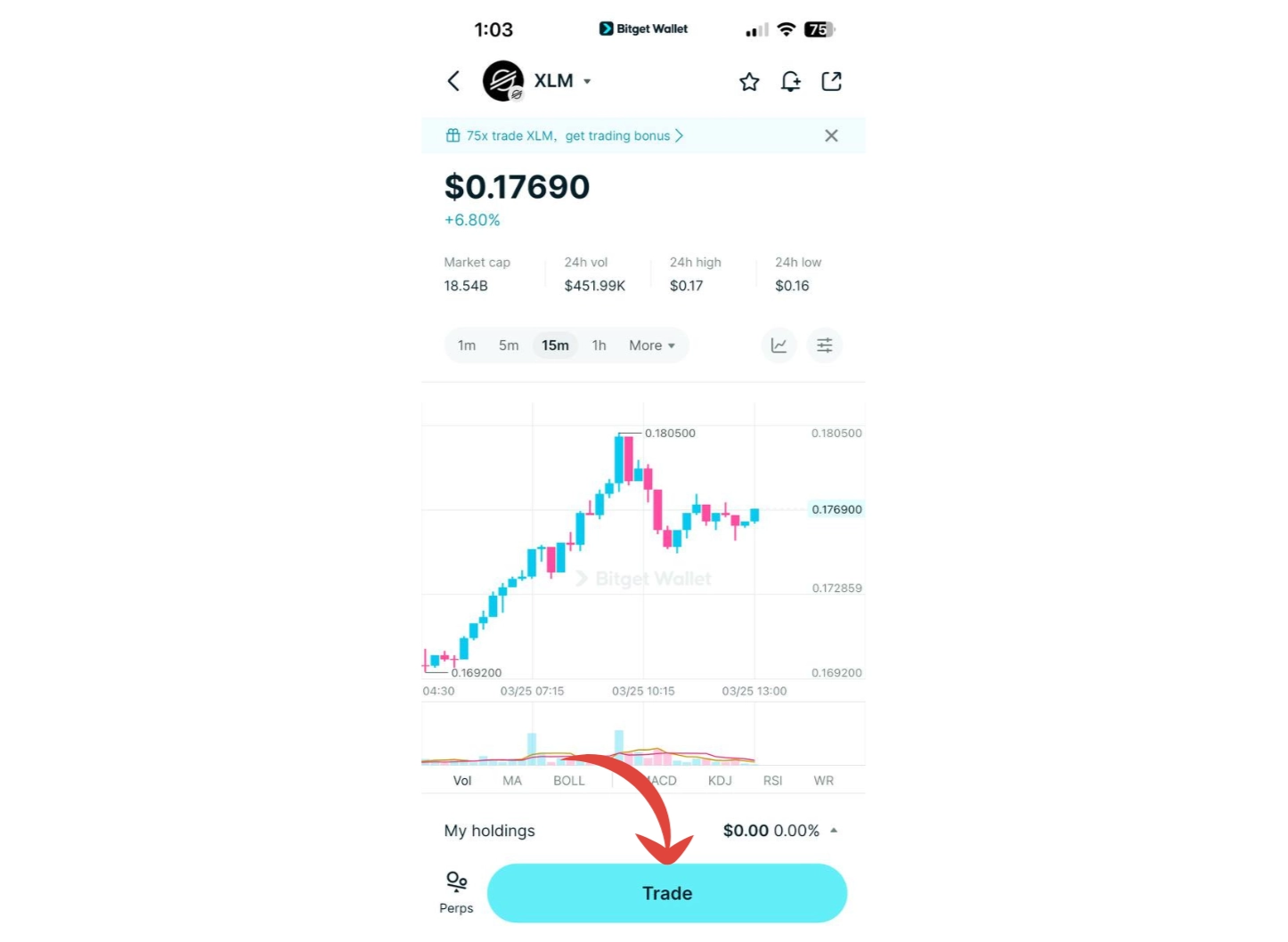
Step 4: Choose Your Trading Pair
Select the trading pair you wish to use, such as XLM/USDT. This will allow you to trade Stellar (XLM) against USDT or another cryptocurrency.
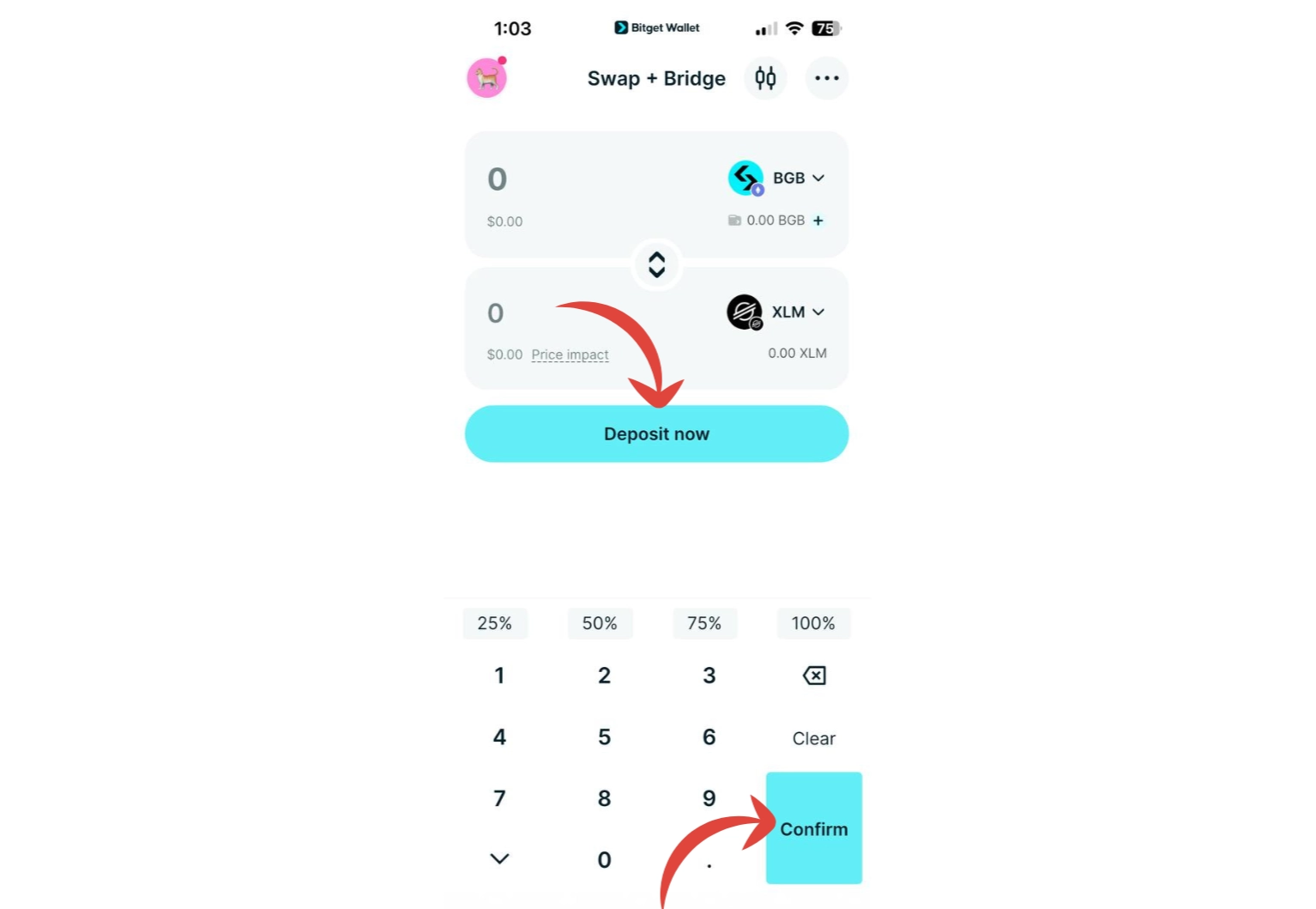
Step 5: Place Your Order
Decide whether you want to place a market order (buy/sell at the current market price) or a limit order (set your own price). Enter the amount of Stellar (XLM) you wish to buy or sell, then confirm your order.
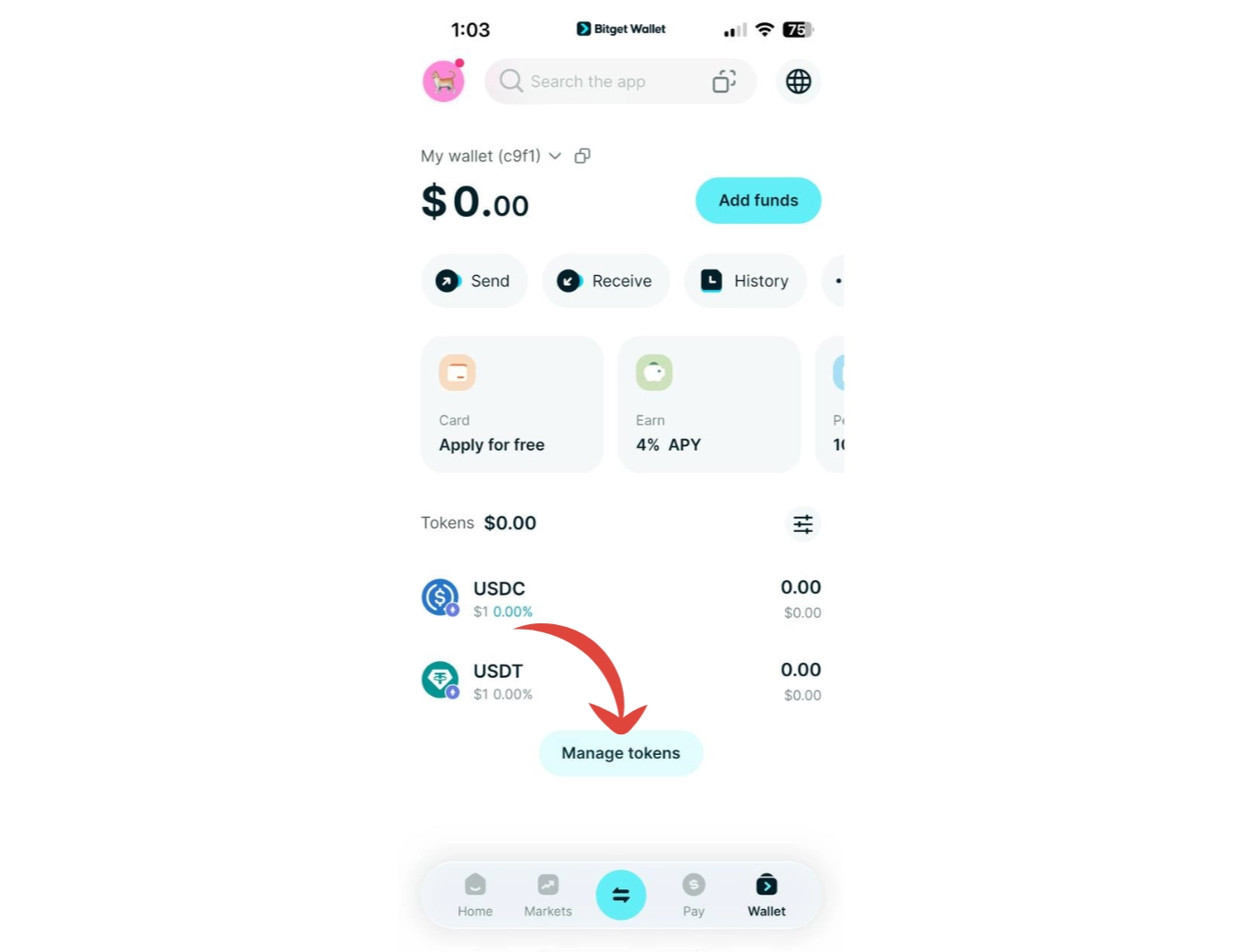
Step 6: Monitor Your Trade
After placing your order, you can monitor its status in the “Open Orders” section. Once the order is executed, you can check your balance to see your newly acquired Stellar (XLM).
Step 7: Withdraw Your Funds (Optional)
If you wish to transfer your Stellar (XLM) or any other cryptocurrency to another wallet, navigate to the withdrawal section, enter your wallet address, and confirm the transaction.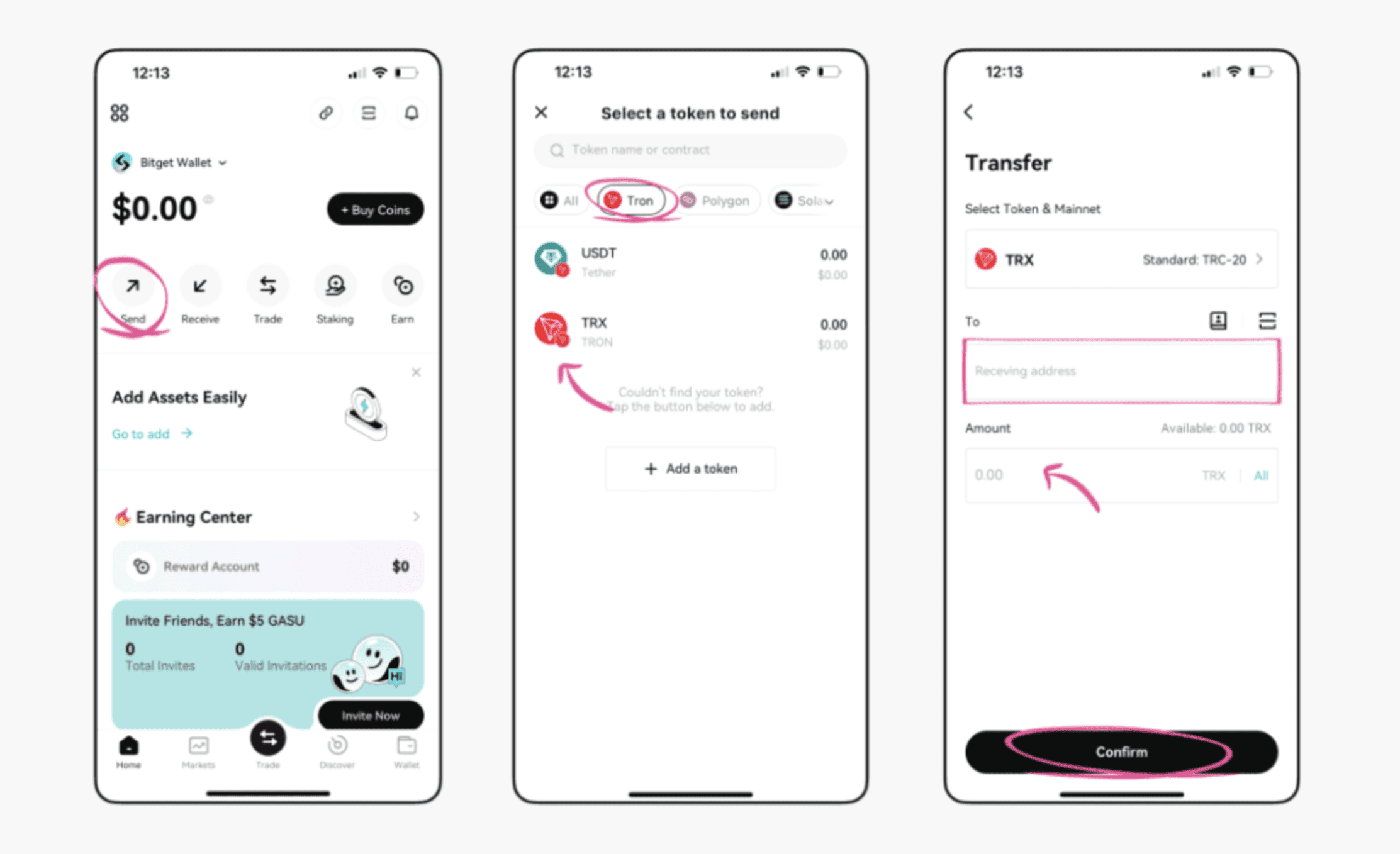
Conclusion
Stellar (XLM) stands out as a utility-driven blockchain asset designed for efficient value transfer, stablecoin settlement, and real-world financial integration. Unlike speculative tokens, its role within the Stellar network is tied to actual transaction usage, low-cost transfers, and seamless asset exchange, making it a practical component of modern blockchain-based financial infrastructure. As adoption of tokenized assets and digital settlement systems continues to grow, XLM remains positioned as a reliable infrastructure asset rather than a hype-driven play.
Using Bitget Wallet to buy and manage Stellar (XLM) enhances this experience by providing self-custody control, seamless cross-chain swaps, and direct access to on-chain markets in one interface. With built-in security features, optimized trading routes, and support for multiple blockchain ecosystems, Bitget Wallet allows users to interact with XLM efficiently while maintaining full control over their assets—making it a strong choice for both secure storage and active trading.
Buy and manage Stellar (XLM) securely with Bitget Wallet—get fast access, low-cost swaps, and full control of your crypto in one place.
Sign up Bitget Wallet now - grab your $2 bonus!
FAQs
1. What is XLM crypto and how does it work?
Stellar (XLM) is the native asset of the Stellar blockchain, designed for fast, low-cost value transfer. It operates without smart contracts, using a protocol-level system to process transactions in seconds.
2. Does XLM have a contract address?
No, XLM does not have a contract address because it is a native blockchain asset. Users access it directly on the Stellar network rather than through ERC-20 or SPL token contracts.
3. Where can I buy Stellar (XLM)?
You can buy Stellar (XLM) on major exchanges like Bitget or directly through Bitget Wallet. It is commonly traded with pairs such as XLM/USDT.
4. Is Stellar (XLM) a good investment?
Stellar (XLM) is considered a utility-focused asset with real-world use cases in payments and asset transfer. However, like all cryptocurrencies, its price depends on market conditions, adoption, and regulatory factors.
5. What makes Stellar different from other blockchains?
Stellar uses the Stellar Consensus Protocol (SCP) instead of Proof-of-Work or Proof-of-Stake, enabling faster transactions and lower fees. It also includes a built-in exchange and asset issuance system, making it suitable for financial applications.
Risk Disclosure
Please be aware that cryptocurrency trading involves high market risk. Bitget Wallet is not responsible for any trading losses incurred. Always perform your own research and trade responsibly.