


Polymarket Fees Explained: How Taker Fees, Rebates, and Trading Costs Work
Polymarket fees explained starts with a key misconception: the platform was long seen as a “zero-fee” prediction market, but that is no longer fully accurate. Today, Polymarket fees include explicit taker fees alongside hidden costs like spreads and slippage, raising a common question: does Polymarket charge fees or spreads? Today, Polymarket charges taker fees, while additional costs like spreads and slippage still affect total trading outcomes.
This matters because many traders underestimate how much they actually pay. Unlike traditional exchanges, prediction markets operate under a different structure, making how Polymarket makes money less obvious. As prediction market fees 2026 evolve, understanding Polymarket vs Kalshi fees becomes essential for comparing cost efficiency across platforms. Understanding trading costs is critical, especially when using flexible tools like Bitget Wallet to move capital across markets and optimize execution.
Key Takeaways
- Polymarket now charges taker fees by market category, replacing its previous zero-fee model. These fees vary across different markets and represent the primary direct cost traders face when executing trades.
- Total trading costs include spreads, slippage, and liquidity, not just explicit fees. This means traders must account for execution conditions, as hidden costs can significantly impact overall profitability.
- No direct fees on winnings or withdrawals, but network fees and execution affect final returns. While users receive full payouts from winning positions, gas costs and pricing inefficiencies still reduce the actual amount received.
Polymarket Fees Explained: What Are Polymarket Trading Fees?
Polymarket fees explained now includes both explicit taker fees and implicit costs like spreads. Since March 30, the platform has introduced category-based trading fees—reaching up to 1.80% in crypto markets—forming a new Polymarket fee model 2026 and fundamentally changing how traders evaluate costs.
Taker Fees by Market Category
Polymarket trading fees are primarily determined by the type of market being traded, with each category carrying a different fee level.
Polymarket trading fees now vary depending on the type of market:
- Crypto: up to 1.80%
- Politics: 1.00%
- Sports: 0.75%
- Geopolitics: 0%
These Polymarket trading fees represent the core direct cost when executing trades, making them a central part of prediction market fees 2026.
| Market | Fee |
| Crypto | up to 1.80% |
| Politics | 1.00% |
| Sports | 0.75% |
| Geopolitics | 0% |
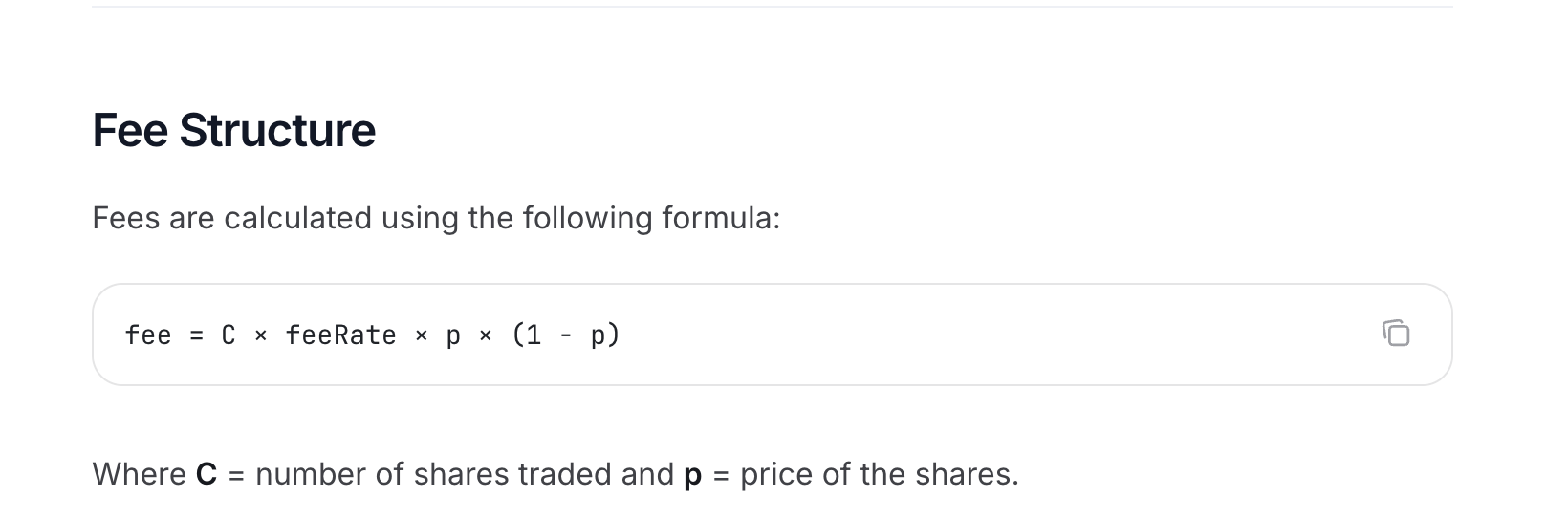
How Taker Fees Are Calculated
Polymarket uses a dynamic system where trading fees are calculated based on probability and market conditions rather than fixed rates.
Polymarket uses a prediction market pricing model where fees are tied to probability curves:
- trades near 50/50 probability incur the highest fees
- pricing adjusts dynamically based on market risk
- fee structure reflects liquidity and uncertainty
This mechanism is a key part of how Polymarket fees explained differs from traditional exchange fee systems.
Source: Polymarket
Maker Rebates and Liquidity Incentives
Polymarket introduces incentives for liquidity providers to ensure efficient trading and reduce market friction.
To maintain liquidity, Polymarket offers maker incentives:
- makers receive 20–50% rebates
- rebates are funded by taker fees
- encourages deeper order books and tighter markets
This structure highlights how Polymarket makes money—by redistributing taker fees while incentivizing liquidity providers and shaping Polymarket liquidity costs.
What Fees Are Charged When You Win or Cash Out
Polymarket does not charge a direct fee on winnings or payouts. However, when closing a position, traders still incur event trading fees such as taker fees and execution-related costs that affect the final amount received.
1. No Fee on Winnings
There are no platform charges applied when a position settles or pays out. Users receive the full value of their winning shares without any deduction, meaning Polymarket does not take a percentage of profits. This answers a key question: is Polymarket really free to use? — partially yes, but only on payouts.
2. Taker Fees on Exit Trades
Closing a position still triggers the same fee structure as entering a trade. Taker fees are applied when orders are executed against existing liquidity, and these fees can reach up to around 1.80% depending on the market category. These charges are identical to standard Polymarket trading fees and represent the primary event trading fees when exiting positions.
3. Spread and Execution Costs
Even without a direct fee on payouts, execution pricing introduces additional costs. The bid-ask spread reduces the final amount received, while slippage can further increase costs in low-liquidity conditions. Execution timing also plays a role, making trading spread Polymarket and Polymarket liquidity costs critical factors in determining actual profitability.
What Are Polymarket Withdrawal Fees?
Polymarket fees explained includes withdrawal-related costs that depend on blockchain networks rather than fixed platform charges. While there is typically no direct withdrawal fee, users still incur gas and transfer costs, which contribute to how much does Polymarket cost per trade in total.
Does Polymarket Charge Withdrawal Fees?
Polymarket fees explained shows that the platform does not apply a direct withdrawal charge, but users still face indirect costs depending on the network used.
Platform fee: None
Fee type: Network-dependent
Variation: Depends on asset and blockchain used
These are indirect but essential components of Polymarket fees.
What Network and Transfer Costs Apply?
Even without a platform fee, Polymarket fees still include network-related costs that affect how much users receive after withdrawing funds.
Gas fees: Required for on-chain transactions
Transfer fees: Stablecoin and token transfer costs
Variability: Changes based on network congestion
These costs directly impact the final amount received after trading and contribute to how much does Polymarket cost per trade in practice.
How Much Does It Cost to Trade on Polymarket?
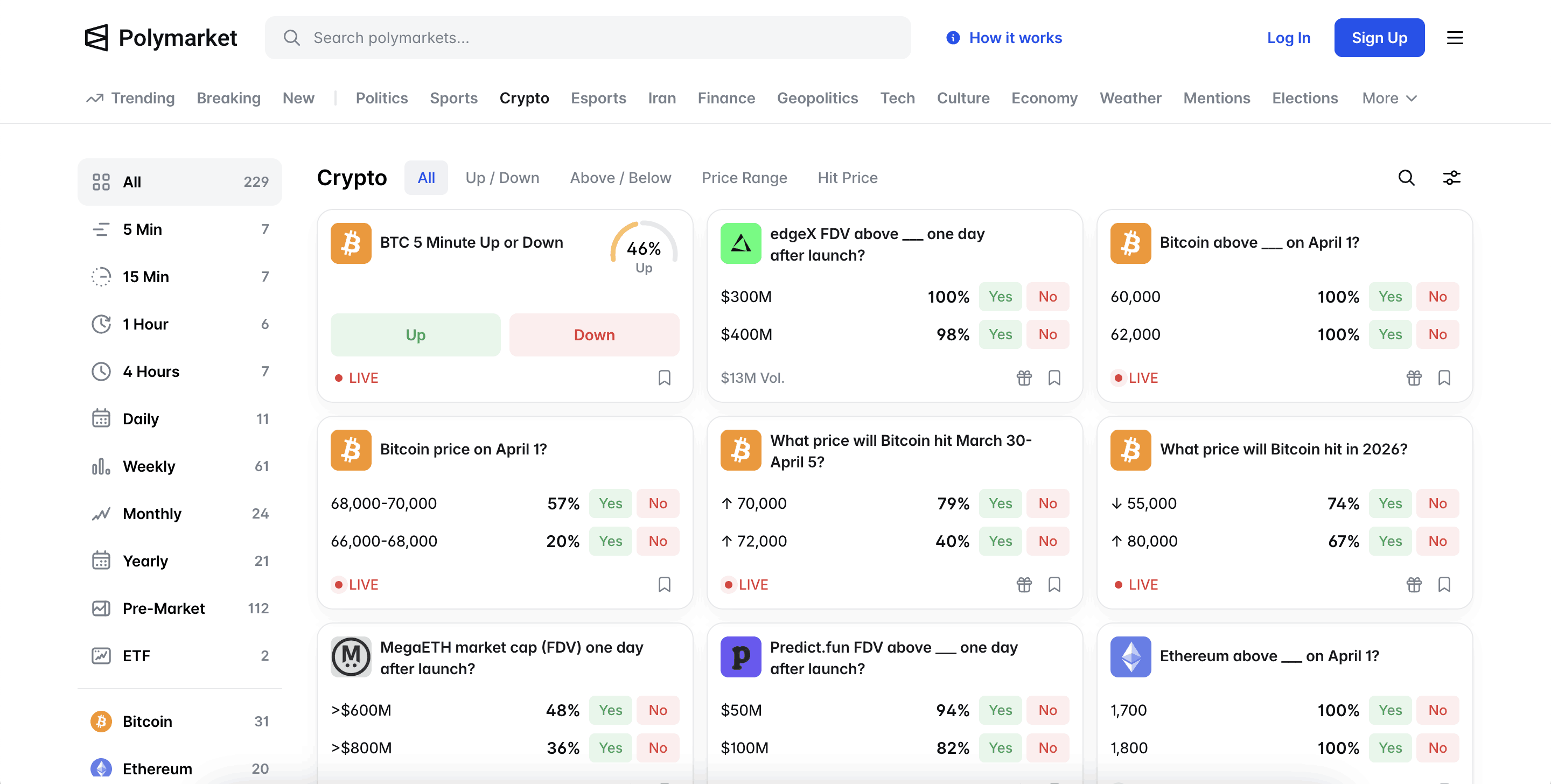
Even with explicit taker fees now in place, traders still incur additional costs through spreads, slippage, and liquidity conditions. The real cost depends on market depth, execution timing, and trading frequency. Polymarket fees explained includes both direct fees and indirect execution costs. This means the real cost of trading on Polymarket is often higher than the headline fee, especially when factoring in Polymarket liquidity costs.
1. How Much Does Polymarket Cost Per Trade?
The direct cost of trading on Polymarket comes primarily from taker fees applied during execution. These fees vary depending on the market category and represent the most visible part of the platform’s pricing structure.
- taker fees are the primary direct cost
- fees vary by market category
- total cost depends on trade size and conditions
This directly answers: how much does Polymarket cost per trade?
2. Spreads and Market Depth
Beyond explicit fees, market structure plays a critical role in determining the actual cost of a trade. The availability of liquidity and the width of spreads directly influence how efficiently orders are executed.
- wider spreads increase effective costs
- low liquidity worsens pricing
- thin markets amplify costs
These are key components of trading spread Polymarket.
3. Slippage and Execution Risk
Execution timing and market volatility can introduce additional hidden costs during trading. These factors become more pronounced in fast-moving or low-liquidity markets, where prices can shift quickly.
- price movement during execution
- higher in volatile markets
- affects both entry and exit
This contributes significantly to Polymarket liquidity costs.
4. Compounding Trading Costs
Over time, repeated trading can significantly increase total cost beyond what individual trades suggest. Even small inefficiencies can accumulate and reduce overall profitability, especially for active traders.
- repeated trades increase total cost
- small inefficiencies accumulate
- critical for active traders
This explains why is Polymarket really free to use is often misunderstood.
Source: Polymarket
How Do Polymarket Fees Compare to Kalshi?
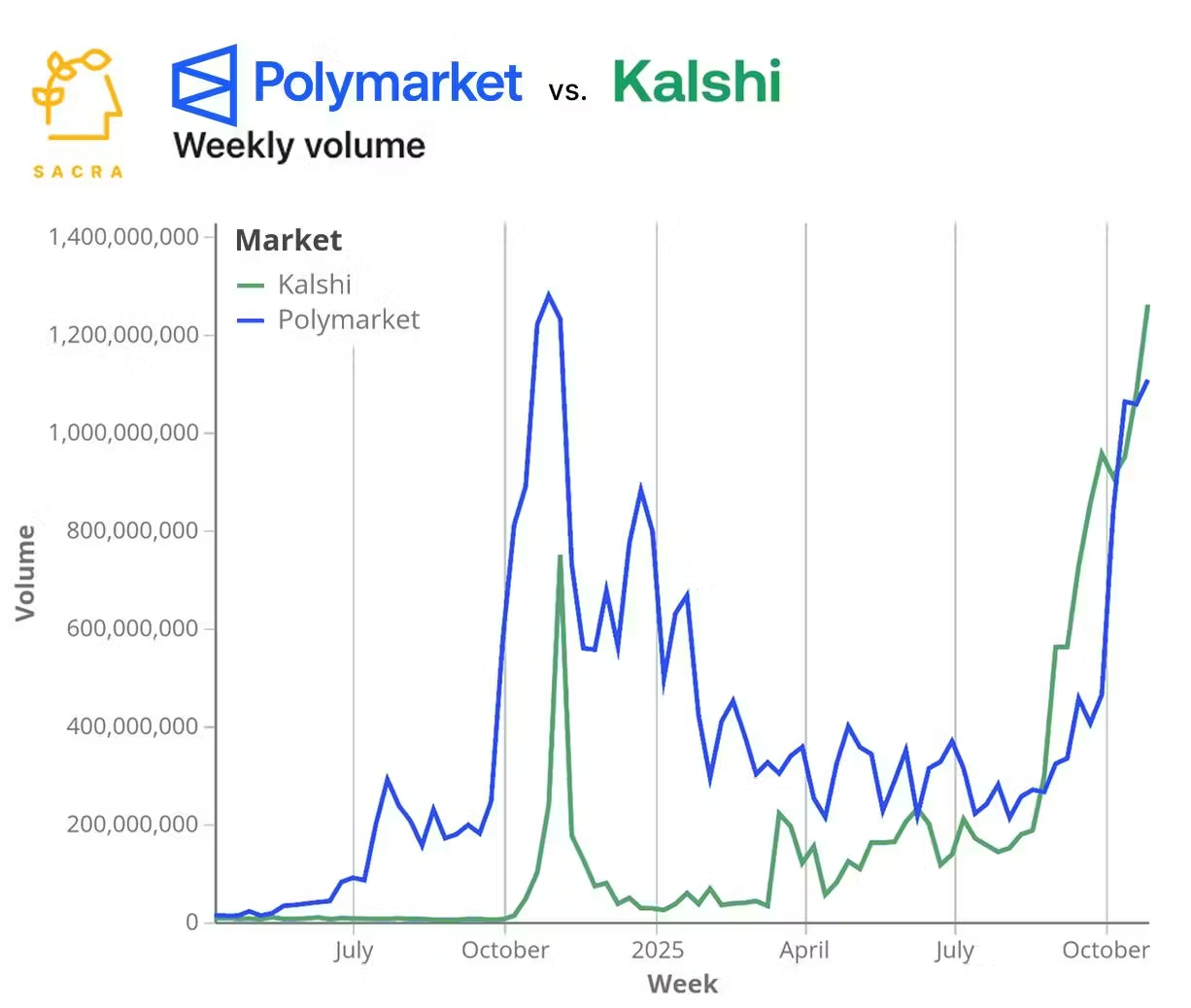
Comparing Polymarket vs Kalshi fees reveals a key difference: Polymarket uses a hybrid model combining taker fees, spreads, and maker rebates, while Kalshi uses a clearer, regulated fee structure. This reflects broader trends i crypto prediction market regulation 2026, where platforms balance liquidity incentives with transparency.
What Is the Difference Between Polymarket’s Fee Model and Kalshi’s?
Polymarket and Kalshi use fundamentally different approaches to structuring trading costs. These differences affect how users experience fees, liquidity, and pricing transparency across platforms.
- Polymarket → taker fees + spreads + maker rebates
- Kalshi → explicit regulated fee structure
- different focus: liquidity vs transparency
Source: Sacra
Which Platform Is Better for Traders?
The better platform depends on trading style, objectives, and risk tolerance. Traders must consider both cost structure and market conditions when choosing between platforms.
- short-term traders → Polymarket (liquidity-driven)
- long-term users → Kalshi (regulated structure)
- depends on strategy and risk tolerance
| Feature | Polymarket | Kalshi |
| Trading fees | Taker fees (up to 1.80%) | Fixed/regulated fees |
| Spreads | Yes | Minimal |
| Rebates | Maker rebates (20–50%) | No |
| Transparency | Medium | High |
| Regulation | Limited | Regulated (US) |
This comparison helps answer what fees do prediction markets charge across platforms.
Read more: Kalshi vs Polymarket: Who Is the True King of the Prediction Market in 2026?
How Can Bitget Wallet Help Optimize Trading Costs Across Markets?
Bitget Wallet helps traders move capital efficiently across ecosystems and reduce friction when managing funds. With over 90 million users, support for 130+ main chains, and connections to 20,000 DApps, it provides a seamless solution for managing assets and optimizing execution while navigating Polymarket fees explained. The wallet is also backed by a $300 million Protection Fund, ensuring safety of funds for users trading across multiple networks.
How Can Faster Fund Movement Help Traders Reduce Friction Costs?
By using Bitget Wallet, traders can move capital quickly between chains and markets, reducing the delays that typically occur with traditional wallets or exchange transfers. This allows users to react faster to market opportunities while maintaining control over their assets, leveraging 1 million tokens across multiple ecosystems if needed.
- move capital across chains efficiently
- reduce delays when repositioning funds
- respond faster to market opportunities
Conclusion
Polymarket fees explained shows that the platform now operates under a hybrid cost structure where taker fees, spreads, and liquidity dynamics all contribute to total trading costs. Taker fees remain the primary direct charge, while maker rebates redistribute part of the fee flow to incentivize liquidity providers. Traders should also account for spreads and slippage, as these factors can significantly affect overall trading outcomes.
Using Bitget Wallet, traders can move capital efficiently across multiple chains and ecosystems, reducing friction and execution delays. With access to 1 million tokens, 20,000 DApps, and 130+ main chains, along with the protection of a $300 million Protector Fund, Bitget Wallet helps users navigate Polymarket fees explained while trading smarter and more securely across prediction markets.
Download Bitget Wallet today to start optimizing your trading costs and executing faster across markets.
Sign up Bitget Wallet now - grab your $2 bonus!
FAQs
1. What are Polymarket fees explained in simple terms?
Polymarket fees explained means that the platform charges taker fees on trades, which are the main direct cost for users. In addition to these fees, spreads and slippage add indirect costs that can affect overall trading profitability.
2. Does Polymarket charge trading fees or spreads?
Polymarket charges both types of fees: taker fees are applied directly when executing trades, while spreads are an indirect cost built into market pricing. Together, these determine the real cost a trader pays per transaction.
3. How much does it cost to trade on Polymarket?
The total cost of trading varies by market category, with taker fees reaching up to approximately 1.80% in crypto markets. Additional costs such as spreads, slippage, and execution timing further influence the final trading cost.
4. Is Polymarket really free to use?
Polymarket is not entirely free to use. While users do not pay fees on winnings, trading, spreads, and execution costs still apply whenever positions are opened or closed.
5. How does Polymarket make money with taker fees and rebates?
Polymarket collects taker fees from trades as its primary revenue source. A portion of these fees is redistributed as maker rebates to incentivize liquidity and maintain deeper markets.
Risk Disclosure
Please be aware that cryptocurrency trading involves high market risk. Bitget Wallet is not responsible for any trading losses incurred. Always perform your own research and trade responsibly.
 Top Arc Tokens and Memecoins: What’s Trending on Arc Mainnet2026-09-16 | 5 mins
 Circle Arc Mainnet Launch: What Is Arc and Why Does It Matter?2026-09-14 | 5 mins
 Top Robinhood Chain Memecoins 20262026-09-09 | 5 mins



