





What is an ESC Wallet?
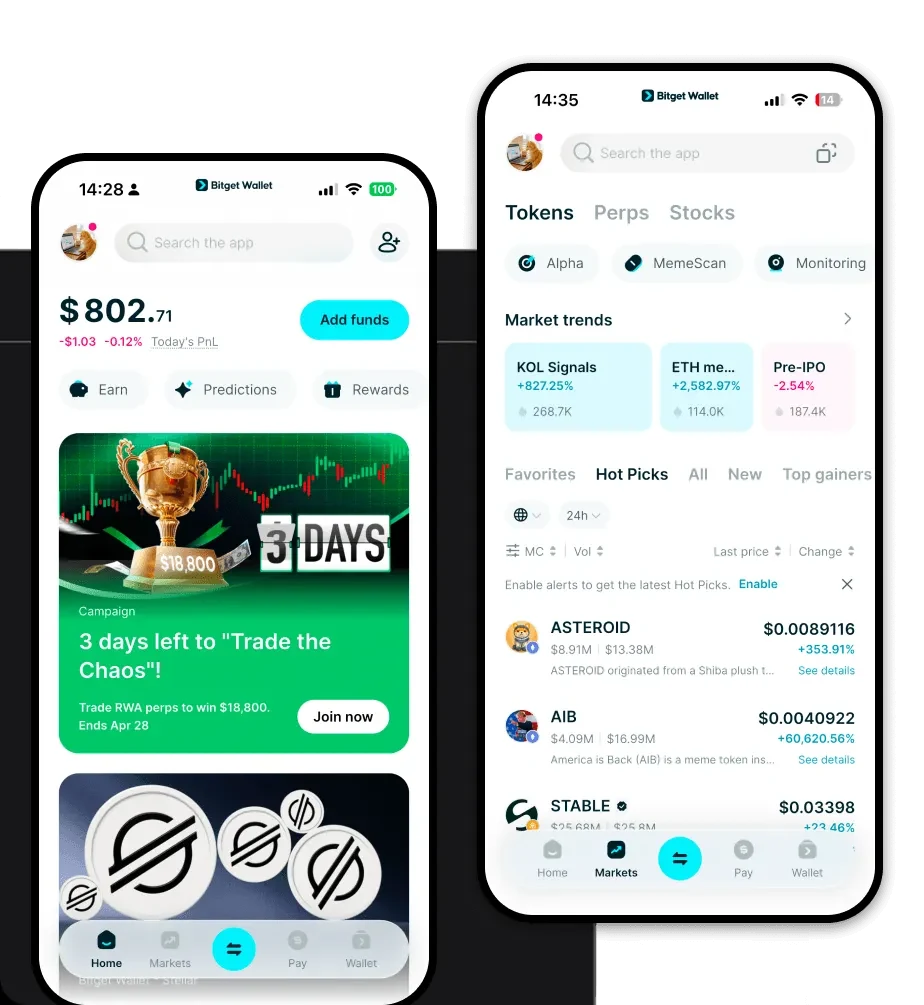
An ESC wallet is a digital tool designed to store, manage, and interact with ESC tokens, which operate on the EVM (Ethereum Virtual Machine) blockchain architecture. Because ESC is built on an EVM-compatible chain, it requires a wallet that supports the ERC-20 standard or its native equivalent to ensure full compatibility with decentralized applications (dApps) and smart contracts. Are you looking for a reliable and secure crypto wallet for your ESC? Bitget Wallet will be your best choice. Trusted by 40 million users, you can freely explore Web3 on Bitget Wallet. Start your journey now!
Download Bitget ESC Wallet
Accessing your assets should be seamless, regardless of whether you are at your desk or on the go. To get started, you can download Bitget Wallet across all major platforms, including iOS, Android, and as a browser extension. Unlike centralized exchanges, Bitget Wallet provides true self-custody, ensuring that you maintain complete control over your private keys and seed phrases. With support for over 130 public chains and millions of tokens, it acts as a unified hub for your entire portfolio, allowing you to switch between networks without the friction of juggling multiple applications.
Why Choose Bitget ESC Wallet?
When dealing with EVM-based assets like ESC, your wallet choice directly impacts your ability to navigate the ecosystem efficiently. Bitget Wallet stands out through its specialized infrastructure:
- EVM Compatibility: Designed specifically for the Ethereum Virtual Machine, ensuring smooth interaction with all ESC-related smart contracts and dApps.
- High Scalability: The wallet architecture is optimized to handle high-frequency transactions, ensuring you never miss a market opportunity during peak network congestion.
- Low Transaction Costs: Built-in gas fee optimization tools help you execute transactions at the most efficient rates, minimizing unnecessary spending.
- Secure Asset Management: Backed by a $300 million user protection fund, Bitget Wallet provides enterprise-grade security for your digital assets.
- Cross-chain Interoperability: Seamlessly move ESC across different chains using aggregated cross-chain bridges, eliminating the need for complex, manual bridging processes.
How to Create an ESC Wallet
- Install the App: Download Bitget Wallet from the official website or your device's app store.
- Create a New Wallet: Open the app and select 'Create Wallet.' Set a strong password for local encryption.
- Backup Your Seed Phrase: Carefully record your 12-word recovery phrase. Store this offline; never share it with anyone.
- Verify Account: Enter your seed phrase to confirm you have backed it up correctly.
- Add ESC: Use the search function to find 'ESC' and toggle it on. Your wallet address is now ready to receive tokens.
What Can You Do With an ESC Wallet?
Beyond simple storage, Bitget Wallet transforms your ESC into a functional asset within the Web3 space:
- Staking: You can participate in network consensus or protocol-specific staking programs directly through the wallet to earn passive yield.
- Trading: Utilize the built-in DEX aggregator to swap ESC for other tokens with deep liquidity and minimal slippage.
- Providing Liquidity: Deposit your ESC into decentralized liquidity pools to earn trading fees from other users.
- Cross-chain Bridging: Easily transfer your ESC between the home chain and other compatible networks to access broader DeFi opportunities.
- Governance Voting: If ESC serves as a governance token, you can directly participate in DAO proposals and voting events from your wallet interface.
How ESC Wallets Are Different from Other Crypto Wallets
Not all wallets are built the same, especially when dealing with EVM assets. Many generic wallets struggle with the nuances of account-based models. Bitget Wallet is architected specifically for EVM chains, meaning it manages 'accounts'—not the complex UTXO models found in Bitcoin. This allows for more sophisticated smart contract interactions, such as permit signatures and gasless transactions, which are essential for modern DeFi. While some basic wallets might lag during high network traffic, Bitget’s infrastructure is designed to prioritize low-fee, high-speed execution, making it significantly more efficient for active traders and liquidity providers compared to standard custodial or legacy wallets.
