





What is an APT Wallet?
An APT wallet is a specialized digital interface designed to interact with the Aptos blockchain, a high-performance Layer 1 network built using the innovative Move programming language. Aptos is engineered for massive scalability and speed, aiming to provide a secure environment for decentralized applications (dApps). Whether you are a developer looking to deploy smart contracts or an investor managing your digital assets, a reliable wallet acts as your gateway to the Aptos ecosystem, allowing you to manage your private keys and execute transactions securely.
Are you looking for a reliable and secure crypto wallet for your APT? Bitget Wallet will be your best choice. Trusted by 40 million users, you can freely explore Web3 on Bitget Wallet. Start your journey now!
Download Bitget APT Wallet
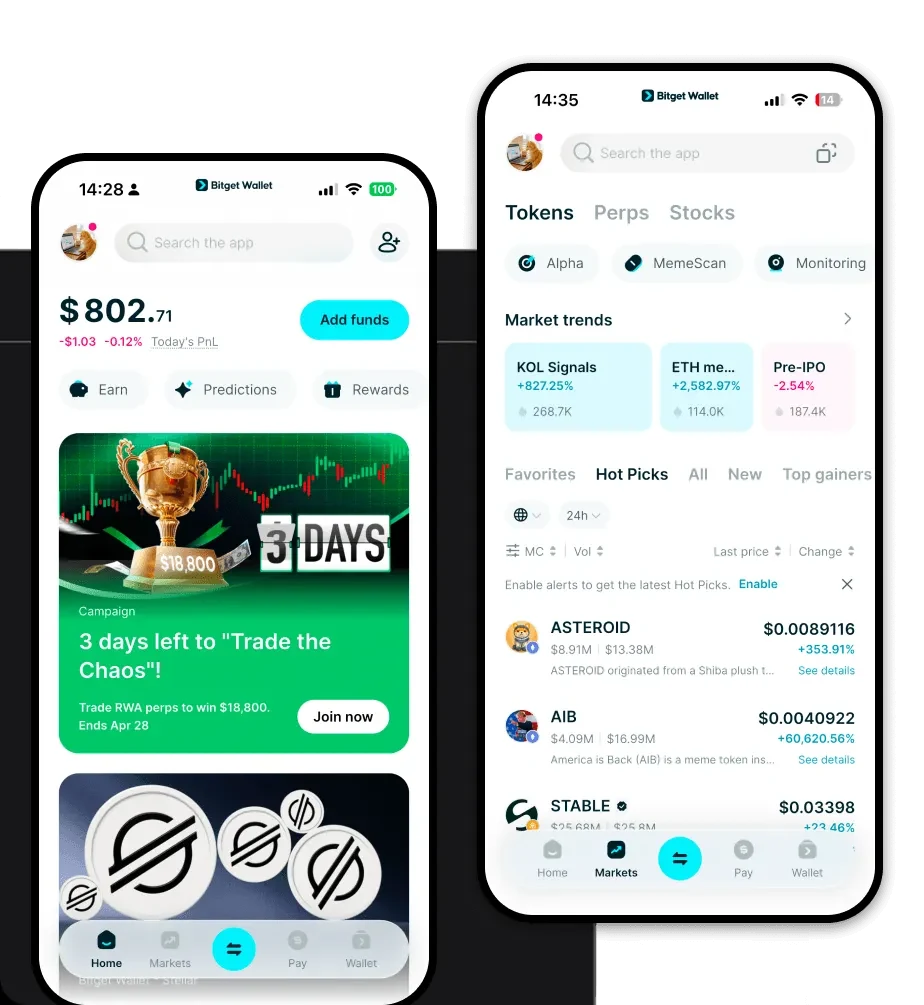
To begin your journey, you need a robust tool that supports the unique architecture of the Aptos network. Bitget Wallet offers a comprehensive solution that serves as an all-in-one portal for your digital assets. By choosing to download Bitget Wallet, you gain access to a non-custodial environment where you maintain full control over your private keys, ensuring that your assets remain under your ownership at all times.
The application is designed for versatility, available as a mobile app for both iOS and Android users, as well as a browser extension for desktop convenience. Whether you are managing your tokens on the go or conducting complex DeFi operations at your desk, Bitget Wallet provides a consistent, high-speed experience. Its multi-chain support means you aren't just limited to one network; you can manage your APT alongside various other assets in a single, unified interface, making it the best wallet for APT users who demand efficiency and security.
Why Choose Bitget APT Wallet?
Choosing the right wallet for the Aptos ecosystem requires looking at how well the software leverages the chain's native strengths. Bitget Wallet excels by integrating deeply with the unique technical features of Aptos:
- High Throughput Optimization: Bitget Wallet is specifically tuned to handle the high transaction volume facilitated by the Aptos network, ensuring your transactions are broadcast and confirmed without congestion.
- Move Language Compatibility: By natively supporting the Move programming language, the wallet provides a seamless interface for interacting with smart contracts and dApps built on Aptos, reducing the risk of errors.
- Parallel Transaction Execution Support: Unlike legacy chains, Aptos uses parallel execution. Bitget Wallet’s infrastructure is optimized to support these concurrent processes, allowing for faster transaction finality.
- Scalable Architecture Integration: The wallet is built to scale alongside the network, ensuring that as the Aptos ecosystem grows, your ability to manage assets remains fluid and lag-free.
- Low Latency Connectivity: Bitget Wallet prioritizes low latency, ensuring that your interactions with the blockchain are near-instantaneous, which is critical for time-sensitive trading and DeFi activities.
How to Create an APT Wallet
Setting up your wallet is a straightforward process designed to prioritize your security. Follow these five steps to get started:
Step 1: Visit the official website or your app store to download Bitget Wallet and install the application on your preferred device.
Step 2: Open the app and select 'Create a New Wallet'. You will be prompted to set a strong, unique password to protect your local wallet file.
Step 3: Carefully back up your seed phrase. This is the most critical step; write it down and store it in a secure, offline location. Never share this phrase with anyone.
Step 4: Once the wallet is initialized, navigate to the asset management section and select 'Add Token'. Search for 'APT' and enable it to view your balance and your unique APT wallet address.
Step 5: Your wallet is now ready. You can now receive APT by sharing your public address or by purchasing tokens directly through the integrated fiat-to-crypto gateways.
What Can You Do With an APT Wallet?
An APT wallet is more than just a storage container; it is an active tool for participating in the Aptos ecosystem. Here is how you can utilize your wallet:
- Staking: You can delegate your APT tokens to validators directly through the wallet interface to earn rewards, contributing to the security and decentralization of the network.
- Governance Voting: By holding your APT in the wallet, you gain the ability to participate in on-chain governance, voting on proposals that shape the future development of the Aptos protocol.
- Paying Transaction Fees: Your wallet serves as the payment hub for all network activities, allowing you to easily pay gas fees for transactions, token transfers, and dApp interactions.
- Trading: You can access decentralized exchanges (DEXs) integrated within the Bitget Wallet to swap your APT for other tokens instantly, benefiting from the high speed of the Aptos chain.
- Providing Liquidity: Utilize your assets to provide liquidity to various liquidity pools within the Aptos ecosystem, enabling you to earn yield on your holdings while facilitating a smoother trading experience for others.
How APT Wallets Are Different from Other Crypto Wallets
Aptos is fundamentally different from Ethereum or Bitcoin, and your wallet needs to reflect that. While Ethereum uses the EVM (Ethereum Virtual Machine) and Bitcoin uses a UTXO (Unspent Transaction Output) model, Aptos utilizes a unique account-based model designed for parallel execution. This means an APT wallet must be capable of processing transactions that do not rely on a strictly sequential order, which is a major departure from older blockchains.
Because of this architecture, the best wallet for APT, like Bitget Wallet, must provide a different user experience regarding fee estimation and transaction speed. You will notice that the network operates with extremely low latency and high throughput. Unlike older wallets that might struggle with network congestion, an APT-optimized wallet ensures that you can execute complex transactions, such as interacting with multiple smart contracts simultaneously, without the typical delays associated with legacy Layer 1 networks.
