


What Are Crypto On-Ramp and How They Shape Fiat-to-Crypto Capital Flows
What is a crypto on-ramp and why is it so important in bringing global capital into the digital asset market? Simply put, a crypto on-ramp acts like a "bridge" or infrastructure that converts fiat currency (like USD, VND) into crypto assets like Bitcoin, ETH, or stablecoins. It creates a physical entry point, injecting liquidity into exchanges, market makers, and on-chain platforms.
From an investor's perspective, on-ramps directly impact the speed of capital flow, the expansion of stablecoin supply, and the ease of accessing liquidity in each country. They also contribute to shaping market structure: where liquidity comes from, how spreads are formed, and how quickly funds are transferred from bank accounts to on-chain positions.
Currently, many users, especially in regions with unstable local currencies, often begin accessing the market through stablecoins. However, this experience will differ significantly depending on whether you are an individual or institutional investor—from transaction limits and compliance procedures to the type of payment used. Furthermore, local regulations act as a "filter," determining who and in which areas can access these entry points. Therefore, equipping yourself with a non-custodial wallet like Bitget Wallet is truly essential. It's like a direct gateway, allowing you to bring your funds to your own management without any intermediaries holding the assets!
In this article, we will analyze how crypto on-ramps actually work, their impact on the flow of money into digital assets, and the factors investors need to consider before choosing a suitable entry point.
Key Takeaways
- Crypto on-ramps determine how efficiently fiat capital enters digital markets and expands overall on-chain liquidity.
- During market cycles, crypto on-ramps influence capital speed, execution cost, and the depth of stablecoin liquidity.
- Choosing the right crypto on-ramps—especially non-custodial options like Bitget Wallet—improves capital control and deployment flexibility.
What Are Crypto On-Ramp?
Crypto on-ramps are the infrastructure layer that converts fiat currency into cryptocurrency. In doing so, they function as the liquidity injection valve of the digital asset ecosystem—determining how quickly capital moves from the traditional banking system into blockchain networks.
They influence three critical factors:
- Capital speed – how fast fiat becomes deployable crypto
- Market friction – fees, settlement time, and payment constraints
- Compliance filtering – KYC, AML, and regulatory access controls
Unlike exchanges, crypto on-ramps do not focus on price discovery or trading. Instead, they solve the conversion and settlement problem: transforming bank balances into on-chain assets.
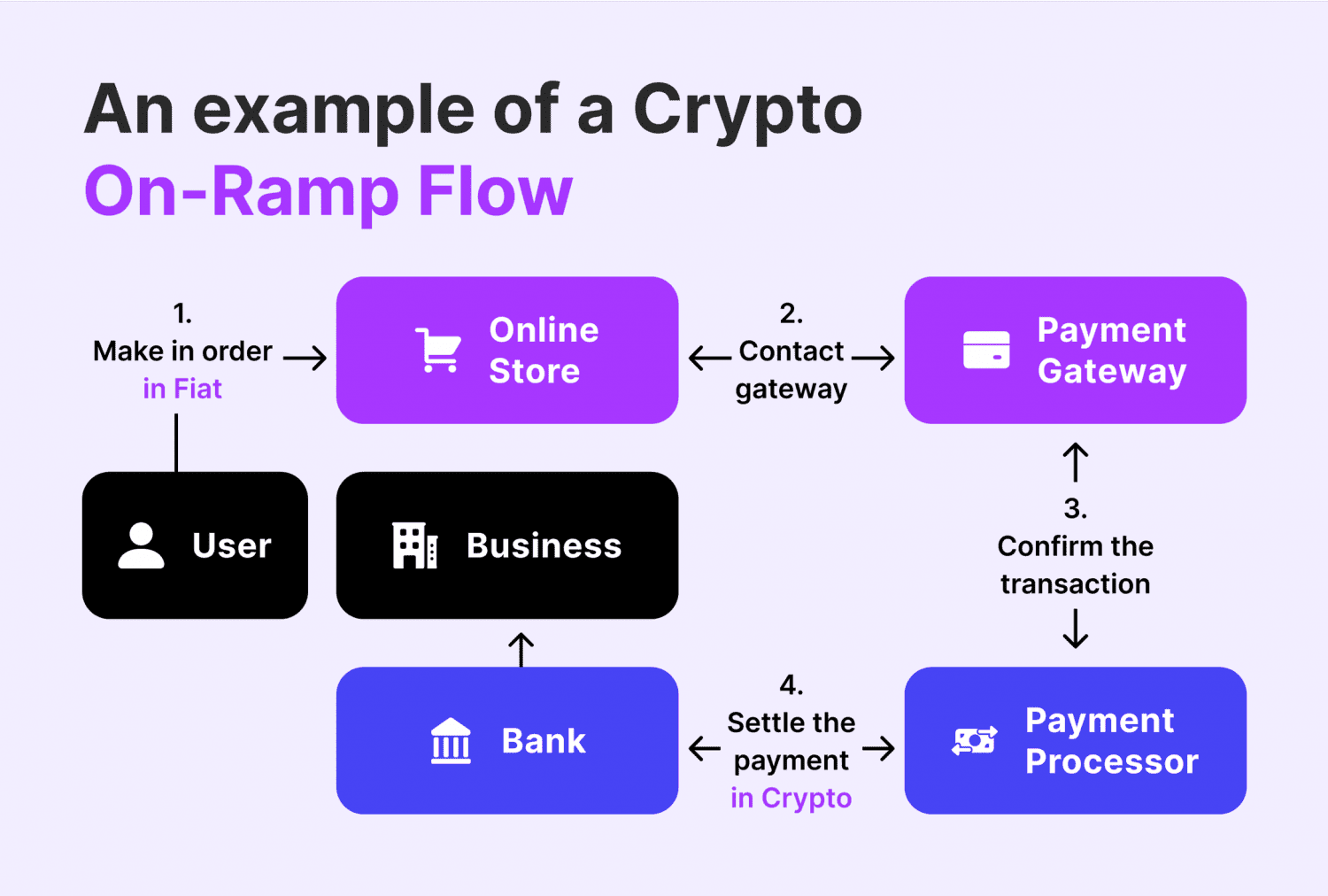
Source: b2binpay.com
How Do Crypto On-Ramp Convert Fiat Into On-Chain Liquidity?
A typical crypto on-ramp sits between traditional payment rails and crypto liquidity sources. The flow often looks like:
- Banking rails / card networks: Card payments, bank transfers, local rails
- Payment processors / acquiring: Authorization, fraud checks, chargeback risk controls
- Compliance stack: KYC/AML, sanctions screening, transaction monitoring
- Liquidity sourcing: Exchange inventory, market makers, stablecoin issuers, or internal pools
- Delivery: Crediting an exchange account or sending assets to a wallet address
In practice, “fiat to crypto” is not a single action. It’s a chain of approvals, pricing, and settlement steps that determine how long funds take to arrive and what total cost a user actually pays. That cost is rarely just a headline fee—spread and FX conversion can dominate.
Why Are Crypto On-Ramp Considered the Entry Gate to Web3?
Crypto on-ramps are the entry gate because they solve the first problem every participant faces: turning local purchasing power into a transferable on-chain asset. This is why crypto onboarding frequently starts with stablecoins:
- Retail onboarding: Simplicity, small ticket sizes, fast entry, mobile-first flows
- Stablecoin-first model: USDT/USDC are used as “cash equivalents” for trading and DeFi
- Emerging markets reliance: Users often depend on local rails and P2P liquidity
- Regulatory filtering: KYC/limits can segment who enters and how much capital can flow
When on-ramps are efficient, capital enters faster and markets generally become deeper. When on-ramps tighten (bank blocks, processor risk-off, or compliance friction), capital velocity slows—even if demand still exists.
How Does Crypto On-Ramp Work in Practice?
A crypto on-ramp transaction is a sequence of authorization, compliance, pricing, and settlement steps. Investors should understand where funds are held, how pricing is formed, and when settlement becomes final, because these define operational risk and execution certainty.
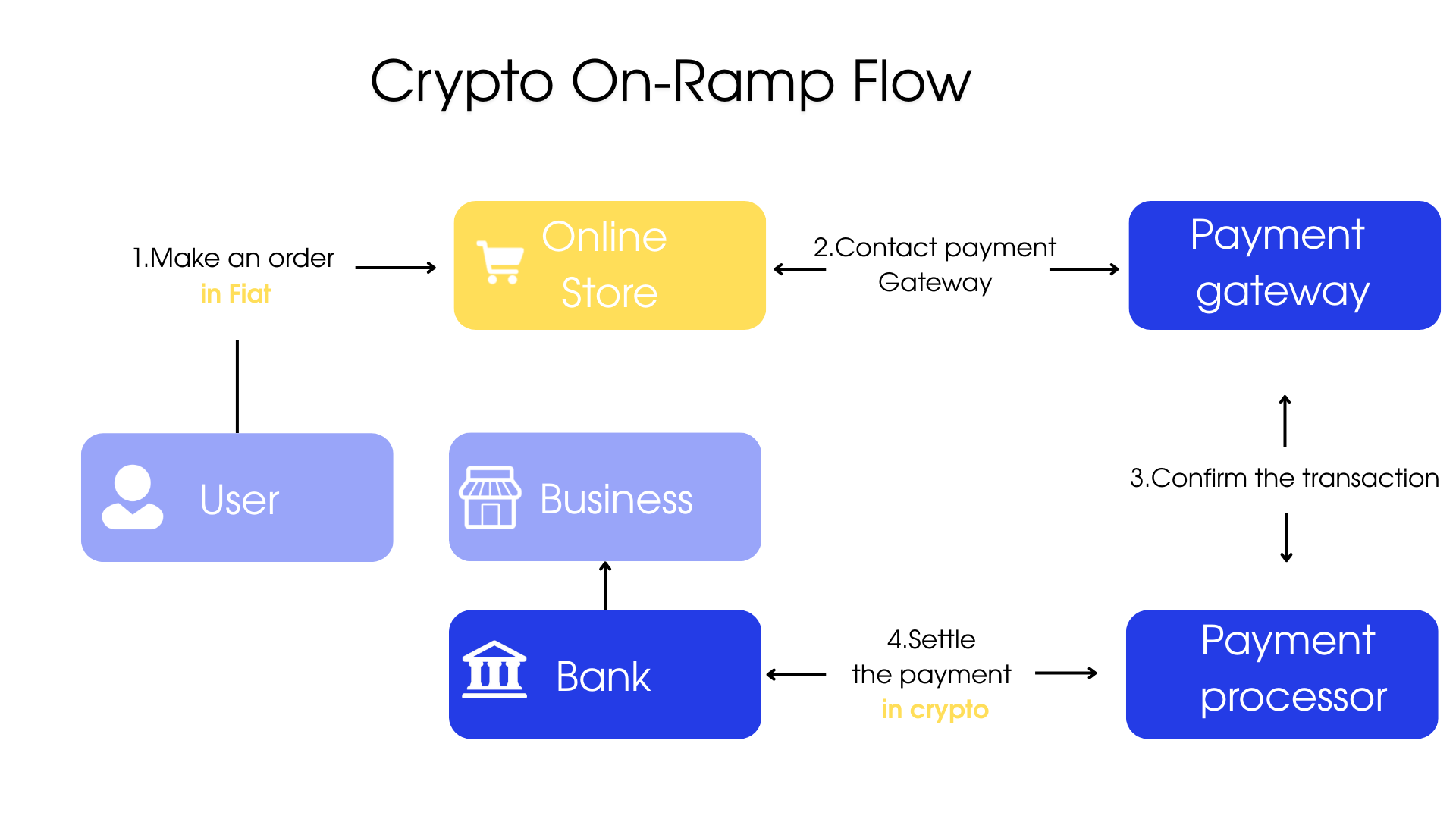
Source: sdk.finance
What Happens Behind the Scenes During a Fiat-to-Crypto Transaction?
A practical flow (abstracted) typically includes:
- Payment authorization: Card/bank transfer approval and fraud checks
- Pricing and quote lock: Spread and volatility buffers may be applied
- Liquidity sourcing: Inventory routed to the asset requested (often stablecoins first)
- Settlement timing: Instant for some rails, delayed for others (and reversible on cards)
- Risk checks: Sanctions screening, velocity limits, and transaction monitoring
- Delivery & confirmations: Credit to account or on-chain transfer to wallet
The key investor insight: a “buy” event can be economically final before settlement is operationally final—or the opposite—depending on the rail. Cards bring speed but also chargeback complexity; bank transfers can reduce chargeback risk but may increase settlement time.
What Is the Difference Between Custodial and Non-Custodial Crypto On-Ramp?
Custodial vs non-custodial crypto on-ramp is fundamentally about who controls the assets immediately after fiat is converted into crypto—and how that decision affects risk exposure, liquidity access, and operational flexibility.
A custodial model routes purchased assets into an exchange account managed by a third party. A non-custodial crypto on-ramp, by contrast, delivers assets directly to a wallet address controlled by the user.
Below is a clear structural comparison:
| Dimension | Custodial On-Ramp (Exchange Account) | Non-Custodial Crypto On-Ramp (Direct-to-Wallet) |
| Asset custody | Platform holds assets | User controls keys / wallet custody |
| Settlement endpoint | Exchange balance | Wallet address on-chain |
| Counterparty risk | Higher (platform exposure) | Lower custody risk (but still provider/rail risk) |
| Post-purchase flexibility | Strong for CEX trading | Strong for on-chain usage (DeFi, cross-chain) |
| Operational constraints | Withdrawals, limits, platform policies | Network fees, wallet safety practices |
Custodial entry is often preferred for immediate centralized order-book trading. A non-custodial crypto on-ramp is preferred when investors want assets delivered directly under self-custody for on-chain execution, portfolio control, or cross-chain management.
How Do Crypto On-Ramp Influence Fiat-to-Crypto Capital Flows?
On-ramps shape capital flows by controlling the conversion friction between fiat balance sheets and digital assets. The easier the conversion path, the higher the velocity and resilience of liquidity—especially for stablecoins that function as trading collateral and settlement currency.
Why Do Stablecoin On-Ramp Drive Market Expansion?
A stablecoin on-ramp compresses volatility risk at the entry point. Instead of buying volatile assets immediately, users often enter via USDT/USDC as a neutral base asset. This matters for market structure:
- Stablecoins expand addressable liquidity: They are used across CEX, DEX, and lending
- They standardize settlement: Many venues quote and settle against stablecoins
- They reduce “entry hesitation”: Users can hold stablecoins before deploying risk
- They enable cross-chain liquidity: Stablecoins move across ecosystems more easily
The result is a broader and faster capital funnel, where fiat conversion becomes stablecoin liquidity—and stablecoin liquidity becomes market depth.
How Do Crypto On-Ramp Affect Liquidity During Bull and Bear Markets?
Cycle effects on crypto on-ramp are essentially about how conversion infrastructure amplifies or constrains capital velocity across different market regimes. On-ramps do not merely process payments—they function as the intake valve of liquidity, determining how quickly fiat purchasing power transforms into deployable crypto capital.
Below is a structural comparison:
| Market Regime | Typical On-Ramp Pattern | Practical Liquidity Impact |
| Bull cycle | Volume spikes, faster conversion demand | Deeper stablecoin pools; tighter spreads; higher throughput stress |
| Bear cycle | Capital contraction, higher risk controls | Wider spreads; lower liquidity; providers may tighten limits |
| Regulatory tightening | Rail disruptions, KYC friction increases | Fragmented flows; shift to alternative rails; higher execution cost |
In bull markets, on-ramps act like a high-throughput intake valve: inflows expand market depth and stablecoin collateral. In bear markets, the same infrastructure can become restrictive—either due to lower demand or higher risk controls—reducing liquidity and increasing friction.
What Fees Do Crypto On-Ramp Charge and How Do They Affect Investors?
On-ramp costs are often a blend of visible fees and invisible execution costs. Investors should evaluate total cost of entry, not just the headline rate, because spread, FX, and rail-specific risk pricing can dominate the final number.
What Are the Typical Cost Components of a Crypto On-Ramp?
Most investors face a stack of costs such as:
- Payment processor fees: Card processing and risk pricing
- Spread: The gap between market price and the quoted purchase price
- FX conversion: If the funding currency differs from the settlement currency
- Network fees (gas): If delivery occurs on-chain
- Compliance overhead: Not always explicit, but can appear as limits or higher pricing
This is why “crypto on-ramp fees explained” is really about effective entry cost. Two services can advertise the same fee but deliver materially different outcomes once spread and FX are included.
How Can Investors Reduce On-Ramp Costs?
Investors typically reduce costs by optimizing rails, timing, and asset choice:
- Prefer bank transfer rails when feasible: Often lower all-in cost than cards
- Avoid high-volatility windows: Spreads tend to widen during fast moves
- Use stablecoin entry intentionally: Buy stablecoins first, then deploy into risk assets
- Minimize unnecessary FX steps: Fund in the most direct settlement currency possible
- Plan for gas and chain choice: Network conditions can materially change final delivery cost
A disciplined approach to “buy crypto with fiat” can improve execution outcomes more than chasing a minor advertised fee difference.
How Can Investors Use Bitget Wallet to Access Crypto On-Ramp Safely?
Bitget Wallet can serve as a non-custodial access point for fiat-to-crypto entry where assets settle directly into the user’s wallet, supporting post-onboarding on-chain activity. The investor goal is simple: reduce custody dependency, keep capital under control, and maintain flexibility across chains.
How Does Bitget Wallet Enable Non-Custodial Crypto On-Ramp Access?
From an investor workflow standpoint, the value is in direct-to-wallet settlement and operational control. With Bitget Wallet, investors can:
- Receive purchased assets directly in a self-custodied wallet (reducing exchange custody reliance)
- Manage assets across multiple networks via cross-chain support
- Maintain clearer separation between conversion (on-ramp) and deployment (on-chain execution)
- Apply wallet-level security practices (device security, backups, safe approval habits)
This keeps the on-ramp function focused on conversion, while the wallet becomes the control layer for custody and deployment decisions.
How to Use Bitget Wallet for Crypto On-Ramping?
Once you decide to enter the market, the goal is not only to convert fiat—but to control, deploy, and manage capital efficiently on-chain. A structured, investor-friendly workflow inside Bitget Wallet looks like this:
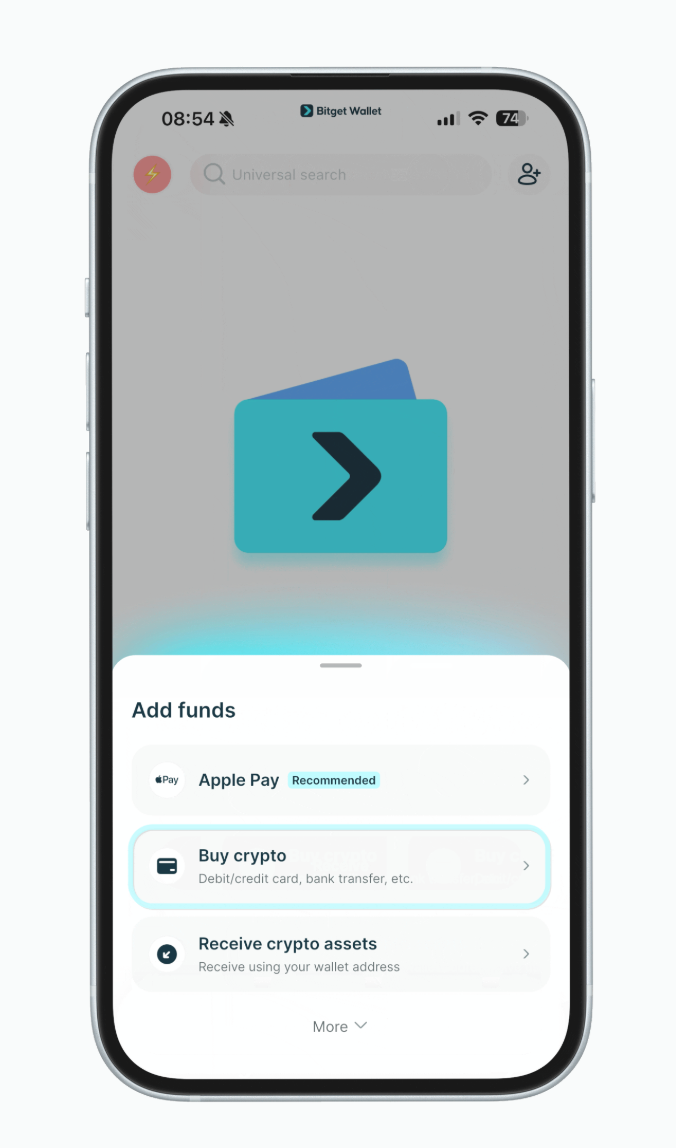
-
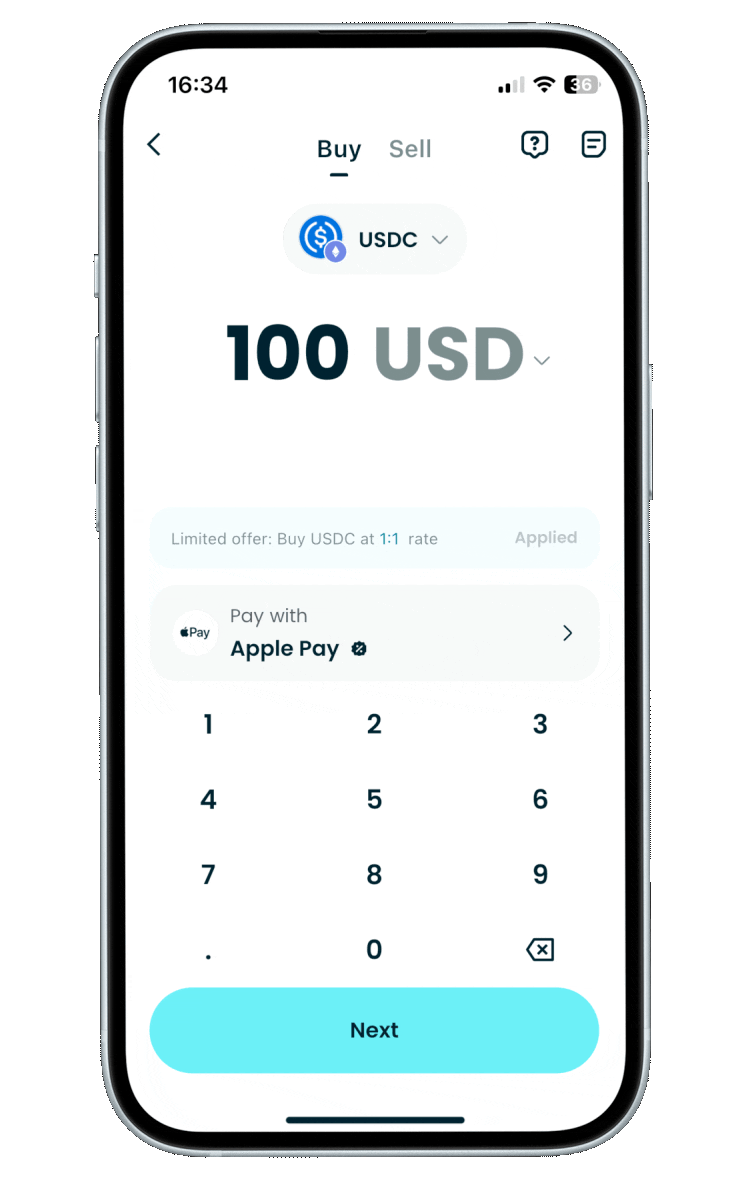
Add funds and initiate the purchase Tap Add Funds → Buy Crypto. Choose your preferred payment method—bank transfer, credit/debit card, or supported online rails.
-
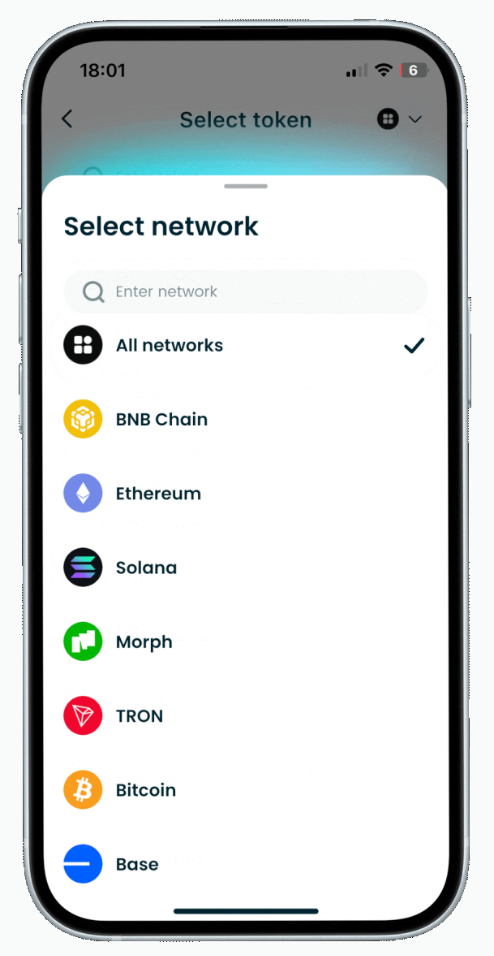
Select your fiat currency and target asset Pick the fiat currency you are paying with and the crypto you want to receive. Carefully confirm the correct blockchain network (for example, Ethereum for ETH or Solana for SOL) to avoid transfer issues.
-
Choose or confirm the payment provider The system automatically recommends an optimal provider based on pricing and availability. You can compare and switch if needed.
-
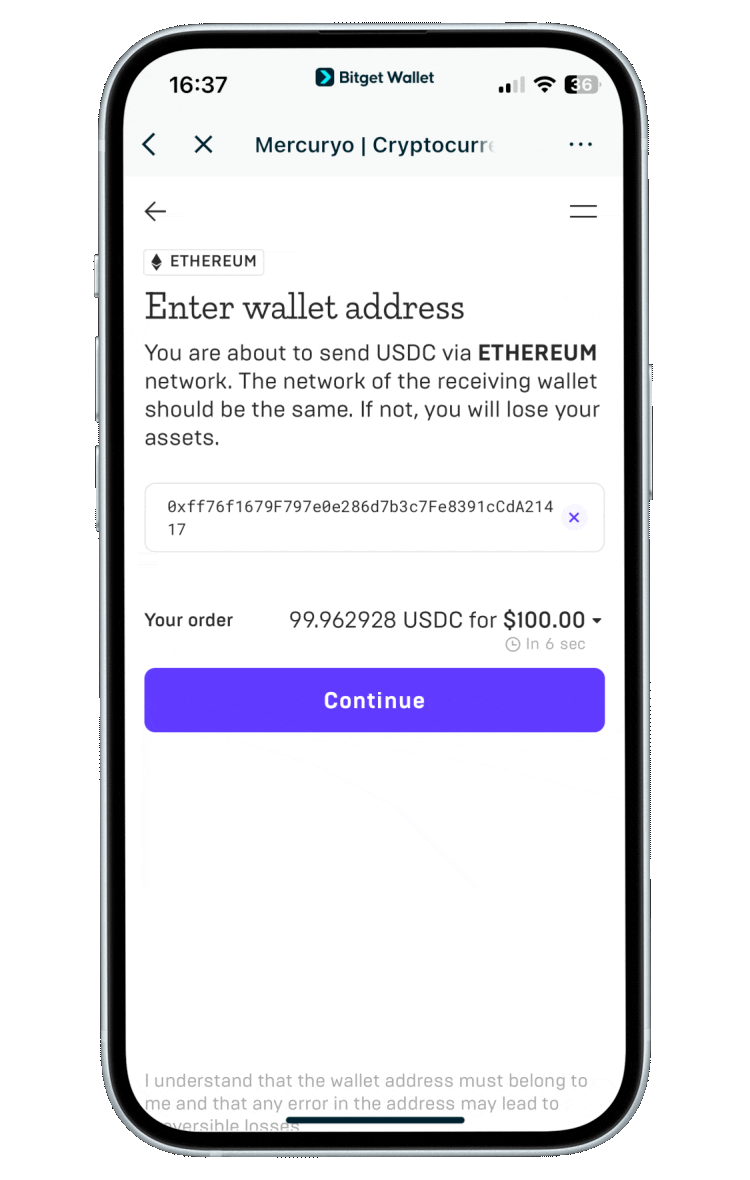
Complete identity verification (KYC) Finish the required verification steps to ensure compliance, fraud prevention, and transaction security.

-
Finalize payment and confirm delivery Follow the payment instructions. Once processed, the purchased crypto is deposited directly into your wallet. You can immediately review the transaction and balance.
-
Deploy and manage capital on-chain After receiving assets, you can swap tokens, bridge across networks, participate in DeFi strategies, or rebalance your portfolio—all within the wallet interface.
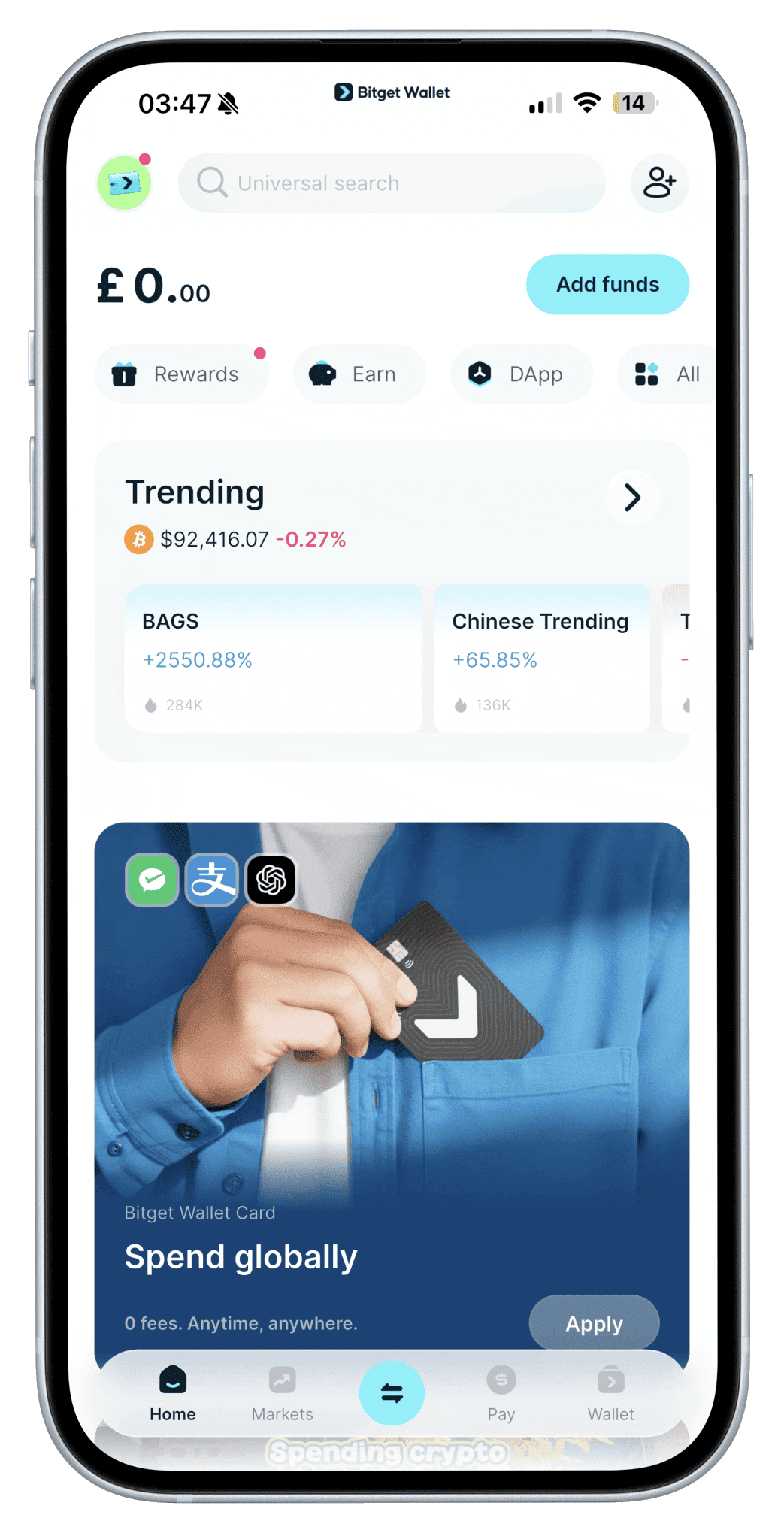
The key insight is this: a wallet is not just a storage tool—it is your execution layer for Web3 participation. With Bitget Wallet, investors can move seamlessly from fiat conversion to self-custody and active on-chain management while maintaining full control of their capital.
Don’t delay participation—use Bitget Wallet to convert fiat efficiently, manage assets independently, and engage on-chain markets with confidence!
Related Reading on Fiat On-Ramps & Off-Ramps
If you want to better understand how fiat on-ramps and off-ramps work — from buying crypto with bank cards to converting USDT back into fiat — these guides will help you navigate the full process safely and efficiently:
🔹 Understanding Crypto On-Ramps & Off-Ramps
- What Are Crypto On-Ramps and Off-Ramps: How to Convert Fiat Into Digital Assets?
- What Is a Crypto On-Ramp and How to Buy Crypto with Fiat
- What Is a Crypto Off-Ramp and How to Convert Crypto to Fiat
🔹 Stablecoins & Fiat Conversion
- What Is Stablecoin? A Beginner’s Guide to Price-Stable Cryptocurrencies
- What Is Tether (USDT)? Complete Guide to the Leading Stablecoin
- USDC vs USDT: What’s the Difference? Investor’s Guide
🔹 Practical Guides: Buying and Selling Crypto with Fiat
- USDT On-Ramp Complete Guide: How to Buy Tether (USDT) with Fiat
- Cash Out USDT: How to Withdraw USDT to Bank Account?
- How to Withdraw USDT and Tether via Exchanges, P2P, and Crypto Cards
Conclusion
What Are Crypto On-Ramp ultimately determines how efficiently capital enters the digital asset ecosystem. For investors, on-ramps are not just a convenience layer—they affect liquidity depth, effective execution cost, market responsiveness across cycles, and the degree to which regulatory and payment rails shape participation.
If your priority is capital control and safe on-chain participation, consider routing entry through a non-custodial approach and managing assets independently. Bitget Wallet can act as a secure entry and management layer for cross-chain assets and stablecoin-led onboarding—helping investors participate while maintaining custody autonomy.
Download Bitget Wallet now to manage stablecoins and access cross-chain on-chain markets with a beginner-friendly, non-custodial setup!
Sign up Bitget Wallet now - grab your $2 bonus!
FAQs
1. What Are Crypto On-Ramp?
What Are Crypto On-Ramp refers to services that convert fiat into crypto; exchanges primarily provide trading and price discovery. On-ramps solve conversion and settlement, while exchanges focus on execution and liquidity venues.
2. How does crypto on-ramp work?
Beginners typically choose a provider, complete verification (if required), pay via card or bank transfer, receive crypto (often stablecoins first), then move funds to a wallet or trade.
3. Are crypto on-ramp fees higher than trading fees?
Often yes, because on-ramps include payment processing, fraud risk, and FX components—plus spread—while trading fees are usually a simpler percentage of executed volume.
4. Is non-custodial crypto on-ramp safer?
It can reduce custody and platform risk because assets settle into a wallet you control. However, it still carries payment-rail risk, provider risk, and user security responsibility (device safety, approvals, and backups).
Risk Disclosure
Please be aware that cryptocurrency trading involves high market risk. Bitget Wallet is not responsible for any trading losses incurred. Always perform your own research and trade responsibly.

 How to Buy USDAI in 2026: A Beginner’s Step-by-Step Guide to USD.ai2026-04-23 | 5 mins
- Cash Out USDC: How to Withdraw USDC to Bank Account?2026-03-03 | 5mins



