


How to Buy StakeStone (STO) in 2026: A Beginner’s Step-by-Step Guide to StakeStone
How to buy StakeStone (STO) depends on where liquidity is available and whether you choose a custodial exchange or on-chain execution. As an omnichain DeFi infrastructure token, STO is actively traded on major exchanges while also participating in cross-chain liquidity flows, making both CEX and on-chain access relevant.
For users looking to access STO early or maintain full control of assets, using a non-custodial wallet can simplify execution while reducing platform dependency. In this article, we break down how to buy StakeStone (STO) step by step, where to trade it, and what risks to understand before entering the market.
Explore StakeStone (STO) with full control using Bitget Wallet—swap on-chain, manage assets securely, and access liquidity across multiple networks.
Key Takeaways
- StakeStone (STO) is a DeFi infrastructure token tied to omnichain liquidity and yield strategies, not a meme asset.
- Users can buy StakeStone (STO) via Binance (CEX) or on-chain swaps, depending on liquidity availability and custody preference.
- Safe execution requires verifying the correct token contract, liquidity depth, and trading pair before entering a position.
What Is StakeStone (STO)?
StakeStone (STO) is a governance and incentive token powering an omnichain liquidity protocol that enables users to deploy capital across multiple blockchain ecosystems while maintaining yield exposure. Rather than locking assets into a single network, StakeStone focuses on improving capital efficiency through cross-chain liquidity routing and yield-bearing asset models.
What makes StakeStone (STO) different from utility tokens?
- Narrative vs utility: StakeStone is an infrastructure + governance token, not a meme coin. Its value is tied to DeFi liquidity usage rather than pure narrative cycles.
- Price driver: Primarily influenced by TVL growth, cross-chain activity, and exchange liquidity, rather than external asset backing.
- Where it trades: STO is primarily traded through centralized exchange pairs and on-chain liquidity pools, with availability depending on listings and cross-chain integrations.

Source: Bitget Wallet
Is StakeStone (STO) a scam or just high-risk?
StakeStone (STO) is not classified as a scam, but it remains a high-risk DeFi token due to its dependence on liquidity flows, protocol adoption, and market sentiment.
Users should always:
- Verify the official contract address before interacting
- Avoid unofficial links or duplicate tokens
- Monitor liquidity depth and holder concentration
Recent market discussion reflects this positioning. A widely shared community post noted that $STO has unexpectedly taken over the momentum previously associated with $SIREN, while also highlighting its earlier connection with World Liberty Financial. This shift suggests that attention is moving toward tokens with perceived “value” narratives, rather than purely speculative plays.
This reinforces that while StakeStone (STO) has stronger fundamentals than many short-term tokens, it should still be approached as a high-risk asset influenced by capital rotation and narrative cycles.
Where to Buy StakeStone (STO)?
When users ask “where to buy StakeStone (STO),” they are choosing between convenience and control. Centralized exchanges provide ease of access, while on-chain swaps allow direct asset ownership without intermediaries.
StakeStone (STO) is currently available on Binance (STO/USDT pair), offering high liquidity and simple execution. On-chain access depends on liquidity integrations, meaning availability may vary across networks and DeFi platforms.
Comparison of StakeStone (STO) Buying Methods
| Buying Method | Custody Model | Execution | Control | Recommended For | Main Risks |
| On-chain Swap (DEX via Wallet) | Non-custodial | User-controlled | High | DeFi users | • Fake tokens • Slippage • Gas fees |
| On-chain UEX (via Exchange) | Custodial | Platform-managed | Medium | Hybrid users | • Custodial risk • Limits |
| Centralized exchange (CEX) | Custodial | Platform-managed | Low | Beginners | • Custody risk • Delays |
Why Many Users Buy StakeStone (STO) With Bitget Wallet?
If StakeStone (STO) liquidity extends to on-chain environments, using a non-custodial wallet allows users to swap directly while maintaining full control of funds. Bitget Wallet also helps reduce common risks such as interacting with incorrect token contracts.
What Bitget Wallet Helps With?
✅ Self-custody and asset control
Users retain full ownership of private keys and funds, reducing exposure to custodial and platform-related risks when buying StakeStone (STO).
✅ On-chain swaps with transparent execution
Access real-time liquidity and token data to execute StakeStone (STO) trades directly on-chain, with full visibility into pricing and routing.
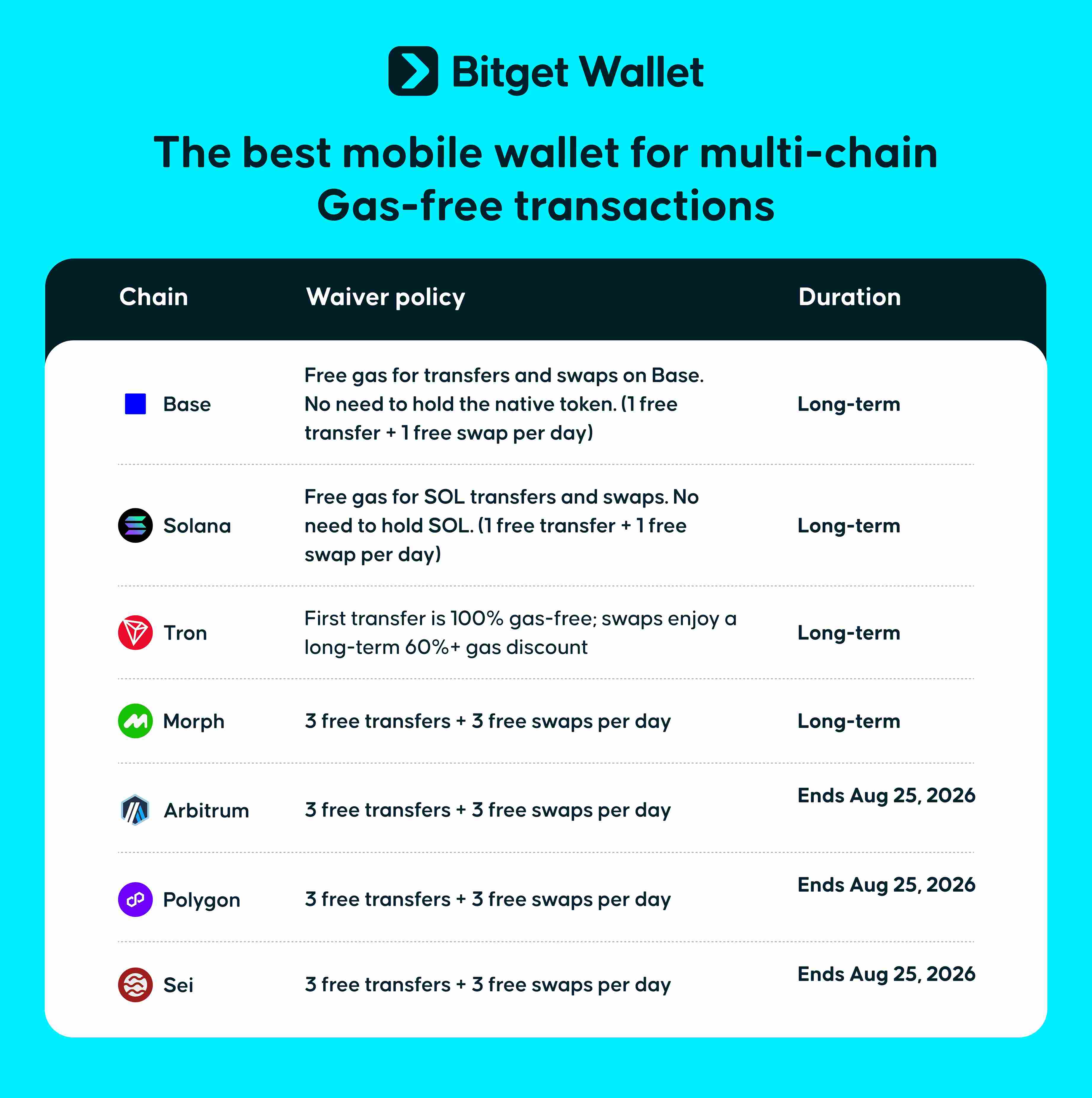
✅ Multi-chain access with cost-efficient execution
Bitget Wallet supports 130+ blockchains, allowing users to manage and interact with StakeStone (STO) across different ecosystems as liquidity expands.
On supported networks, users can benefit from gas optimization and cost-efficient routing, helping reduce execution costs when swapping or transferring assets.
✅ Flexible post-purchase asset management
After buying StakeStone (STO), users can hold, transfer, or deploy assets across chains without withdrawal limits or platform restrictions.
Sign up Bitget Wallet now - grab your $2 bonus!
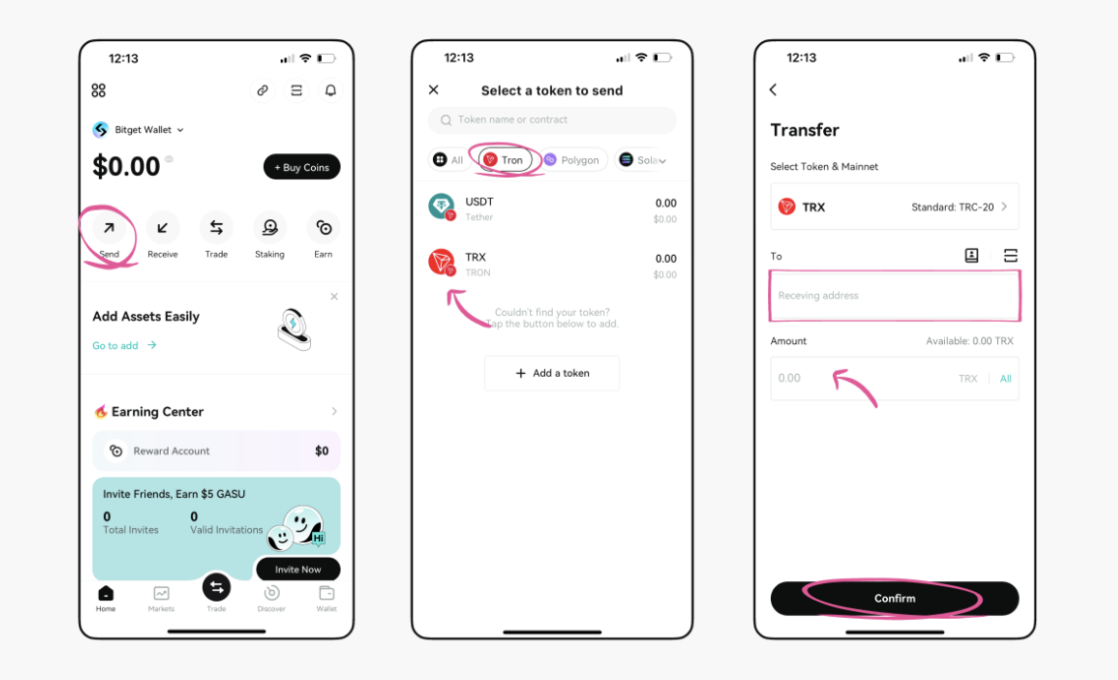
How to Buy StakeStone (STO) on Bitget Wallet?
Trading StakeStone (STO) is easy on Bitget Wallet. Follow these simple steps to get started:
Step 1: Create an Account
If you don't have an account, download the Bitget Wallet app. Sign up by providing the necessary information and verifying your identity.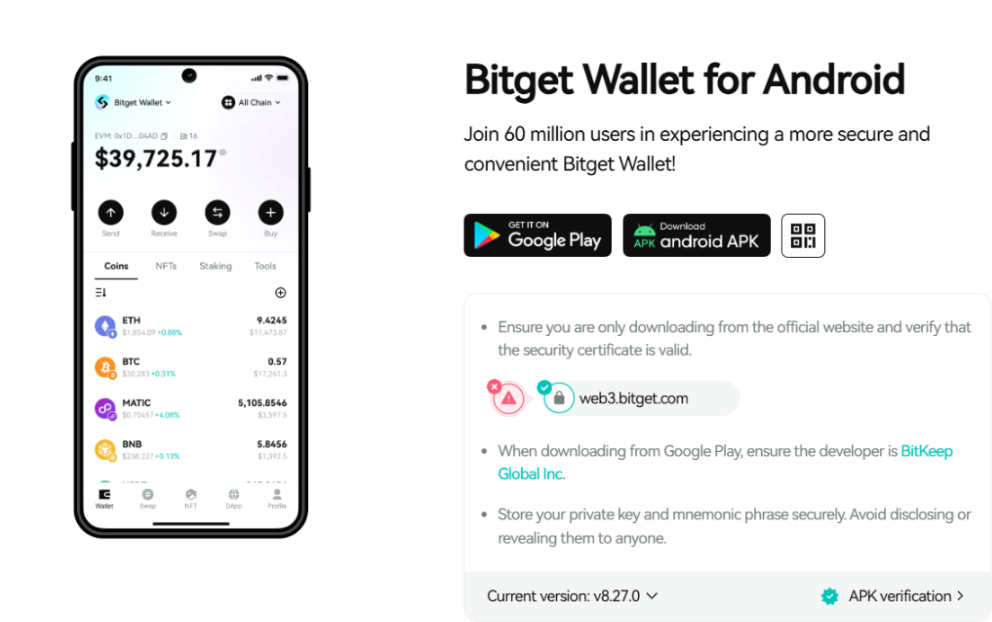
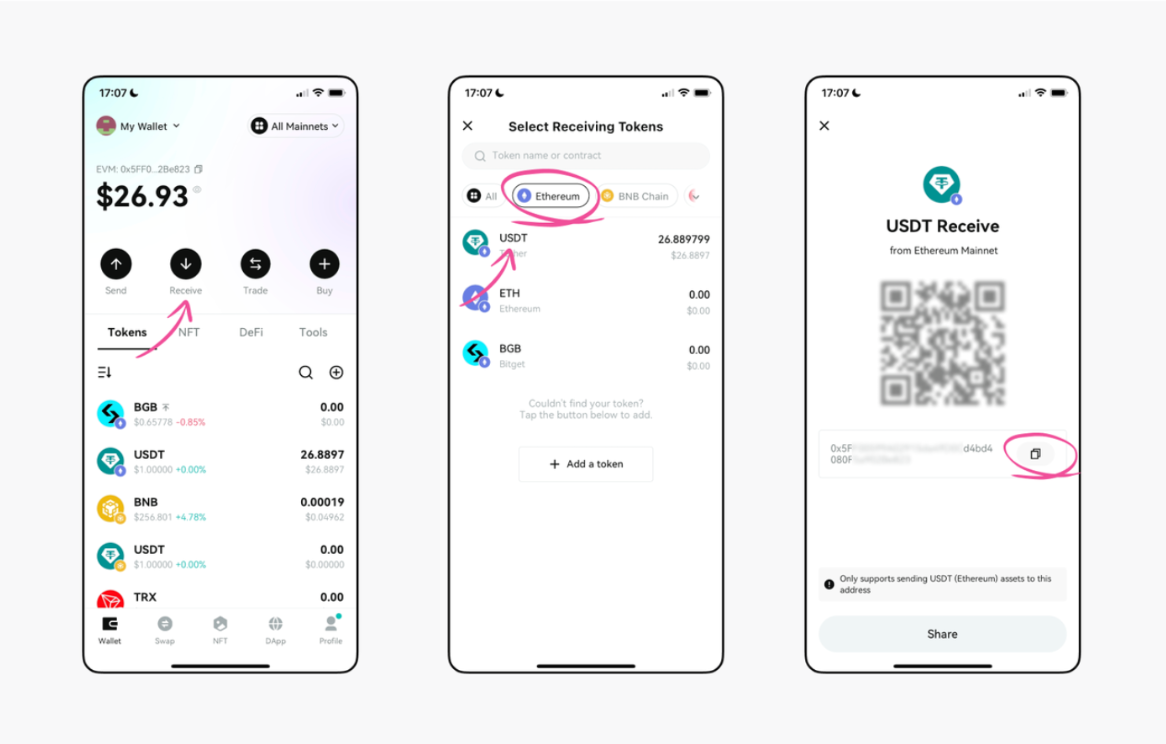
Step 2: Deposit Funds
Once your account is set up, you need to deposit funds. You can do this by:
- Transferring Cryptocurrency: Send crypto from another wallet.
- Buying Crypto: Use a credit or debit card to purchase crypto directly on Bitget Wallet, ensuring you have enough funds for trading StakeStone (STO).
Step 3: Find StakeStone (STO)
In the Bitget Wallet interface, navigate to the market section. Use the search bar to find StakeStone (STO). Click on the token to view its trading page.
Since this token has not been listed yet, please refer to the final contract address provided by the project team after the token is officially listed.
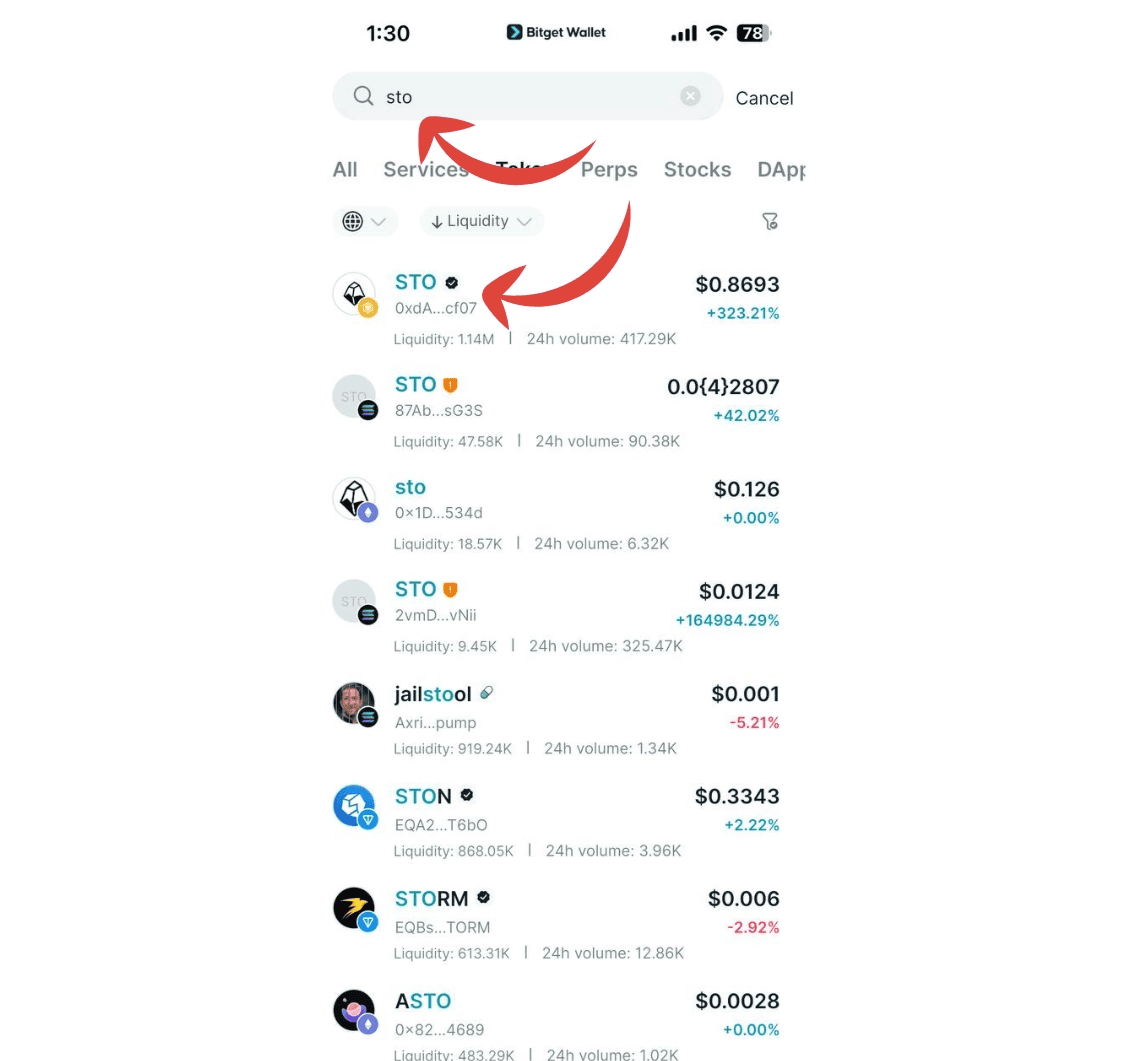
Step 4: Choose Your Trading Pair
Select the trading pair you wish to use, such as STO/USDT. This will allow you to trade StakeStone (STO) against USDT or another cryptocurrency.
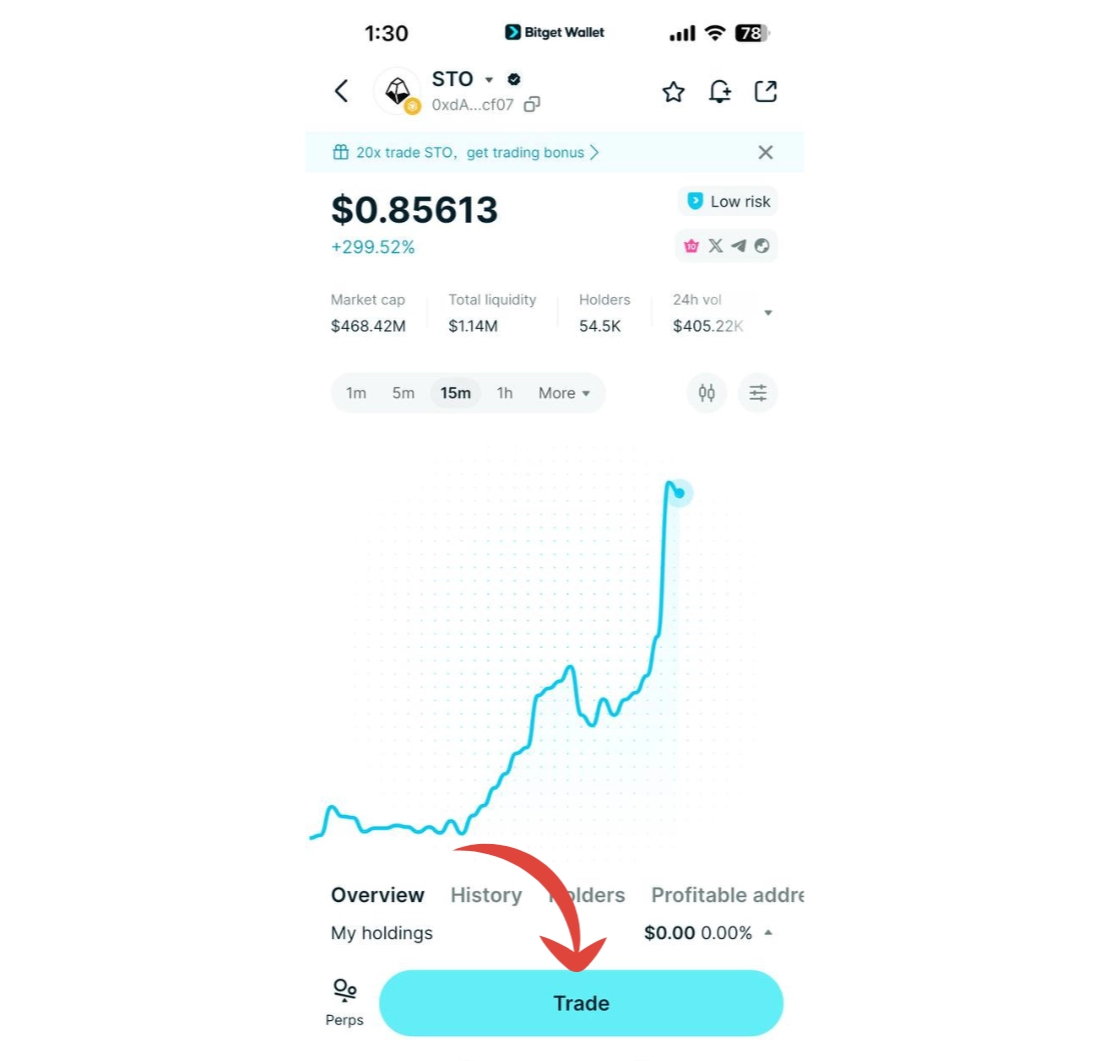
Step 5: Place Your Order
Decide whether you want to place a market order (buy/sell at the current market price) or a limit order (set your own price). Enter the amount of StakeStone (STO) you wish to buy or sell, then confirm your order.
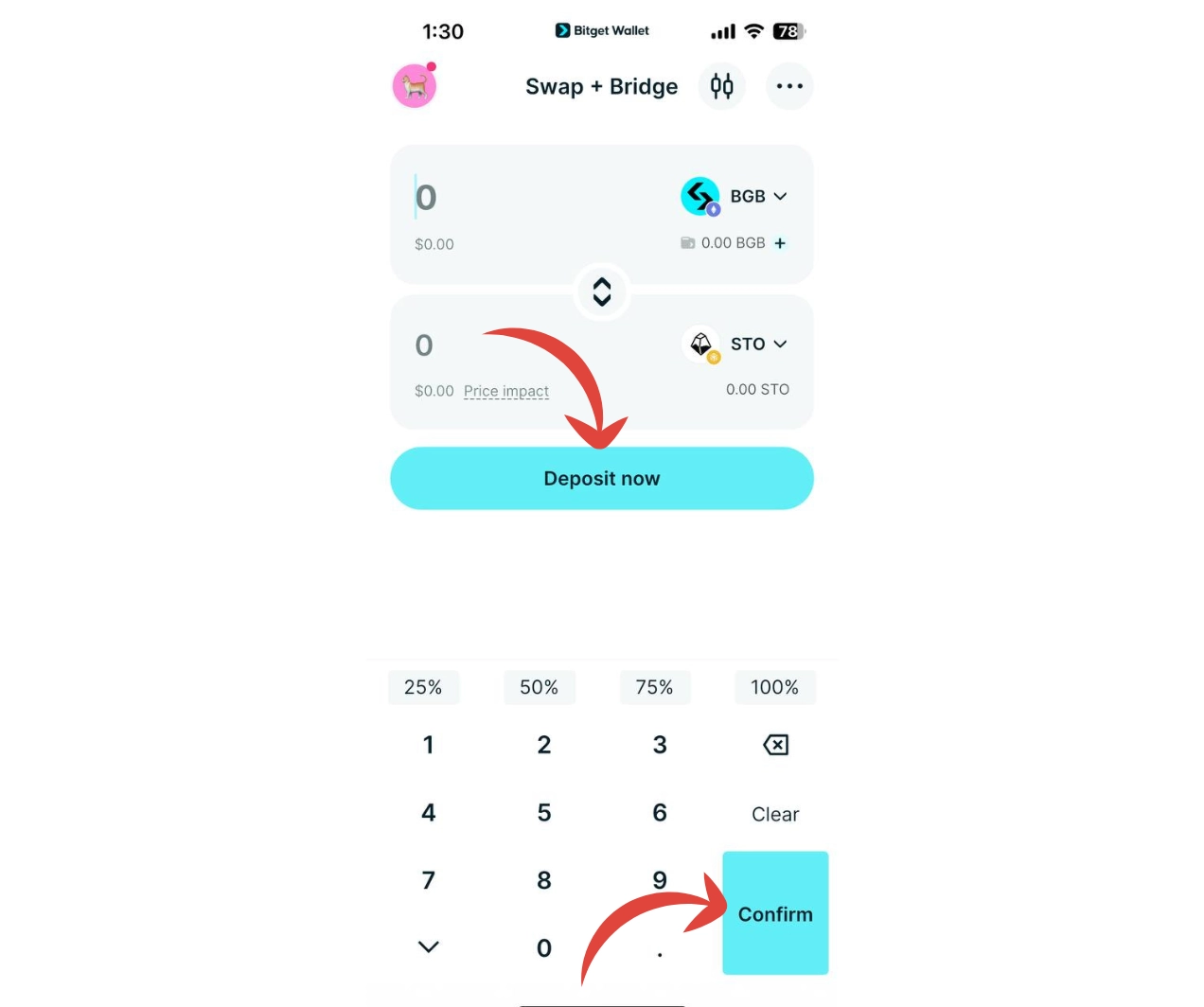
Step 6: Monitor Your Trade
After placing your order, you can monitor its status in the “Open Orders” section. Once the order is executed, you can check your balance to see your newly acquired StakeStone (STO).
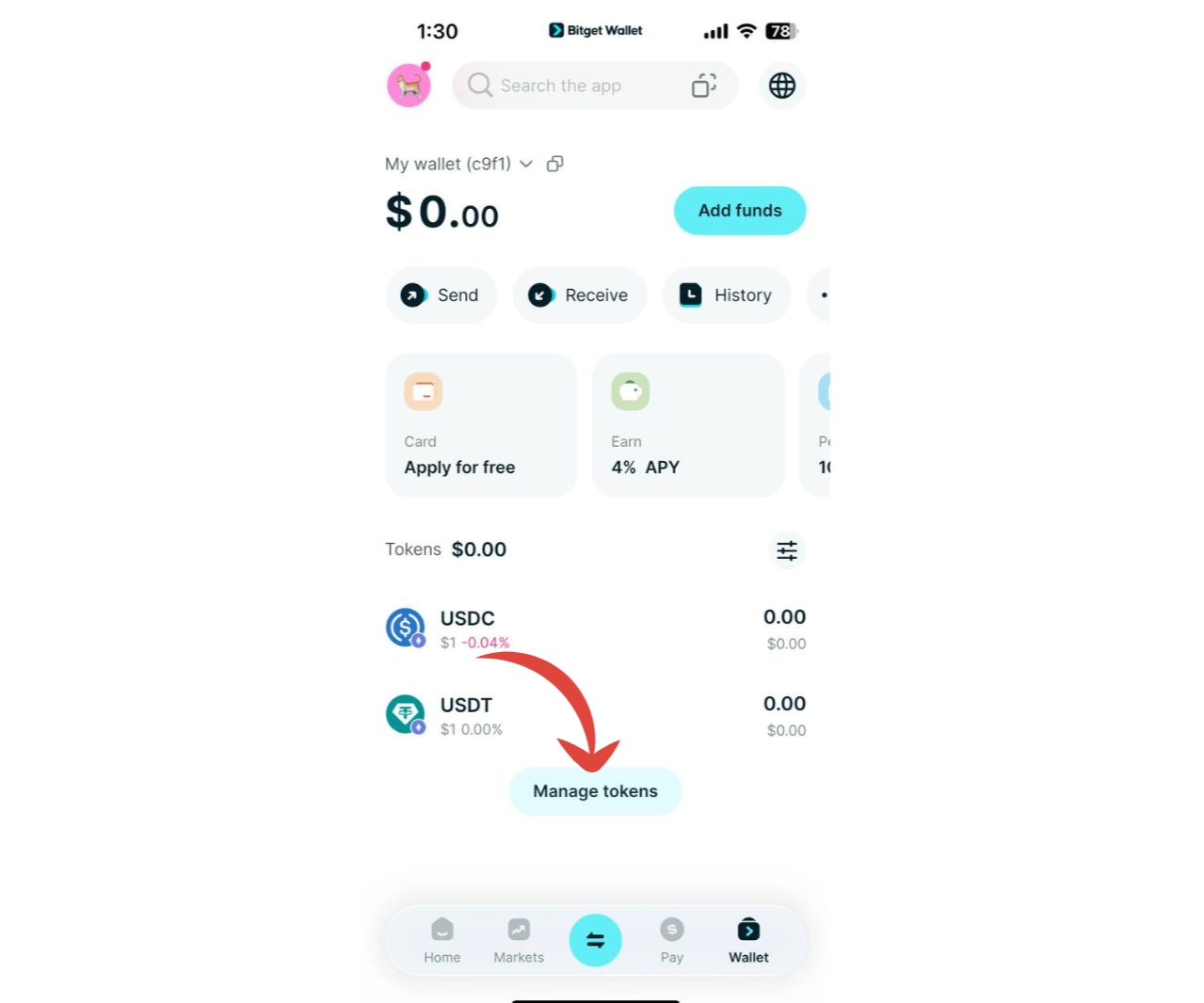
Step 7: Withdraw Your Funds (Optional)
If you wish to transfer your StakeStone (STO) or any other cryptocurrency to another wallet, navigate to the withdrawal section, enter your wallet address, and confirm the transaction.
▶Learn more about StakeStone (STO):
What Should You Know About StakeStone (STO) Price Volatility?
StakeStone (STO) is a DeFi infrastructure token, meaning its volatility is driven by liquidity flows and protocol adoption, rather than fixed revenue models. As a mid-cap asset, it reacts strongly to changes in trading volume and market sentiment.
Price fluctuations are often influenced by exchange activity, DeFi narrative shifts, and capital rotation, making volatility a structural risk rather than a predictable opportunity.
StakeStone (STO) Price Prediction: How High Can StakeStone Go?
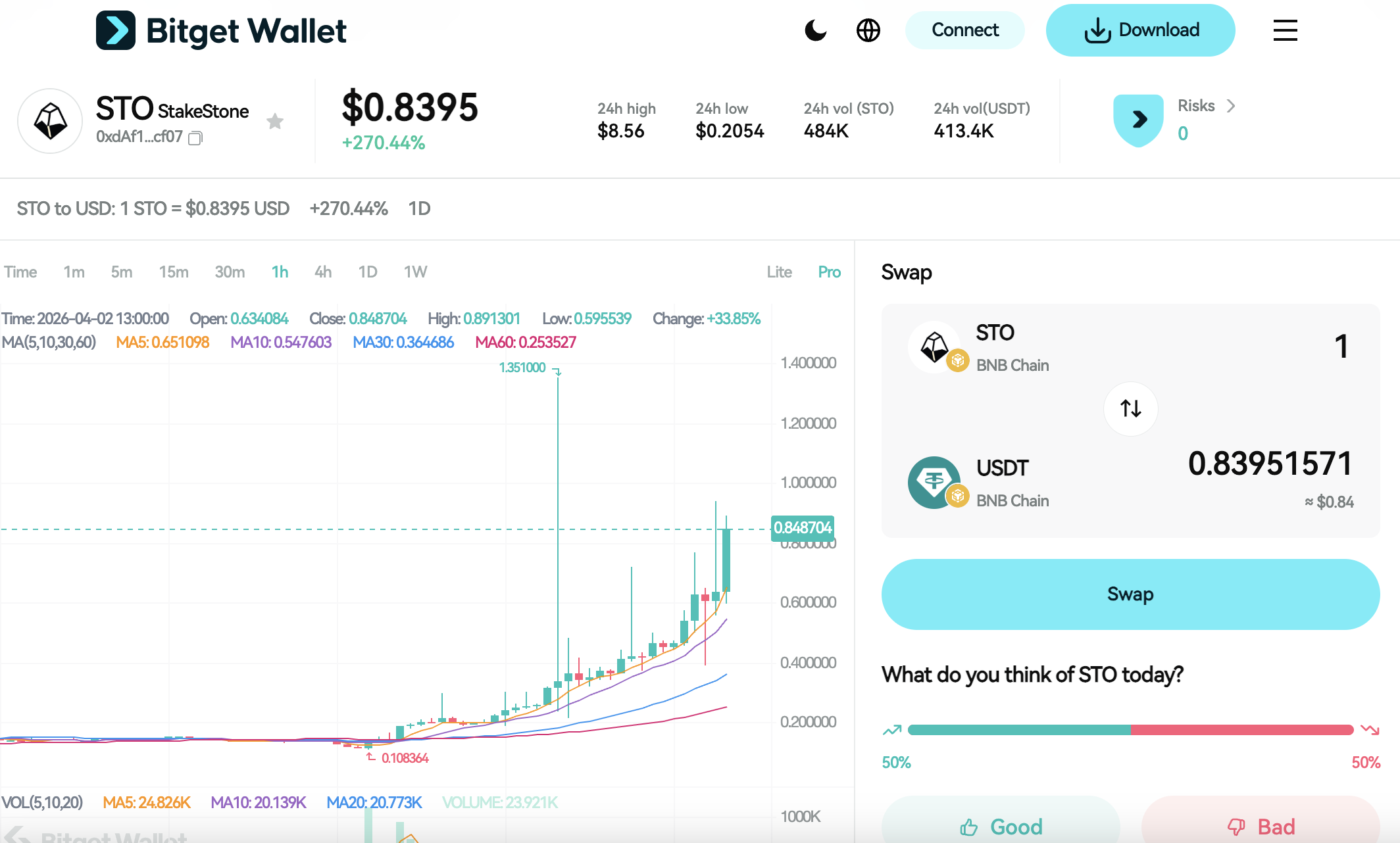
Predicting the price of any cryptocurrency depends on market trends, adoption, and liquidity conditions. As of recent market data, StakeStone (STO) is trading around ~$0.06–$0.08, reflecting its current mid-cap DeFi positioning and active trading volume.
Given its relatively low price range compared to its historical high (~$0.23), STO’s movement remains closely tied to DeFi liquidity flows and exchange activity, rather than fixed valuation models.
If StakeStone continues expanding its role in cross-chain liquidity infrastructure and yield aggregation, its price could trend higher alongside broader DeFi growth. However, any long-term upside depends heavily on TVL expansion, protocol adoption, and sustained trading demand, making it a market-driven asset rather than a predictable one.
Source: CoinGecko, MEXC market data
Source: Bitget Wallet
Is StakeStone (STO) Crypto Safe to Invest In?
The safety of StakeStone (STO) does not depend on the token alone, but on how users execute trades, verify data, and manage risk exposure. Like most DeFi infrastructure tokens, STO operates in a market where liquidity, access points, and user decisions play a bigger role than built-in protections.
Rather than asking whether StakeStone (STO) is “safe,” a more accurate question is whether your trading approach is secure and informed. Even fundamentally stronger projects can carry risk if users interact with the wrong contracts, enter illiquid markets, or overexpose capital.
Key risks to consider:
- Fake or impersonation tokens Copycat contracts can appear on-chain, making it critical to verify the official StakeStone (STO) contract address before trading.
- Liquidity and execution risk Entering trades without checking liquidity depth can result in high slippage or difficulty exiting positions.
- Market-driven volatility StakeStone (STO) price movements are influenced by liquidity flows and DeFi narratives, which can shift quickly.
- Overexposure to a single asset Allocating too much capital to one token increases downside risk, especially in volatile markets.
No speculative crypto asset—including StakeStone (STO)—is risk-free. Managing exposure, verifying transaction details, and understanding market conditions are essential to reducing avoidable losses.
How to Approach StakeStone (STO) Volatility With a Smarter Strategy?
Managing StakeStone (STO) volatility is less about timing the market and more about discipline, controlled exposure, and execution quality. A structured approach helps reduce avoidable losses while building practical on-chain trading skills that apply across different tokens and market conditions.
Instead of chasing short-term price movements, users should treat volatility as a risk factor to manage, not an opportunity to exploit. Learning how liquidity behaves and executing trades carefully is more valuable than reacting to sudden market spikes.
Practical approaches:
- Observe on-chain liquidity behavior Monitor trading volume, order depth, and liquidity pools before entering a position.
- Use small position sizes Limit exposure per trade to reduce downside risk from sudden price swings.
- Set clear capital limits Define how much capital you are willing to allocate to StakeStone (STO) and avoid exceeding it.
- Prioritize secure execution Always verify token details and transaction parameters before confirming trades.
Over time, this disciplined approach helps users develop transferable skills in risk management, liquidity analysis, and secure execution, which are essential for navigating any on-chain market.
Which Crypto Wallet Is the Best Choice to Buy StakeStone (STO): Bitget Wallet
When users search for the best wallet to buy StakeStone (STO), they are typically evaluating security, liquidity access, and execution reliability. Non-custodial wallets allow direct interaction with on-chain markets, while custodial platforms manage assets on behalf of users—each offering different trade-offs.
From a practical standpoint, tokens with on-chain liquidity or cross-chain integrations are often more accessible through non-custodial wallets, especially when liquidity is distributed across multiple networks.
Why Many Traders Choose Bitget Wallet to Buy StakeStone (STO)?
| Feature | Details |
| Self-custody | • Users keep full control of private keys and assets • Reduces custodial risk compared with centralized platforms |
| On-chain swap access | • Interact directly with decentralized liquidity pools • Useful when liquidity is not fully consolidated on a single exchange |
| Multi-chain compatibility | • Supports 130+ blockchains • Access liquidity across different ecosystems as StakeStone expands |
| Trading interface | • Built-in token discovery and swap tools • Simplifies execution while maintaining transparency |
On-chain wallets often provide earlier access to tokens because liquidity typically forms on decentralized platforms before wider exchange listings. Integrated swap functionality also improves execution efficiency by allowing users to trade directly within a single interface without relying on multiple platforms.
Sign up Bitget Wallet now - grab your $2 bonus!
FAQs
Q1. How to buy StakeStone (STO) safely as a beginner?
To buy StakeStone (STO) safely, verify the official contract address, use trusted platforms or wallets, and avoid clicking unknown links. Always check liquidity and trading pairs before executing any transaction.
Q2. Where to buy StakeStone (STO) in 2026?
StakeStone (STO) can be purchased on centralized exchanges with STO/USDT pairs or through on-chain swaps if liquidity is available. The best option depends on whether you prefer convenience (CEX) or full control (non-custodial wallets).
Q3. Can I buy StakeStone (STO) on-chain without KYC?
Yes, you can buy StakeStone (STO) on-chain using a non-custodial wallet like Bitget Wallet without completing KYC. However, you are fully responsible for verifying the correct token and executing the transaction securely.
Q4. What is the StakeStone (STO) contract address and how do I verify it?
The StakeStone (STO) contract address should always be obtained from official sources such as the project website or verified listings. Cross-check it on blockchain explorers before trading to avoid fake tokens.
Q5. Why is StakeStone (STO) price volatility high?
StakeStone (STO) price volatility is driven by liquidity flows, market sentiment, and DeFi adoption rather than fixed fundamentals. As a mid-cap infrastructure token, its price can move quickly based on trading activity and capital rotation.
Risk Disclosure
Please be aware that cryptocurrency trading involves high market risk. Bitget Wallet is not responsible for any trading losses incurred. Always perform your own research and trade responsibly.
 Top Arc Tokens and Memecoins: What’s Trending on Arc Mainnet2026-09-16 | 5 mins
 Circle Arc Mainnet Launch: What Is Arc and Why Does It Matter?2026-09-14 | 5 mins
 Top Robinhood Chain Memecoins 20262026-09-09 | 5 mins



