How to Buy HACHI in 2026: A Beginner’s Step-by-Step Guide to Hachiko
How to buy HACHI is a common question as Hachiko (HACHI) gains attention from increased on-chain trading activity and noticeable shifts in liquidity across Solana DEX markets. As a micro-cap memecoin, HACHI behaves differently from traditional crypto assets, making execution quality and contract verification essential for beginners.
If you’re exploring where to buy HACHI and how to execute trades safely, the process depends on using the correct wallet, verifying the official token, and understanding how on-chain swaps work. In this article, you’ll learn how to buy HACHI step by step, how to verify the correct contract address, and how to manage risk when trading HACHI on Solana.
This guide explains the full buying process and how to trade HACHI safely using on-chain swaps.
To get started, many users choose Bitget Wallet to buy HACHI on-chain, verify the correct contract address, and manage their assets securely in one place.
Key Takeaways
- Hachiko (HACHI) is a Solana-based memecoin driven by liquidity and market sentiment rather than utility.
- Understanding how to buy HACHI safely requires verifying the correct HACHI contract address and avoiding fake tokens.
- Most users buy HACHI on-chain using a non-custodial wallet like Bitget Wallet due to DEX-based liquidity.
What Is Hachiko (HACHI)?
Hachiko (HACHI) is a Solana-based memecoin that has recently gained attention following a sharp surge in trading activity and price movement across decentralized exchanges. Market data shows the token operating in the ~$3M–$4M market cap range with daily volume exceeding ~$500K, alongside intraday price increases of over 30%–40% during peak trading periods, signaling a sudden influx of on-chain liquidity.
Unlike inactive or short-lived tokens, HACHI continues to show ongoing trading activity across Solana DEXs, with tens of thousands of holders participating in the market. This level of activity places it within the actively traded micro-cap segment, where price behavior is highly reactive to capital inflows rather than long-term fundamentals.
Understanding how to buy HACHI requires recognizing how on-chain liquidity and trading activity shape its behavior.
What makes Hachiko (HACHI) different from utility tokens?
-
Market-driven surge (news signal):
Recent data indicates that HACHI experienced rapid increases in both price and trading volume within short timeframes, with volume spikes exceeding 200% during active trading windows. This type of movement is typically associated with speculative inflows and short-term trading cycles, not protocol growth.
-
Supply and price structure:
HACHI operates with a total supply approaching 1 quadrillion tokens, resulting in a low unit price that allows smaller traders to enter positions easily. This structure is commonly seen in tokens that rely on high circulation and rapid turnover.
-
DEX-driven trading environment:
HACHI is primarily traded through on-chain liquidity pools on the Solana network, with limited presence on centralized exchanges. This means price discovery happens directly on-chain, where liquidity depth and trade size can significantly impact execution and price movement.

Source: Bitget Wallet
Is Hachiko (HACHI) a scam or just high-risk?
Hachiko (HACHI) is not automatically a scam, but it should be treated as a high-risk, activity-driven token based on how it trades on-chain.
Recent activity shows that HACHI has re-entered active trading circulation following its January 2026 peak, with renewed volume and price movement indicating ongoing participation rather than inactivity. However, this type of activity is typically cycle-based, meaning trading interest can increase and fade quickly depending on liquidity conditions.
This is why learning how to buy HACHI safely and verifying the correct contract address is critical before trading.
To understand how to buy HACHI safely, users must:
-
Verify the official HACHI contract address:
x95HN3DWvbfCBtTjGm587z8suK3ec6cwQwgZNLbWKyp -
Be aware that multiple tokens may use the name “HACHI”, making contract verification essential before any transaction
-
Check liquidity depth before swapping, as price impact can vary significantly depending on pool size
-
Recognize that trading activity may be cyclical, meaning liquidity and execution conditions can change rapidly within short periods
Where to Buy HACHI?
When users ask “where to buy HACHI,” they usually mean the best mix of convenience, safety, and execution quality. The real decision is custody model: custodial platforms hold assets for you, while on-chain swaps let you trade HACHI directly from your own wallet.
HACHI is currently not widely listed on major centralized exchanges, so most access comes from on-chain swaps on the Solana network. This means users rely on wallet-based execution rather than traditional exchange platforms.
What’s available depends on active liquidity and trading pairs at the time of execution, which can change quickly for tokens like HACHI. Before buying, users should check liquidity conditions to avoid high price impact and unstable execution.
Because HACHI is issued on Solana, users searching how to buy HACHI on Solana are typically referring to wallet-based swaps that access decentralized liquidity.
Comparison of HACHI Buying Methods
| Buying Method | Custody Model | Execution | Control | Recommended For | Main Risks |
| On-chain Swap (DEX via Wallet) | Non-custodial | User-controlled, on-chain | High | DeFi users | • Contract impersonation • Slippage • Gas fee fluctuation |
| On-chain UEX (via Exchange) | Custodial | Platform-managed | Medium | Simplified access | • Custodial exposure • Withdrawal limits |
| Centralized Exchange (CEX) | Custodial | Platform-managed | Low | Beginners | • Custodial risk • Regulatory limits |
Why Many Users Buy HACHI With Bitget Wallet?
If HACHI liquidity is mainly on-chain, a non-custodial wallet helps you swap while keeping control of assets. Bitget Wallet also supports cross-chain access and helps reduce common beginner mistakes like interacting with impersonation tokens.
Many users prefer to buy HACHI with Bitget Wallet because it allows direct access to on-chain liquidity while maintaining full control over assets.
What Bitget Wallet Helps With?
✅ Self-custody and asset control
Users retain full ownership of private keys and funds, reducing exposure to custodial and platform-related risks.
✅ On-chain swaps with transparent execution
Explore over 1M tokens with real-time in-app rankings—discover trending assets early and stay ahead of the market.
✅ Multi-chain access with cost-efficient execution
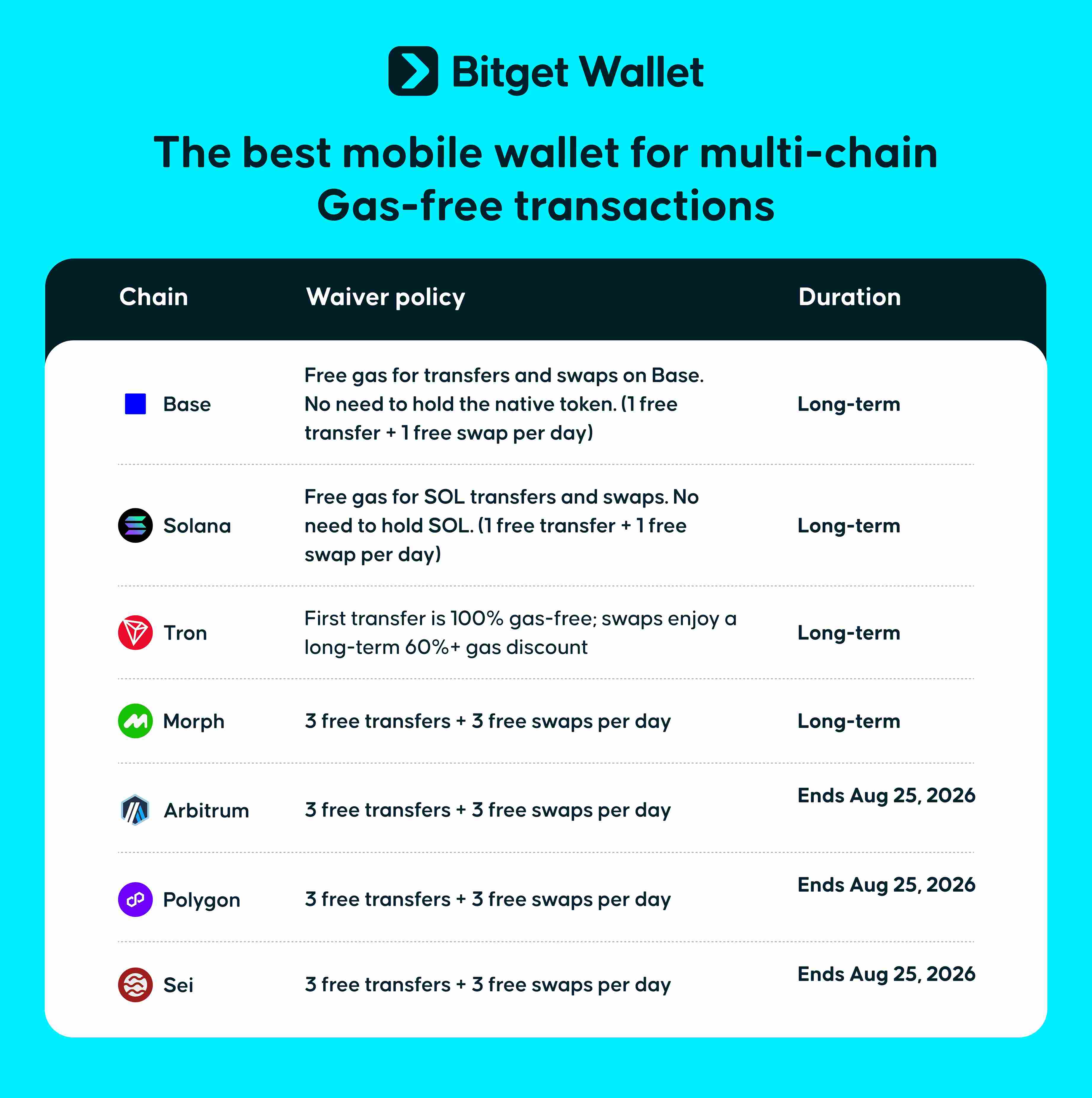
Bitget Wallet supports 130+ blockchains, including 7 major networks such as Solana, Base, Arbitrum, Polygon, Tron, and more. This allows users to buy, hold, and manage HACHI across different ecosystems without being locked into a single chain environment.
On supported networks, users can also benefit from gas-free transactions or long-term gas discounts, helping reduce execution costs when swapping, transferring, or managing assets across chains—an advantage for users who trade frequently or operate across multiple ecosystems.
✅ Flexible post-purchase asset management
After buying HACHI, users can hold, transfer, or manage assets freely across supported chains without withdrawal limits or third-party restrictions, making it easier to adapt to changing liquidity or market conditions.
Sign up Bitget Wallet now - grab your $2 bonus!
How to Buy Hachiko (HACHI) on Bitget Wallet?
Trading Hachiko (HACHI) is easy on Bitget Wallet. Follow these simple steps to get started:
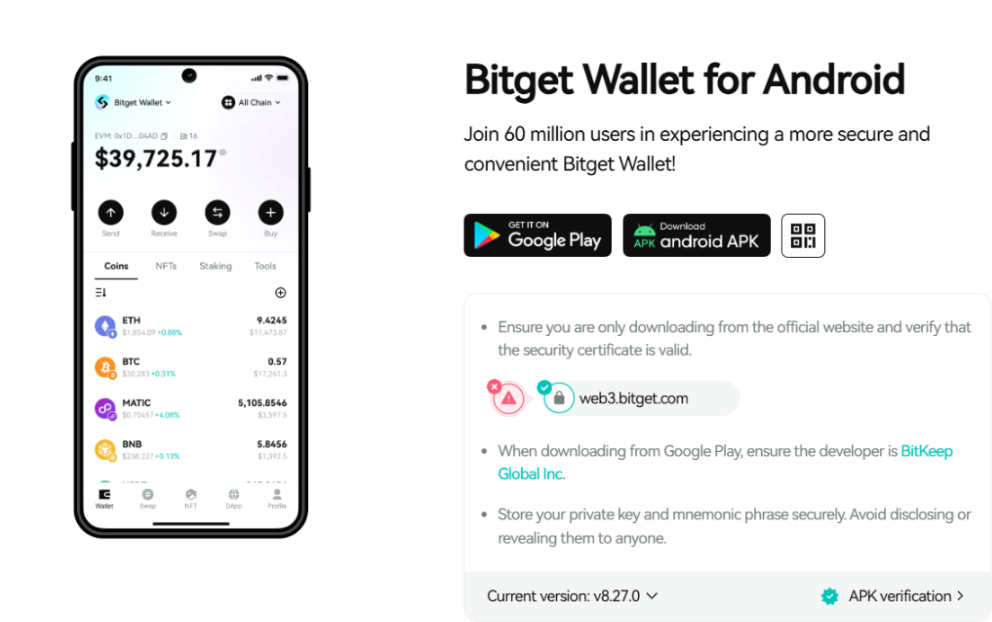
Step 1: Create an Account
If you don't have an account, download the Bitget Wallet app. Sign up by providing the necessary information and verifying your identity.
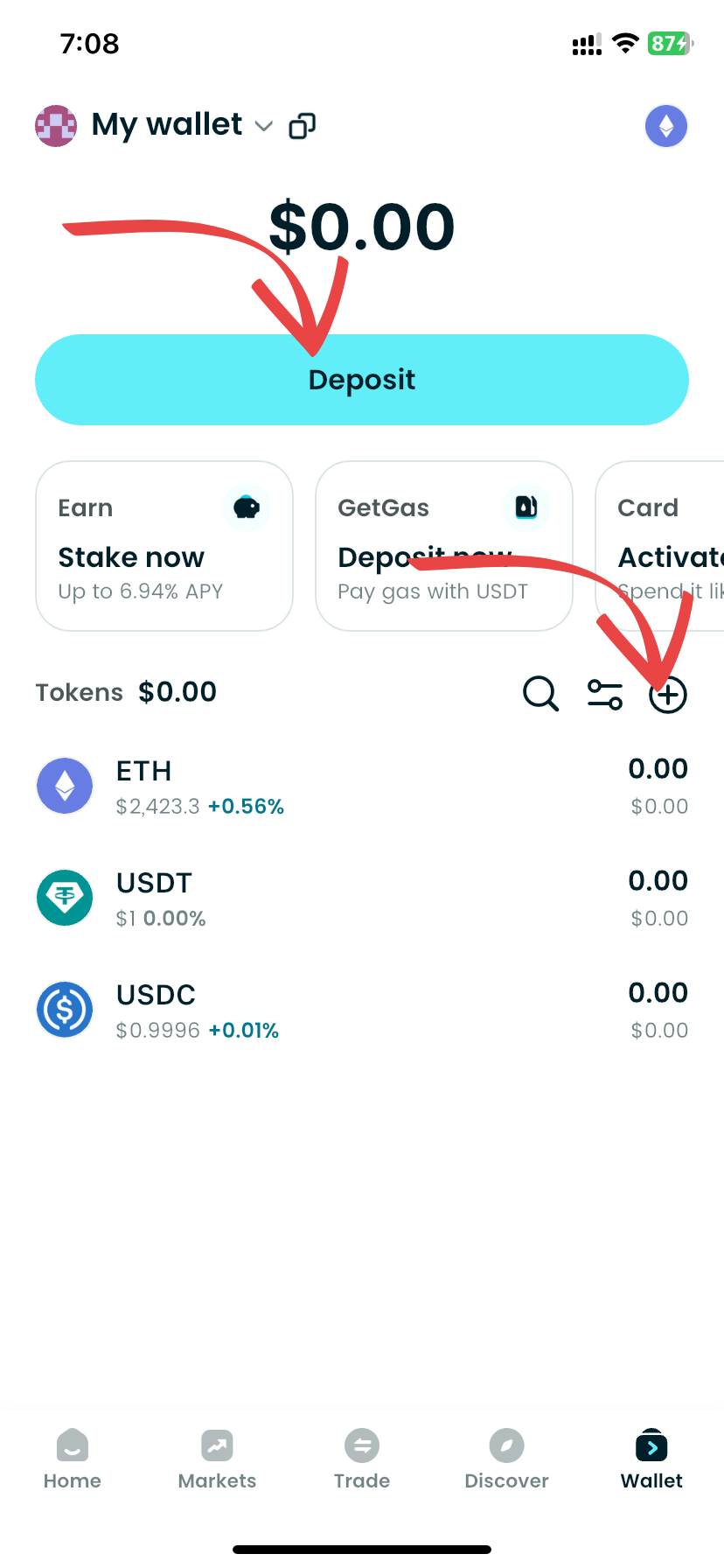
Step 2: Deposit Funds
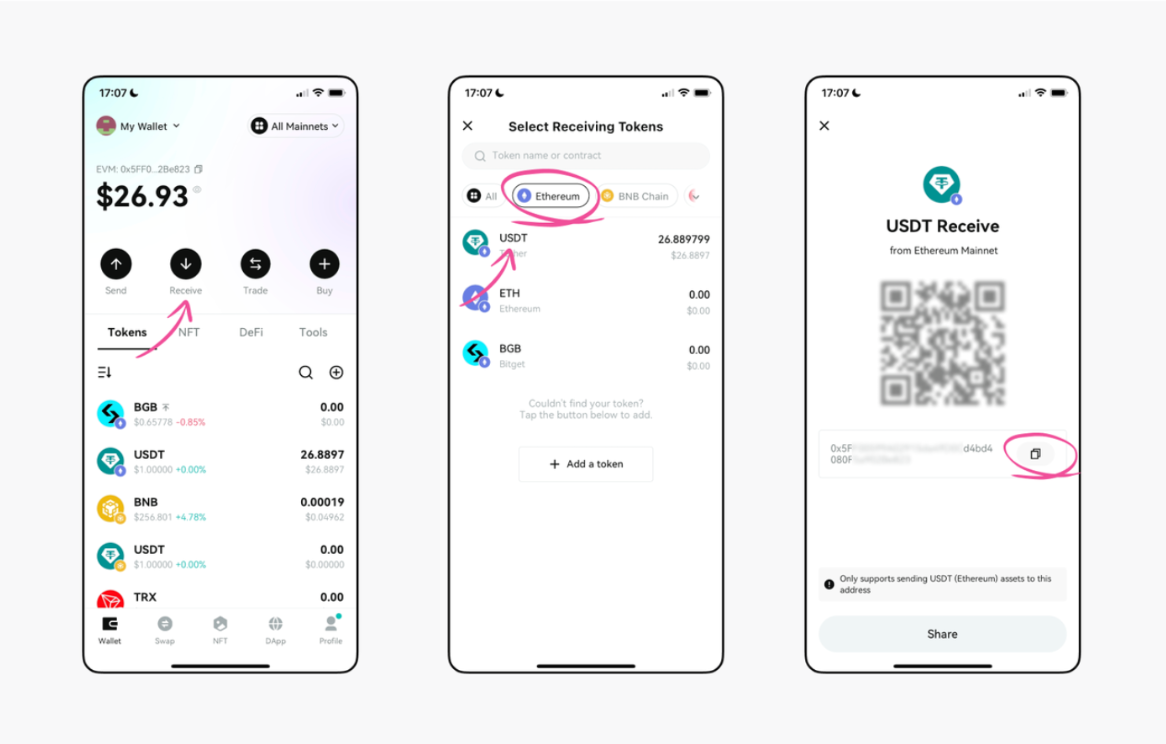
Once your account is set up, you need to deposit funds. You can do this by:
- Transferring Cryptocurrency: Send crypto from another wallet.
- Buying Crypto: Use a credit or debit card to purchase crypto directly on Bitget Wallet, ensuring you have enough funds for trading Hachiko (HACHI).
Step 3: Find Hachiko (HACHI)
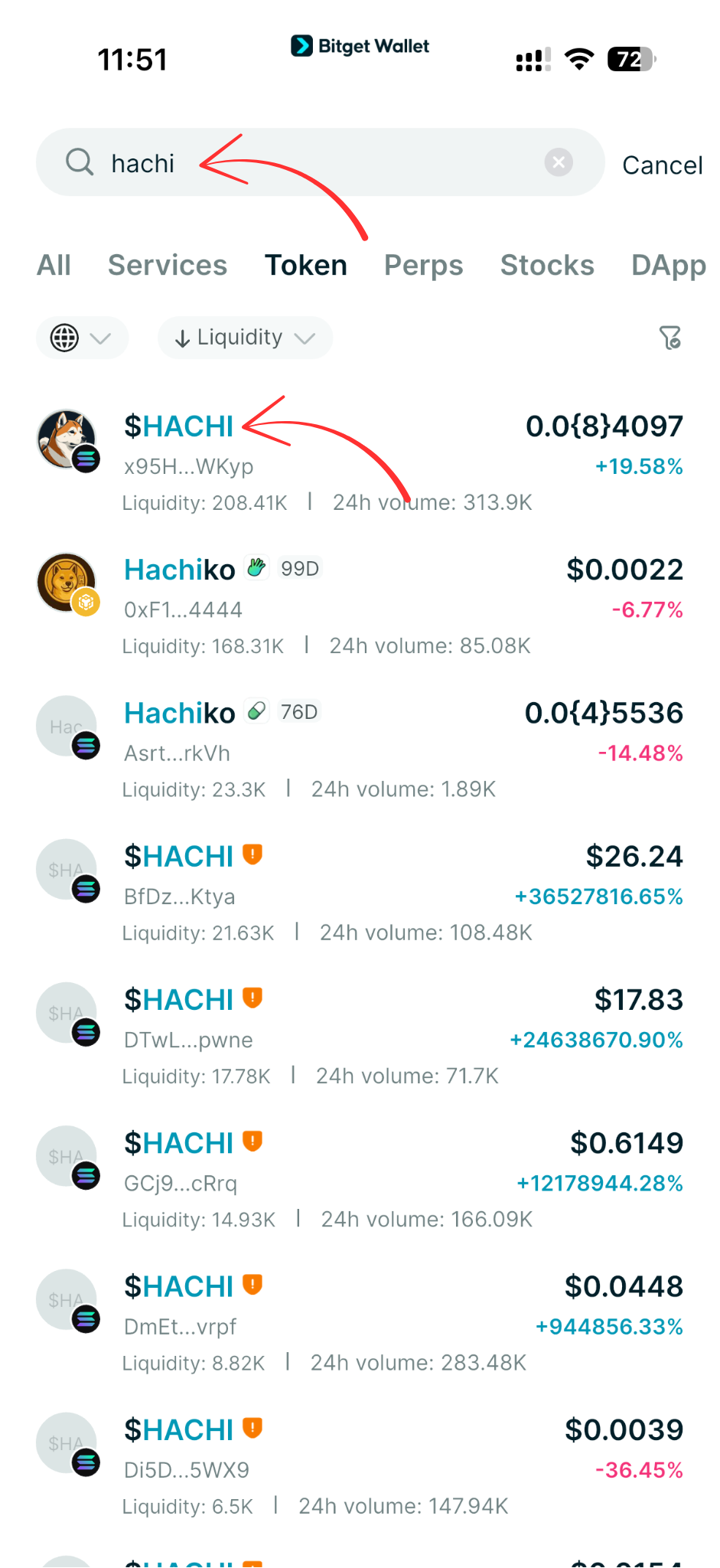
In the Bitget Wallet interface, navigate to the market section. Use the search bar to find Hachiko (HACHI). Click on the token to view its trading page.
To ensure accuracy, always verify the official HACHI contract address before selecting the token, as multiple assets may share the same name on Solana.
Step 4: Choose Your Trading Pair
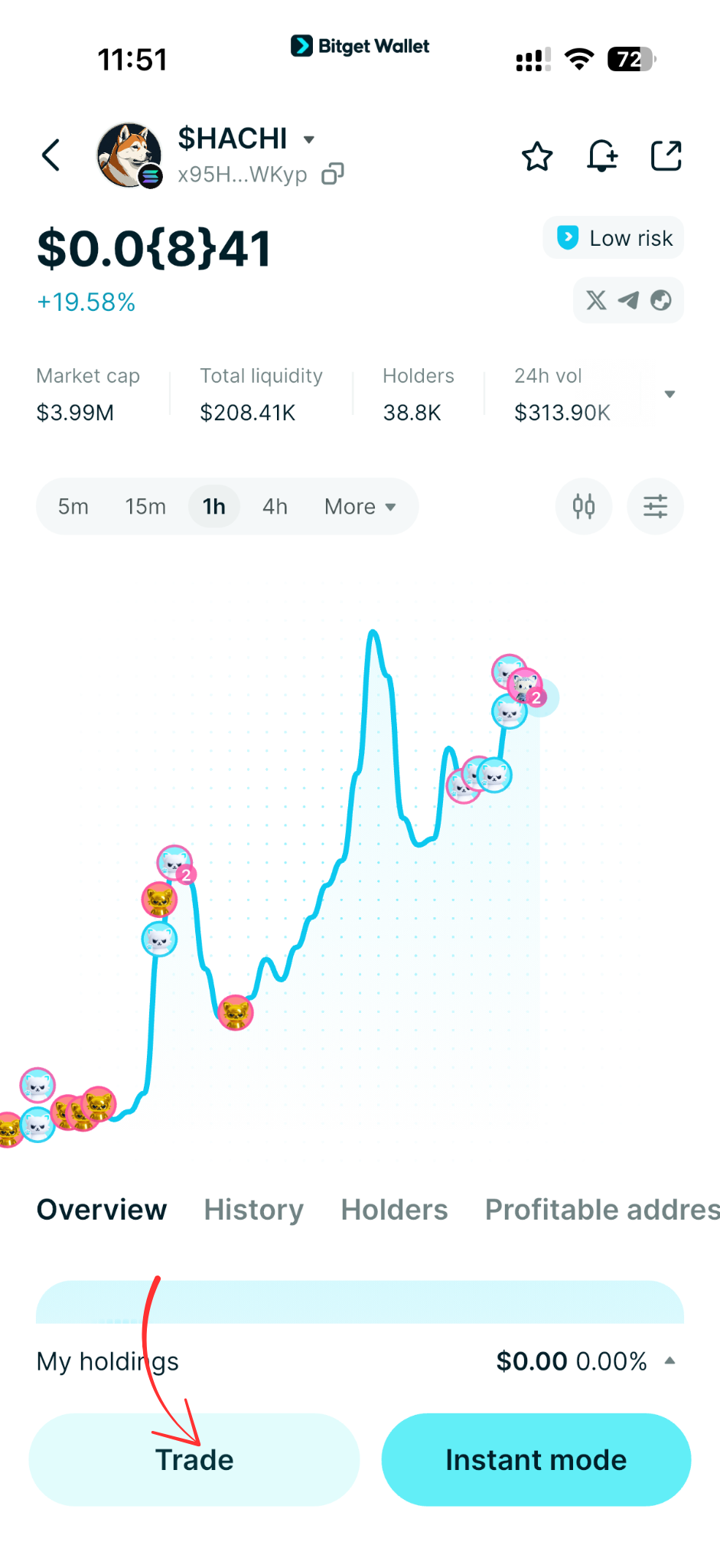
Select the trading pair you wish to use, such as HACHI/USDT. This will allow you to trade Hachiko (HACHI) against USDT or another cryptocurrency.
Step 5: Place Your Order
Decide whether you want to place a market order (buy/sell at the current market price) or a limit order (set your own price). Enter the amount of Hachiko (HACHI) you wish to buy or sell, then confirm your order.
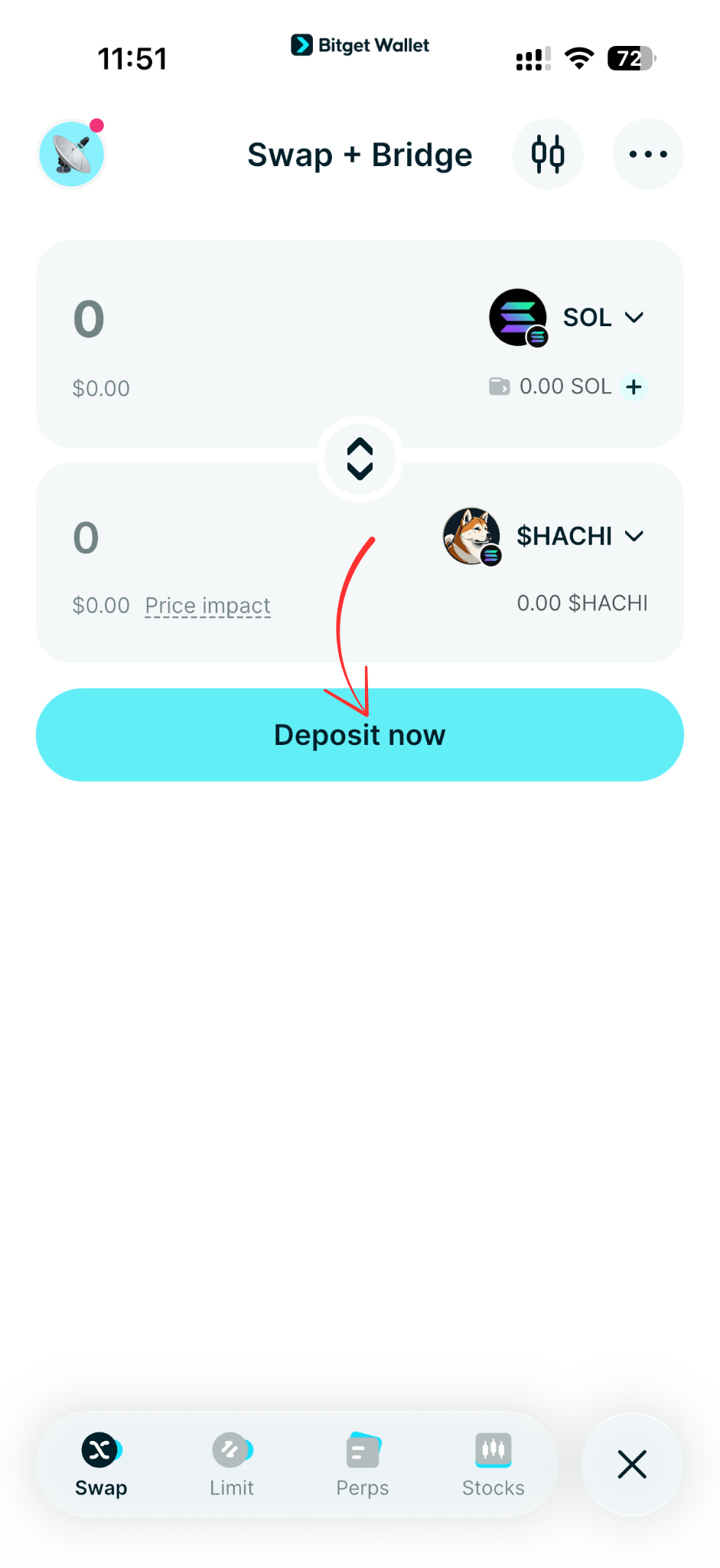
Step 6: Monitor Your Trade
After placing your order, you can monitor its status in the “Open Orders” section. Once the order is executed, you can check your balance to see your newly acquired Hachiko (HACHI).
Step 7: Withdraw Your Funds (Optional)
If you wish to transfer your Hachiko (HACHI) or any other cryptocurrency to another wallet, navigate to the withdrawal section, enter your wallet address, and confirm the transaction.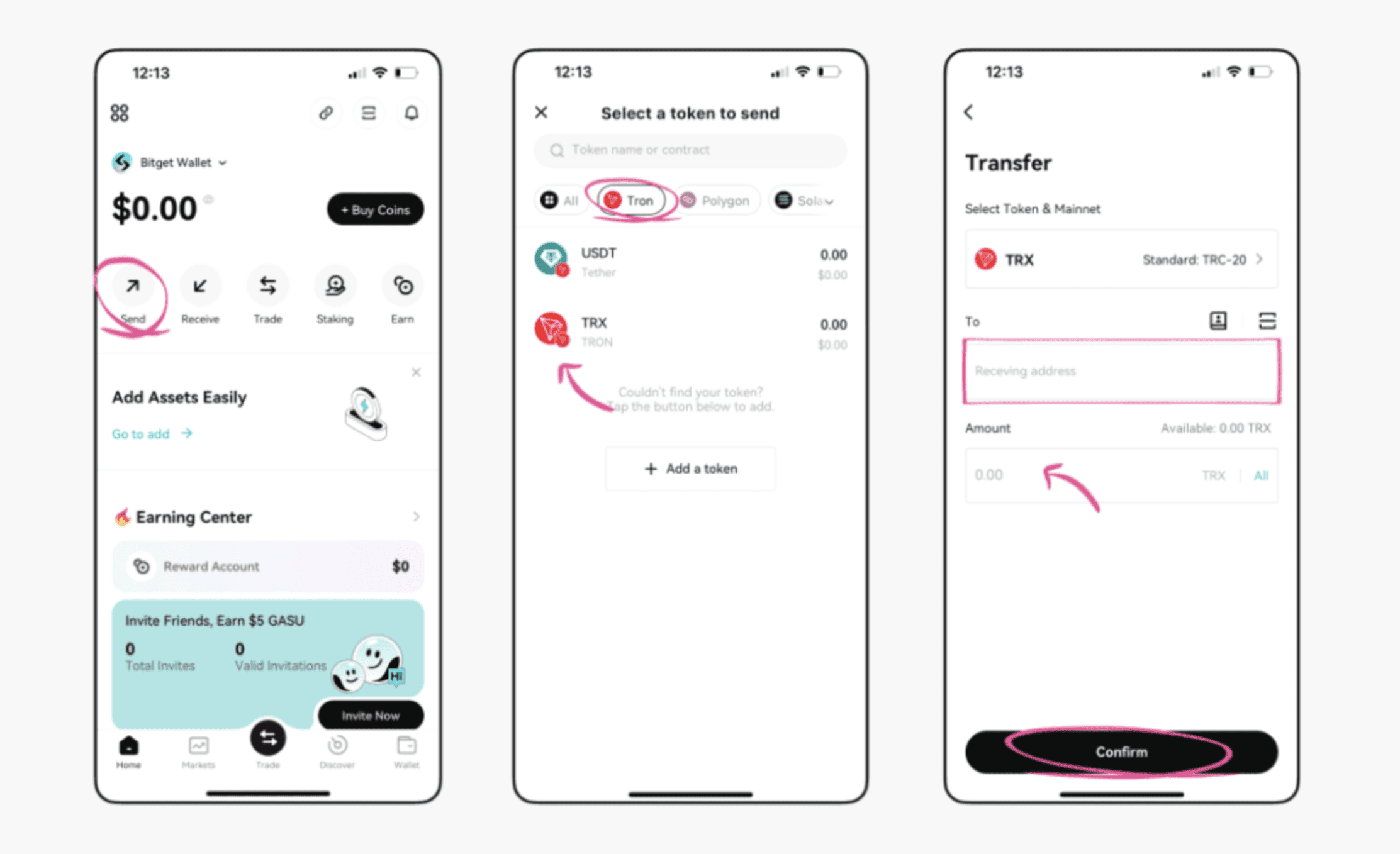
What Should You Know About HACHI Price Volatility?
HACHI price volatility is driven by its nature as a micro-cap Solana memecoin, where price movements depend on on-chain liquidity and short-term trading demand. Because HACHI does not rely on utility or product adoption, its price is shaped by capital flow and market attention, not fundamentals.
HACHI can experience sharp price fluctuations because it trades through on-chain liquidity pools where price reacts directly to buy and sell pressure. Even moderate trades can create noticeable price impact, making execution timing and liquidity awareness critical when learning how to buy HACHI safely.
The role of HACHI price volatility is closely tied to:
- changing liquidity conditions
- shifts in trader participation
- short-term attention cycles
Recent market reports describe Hachiko (HACHI) gaining traction after a SHIB-related narrative, followed by a rapid rise in trading activity and market cap during the same cycle, reflecting short-term demand and speculative participation.
For this reason, HACHI price volatility should be treated as a risk characteristic, not an opportunity, as conditions can change rapidly without warning.
HACHI Price Prediction: How High Can Hachiko (HACHI) Go?
Factors such as market conditions, trading activity, and liquidity conditions shape cryptocurrency valuations. Based on observed market data and circulating supply of approximately 970 trillion tokens, Hachiko (HACHI) is expected to trade within the range of $0.000000003 to $0.000000012 during active market cycles. If trading activity intensifies and liquidity expands, its price may temporarily rise toward $0.000000015, though such levels are typically driven by short-term demand rather than sustained growth.
Key Drivers of Hachiko (HACHI) Price Movement
Several factors shape the potential value of Hachiko (HACHI):
-
Market Dynamics:
Price is influenced by liquidity depth and trading activity, where increased buy pressure can quickly push price higher within short periods.
-
Adoption & Practical Use Cases:
There is no confirmed utility or product adoption supporting HACHI, meaning price movement depends primarily on market participation.
-
Technological Development & Expansion:
There are no active development updates or ecosystem integrations that directly support long-term valuation.
Future Growth Prospects
If Hachiko (HACHI) maintains trading activity within the Solana memecoin segment, increased participation could push its price toward the upper range of $0.000000012 to $0.000000015 during strong cycles. However, investors should remain cautious, as price movements are highly sensitive to liquidity changes and can reverse quickly without sustained demand.
Source: CoinMarketCap, CoinGecko
Is HACHI Crypto Safe to Invest In?
The safety of HACHI depends on how users trade and manage risk, rather than the token itself. Because HACHI is primarily accessed through on-chain swaps, execution quality, contract verification, and position control play a critical role in reducing avoidable losses.
Knowing how to avoid fake HACHI tokens is essential when trading on decentralized exchanges.
Key risks include:
- Fake tokens using similar names or contract variations
- Low liquidity awareness leading to high slippage or poor execution
- Overexposure to a highly volatile, activity-driven asset
No speculative crypto asset is risk-free. Users should focus on verifying the correct token, managing trade size, and understanding execution conditions before interacting with HACHI.
How to Approach HACHI Volatility With a Smarter Strategy?
Approaching HACHI volatility requires discipline rather than attempting to time short-term price movements. By focusing on controlled exposure and understanding how on-chain markets behave, users can reduce avoidable losses and build skills that apply across different trading environments.
Understanding how to check HACHI liquidity can help reduce slippage and improve trade execution.
Best practices include:
- Observing on-chain liquidity behavior before entering trades
- Using small position sizes to limit downside risk
- Setting clear capital limits
- Prioritizing secure execution over speed
Over time, this approach helps users develop practical on-chain trading experience, improving decision-making and risk management beyond a single token or market cycle.
Which Crypto Wallet Is the Best Choice to Buy HACHI: Bitget Wallet
When choosing the best wallet to buy HACHI, users should compare custody, execution control, and liquidity access. Unlike custodial platforms that hold assets on behalf of users, non-custodial wallets allow direct interaction with on-chain liquidity, which is where HACHI is primarily traded.
Because HACHI liquidity exists mainly on decentralized markets, using a non-custodial wallet provides better access and control. It also allows users to execute swaps directly without relying on exchange listings, which may not always be available or liquid.
Why Many Traders Choose Bitget Wallet to Buy HACHI?
Bitget Wallet can be a suitable option when buying tokens like Hachiko (HACHI), especially when liquidity is concentrated on-chain rather than on centralized exchanges. It allows users to access decentralized markets directly while maintaining control over assets and execution.
| Feature | Details |
| Self-custody | • Users keep full control of private keys and assets • Reduces custodial risk compared with centralized platforms |
| On-chain swap access | • Direct interaction with decentralized liquidity pools • Many new tokens appear on DEX before exchange listings |
| Multi-chain compatibility | • Supports 130+ blockchains • Allows access to liquidity across ecosystems |
| Trading interface | • Built-in token discovery and swap tools • Simplifies execution for beginners |
For tokens like HACHI, on-chain wallets often provide the earliest access because liquidity forms on decentralized exchanges before centralized listings. Integrated swap functionality also improves execution efficiency by allowing users to trade directly within the wallet without relying on external platforms.
Sign up Bitget Wallet now - grab your $2 bonus!
FAQs
Q1. How to buy HACHI safely as a beginner?
To learn how to buy HACHI safely, always verify the official contract address and use a trusted non-custodial wallet before executing any swap. Avoid unknown links and check liquidity conditions to reduce the risk of interacting with fake tokens.
Q2. Where can I buy HACHI?
If you’re wondering where to buy HACHI, it is mainly available through on-chain swaps where liquidity exists rather than major centralized exchanges. Most users buy HACHI directly from decentralized liquidity pools using a wallet-based swap.
Q3. Do I need KYC to buy HACHI?
Whether KYC is required depends on the purchase method. Centralized exchanges (CEXs) typically require KYC, as users trade through custodial accounts managed by the platform.
In contrast, buying HACHI through on-chain swaps using a non-custodial wallet like Bitget Wallet does not require KYC. Users interact directly with decentralized liquidity from their own wallet, without submitting identity information. However, this also means users are fully responsible for security, contract verification, and transaction execution.
Q4. Is HACHI crypto high risk?
Yes, HACHI is a high-risk asset because its price is driven by liquidity and trading activity rather than stable fundamentals. Rapid price changes and low liquidity conditions can lead to significant losses if not managed carefully.
Q5. How to avoid fake HACHI tokens?
To avoid fake HACHI tokens, always confirm the correct contract address and avoid clicking on unofficial links or social media promotions. Checking liquidity pools and token details before swapping is essential to ensure you are interacting with the legitimate asset.
Risk Disclosure
Please be aware that cryptocurrency trading involves high market risk. Bitget Wallet is not responsible for any trading losses incurred. Always perform your own research and trade responsibly.