


Bitget Wallet Is a Non-Custodial Wallet | Why Self-Custody Matters in Crypto?
Bitget Wallet is a non-custodial wallet, which means you get to keep control of your private keys your money and what you do with it. This kind of wallet lets you take care of your crypto on your own without having to trust someone with your money. As more people start using Web3 it becomes more important to have control over your crypto. This is called self-custody crypto. Bitget Wallet gives you this control so you really own your money in these decentralized systems.
You can manage your money the way you want to with Bitget Wallet. In this article we will talk about how Bitget Wallet helps you have control over your crypto and makes it easy to manage your money across chains. Bitget Wallet is, about giving you control over your crypto so you can do what you want with your money.
Key Takeaways
- The Bitget Wallet is a type of wallet where you're in charge of your own money and private information.
- When you use a wallet like this you can do what you want with your crypto without needing to go through a company.
- Being able to take care of your crypto is really important if you want to be a part of Web3 and use things like decentralized finance and blockchain.
- The Bitget Wallet lets you do lots of things like keep your assets trade tokens and use apps that are not controlled by one company all on different blockchains, with the Bitget Wallet.
What Is a Non-Custodial Wallet?
A non-custodial wallet does not rely on third parties to store or manage assets. Instead, users directly interact with blockchain networks, sign transactions themselves, and maintain full authority over their digital wealth. This is the foundation of crypto self-custody and a key principle of Web3.
What Are the Key Characteristics of a Non-Custodial Wallet?
A non-custodial wallet is defined by one core principle: users have full ownership and control over their digital assets. Unlike custodial solutions, where a third party manages access, non-custodial wallets empower individuals through private key control, ensuring that only the user can authorize transactions and manage funds. This model is fundamental to self-custody crypto, enabling secure, independent participation in blockchain ecosystems.
Key characteristics include:
- Users hold their own private keys Full ownership begins with private keys. In a non-custodial wallet, these keys are generated and stored by the user, not a centralized platform.
- Transactions are signed directly by the user Every transaction must be approved and signed locally, ensuring that no external party can move funds without permission.
- No third party controls funds or access Users are the sole custodians of their assets, removing reliance on exchanges or intermediaries.
- Full interaction with blockchain networks A non-custodial wallet enables direct access to decentralized applications, DeFi protocols, and on-chain services.
What Is a Custodial Wallet?
A custodial wallet is the opposite model. In this setup, a centralized platform manages your keys and assets on your behalf.
Instead of having direct private key control, users depend on the provider to secure funds, process withdrawals, and authorize access. While this may be convenient, it introduces risks related to control, access restrictions, and reliance on third parties.
What Is the Difference Between a Non-Custodial Wallet and a Custodial Wallet?
Understanding custodial vs non-custodial wallet differences is essential for anyone entering crypto, especially as more users move toward self-custody crypto solutions.
| Feature | Non-Custodial Wallet | Custodial Wallet |
| Ownership of Private Keys | User controls keys | Platform controls keys |
| Control Over Funds | Full user control | Platform manages funds |
| Security Responsibility | User-managed security | Platform-managed security |
| Privacy | Higher privacy | Often requires identity verification |
| Asset Access | Direct blockchain access | Platform-dependent access |
| Recovery Options | Seed phrase recovery | Account recovery via platform |
What Role Do Non-Custodial Wallets Play in Web3?
A Web3 wallet is more than just a storage tool—it acts as your gateway to decentralized ecosystems. Non-custodial wallets are the backbone of Web3 because they allow users to interact directly with blockchain protocols.
Without intermediaries, users can participate in DeFi, NFTs, and decentralized applications freely, making crypto self-custody a critical component of Web3 infrastructure.
Why Self-Custody Matters in Crypto ?
To understand why self-custody matters in crypto, consider ownership. In traditional finance, banks hold your money. In crypto, non-custodial wallets allow you to become your own bank.
Key advantages include:
- Direct ownership of digital assets
- Permissionless access to blockchain networks
- Ability to interact with decentralized applications
- Reduced reliance on centralized intermediaries
This shift empowers users globally, reinforcing the philosophy of decentralization and financial independence.
What Can Users Do With Bitget Wallet?
Bitget Wallet is a secure Web3 wallet for crypto users, designed to support everyday financial activities in a decentralized environment. As a non-custodial wallet, it combines private key control with a full suite of onchain tools.
1. Manage and Secure Digital Assets
Managing digital assets in a non-custodial wallet means users retain full ownership and responsibility over their funds at all times. With self-custody crypto, there is no reliance on centralized platforms—assets are controlled directly through secure wallet infrastructure.
This approach ensures stronger security, enhanced privacy, and complete private key control, allowing users to confidently manage portfolios across multiple blockchain networks within a single interface.
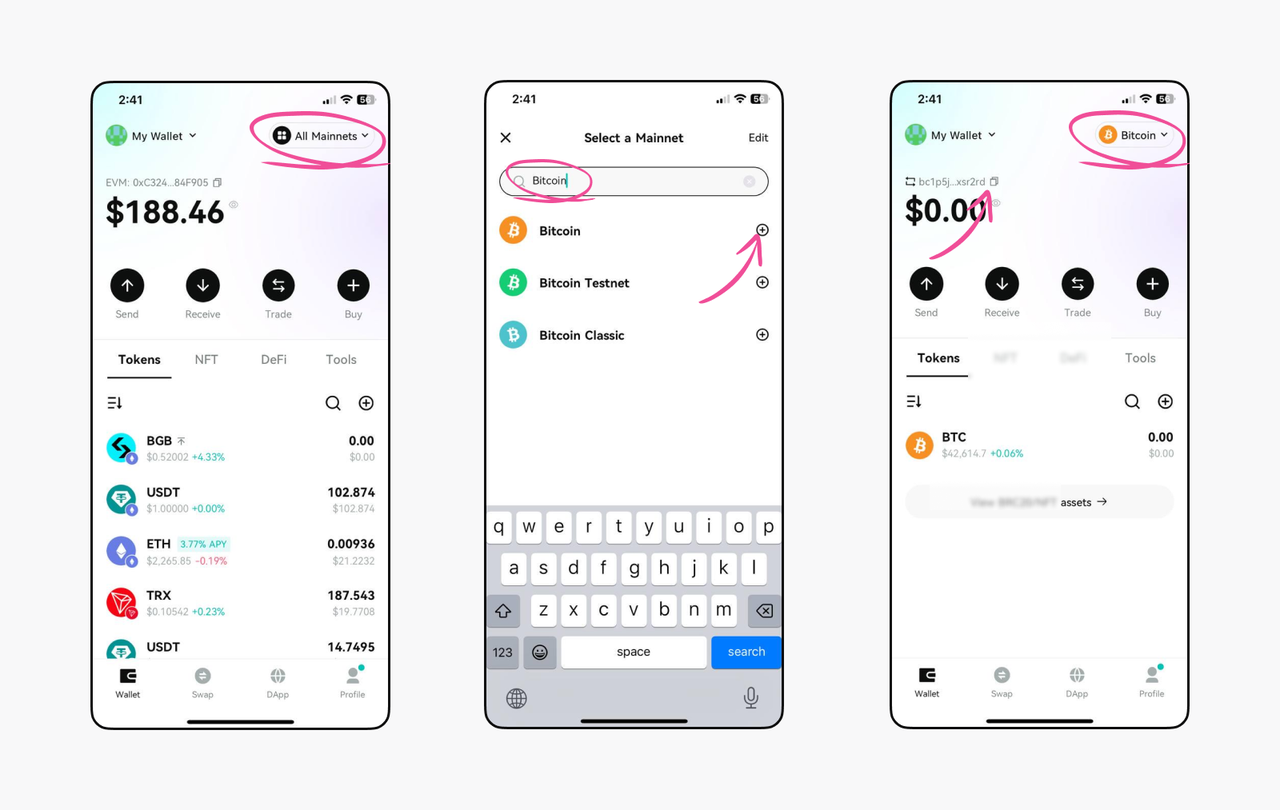
Key capabilities include:
- Store assets with full self-custody crypto ownership Users maintain complete control over their funds without entrusting them to third parties.
- Maintain complete private key control with encryption and TEE-based protection Advanced security technologies help safeguard private keys from unauthorized access.
- Track portfolios across multiple chains Monitor asset balances, performance, and holdings across different blockchain ecosystems in real time.
- Manage assets in a unified interface Access and organize all digital assets seamlessly within one intuitive platform.
Read more: Everything You Need to Know to Manage BTC on Bitget Wallet
2. Trade Across Chains and Markets
Trading within a non-custodial wallet allows users to execute transactions directly on-chain while maintaining full self-custody crypto ownership. Instead of relying on centralized exchanges, users can access decentralized liquidity and perform seamless swaps across multiple blockchain networks.
This approach not only enhances flexibility but also preserves private key control, ensuring that assets remain secure throughout the trading process.
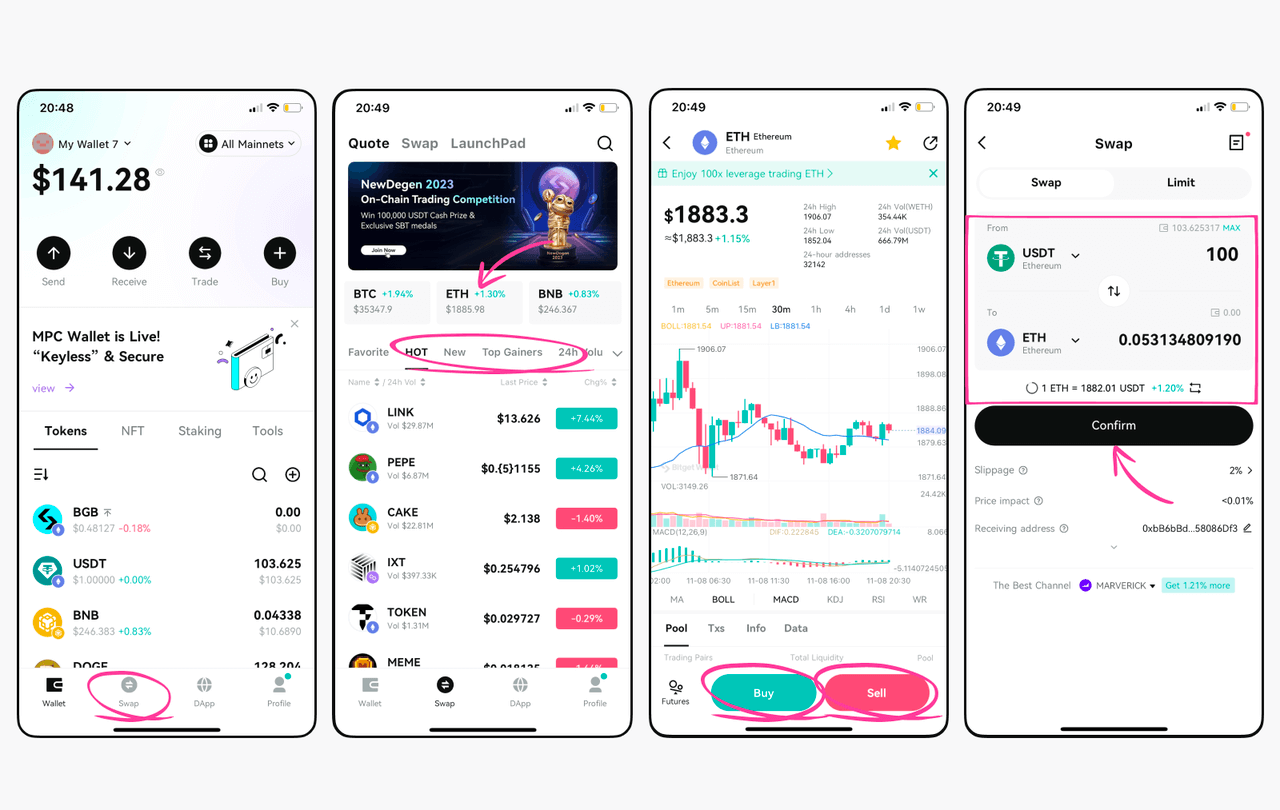
Key capabilities include:
- Swap tokens directly within the wallet Execute fast and convenient token swaps without transferring funds to external platforms.
- Access cross-chain trading without centralized exchanges Trade assets across different blockchains while maintaining full control of your funds.
- Aggregate liquidity for better pricing Tap into multiple decentralized liquidity sources to achieve more efficient and competitive trade execution.
- Trade advanced products across ecosystems Access a wide range of on-chain opportunities, including DeFi tokens and emerging digital assets.
Read more: How to Trade Tokens on Bitget Swap
3. Earn Yield on Digital Assets
Earning opportunities are a key advantage of using a Bitget Wallet, allowing users to grow their holdings while maintaining full self-custody crypto control. Instead of depositing funds into centralized platforms, users can access decentralized finance (DeFi) protocols directly, putting their assets to work without giving up private key control.
This ensures that users can generate returns while still retaining ownership and security over their funds.
Key capabilities include:
- Participate in staking and DeFi strategies Earn rewards by staking tokens or providing liquidity to decentralized protocols across multiple blockchains.
- Use integrated earning tools Access built-in features that simplify yield generation without needing external platforms.
- Track real-time performance Monitor earnings, returns, and portfolio growth directly within the wallet interface.
- Generate passive income while maintaining crypto self-custody Grow assets over time without sacrificing control, security, or ownership.
4. Spend Crypto in Everyday Life
Bitget Wallet can extends beyond storage and trading by enabling real-world payments while preserving full self-custody crypto ownership. Users can spend digital assets directly without relying on banks or intermediaries, making crypto more practical for daily use. With complete private key control, every transaction remains secure, transparent, and fully authorized by the user.
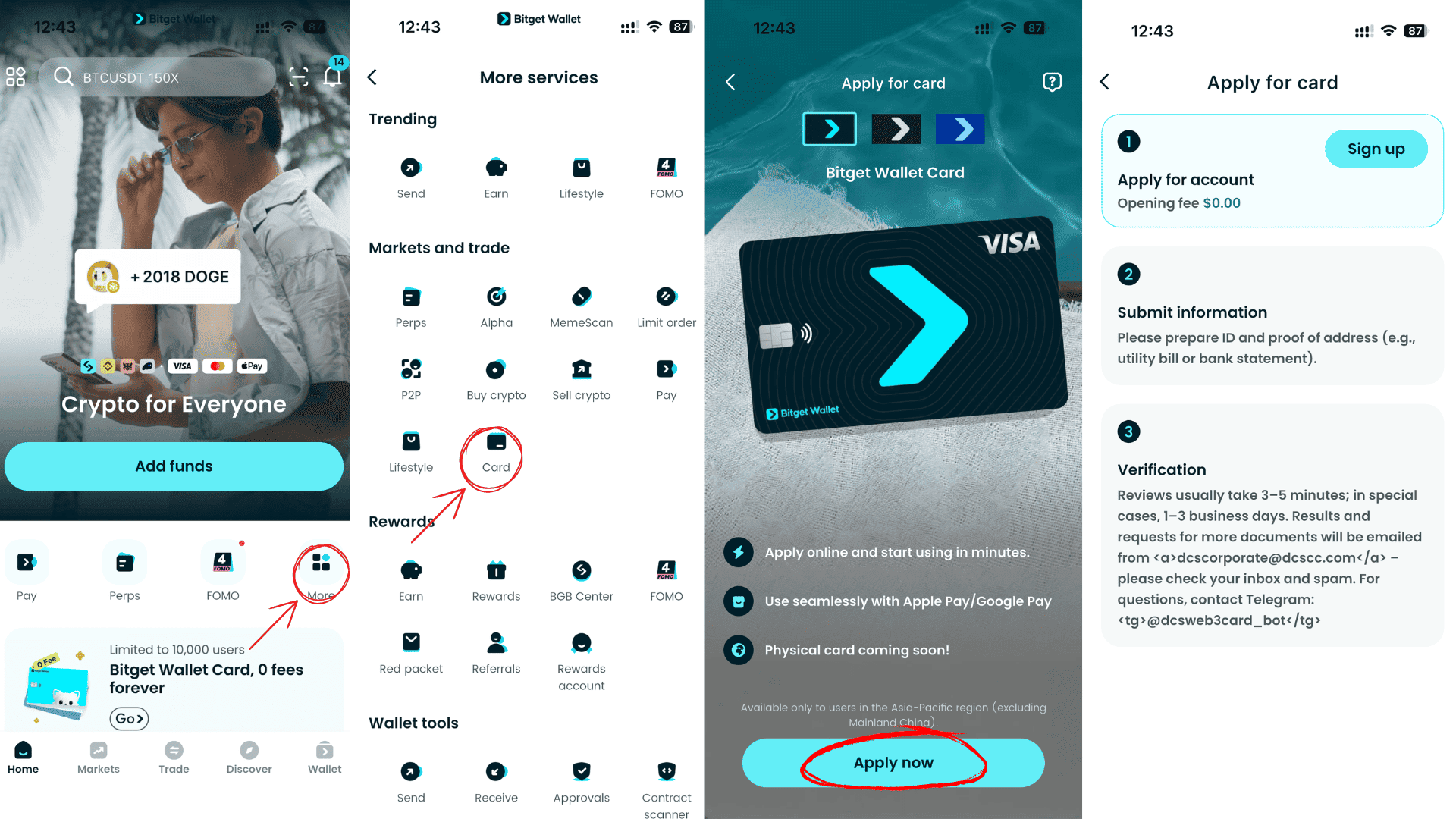
Key capabilities include:
- Pay using crypto with QR codes and cards Make fast and convenient payments both online and offline using supported payment methods.
- Convert crypto to fiat seamlessly Easily switch between digital assets and local currencies for everyday spending.
- Shop for services and digital goods Use crypto to purchase subscriptions, gift cards, and other services directly.
- Enable real-world use cases beyond holding Turn crypto into a functional financial tool for daily transactions, not just investment.
Read more: **How to Use the Bitget Wallet Card for Online Shopping: Spend Crypto Instantly and Earn Rewards**
5. Send and Transfer Assets Globally
One of the strongest advantages of a Bitget Wallet is the ability to move funds globally without friction. With self-custody crypto, users can send and receive assets anytime, anywhere, without relying on traditional financial systems. This ensures faster settlement, lower costs, and full private key control over every transaction.
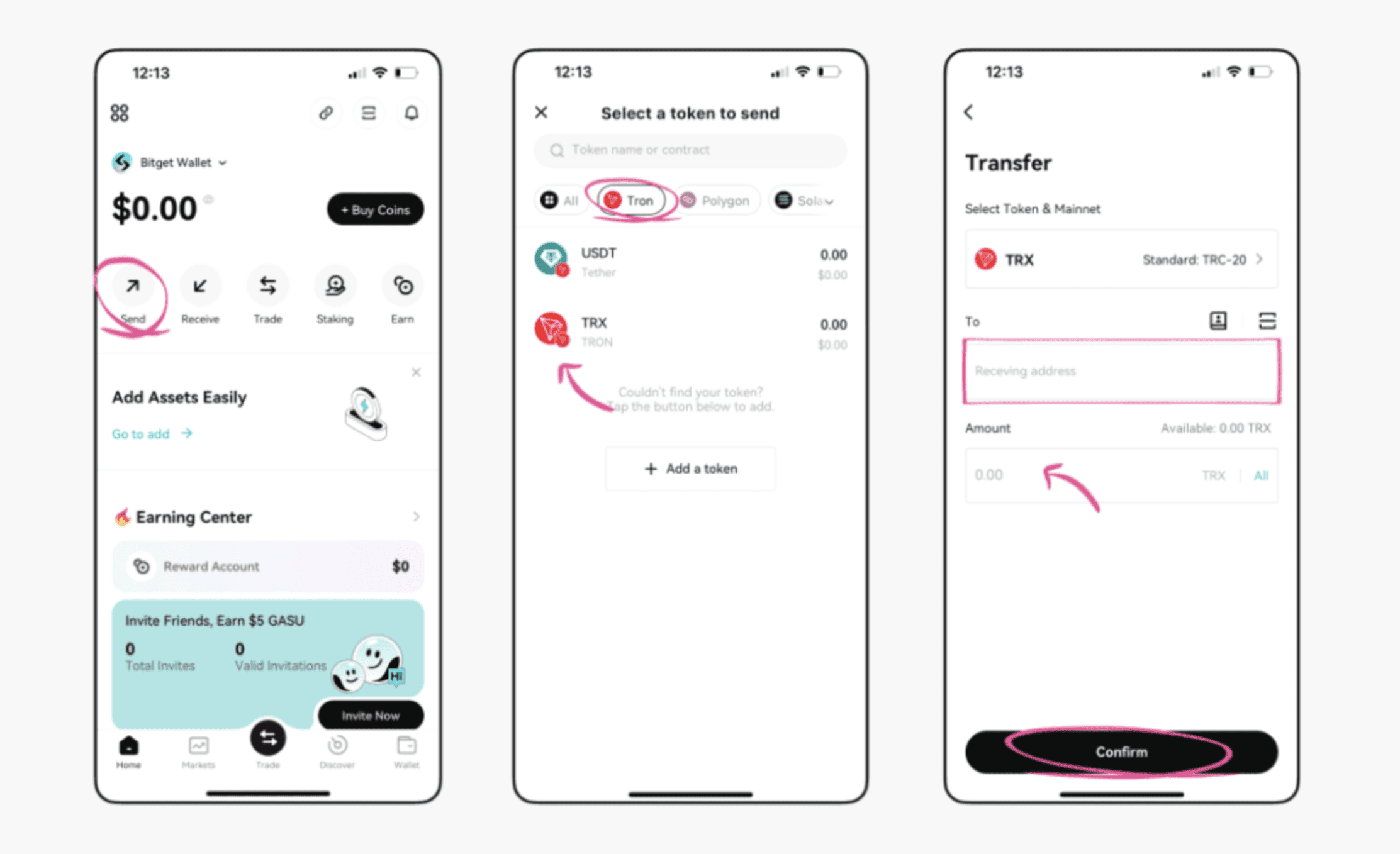
Key capabilities include:
- Send crypto instantly across borders Transfer funds globally within minutes, without delays from intermediaries.
- Perform cross-chain transfers easily Move assets between different blockchain networks with simplified processes.
- Reduce reliance on traditional payment systems Eliminate the need for banks or remittance services when transferring value.
- Enable fast, low-cost transactions Benefit from efficient blockchain-based transfers with reduced fees and improved speed
Read more: How to Deposit and Transfer Funds?
Is Bitget Wallet a Self-Custodial Wallet?
Yes, Bitget Wallet is a non-custodial wallet built on a self-custodial architecture. In this model, users generate and store their keys locally, ensuring full private key control at all times. The platform does not access or manage user funds, aligning with the principles of crypto self-custody.
This design answers an important question: how Bitget Wallet protects private keys. By combining encryption, secure environments (TEE), and user-side key generation, the wallet minimizes external risks and keeps ownership fully in the hands of users.
Bitget Wallet: Best Non-Custodial Wallet
Bitget Wallet is a non-custodial wallet designed to give users full control over their digital assets while providing seamless access to the Web3 ecosystem. By combining strong security infrastructure with multi-chain functionality, it enables users to manage, trade, and interact with blockchain networks without sacrificing self-custody crypto principles. The platform balances usability and control, making it a powerful choice for both beginners and experienced users.
1. Self-Custody Asset Control
At the core of Bitget Wallet is complete ownership. Users retain full private key control, ensuring that only they can access and authorize transactions. This self-custodial model eliminates reliance on third parties and aligns with the fundamentals of crypto self-custody, giving users true financial independence.
Key highlights include:
- Full ownership of assets Users are the sole custodians of their funds, with no third-party access or control.
- Direct transaction authorization Every transaction is signed by the user, ensuring complete control over asset movements.
- No reliance on intermediaries Eliminates risks associated with centralized platforms holding or restricting funds.
- Aligned with Web3 principles Supports decentralization, transparency, and user empowerment.
2. Multi-Chain Asset Management
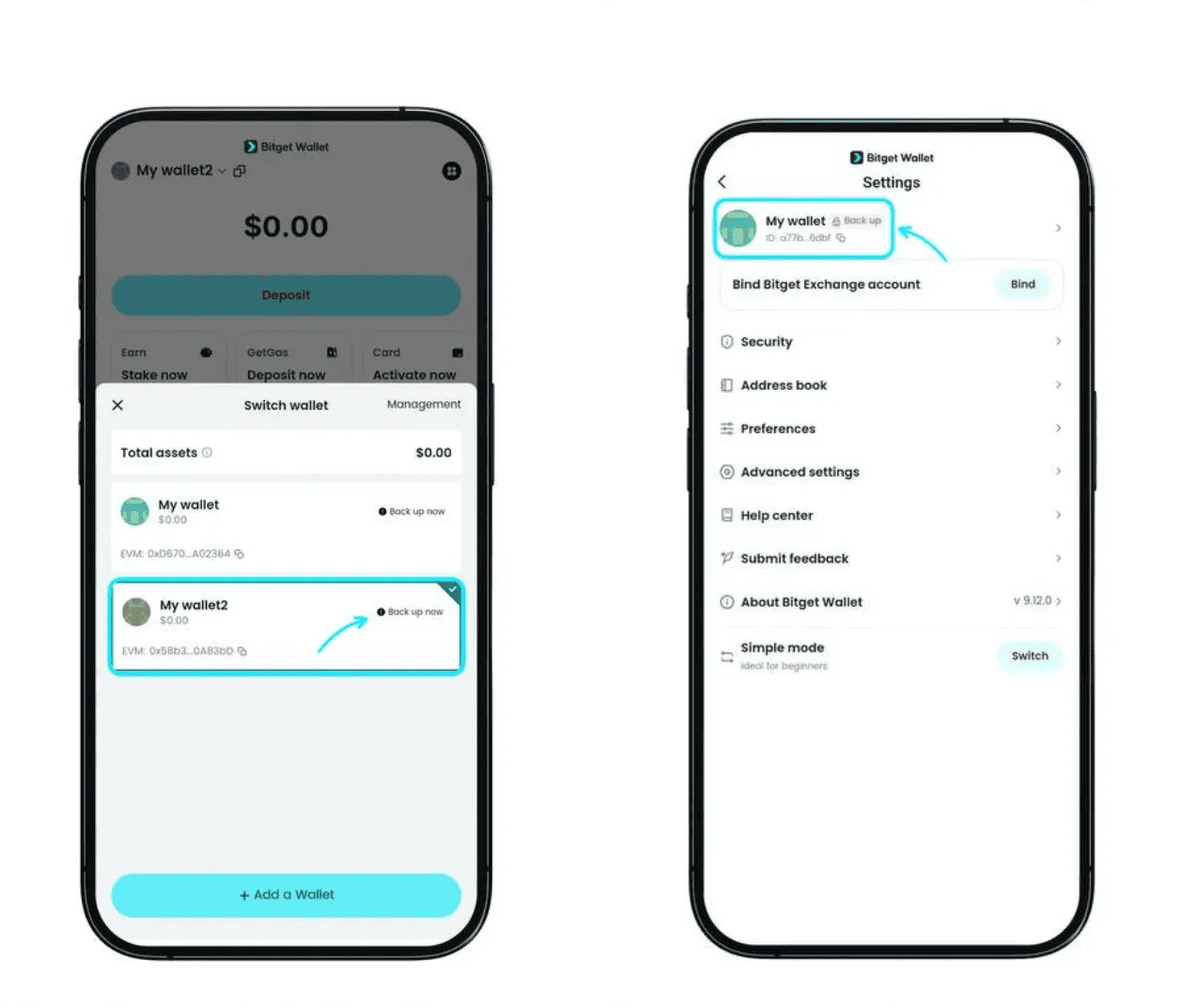
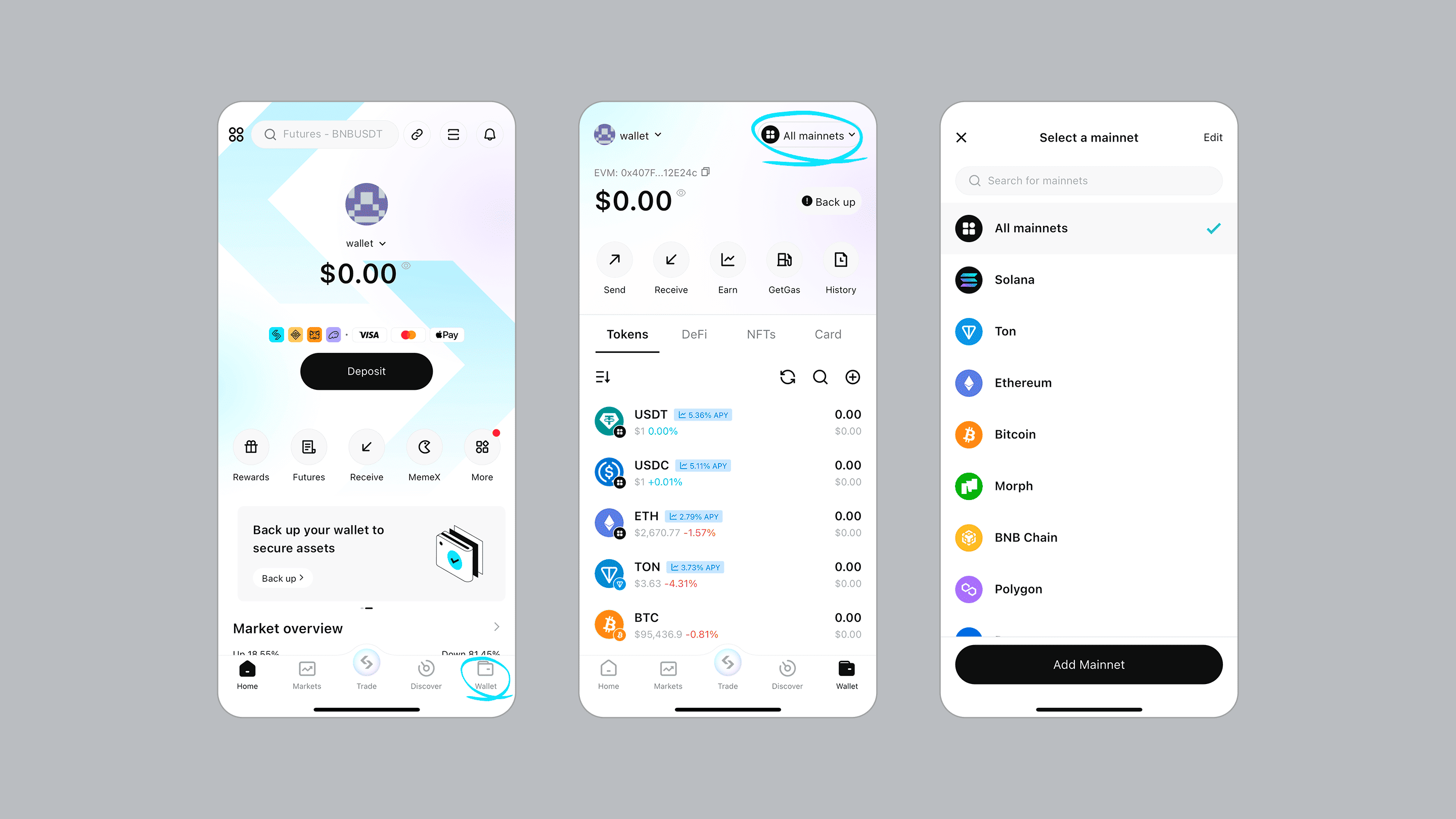
Bitget Wallet supports a wide range of blockchain networks, allowing users to manage assets across ecosystems within a single interface. As a versatile Web3 wallet, it simplifies portfolio tracking, making it easier to organize and monitor assets without switching between multiple platforms.
Key highlights include:
- Support for multiple blockchains Manage assets across different networks in one place.
- Unified portfolio view Track balances and performance without juggling multiple wallets.
- Simplified asset organization Easily categorize and manage tokens across ecosystems.
- Improved efficiency Reduce complexity when handling multi-chain investments.
3. Integrated Token Swaps
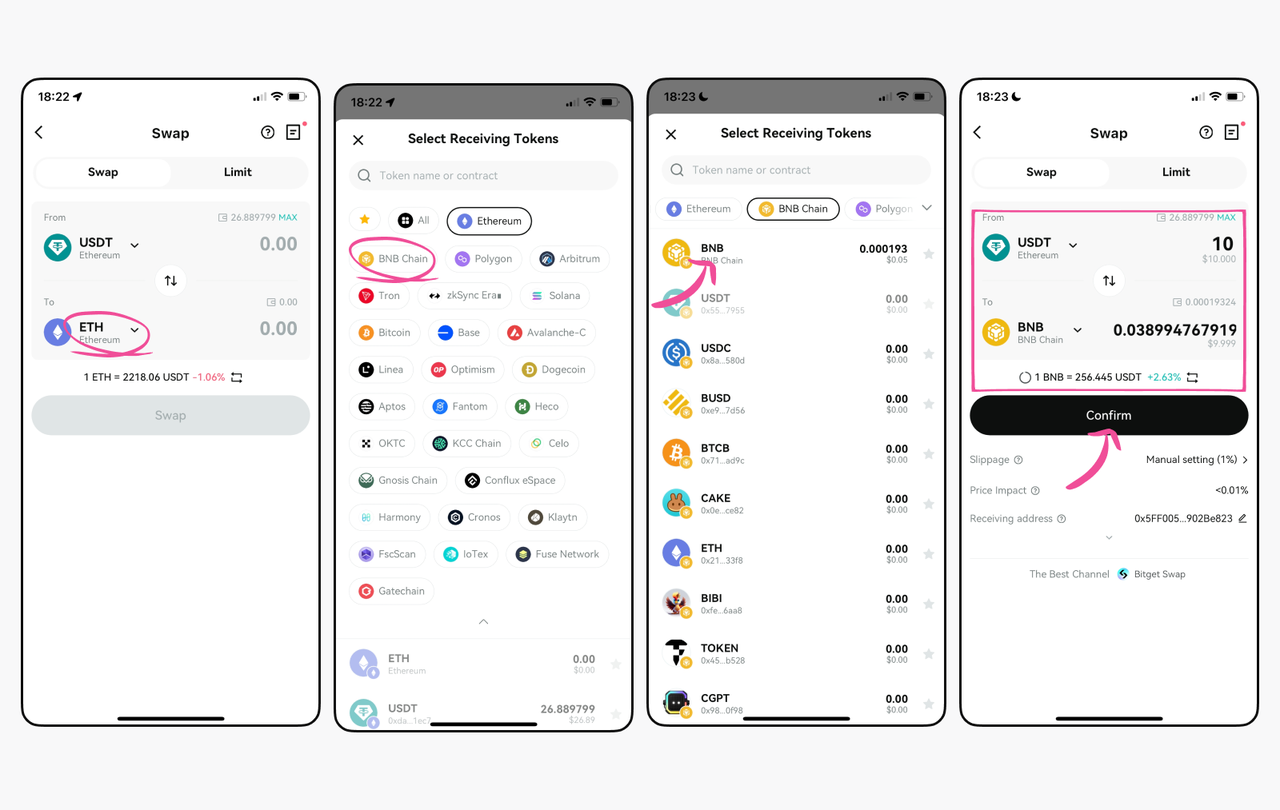
Users can swap tokens directly within the wallet, enabling fast and efficient trading without transferring funds to external exchanges. This feature enhances convenience while maintaining self-custody crypto, ensuring that assets remain under user control throughout the trading process.
Key highlights include:
- In-app token swaps Execute trades directly without leaving the wallet.
- No need for centralized exchanges Maintain full control of assets during transactions.
- Faster execution Reduce delays by trading directly on-chain.
- Seamless user experience Simplifies trading for both beginners and experienced users.
4. Access to Web3 Ecosystems
Bitget Wallet provides built-in access to decentralized applications, including DeFi platforms, NFT marketplaces, and other blockchain-based services. This makes it more than just a wallet—it acts as a gateway to Web3, allowing users to explore and interact with decentralized ecosystems seamlessly.
Key highlights include:
- Direct access to dApps Connect with DeFi, NFTs, and other blockchain services easily.
- Permissionless interaction Use decentralized platforms without restrictions.
- Expanded use cases Go beyond storage and trading into full Web3 participation.
- All-in-one experience Explore multiple ecosystems within a single interface.
5. Built-In Security Features
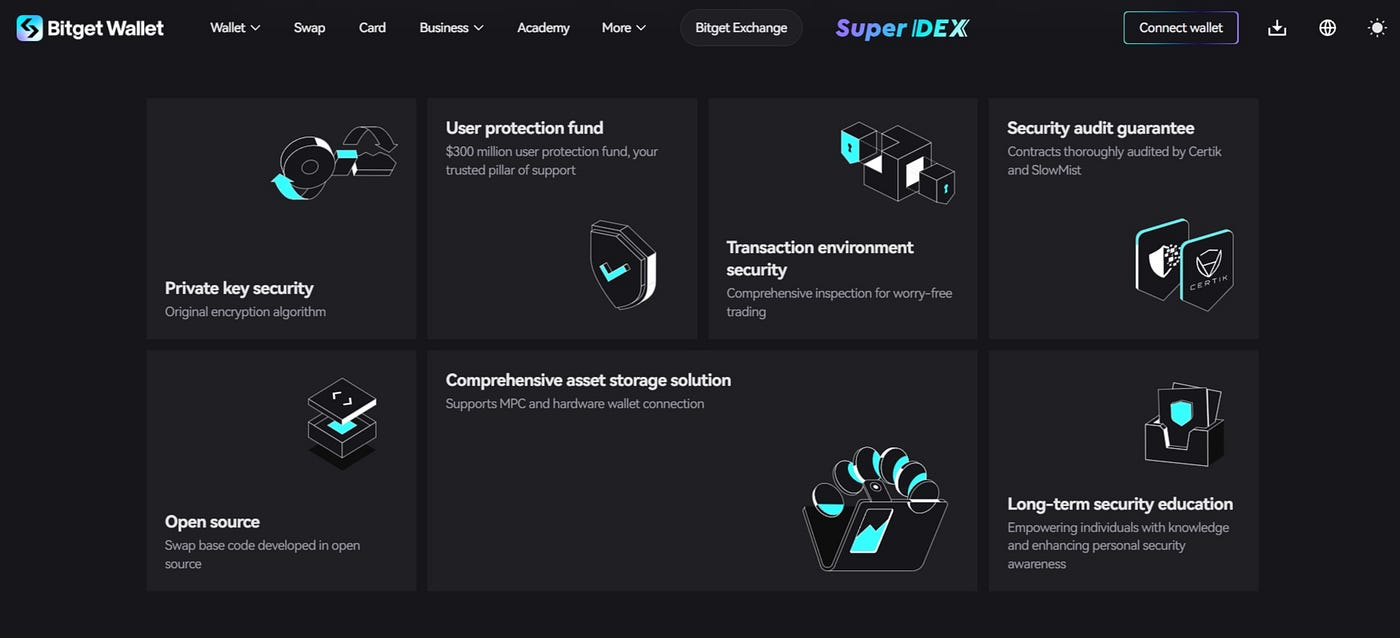
Security is reinforced through advanced encryption, authentication systems, and protective tools designed to safeguard user accounts. Combined with strong private key control, these features help reduce risks and ensure that users can confidently manage their assets in a secure environment.
Key highlights include:
- Advanced encryption systems Protect sensitive data and wallet access.
- Authentication layers Use PIN codes and biometrics for secure login and transactions.
- Risk detection tools Identify and mitigate potential threats from smart contracts or tokens.
- Enhanced user protection Strengthen overall safety while maintaining full self-custody crypto control.
Who Should Use a Non-Custodial Wallet Like Bitget Wallet?
A non-custodial wallet is ideal for users who want full control over their digital assets while actively participating in the Web3 ecosystem. By enabling self-custody crypto, these wallets remove reliance on centralized platforms and give users direct ownership through private key control. This makes them especially valuable for individuals who prioritize independence, security, and flexibility in managing their crypto.
Common user groups include:
- Crypto users who prefer full asset ownership Individuals who want complete control over their funds without trusting third parties.
- Individuals interacting with DeFi platforms Users engaging in staking, lending, and liquidity provision through decentralized protocols.
- Users exploring NFT marketplaces Those buying, selling, or holding NFTs who require direct wallet connectivity to blockchain platforms.
- Traders managing assets across multiple blockchains Users who need a Web3 wallet capable of handling cross-chain assets efficiently.
- Users prioritizing privacy and independent asset management Individuals who value autonomy and reduced exposure to centralized systems.
Why Many Users Choose Bitget Wallet for Self-Custody
As adoption of crypto self-custody continues to grow, more users are choosing solutions that combine control with usability. Bitget Wallet is a non-custodial wallet that enables users to securely manage assets while accessing a wide range of Web3 services from a single platform.
One of the main reasons users prefer Bitget Wallet is its balance between security and convenience. It offers full private key control, ensuring that users remain the sole owners of their assets, while also providing multi-chain support, integrated trading, and seamless access to decentralized applications.
In addition, Bitget Wallet simplifies complex blockchain interactions, making it easier for both beginners and experienced users to navigate the Web3 space. From managing assets to exploring DeFi and NFTs, it delivers a comprehensive experience without compromising on self-custody crypto principles.
Ultimately, Bitget Wallet stands out because it empowers users with true ownership, flexibility, and secure access to the evolving decentralized economy.
Related Reading on Crypto Wallets
Crypto wallets are essential tools for managing digital assets, allowing users to store, send, receive, and interact with blockchain networks. Wallets can be categorized by custody models, supported blockchain networks, and how they manage assets across chains.
The following guides explore crypto wallet fundamentals, custody types, and how modern wallets support multi-chain and cross-chain asset management.
🔹 Crypto Wallet Fundamentals
- What Is a Crypto Wallet: Beginner’s Guide to Digital Assets
- What Is a Custodial Wallet and How Centralized Crypto Wallets Work?
- What Is a Non-Custodial Wallet: Understanding Self-Custody and Private Key Control
- Non Custodial vs Custodial Wallet: Key Differences and How to Choose the Right Crypto Wallet
🔹 Multi-Chain and Cross-Chain Wallets
- What Is a Multi-Chain Wallet: A Beginner’s Guide to Cross-Chain Crypto Wallets
- What Is a Cross Chain Crypto Wallet? A Beginner’s Guide to Multi-Chain Asset Management
- Multi-Chain vs Cross-Chain Wallet: What’s the Difference?
🔹 Real-World Example of Self-Custody
Conclusion
Bitget Wallet is a non-custodial wallet that gives users full control of their crypto assets and Web3 access. By enabling self-custody crypto, it empowers users to securely manage assets, interact across chains, and participate in decentralized ecosystems without intermediaries. From asset storage and trading to earning and payments, Bitget Wallet delivers a complete Web3 wallet experience while maintaining strong private key control.
Start managing your crypto securely today – download Bitget Wallet and explore seamless cross-chain trading and stablecoin management.
FAQs
1. What is a non-custodial wallet?
A non-custodial wallet is a crypto wallet where users control their own private keys and assets, without relying on a third party.
2. Is Bitget Wallet a non-custodial wallet?
Yes, Bitget Wallet is a non-custodial wallet that provides full private key control and ensures users retain complete ownership of their funds.
3. Why do users prefer non-custodial wallets?
Users prefer them because they offer greater security, ownership, privacy, and direct access to Web3 applications through self-custody crypto.
Risk Disclosure
Please be aware that cryptocurrency trading involves high market risk. Bitget Wallet is not responsible for any trading losses incurred. Always perform your own research and trade responsibly.
 Which Wallet Is the Most Secure for Storing Cryptocurrencies?2026-07-12 | 5 mins
- How Does CoinJar Compare to Other Cryptocurrency Wallets?2026-07-12 | 5 mins



