


Crypto Wallet Security in 2026: How AI Threat Detection Protects Your Assets
Crypto wallet security has become harder as attackers use AI to create convincing phishing sites and deceptive transactions faster than traditional threat lists can update. Self-custodial wallets give you control, but that control also means you are responsible for spotting risks before you sign.
Bitget Wallet recently expanded its AI-powered threat detection to help address this. The system combines AI-assisted website and domain analysis with GetShield’s real-time pre-sign checks. These features are available to all Bitget Wallet users at no additional cost. For the full product update and detailed detection figures, see the AI threat detection announcement.
Key Takeaways
- Strong crypto wallet security now requires more than known threat lists, because attackers generate new phishing sites quickly.
- Bitget Wallet’s AI has taken a larger role in identifying newly blocked risk domains, catching many that external databases had not yet flagged.
- GetShield runs three layers of checks before you sign: website/DApp screening, permission and contract analysis, and signing request verification.
- AI detection works alongside other layers such as encrypted private-key storage, trusted execution environments (TEE), and biometric authentication.
- The features are free for all users. Basic habits (protecting seed phrases, reviewing what you sign) remain essential.
Why Crypto Wallet Security Needs AI Threat Detection
Traditional databases only catch risks after they have been reported. By then, many users may already have interacted with a phishing site or malicious contract. For more on common tactics, see our guide on crypto wallet scams in 2026.
Bitget Wallet’s monitoring shows the shift. AI involvement in identifying newly blocked risk domains rose across recent quarters. Phishing-related signing risks made up the largest share of detections in one recent period.
| Risk Category | Approximate Share of Detections |
| Phishing-related signing | ~57% |
| Malicious addresses | ~17% |
| Risky contracts | ~14% |
| Malicious approvals | ~12% |
Industry reports align with this pattern. Scams linked to AI tools have generated higher revenue per operation, and while the number of phishing incidents has fallen in some datasets, losses have not declined at the same rate. This is why modern crypto wallet security includes proactive detection instead of relying only on known lists. Full quarter-by-quarter figures are available in the AI threat detection update.
How Bitget Wallet’s AI Threat Detection Works
The system examines signals that static lists often miss:
- Website and domain analysis looks at code patterns, domain characteristics, and similarity to legitimate sites.
- It checks against known threat intelligence while also flagging risks external databases have not yet recorded.
- GetShield, the wallet’s proprietary real-time security engine, applies these checks before you authorize a transaction.
GetShield combines AI-assisted analysis with three layers of pre-sign checks for supported wallet interactions:
| Layer | What It Checks | User Benefit |
| Website and DApp screening | Site code, domain traits, and similarity to known legitimate sites | Warns before you connect |
| Permission and contract analysis | Permissions requested and smart contract behavior | Surfaces risky approvals early |
| Signing request checks | Differences between displayed request and actual transaction outcome | Helps avoid unexpected asset transfers |
You keep full control of your assets. The system surfaces risks so you can decide whether to proceed. For a deeper look at GetShield’s overall design, see How to Secure Your Asset Security with GetShield and Experience Bitget Wallet GetShield.
What Secure Crypto Wallet Protection Looks Like in Practice
When you visit a site or prepare to sign in Bitget Wallet, GetShield can warn you about:
- Domains that resemble legitimate sites but have not yet appeared on public threat lists.
- Requests for broad token approvals or unexpected asset transfers.
- Contracts that match patterns linked to malicious activity.
These checks happen at the highest-risk moment — right before you sign — rather than after funds have moved. This is one practical way AI improves crypto wallet security for everyday users. Real-world examples of social engineering that target these moments are covered in Stay Vigilant Against Social Engineering Scams.
Multi-Layer Security Beyond AI Detection
AI threat detection is one part of a broader crypto wallet security framework.
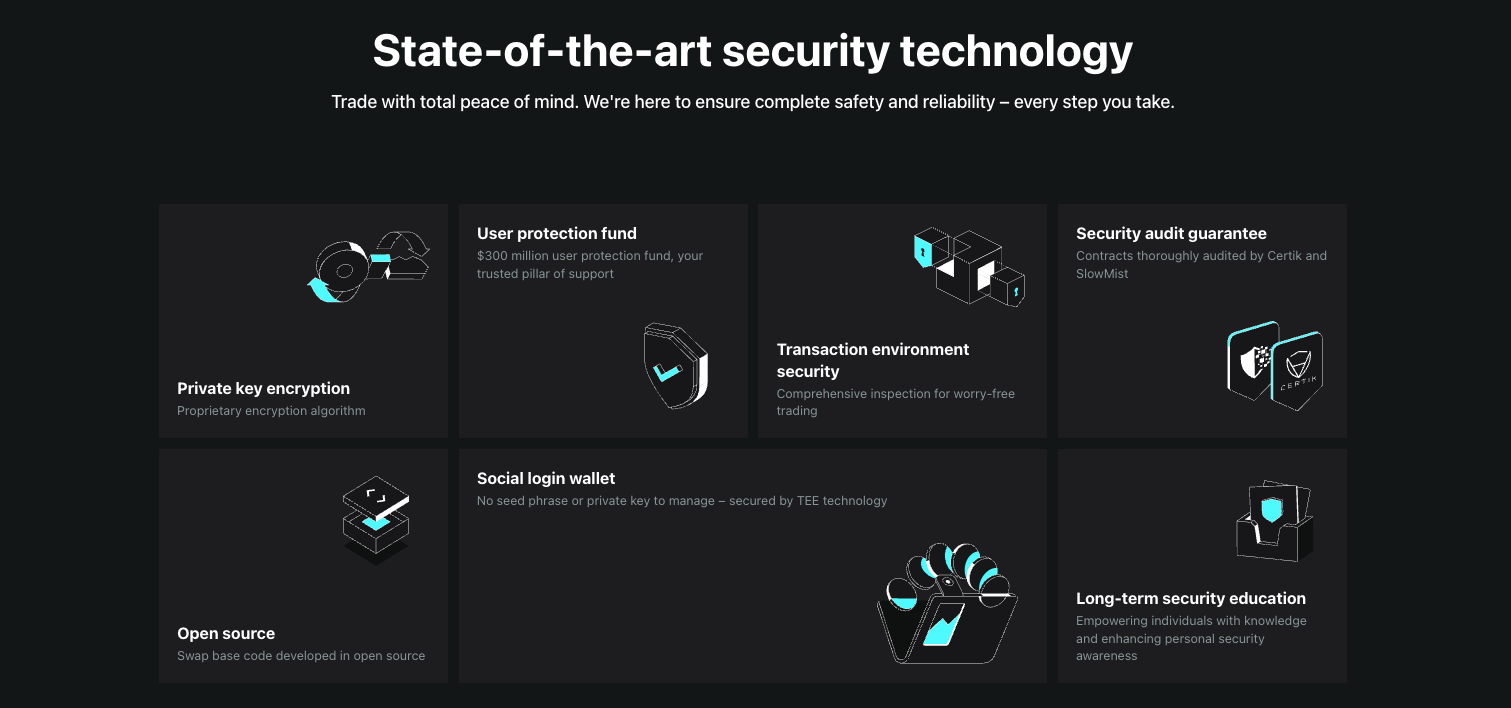
Bitget Wallet also includes encrypted private-key storage, trusted execution environments (TEE) for social login wallets, biometric authentication, infrastructure isolation, and continuous vulnerability monitoring. Existing MPC wallets remain supported, but new users create wallets through social login (Google, Apple, or email) backed by TEE hardware isolation.
These layers address different risks and are designed to limit the impact of any single failure. The AI capabilities complement this stack rather than replace it. For a full overview of the security technology, visit the Bitget Wallet security page.
Crypto Wallet Security Best Practices That Still Matter
Even with automated checks, a few habits improve protection:
- Download the wallet only from official channels.
- Never enter your seed phrase on any website or share it with anyone claiming to be support.
- Review and revoke unused token approvals regularly.
- Treat urgent messages or limited-time offers with extra caution.
- Use device-level protections such as biometrics when available.
If you are deciding where to hold assets after an exchange incident, our guide on the safest place for your crypto covers practical options including self-custodial wallets.
Frequently Asked Questions
What is crypto wallet security in 2026?
It covers the tools and habits that protect self-custodial assets from phishing, malicious approvals, and risky transactions. Modern approaches combine user practices with automated detection such as AI threat analysis.
How does AI threat detection improve crypto wallet security?
It analyzes websites, domains, and transaction requests for signs of phishing or malicious activity, including risks that have not yet been added to public threat lists. Bitget Wallet’s AI has taken on a larger share of identifying newly blocked risk domains in recent periods.
Does Bitget Wallet’s AI replace the need to check transactions yourself?
No. It adds an automated layer that flags risks before you sign. You still review and approve every transaction.
Is GetShield available to all users?
Yes. GetShield and the AI threat detection features are available to all Bitget Wallet users at no additional cost.
What are the most important crypto wallet security best practices?
Protect your seed phrase offline, only download official apps, review what you sign, manage token approvals, and use wallets that include real-time risk checks.
Strengthen your crypto wallet security with AI-powered threat detection.
Download Bitget Wallet

 Elysium Mainnet Guide: Access, Trade & Use on Bitget Wallet2026-11-10 | 5 mins
 Exchange Got Hacked? Where is the Safest Place for Your Crypto Now?2026-11-02 | 5 mins
 Arc Wallet Guide: How to Get Started With Arc in Bitget Wallet2026-09-19 | 5 mins



