What Is SanaeCoin (SANAE): Understanding Japan Prime Minister Sanae Takaichi’s Political Token
What is SanaeCoin (SANAE)? Sanae Token (SANAE) is a narrative-driven community cryptocurrency issued on the Solana blockchain. The token is known for its branding that references Sanae Takaichi, Japan’s current Prime Minister and the president of the Liberal Democratic Party (LDP).
Unlike many typical meme coins that revolve around internet culture or retired political figures, SANAE is considered an example of a crypto asset that gained attention through a narrative connected to a currently active political leader. Because of this positioning, discussions about the token sometimes appear alongside commentary on Japanese political developments and media coverage. However, it is important to note that SANAE is not issued, endorsed, or approved by the Japanese government or any official public institution.
In the on-chain market, SANAE is primarily traded through automated market maker (AMM) liquidity pools on Solana-based decentralized exchanges (DEXs). Its price movements tend to be influenced by factors such as liquidity depth, wallet distribution, trading activity, and overall market sentiment. In this sense, SANAE can be viewed as an example of how token value can emerge at the intersection of narrative visibility and decentralized market mechanics.
If you are looking for an app that makes it easy for beginners to manage tokens, you may want to consider using Bitget Wallet. Download Bitget Wallet today and start your Web3 wallet experience.
Key Points
- Sanae Coin (Sanae Token / SANAE) is a political narrative–driven meme coin issued on the Solana blockchain, known for branding that references Sanae Takaichi, the current Prime Minister of Japan.
- Its price movements tend to be influenced more by political news coverage, media exposure, social media discussions, and the depth of liquidity on Solana-based decentralized exchanges (DEXs) rather than traditional fundamentals such as revenue models or utility-driven demand.
- As of March 2026, reports indicate that Japan’s Financial Services Agency (FSA) is verifying the registration status of businesses related to “SANAE TOKEN.” Prime Minister Sanae Takaichi has also denied any connection to the token through her official X (formerly Twitter) account.
- SANAE is considered a highly volatile crypto asset. Since trading occurs through automated market maker (AMM) liquidity pools on Solana, limited liquidity depth can result in slippage and sudden price swings during trading activity.
What Is Sanae Coin: Why Sanae Token (SANAE) Surged in 2026 and Its Political Background
Sanae Token (SANAE) is a political narrative token built on the Solana blockchain referencing Japanese Prime Minister Sanae Takaichi (高市早苗). The token adopts the name of the sitting head of government directly, linking its narrative identity to a contemporary political figure whose leadership of the Liberal Democratic Party (LDP) and position in Japan’s parliamentary system place her at the center of national policy decisions.
On-chain, Sanae Token (SANAE) is traded through automated market maker (AMM) liquidity pools on Solana decentralized exchanges. Activity around the token is therefore reflected through swaps and liquidity movements within these pools. Instead, activity around Sanae Token (SANAE) is driven by the following factors:
- The Japanese Financial Services Agency (FSA) review of the SANAE token
- Prime Minister Sanae Takaichi’s public denial of involvement with the project
- Legal scrutiny over the token’s issuance under Japan’s Payment Services Act
- Market reactions following government commentary about the SANAE token
As a result, Sanae Token (SANAE) can be viewed as a narrative-reactive asset operating within the constraints of decentralized liquidity markets.

Source: Sanaecoin
Japanese crypto media have highlighted Sanae Token (SANAE) as one of the first Solana-based meme coins referencing a sitting Prime Minister of Japan. The token features a fixed total supply of 1 billion tokens and is primarily traded through decentralized exchanges (DEXs).
Although SANAE has attracted attention because of its political branding, it operates independently on-chain and is not officially supported or endorsed by the government.
Who Is Sanae Takaichi: Political Developments in 2026 and the Connection to SANAE Token
Sanae Takaichi leads the Liberal Democratic Party (LDP) and secured a two-thirds majority in Japan’s House of Representatives in early 2026. With this level of control, her administration gains greater flexibility to push forward legislation — including constitutional debates and fiscal policy — while facing relatively limited resistance from opposition parties.
For SANAE, what matters is not simply volatility driven by uncertainty, but the tendency for activity to cluster around specific parliamentary events. When the ruling party operates with a fragile majority, markets often react with uncertainty-driven spikes. By contrast, a government with a supermajority tends to create event-driven cycles, such as budget votes, defense spending allocations, tax policy debates, and major policy announcements.

Prime Minister Sanae Takaichi, leader of Japan’s ruling Liberal Democratic Party and the country’s first female head of government, addresses supporters in October 2025. Photograph: Yohei Fukai/AP
Source: The Guardian
Why Political News Cycles Can Influence SanaeCoin (SANAE)?
Sanae Token (SANAE) is a Solana meme token referencing Japanese political figure Sanae Takaichi, making the asset sensitive to news cycles involving that name.
Its short-term attention patterns can sometimes correlate with current political developments in Japan, especially those tied to Prime Minister Sanae Takaichi. As of early 2026:
-
Historic general election victory: On 2026.02.08, the Liberal Democratic Party (LDP) led by Prime Minister Takaichi secured more than two-thirds of the seats in the House of Representatives. This postwar-record result gave the administration a supermajority to push its agenda forward, including fiscal and national security policy.
-
Legislative agenda under scrutiny: With this mandate, the government is expected to pursue measures such as suspending the consumption tax on groceries and expanding defense spending, keeping media and market attention elevated.
-
Shift in economic policy direction:
Appointments to the Bank of Japan’s Policy Board suggest the government intends to keep prioritizing monetary easing and fiscal stimulus, influencing both markets and public opinion.
-
Stronger emphasis on national security:
Under the second cabinet, national security policy has been further strengthened, reflecting ongoing geopolitical concerns in the Indo-Pacific.
-
Immigration and social policy controversy:
Rising national debate around immigration policy and social cohesion has intensified political coverage and partisan conflict.
When political reporting heats up—through election cycles, policy battles in the Diet, or major announcements on economic and security strategy—search interest and social media discussion around Sanae Takaichi can also rise.

Japan’s previous lower-house election, held in 2024, saw the LDP punished for money scandals. On February 8, 2026, it came roaring back to take more than two-thirds of seats in a lower house election giving Prime Minister Takaichi Sanae a free hand in policymaking moving forward.
Source: Nippon
How Does Political Attention Actually Convert Into Price Movement on Solana?
Political news can increase attention around tokens that reference public figures. When that attention brings new buyers into the market, trades begin to flow into the token’s liquidity pool on Solana decentralized exchanges.
The magnitude of the resulting price movement depends on several structural conditions:
- Liquidity depth in the trading pool
- Token concentration among major wallets
- Whether new buyers are entering the market or existing holders are selling
- Whether liquidity providers expand the pool during periods of heavy trading
If buying activity rises while liquidity remains limited, prices can move sharply. When that buying pressure slows, shallow liquidity can cause those moves to reverse quickly.
These fluctuations reflect liquidity conditions in the trading pool, not political support or policy approval.
What Are the Key Structural Risks of Sanae Token (SANAE)?
As a Solana meme token traded through AMM liquidity pools, Sanae Token (SANAE) is exposed to three structural risks: thin liquidity, concentrated ownership, and short-term speculative inflows. With no protocol revenue, governance function, or utility demand to anchor valuation, price stability depends almost entirely on liquidity available in the trading pool and how quickly that liquidity absorbs new trades. In this structure, market mechanics—not political narrative—become the dominant source of risk.
The behavior of Sanae Token (SANAE) tends to follow a simple chain:
Political event → Speculative capital inflow → Liquidity pool pressure → Price displacement → Reversal if the pool is shallow
To understand Sanae Token (SANAE) properly, both dimensions need to be evaluated at the same time:
- Japan’s legislative timing and policy calendar
- On-chain liquidity depth and wallet concentration
SanaeCoin (SANAE) Listing Details and Launch Date
Key Listing Information
Here are the important details about the SanaeCoin (SANAE) listing:
- Exchange: To be announced
- Trading Pair: SANAE/USDT
- Deposit Available: To be announced
- Trading Start: To be announced
- Withdrawal Available: To be announced
Don’t miss your chance to start trading SanaeCoin (SANAE) on exchanges and be part of this groundbreaking journey.
- Please refer to the official announcement for the most accurate schedule.
SanaeCoin (SANAE) Price Prediction 2026
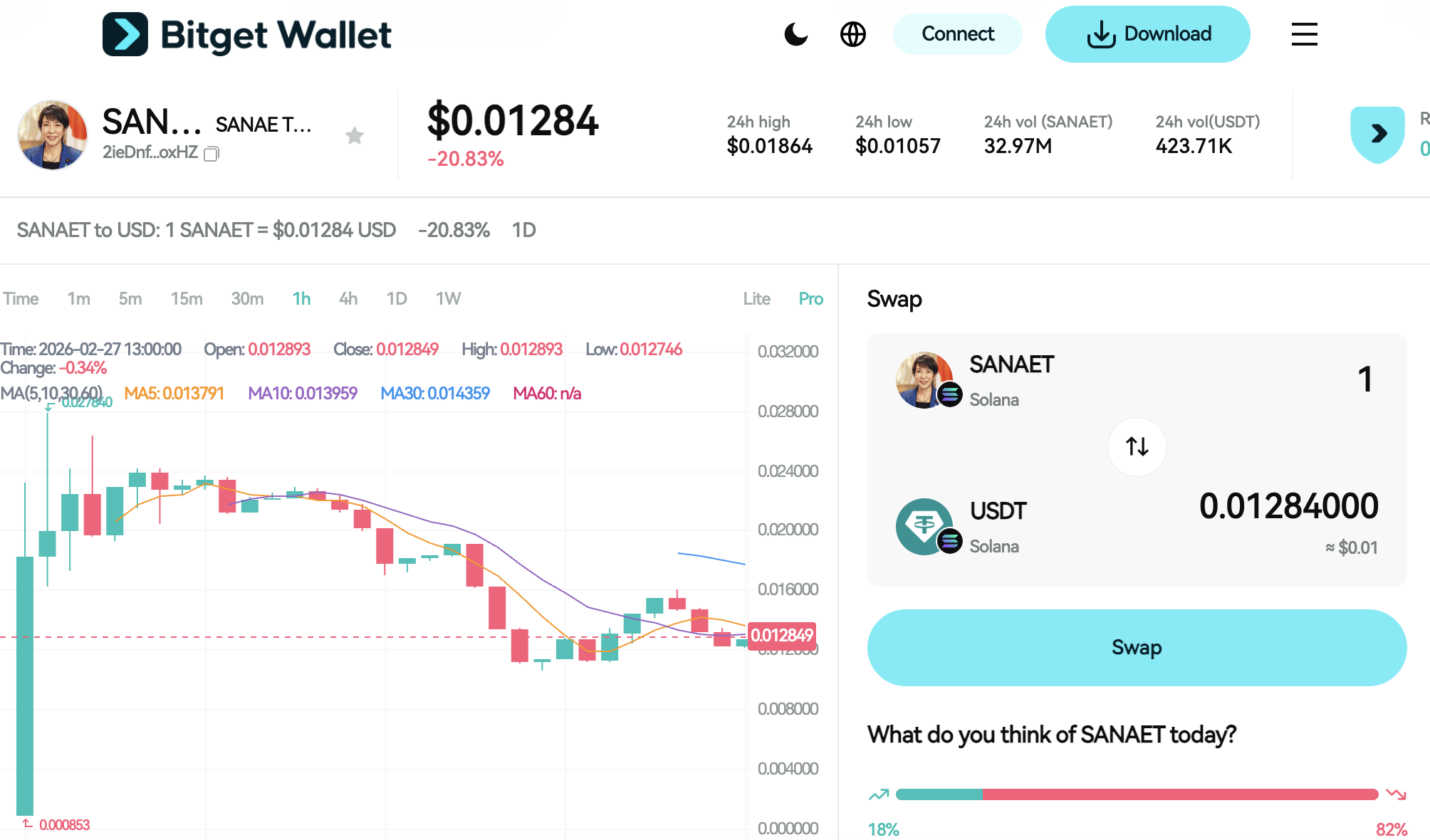
Predicting the price of any cryptocurrency relies on market trends, project fundamentals, and community adoption. Using comparative valuation data from early-stage Solana memecoins such as Book of Meme (BOME) during its micro-cap phase (historical market cap data referenced via CoinMarketCap), SanaeCoin (SANAE) is expected to stabilize within the range of $0.000005 – $0.00002, assuming a similar $5M–$20M valuation band and an approximate 1B token supply.
If the project maintains its development trajectory and expands its applications within the Solana memecoin sector, and reaches a stronger comparative valuation similar to BOME’s early breakout range (~$30M–$60M market cap), the value of SanaeCoin (SANAE) could rise to $0.00003 – $0.00006.
Source: CoinMarketCap
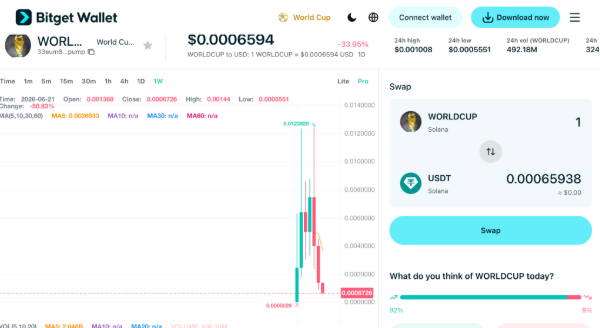
Source: Bitget Wallet
Key Features of Sanae Token (SANAE): What Makes It Different?
The standout characteristics of Sanae Token (SANAE) include the following:
1. Real-time political reference
Unlike meme tokens tied to fictional concepts or past political campaigns, SANAE references a politician currently in office. This increases its sensitivity to real-time legislative calendars and the evolution of national policy.
2. AMM-based liquidity structure
SANAE is traded through decentralized liquidity pools rather than centralized order books. This structure enables permissionless participation, but it also increases sensitivity to liquidity depth and slippage conditions.
3. Fixed supply without a revenue anchor
With a reported fixed supply and no staking or yield mechanisms, SANAE’s valuation depends almost entirely on secondary market demand and capital rotation, rather than any embedded economic utility.
How SanaeCoin (SANAE) Operates and What Benefits It Delivers?
SanaeCoin (SANAE) operates as a standard fungible crypto token deployed via a public blockchain token contract on the Solana network. Its functionality is defined by token-level parameters such as fixed total supply (reported at 1 billion tokens), transfer logic, and liquidity pool integration, allowing users to trade, transfer, and hold the asset within decentralized marketplaces.
Key Technological Components
-
Blockchain Network:
SanaeCoin is issued on the Solana blockchain, a high-throughput public network that enables peer-to-peer transfers, wallet compatibility, and integration with decentralized exchanges (DEXs). The network provides transparent on-chain transaction records and publicly verifiable token balances.
-
Consensus Mechanism:
The underlying blockchain uses a validator-based Proof of Stake (PoS) model combined with Proof of History (PoH) to confirm transactions and maintain ledger integrity. SANAE holders do not participate directly in consensus but benefit from Solana’s security architecture and transaction finality.
-
Smart Contracts:
SanaeCoin is governed by a token smart contract following Solana’s SPL token standard, which defines supply parameters, transfer rules, and liquidity behavior. The contract enables permissionless transfers between wallets and interaction with decentralized liquidity pools for trading.
-
Scalability Solutions:
Solana is designed for high transaction throughput and low latency, allowing rapid trade execution and relatively low network fees. This supports fast settlement and reduced congestion risk during periods of elevated SANAE trading activity.
The Companies and Organizations Supporting SanaeCoin (SANAE)
| The Team | SanaeCoin (SANAE) was introduced by NoBorder, a Japanese political YouTube channel run by entrepreneur Yuji Mizoguchi. The project emerged from that media community rather than a traditional crypto development company |
| The Vision | The project focuses on cultivating meme-driven participation and speculative engagement within the digital asset space. Its positioning centers on community culture, attention cycles, and momentum-based growth rather than enterprise utility development. |
| Partnerships | As of now, there are no officially verified strategic partnerships, institutional collaborations, or corporate alliances publicly disclosed for SanaeCoin (SANAE). |
Use Cases of SanaeCoin (SANAE)
SanaeCoin (SANAE) serves a variety of purposes, including:
-
Speculative Trading Asset
SANAE is primarily used as a tradable Solana-based token within decentralized exchange (DEX) liquidity pools. Market participants buy and sell SANAE based on liquidity shifts, political narrative attention surrounding Sanae Takaichi, and short-term momentum cycles common in the Solana memecoin ecosystem.
-
Political-Narrative Community Participation
The token functions as a coordination layer for community members engaging with politically themed meme culture. Holders align around shared narrative identity, online discussion, and trading activity tied to SANAE’s branding and public visibility.
-
Liquidity Pool Participation
SANAE holders can contribute tokens to Solana DEX liquidity pools, helping provide market depth for trading pairs. In return, liquidity providers may earn a portion of trading fees, depending on the specific decentralized platform and pool mechanics.
These applications position SANAE within the political memecoin segment of the Solana ecosystem, where usage is driven primarily by narrative engagement and on-chain trading participation rather than utility protocol functions.
SanaeCoin (SANAE) Roadmap Explained: What’s Coming Next?
The roadmap for SanaeCoin (SANAE) outlines a projected path centered on community growth and market expansion:
| Q1 2026 | Community expansion campaigns, increased social engagement initiatives, and liquidity stabilization efforts. |
| Q2 2026 | Broader marketing push within the memecoin sector and exploration of additional decentralized trading integrations. |
| Q3 2026 | Potential exchange listing applications and ecosystem visibility expansion through influencer and community-driven promotion. |
| Q4 2026 | Strategic review of token growth performance and planning for next-phase scaling based on market conditions. |
These developments highlight the practical positioning of $SANAE within the speculative digital asset and memecoin trading sector.
How to Buy SANAE on Bitget Wallet?
Trading SanaeCoin (SANAE) is easy on Bitget Wallet. Follow these simple steps to get started:
Step 1: Create an Account
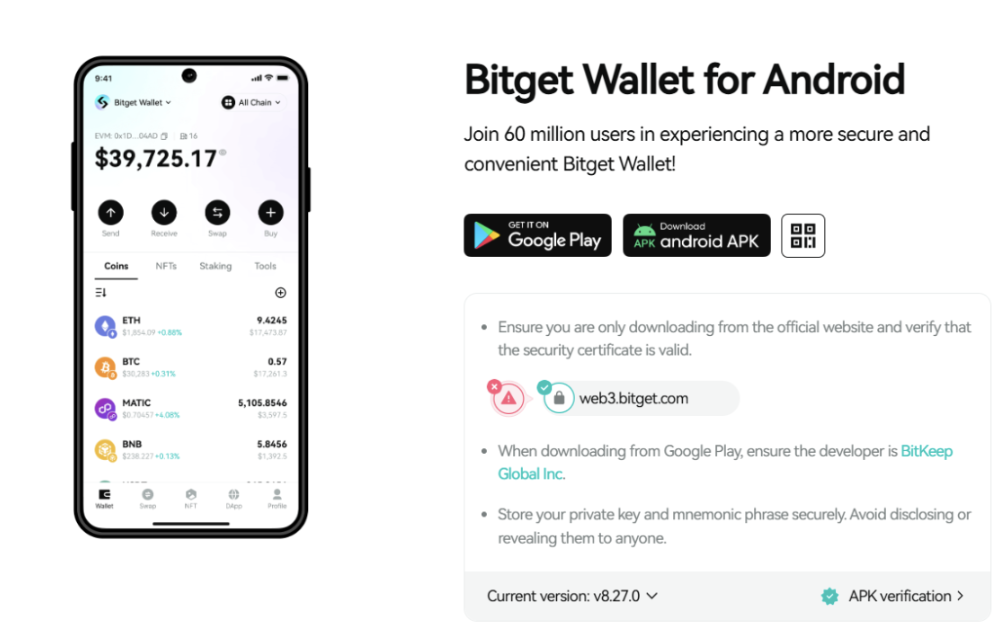
If you don't currently have an account, install the Bitget Wallet app. Register by inputting the required details and confirming your identity.
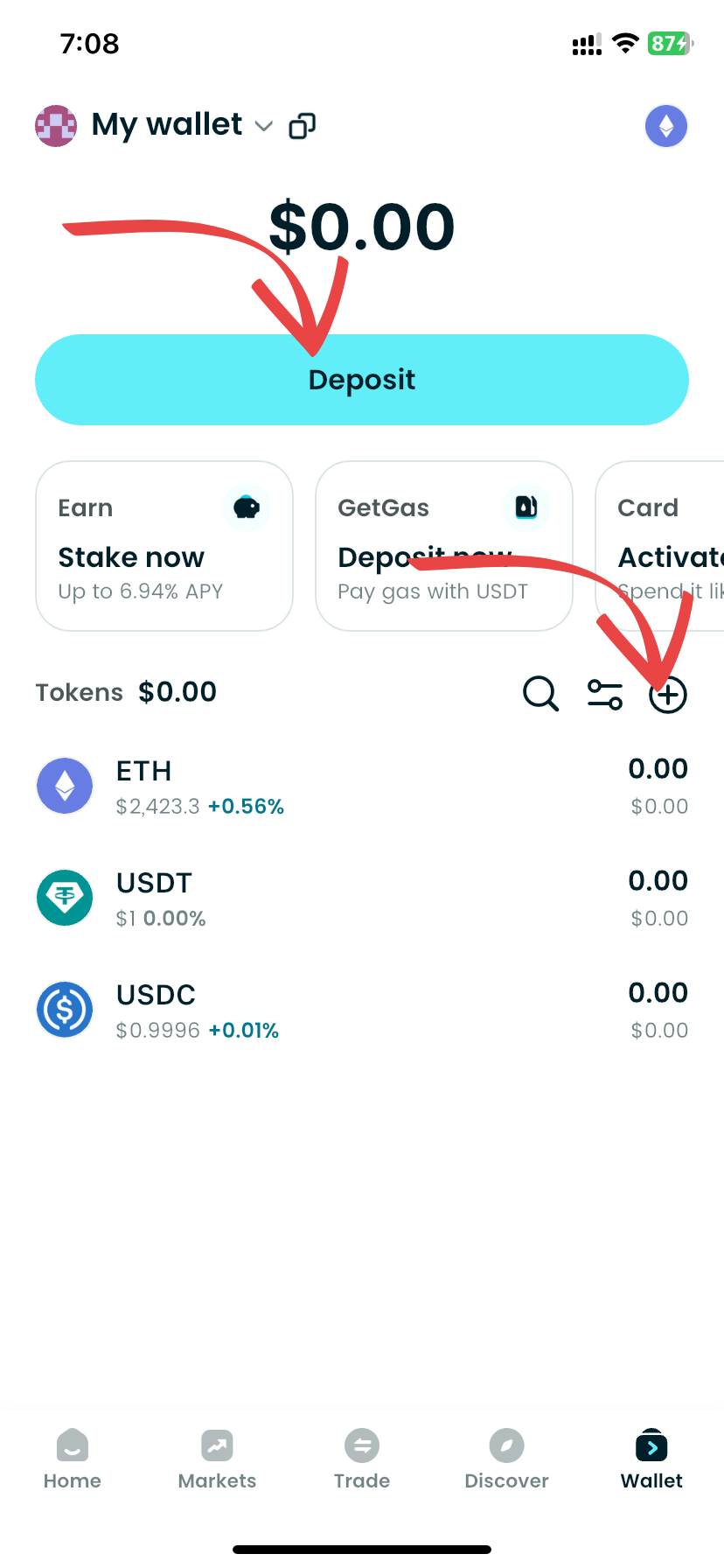
Step 2: Deposit Funds
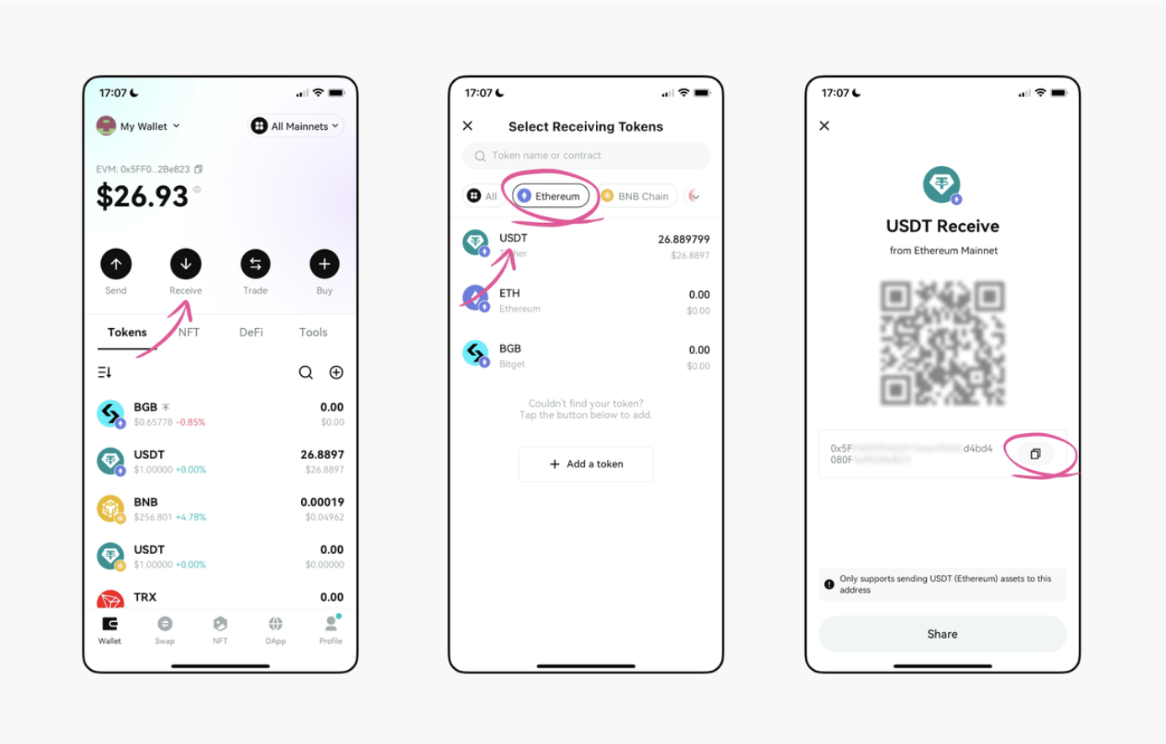
After setting up an account, you must deposit money. You can do this by:
- Transferring Cryptocurrency: Transfer crypto from a different wallet.
- Purchasing Crypto: Utilize a credit or debit card to buy crypto directly from Bitget Wallet, making sure you have sufficient capital for trading SanaeCoin (SANAE).
Step 3: Find SanaeCoin (SANAE)
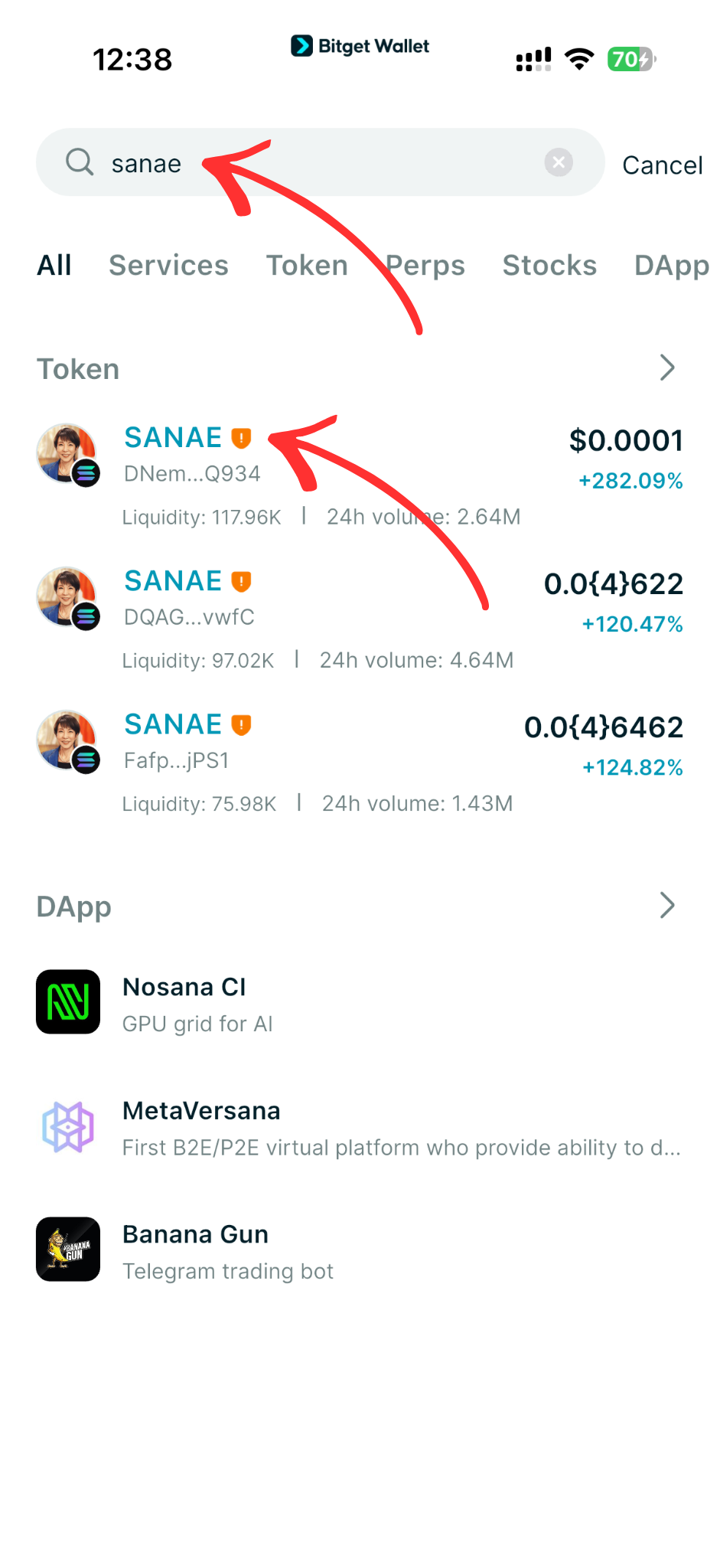
On the Bitget Wallet platform, go to the market area. Search for SanaeCoin (SANAE) using the search function. Click on the token to access its trading page.
Step 4: Choose Your Trading Pair
Select your trading pair you would like to deal with, for instance, SANAE/USDT.
By doing this, you will be able to exchange SanaeCoin (SANAE) for USDT or any other cryptocurrency.
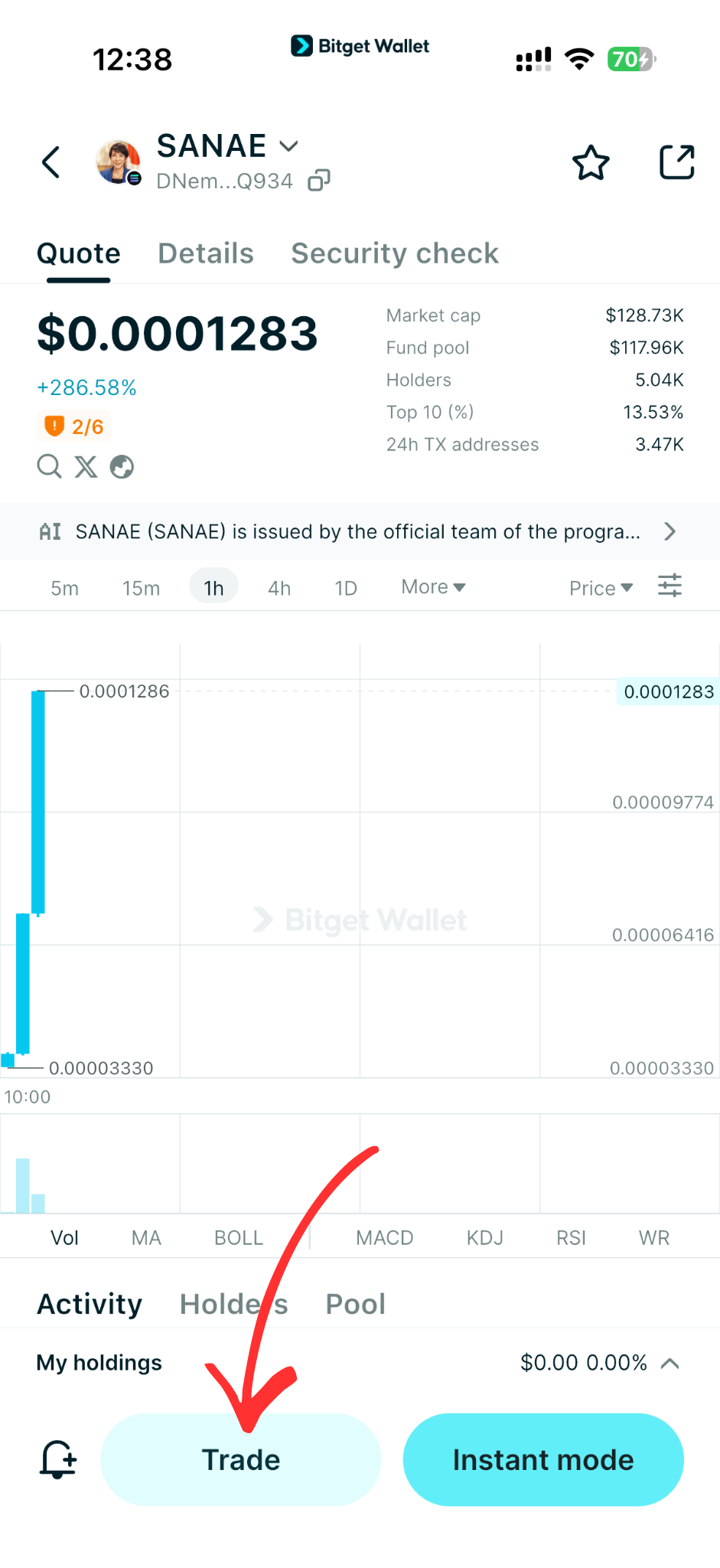
Step 5: Place Your Order
Choose whether to carry out a market order—either buy or sell at the prevailing rate—or place a limit order at your desired price. Fill in the amount of SanaeCoin (SANAE) you want to exchange, then proceed to confirm in order to complete the trade.
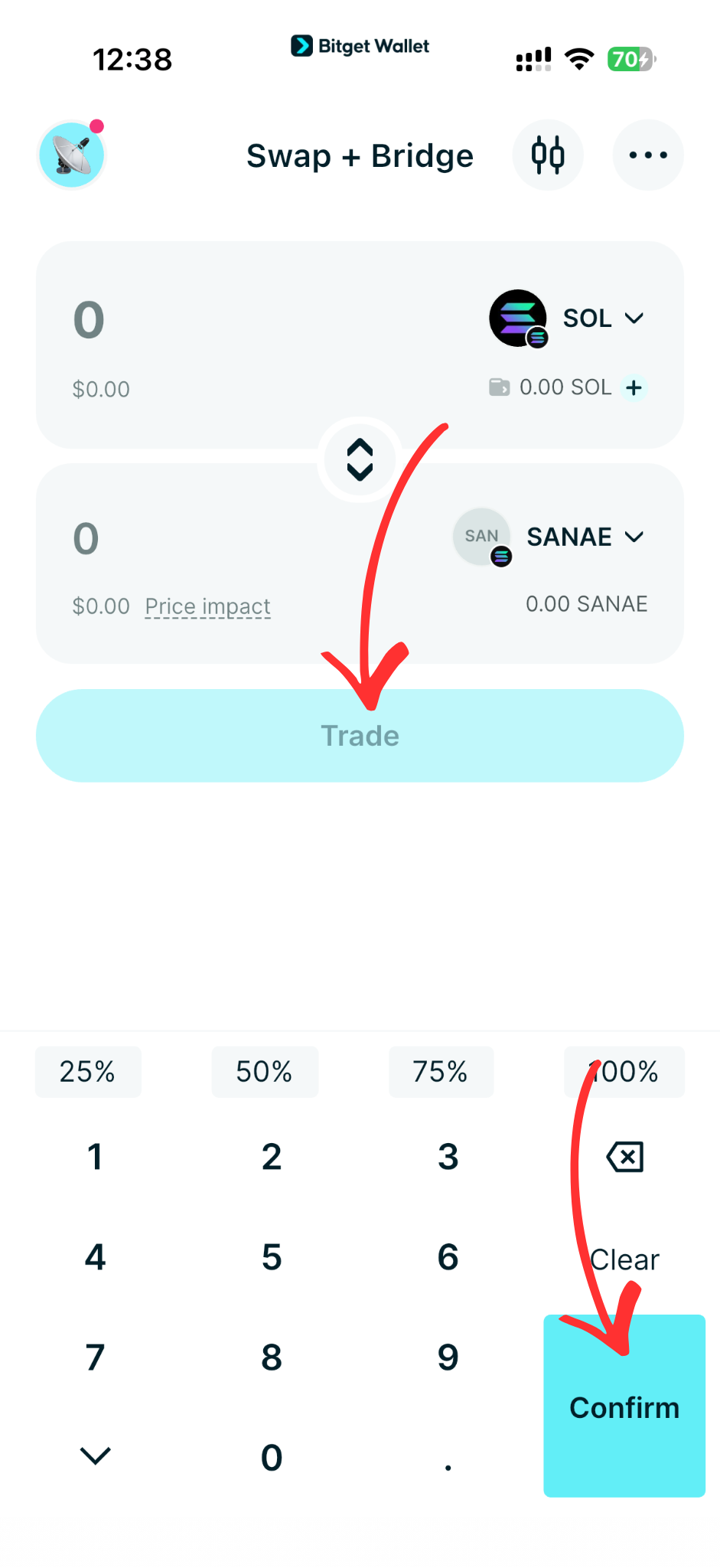
Step 6: Monitor Your Trade
Once you have ordered, you can track the status of your order under "Open Orders." Upon completion of the order, you can view your balance to see the newly purchased SanaeCoin (SANAE).
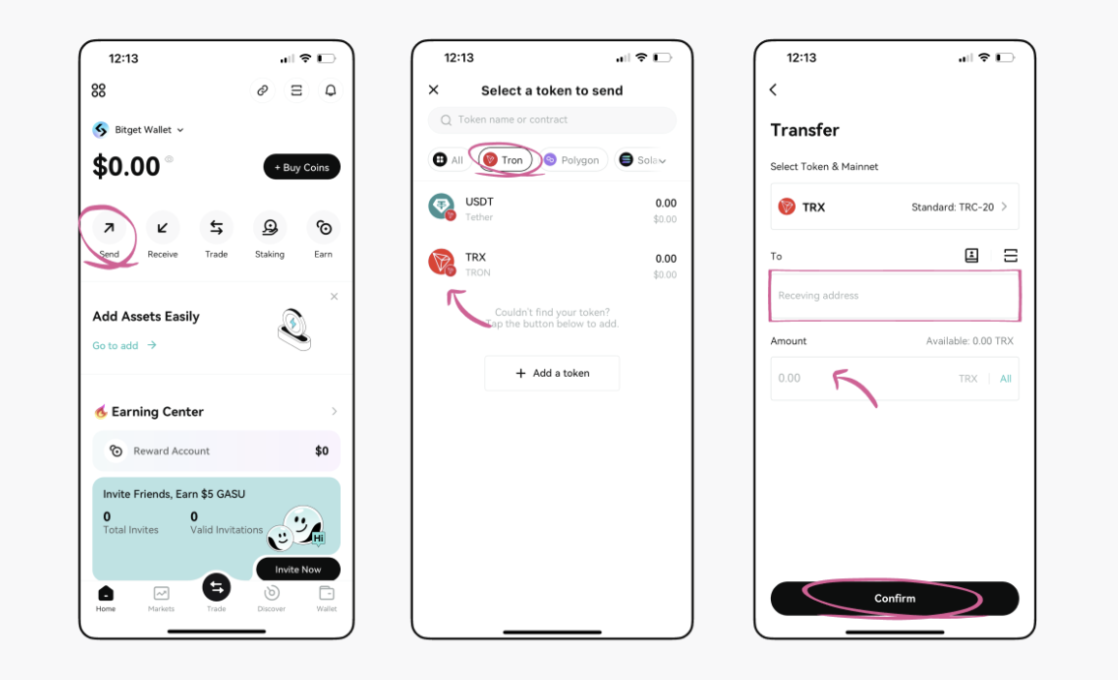
Step 7: Withdraw Your Funds (Optional)
If you want to transfer your SanaeCoin (SANAE) or any other cryptocurrency to another wallet, go to the withdrawal section, provide your wallet address, and confirm the transaction.
▶ Learn more about SanaeCoin (SANAE):
Conclusion
SanaeCoin (SANAE) stands out as a Solana-based political memecoin referencing Sanae Takaichi, combining narrative-driven momentum with high-speed, low-fee on-chain trading. Throughout this guide, we covered what SANAE is, how it operates on Solana DEX liquidity pools, why its price volatility is liquidity-sensitive, and how to approach trading with structured risk management. Its core strength lies in its political name-recognition positioning and integration within Solana’s fast-moving memecoin ecosystem.
Using Bitget Wallet to access SanaeCoin (SANAE) provides a more controlled and efficient trading experience. Bitget Wallet supports secure self-custody, fast on-chain swaps, multi-chain compatibility, and seamless token management — reducing risks such as interacting with incorrect contracts or unreliable platforms. With built-in swap functionality, portfolio tracking, and broad ecosystem access, Bitget Wallet allows users to buy, store, and manage SANAE efficiently while maintaining full asset control.
Trade, store, and explore Web3 seamlessly – beginner-ready with Bitget Wallet.
Sign up Bitget Wallet now - grab your $2 bonus!
FAQs
1. What is SanaeCoin (SANAE)?
SanaeCoin (SANAE) is a Solana-based, politically themed memecoin referencing Sanae Takaichi, Japan’s current Prime Minister. It operates as a community-driven token within the Solana DEX ecosystem, where its value is shaped primarily by liquidity depth, political narrative visibility, and trader participation rather than utility-based fundamentals or revenue models.
2. Is SanaeCoin (SANAE) a good investment in 2026?
SanaeCoin (SANAE) is considered a high-volatility, speculative asset. Potential upside depends on community growth and broader market sentiment, but investors should carefully assess risk tolerance before participating.
3. Where can I buy SanaeCoin (SANAE)?
SanaeCoin (SANAE) can be purchased through supported decentralized trading platforms. Users commonly access it via crypto wallets with integrated swap functionality such as Bitget Wallet.
4. Does SanaeCoin (SANAE) have a confirmed exchange listing date?
As of now, there is no officially announced centralized exchange listing schedule. Investors should monitor official project channels for verified updates.
5. What are the risks of buying SanaeCoin (SANAE)?
Like most early-stage memecoins, SANAE carries risks including price volatility, liquidity fluctuations, and speculative market behavior. Proper contract verification and secure wallet usage are essential before trading.
Risk Disclosure
Please be aware that cryptocurrency trading involves high market risk. Bitget Wallet is not responsible for any trading losses incurred. Always perform your own research and trade responsibly.