


What is PDR (PDR): Understanding the Micro-Cap BNB Chain Token With Near-Zero Trading Activity
What is PDR (PDR)? PDR (PDR) is not a traditional cryptocurrency project with a defined ecosystem or cultural narrative; instead, it represents a low-cap on-chain token deployed on the BNB Chain. In the broader context of decentralized finance and permissionless token creation, PDR reflects how easily digital assets can be launched and traded without requiring a formal team, roadmap, or utility framework.
Without confirmed backing from developers, institutions, or an active community, PDR (PDR) does not currently represent a broader trend or movement in the crypto industry. Instead, it serves as an example of a micro-cap, liquidity-dependent token, where value—if any—is driven by on-chain activity rather than fundamentals. This article explores what PDR (PDR) is, how it functions on BNB Chain, and what risks users should understand before interacting with such tokens, while leveraging Bitget Wallet = Secure Stablecoin Storage + Hot Memecoin Trading + Seamless Cross-chain Experience for safer on-chain access and execution.
Key Takeaways
- PDR (PDR) is a BNB Chain micro-cap token with no verified project fundamentals, meaning it lacks a clear team, roadmap, or real-world utility. Its existence reflects permissionless token creation rather than a structured crypto initiative.
- Market activity is extremely limited, with near-zero trading volume and weak liquidity, so price movement—if any—is driven by sporadic on-chain interactions rather than sustained demand or investor interest.
- PDR should be treated as a high-risk, non-verified asset, where users must rely on contract verification, liquidity checks, and strict risk management rather than assuming long-term value or growth potential.
What is PDR (PDR)?
PDR (PDR) is a micro-cap BEP-20 token based on the BNB Chain that represents a modern example of permissionless token creation rather than a structured crypto project. Instead of reflecting a defined narrative or utility, it highlights how tokens can exist and be traded on-chain without formal development or ecosystem backing. The project embodies the following characteristics:
- Permissionless creation: anyone can deploy and list tokens without centralized approval
- Liquidity-driven pricing: value depends entirely on trading activity and pool depth
- Minimal transparency: no verified team, roadmap, or official documentation
PDR (PDR) does not carry cultural or institutional significance; instead, it exists within the broader DeFi landscape as a speculative on-chain asset, where participation is driven by individual traders rather than a coordinated community or long-term vision.

Source: Bitget Wallet
PDR (PDR), a little-known token on the BNB Chain, has surfaced on decentralized swap platforms despite showing no active trading volume or verified project backing. With minimal liquidity and no confirmed development activity, it reflects a growing trend of dormant or low-visibility tokens in the on-chain ecosystem, where assets can exist and be traded without traditional project fundamentals or sustained market engagement.
PDR (PDR) Listing Details and Launch Date
1. Key Listing Information
Here are the important details about the PDR (PDR) listing:
- Exchange: To be announced
- Trading Pair: PDR/USDT
- Deposit Available: To be announced
- Trading Start: To be announced
- Withdrawal Available: To be announced
Don’t miss your chance to start trading PDR (PDR) on exchanges and be part of this emerging on-chain asset as it potentially moves toward broader market access.
- Please refer to official announcements for the most accurate schedule, as no confirmed centralized exchange listing has been released.
PDR (PDR) Price Prediction 2026
Predicting the price of any cryptocurrency relies on market trends, project fundamentals, and community adoption. In the case of PDR (PDR), there is no confirmed backing, utility, or active development, meaning its price behavior is primarily influenced by liquidity conditions and sporadic on-chain activity rather than structured growth. As a result, PDR is expected to remain within a near-zero or inactive trading range, with limited price movement under current conditions.
If PDR (PDR) were to regain liquidity or attract short-term speculative interest, its price could experience brief spikes typical of micro-cap tokens. However, without sustained trading volume or ecosystem expansion on the BNB Chain, any upside would likely be temporary and driven by short-term capital rotation rather than long-term fundamentals.
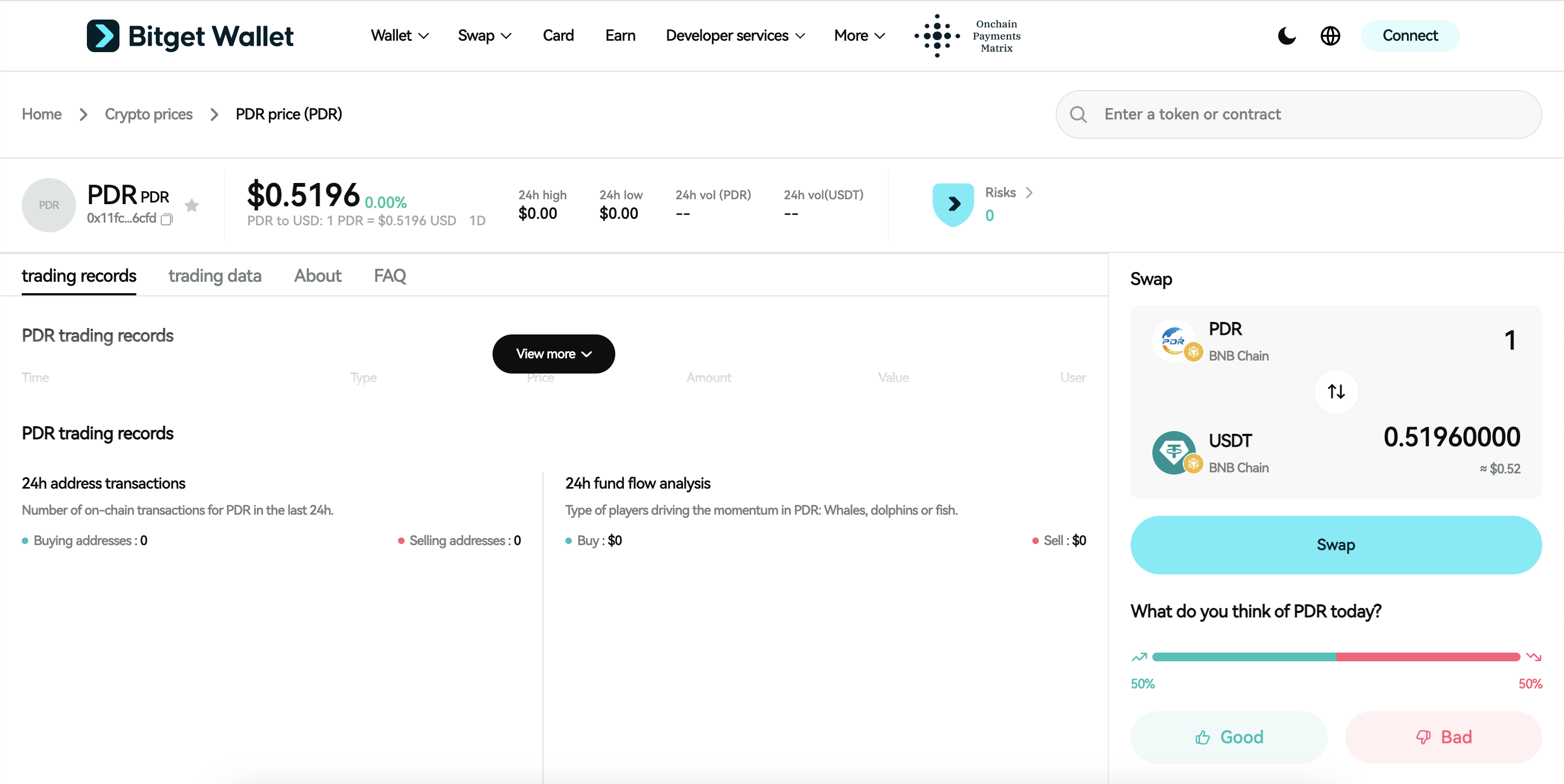
Source: Bitget Wallet
Key Features of PDR (PDR)
The standout features of PDR (PDR) include:
-
Permissionless Token Creation
PDR (PDR) is a BEP-20 token deployed on the BNB Chain without centralized approval, reflecting the open nature of blockchain ecosystems. This allows tokens to be created and traded freely, but also means there is no built-in verification of project quality or credibility.
-
Liquidity-Driven Price Mechanism
The price of PDR (PDR) is determined entirely by decentralized liquidity pools rather than strong market demand or utility. With minimal trading activity, price movement is highly dependent on whether liquidity exists, making it unstable or inactive compared to established tokens.
-
Limited Transparency and Ecosystem Support
PDR (PDR) does not have a confirmed development team, official roadmap, or documented use case. This lack of transparency means users must rely on on-chain data and contract verification rather than traditional project fundamentals when evaluating the token.
How Does PDR (PDR) Work?
The operation of PDR (PDR) is based on its existence as a decentralized on-chain token traded through liquidity pools on the BNB Chain, rather than a structured product, platform, or upcoming event.
-
On-Chain Token Deployment
PDR (PDR) operates as a BEP-20 token deployed via a smart contract on the BNB Chain. This allows it to exist independently on the blockchain, enabling users to hold, transfer, or interact with the token through compatible wallets without relying on centralized infrastructure.
-
Decentralized Swap Mechanism
Trading PDR (PDR) occurs through decentralized exchanges (DEXs) or swap aggregators, where users exchange tokens directly via liquidity pools. Pricing is determined algorithmically based on pool ratios, meaning the token’s value depends entirely on available liquidity and user activity rather than external market-making systems.
-
Liquidity-Driven Interaction Model
The usability of PDR (PDR) depends on whether liquidity providers supply tokens to trading pools. With limited or inactive liquidity, transactions may be difficult to execute, and price discovery remains weak, making participation highly dependent on current on-chain conditions.
By functioning purely as an on-chain asset without confirmed community backing or partnerships, PDR (PDR) reflects a segment of the crypto ecosystem where tokens operate independently of traditional project structures, relying solely on decentralized infrastructure and user-driven activity.
PDR (PDR)’s Team, Vision, and Partnerships
The Team
PDR (PDR) does not have a publicly disclosed team or verified organization behind its development. There is no available information about founders, contributors, or any company managing the token, which is common among permissionless tokens deployed on-chain without formal project structure.
The Vision
There is no officially stated vision or roadmap for PDR (PDR). Instead, it functions as a standalone on-chain asset within the BNB Chain ecosystem, where its existence reflects the broader concept of open token creation rather than a defined long-term goal or ecosystem development plan.
Partnerships
PDR (PDR) has no confirmed partnerships, integrations, or collaborations with other projects or platforms. There are no verified relationships with protocols, companies, or communities that would indicate ecosystem expansion or strategic growth.
Use Cases of PDR (PDR)
PDR (PDR) serves a limited set of purposes, including:
- On-Chain Trading Asset PDR can be swapped on decentralized exchanges through liquidity pools on the BNB Chain, allowing users to trade it against other assets based on available liquidity.
- Speculative Micro-Cap Token Due to its low market activity and lack of fundamentals, PDR is primarily used for speculative trading, where participation depends on short-term price movements rather than long-term utility.
- Blockchain Interaction Example PDR can be used as an example of how permissionless tokens operate on-chain, demonstrating token transfers, wallet interactions, and liquidity-based pricing within decentralized finance environments.
These applications highlight the limited and primarily speculative nature of $PDR within the decentralized trading ecosystem rather than a defined use case in a specific industry.
Roadmap of PDR (PDR)
The roadmap for PDR (PDR) outlines a speculative path based on typical on-chain token behavior rather than an officially published plan:
| Quarter | Roadmap |
| Q1 2026 | Existing as a deployed token on BNB Chain with limited liquidity and minimal trading activity. |
| Q2 2026 | Potential short-term trading spikes if liquidity is added or speculative interest emerges. |
| Q3 2026 | Possible increased visibility if listed on additional tracking platforms or discussed within niche trading communities. |
| Q4 2026 | Continued presence as a micro-cap token, dependent on whether liquidity and user participation improve or remain inactive. |
These applications highlight the limited and speculative role of $PDR within the decentralized trading ecosystem, rather than a defined development roadmap in a specific industry.
How to Buy PDR (PDR) on Bitget Wallet?
Trading PDR (PDR) is easy on Bitget Wallet. Follow these simple steps to get started:
Step 1: Create an Account
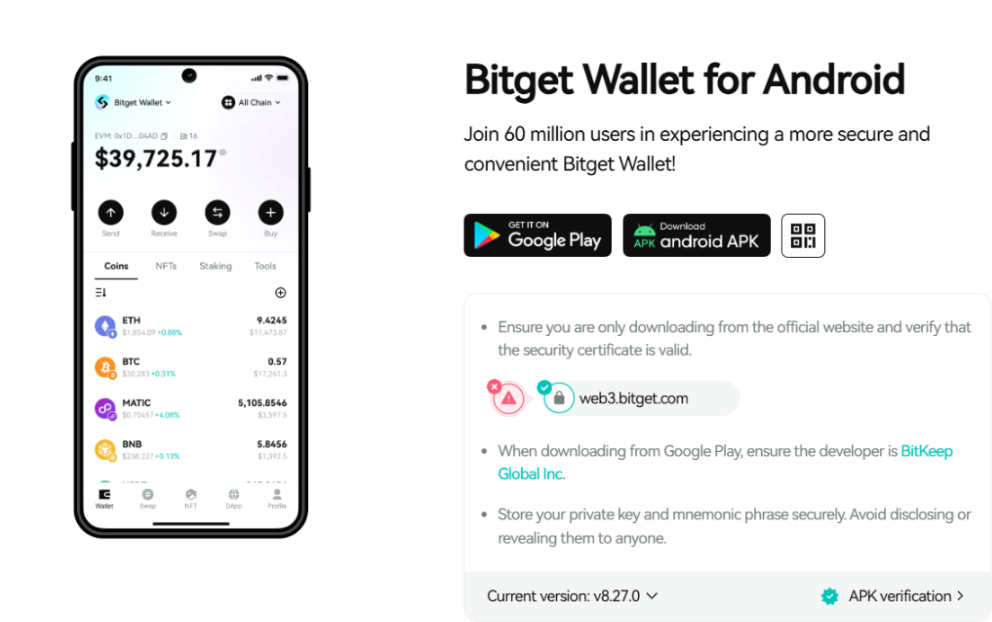
If you don't currently have an account, install the Bitget Wallet app. Register by inputting the required details and confirming your identity.
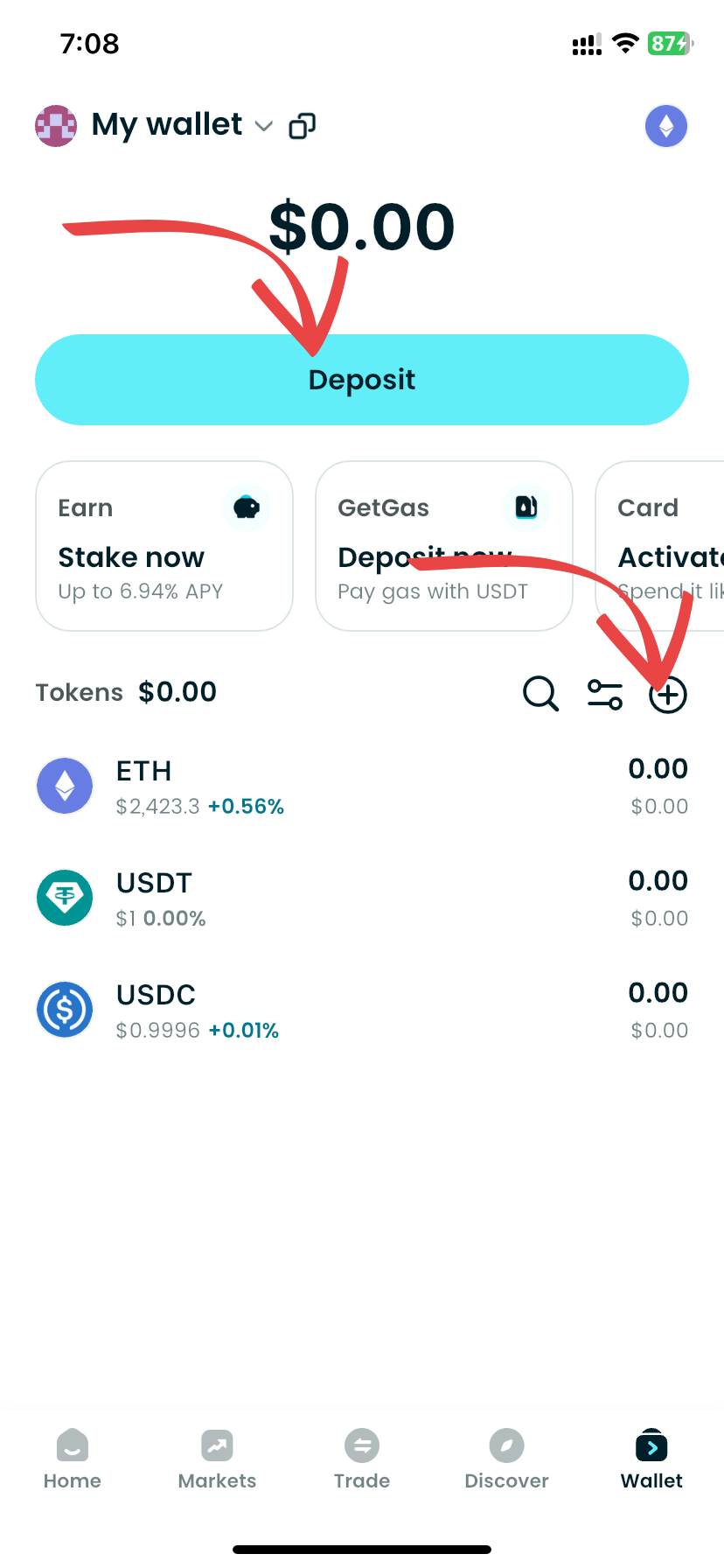
Step 2: Deposit Funds
After setting up an account, you must deposit money. You can do this by:
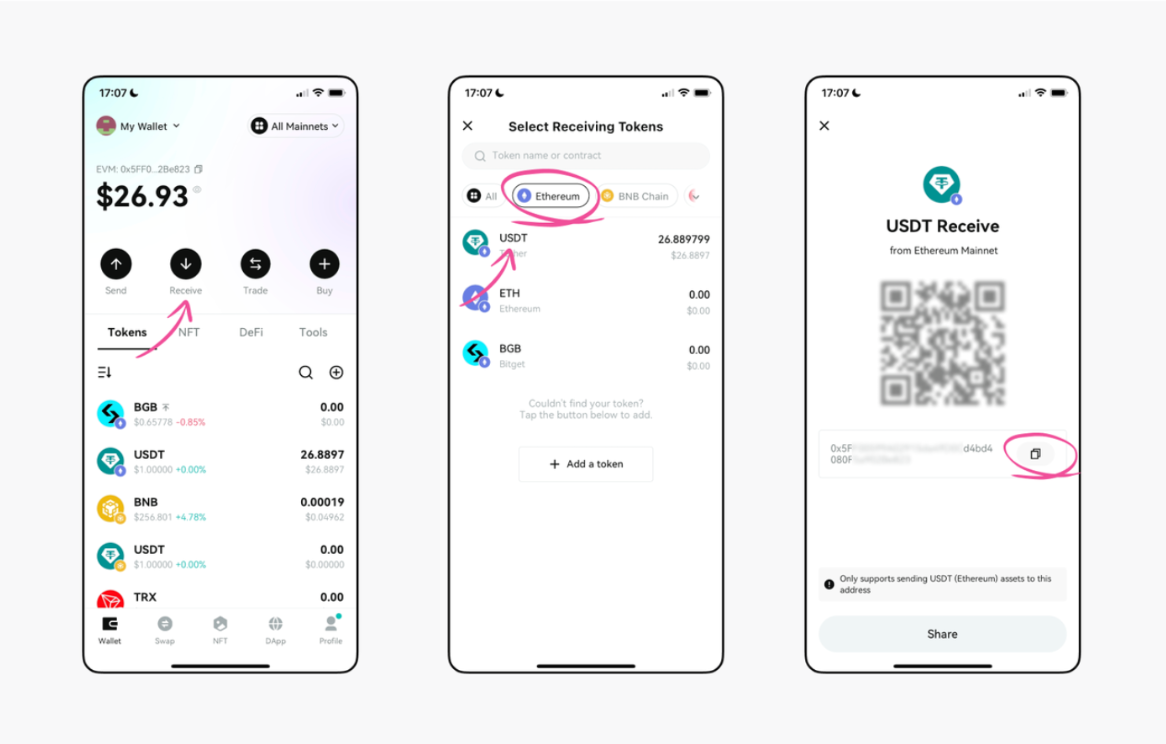
- Transferring Cryptocurrency: Transfer crypto from a different wallet.
- Purchasing Crypto: Utilize a credit or debit card to buy crypto directly from Bitget Wallet, making sure you have sufficient capital for trading PDR (PDR).
Step 3: Find PDR (PDR)
On the Bitget Wallet platform, go to the market area. Search for PDR (PDR) using the search function. Click on the token to access its trading page.
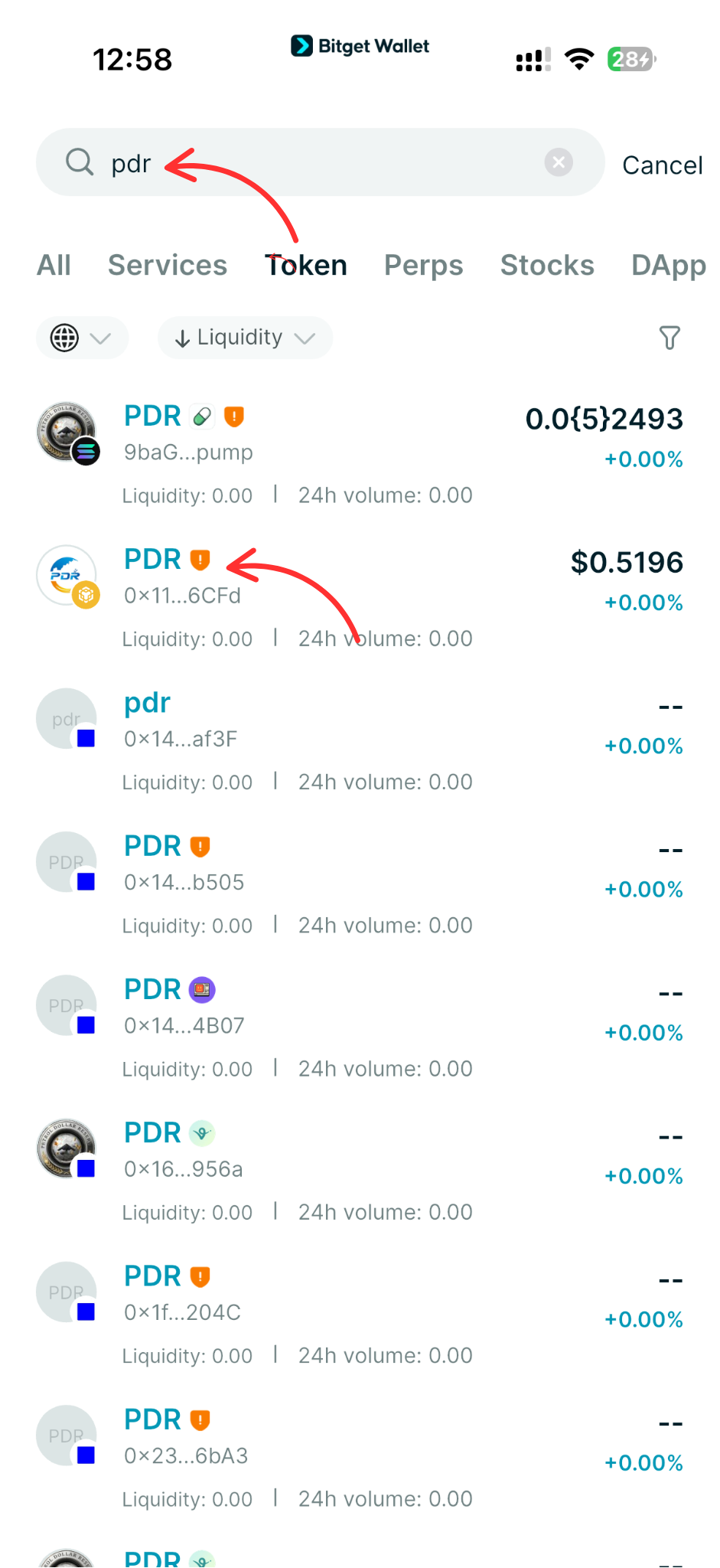
Step 4: Choose Your Trading Pair
Select your trading pair you would like to deal with, for instance,PDR/USDT.
By doing this, you will be able to exchange PDR (PDR) for USDT or any other cryptocurrency.
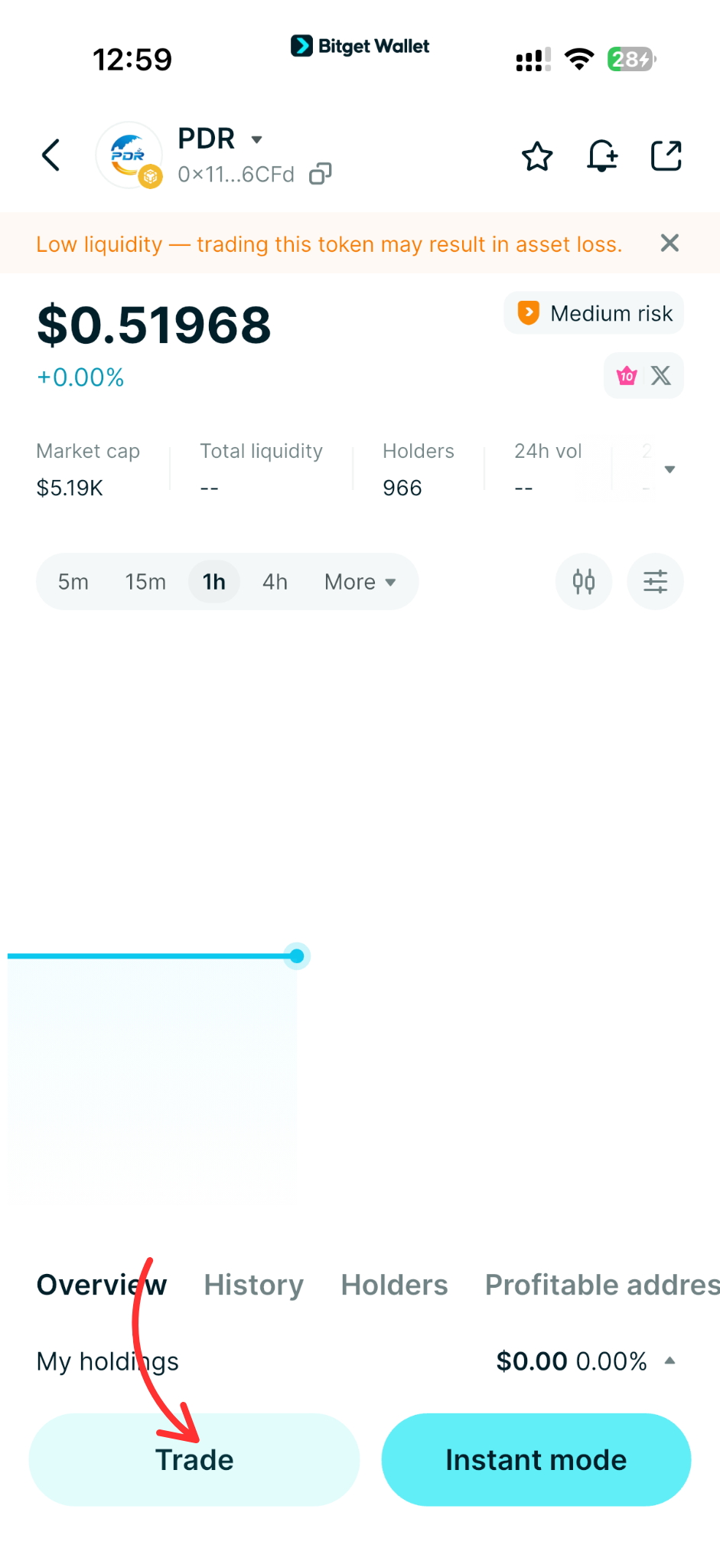
Step 5: Place Your Order
Choose whether to carry out a market order—either buy or sell at the prevailing rate—or place a limit order at your desired price. Fill in the amount of PDR (PDR) you want to exchange, then proceed to confirm in order to complete the trade.
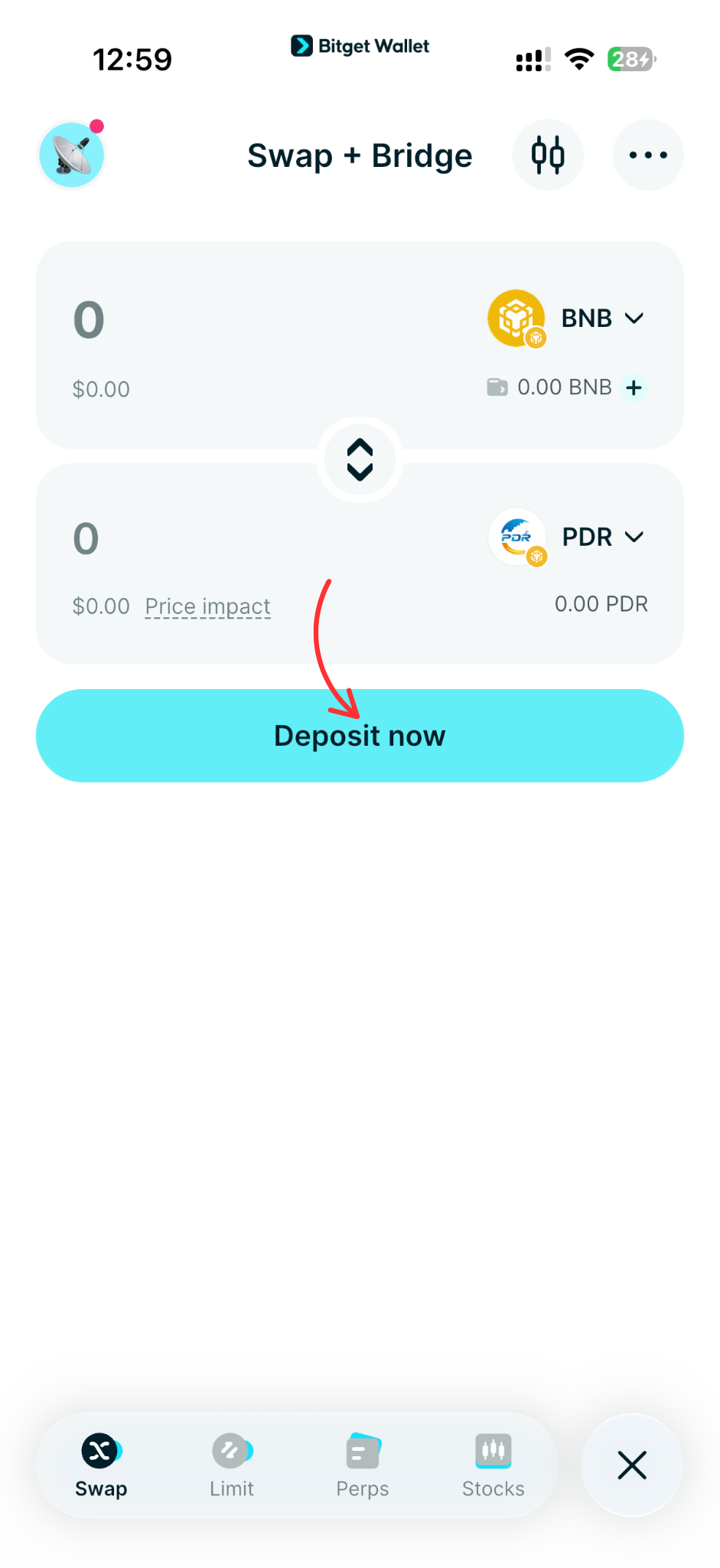
Step 6: Monitor Your Trade
Once you have ordered, you can track the status of your order under "Open Orders." Upon completion of the order, you can view your balance to see the newly purchased PDR (PDR).
Step 7: Withdraw Your Funds (Optional)
If you want to transfer your PDR (PDR) or any other cryptocurrency to another wallet, go to the withdrawal section, provide your wallet address, and confirm the transaction.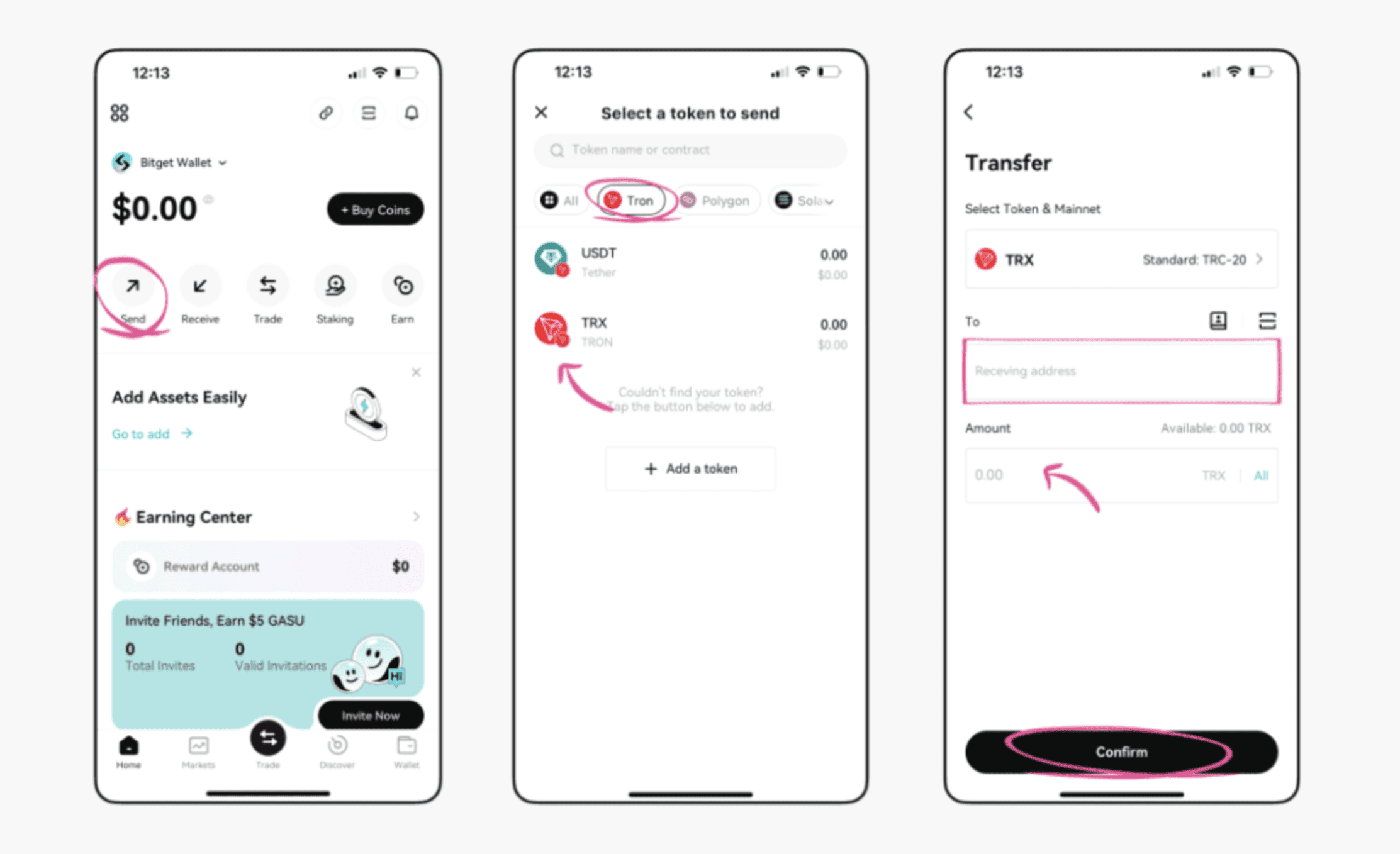
Conclusion
PDR (PDR) is a low-cap, on-chain token on the BNB Chain that operates without a defined team, roadmap, or utility, making it primarily a liquidity-driven and speculative asset. As outlined in this article, its value depends entirely on on-chain activity rather than fundamentals, which positions it more as an example of permissionless token creation than a structured crypto project with long-term growth potential.
For users exploring tokens like PDR, using Bitget Wallet provides a practical advantage by enabling secure self-custody, contract verification, and direct on-chain swaps without relying on intermediaries. In addition to accessing emerging tokens, Bitget Wallet also offers benefits such as Stablecoin Earn Plus with up to 10% APY and zero-fee trading on memecoins and RWA U.S. stock tokens, helping users manage both risk and opportunity more effectively.
Manage all your tokens in one beginner-friendly app – download Bitget Wallet today.
Sign up Bitget Wallet now - grab your $2 bonus!
FAQs
1. What is PDR (PDR) in crypto?
PDR (PDR) is a micro-cap BEP-20 token on the BNB Chain with no verified team, roadmap, or utility. It functions primarily as an on-chain asset whose value depends on liquidity and trading activity rather than fundamentals.
2. Is PDR (PDR) a real project or just a token?
PDR is a real on-chain token with a valid contract, but it is not a confirmed or structured crypto project. There is no public information about developers, partnerships, or ecosystem development.
3. What blockchain is PDR (PDR) on?
PDR (PDR) is deployed on the BNB Chain as a BEP-20 token. It can be accessed and traded through decentralized swap platforms that support BNB Chain assets.
4. Can you trade PDR (PDR)?
Yes, PDR can be traded via decentralized exchanges or swap aggregators if liquidity is available. However, trading activity is extremely limited, and execution may be difficult due to low liquidity.
5. Is PDR (PDR) safe to invest in?
PDR is considered a high-risk asset because it lacks transparency, liquidity, and verified project backing. Users should rely on contract verification and risk management rather than assuming long-term value.
Risk Disclosure
Please be aware that cryptocurrency trading involves high market risk. Bitget Wallet is not responsible for any trading losses incurred. Always perform your own research and trade responsibly.

 How to Buy LAB in 2026: A Beginner’s Step-by-Step Guide to LAB2026-05-15 | 5 mins
- How to Buy ZEC in 2026: A Beginner’s Step-by-Step Guide to Zcash2026-05-07 | 5 mins
 How to Buy QUQ in 2026: A Beginner’s Step-by-Step Guide to Quq2026-04-24 | 5 mins



