


What Is Octra (OCT): Web3 Privacy Chain Token Enabling Encrypted AI, DeFi, and Confidential Workflows
What is Octra (OCT)? Rooted in privacy-centric cryptography, Octra (OCT) bridges tradition and innovation within the encrypted computation and blockchain security industry. It leverages blockchain to enhance data confidentiality and secure computation in the digital economy, ensuring privacy remains relevant in a modern technological landscape.
Thanks to backing from cryptography investors and ecosystem partners, Octra (OCT) is reshaping digital assets with its encrypted compute foundation. Managing OCT through Bitget Wallet gives users Secure Stablecoin Storage, Hot Memecoin Trading, and a Seamless Cross-chain Experience, enhancing participation in the Octra ecosystem.
Through this article, we explore Octra (OCT), outlining its vision, unique characteristics, and market prospects. Whether you’re assessing its real-world functionality, investment potential, or broader impact, this guide helps you navigate its significance in the crypto space.
Key Takeaways
- Octra (OCT) introduces a privacy-first blockchain designed for encrypted computation, ensuring data remains protected even during processing.
- The project leverages advanced cryptography, including Fully Homomorphic Encryption (FHE), enabling confidential smart contracts and secure on-chain workflows.
- OCT functions as the core utility token powering compute operations, network participation, and ecosystem growth, supporting Octra’s long-term role in the encrypted Web3 economy.
What Is Octra (OCT): What You Should Know?
Octra (OCT) is a utility token based on the Octra encrypted-compute blockchain that represents a modern version of privacy-preserving digital infrastructure. The project embodies the following values:
- Data confidentiality
- Cryptographic integrity
- Decentralized collaboration
Octra (OCT) not only inherits the spirit of secure digital practices but also applies it to the privacy-tech and encrypted computation industry to build a sustainable, trustworthy, and collaborative community.

Source: X
Octra recently gained strong market attention with the announcement of its public token sale and growing support from cryptography-focused investors. As demand for privacy-preserving blockchain solutions rises, Octra’s fully encrypted compute approach positions it as a standout project entering the next wave of Web3 innovation.
Octra (OCT) Listing: Key Details and Trading Schedule
1. Key Listing Information
Here are the important details about the Octra (OCT) listing:
- Exchange: To be announced
- Trading Pair: OCT/USDT
- Deposit Available: To be announced
- Trading Start: To be announced
- Withdrawal Available: To be announced
Don’t miss your chance to start trading Octra (OCT) on major centralized exchanges and be part of this groundbreaking journey.
- Please refer to the official announcement for the most accurate schedule.
What Are the Token Sale Details For Octra (OCT)?
The Octra (OCT) Token Sale will officially run from December 18, 2025 (UTC) to January 2026 (UTC — official closing date not announced). During this period, a total of undisclosed OCT allocation will be offered at a fixed price of $0.16 per OCT. The sale will take place on Sonar, and participants will need to complete KYC and wallet connection requirements before joining.
Key details include:
- Total Supply: Not disclosed by the team
- Tokens for Sale: $20,000,000 worth of OCT allocated for the public sale (exact token amount not disclosed)
- Token Price: $0.16 per OCT (fixed)
- Accepted Currencies: USDT
- Vesting Schedule: Not announced by the project
After the sale ends, participants will be able to claim their tokens directly through the Sonar Claim Portal once the claim period opens.
To manage, store, and trade OCT seamlessly after distribution, users are encouraged to download Bitget Wallet, which supports secure storage, cross-chain swaps, and access to DeFi and Web3 features.
Octra (OCT) Market Trends & Price Predictions 2025
Octra (OCT)’s price is determined by market trends, ecosystem strength, and adoption levels. With notable backing and its unique position in the encrypted-compute sector, Octra (OCT) could maintain a stable price within $0.15–$0.35 during its early post-sale period. Future expansion and deeper involvement in privacy-preserving computation and FHE-powered applications may push its valuation to $0.50–$0.80 in the long term.
Factors Influencing the Price of Octra (OCT)
Several crucial aspects contribute to the growth potential of Octra (OCT):
- Market Trends: Interest in privacy solutions and encrypted computation is rising, especially as AI and data-sharing regulations tighten globally. This macro trend strongly benefits projects like Octra.
- Adoption & Real-World Utility: OCT powers encrypted on-chain compute, confidential smart contracts, and privacy-focused AI workflows — real utility that can drive sustained demand once integrated by developers.
- Project Advancements: Progress on Octra’s FHE engine, node incentives, enterprise partnerships, and mainnet roadmap can significantly influence long-term valuation.
Long-Term Growth Potential
Should Octra (OCT) continue its expansion in the privacy-tech and encrypted computation industry, demand could rise, resulting in higher valuations. Analysts believe ongoing innovation and wider adoption could drive its price toward $0.80+, but investors should watch for regulatory risks and market fluctuations.
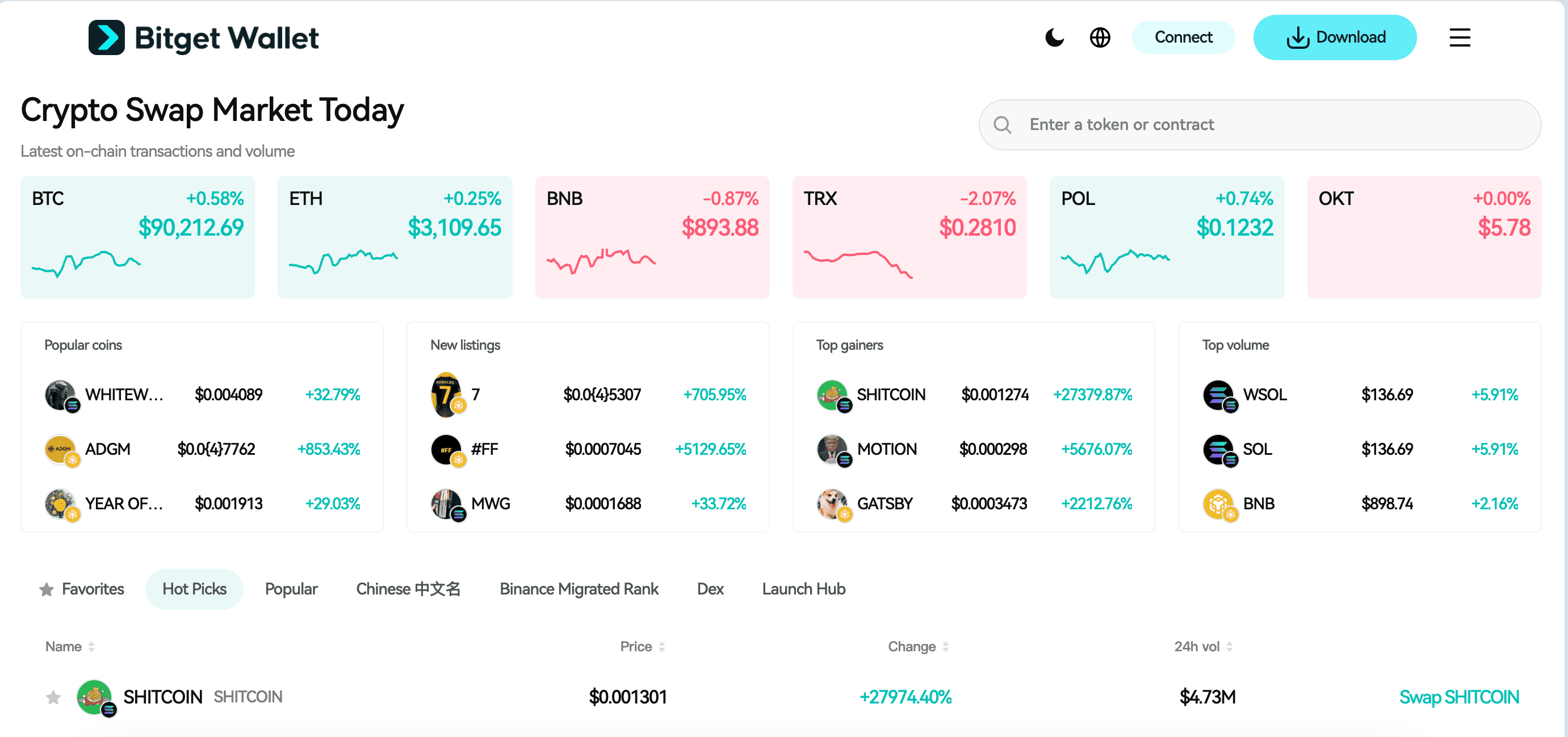
Source: Bitget Wallet
Why Octra (OCT) Stands Out: Essential Features
The standout features of Octra (OCT) include:
-
Fully Homomorphic Encryption (FHE) Compute Layer
Octra enables computations to be performed directly on encrypted data without ever exposing the underlying information. This allows developers, enterprises, and AI models to process sensitive data securely while meeting modern privacy requirements.
-
Privacy-Preserving Smart Contracts
Unlike traditional blockchains where contract data is fully public, Octra supports confidential smart contracts. These allow financial transactions, AI execution, and sensitive workflows to run fully encrypted end-to-end, protecting users and organizations from data leakage.
-
Utility Token for Encrypted Compute & Network Participation
OCT serves as the core token powering Octra’s ecosystem. It is used to pay for encrypted workloads, incentivize compute nodes, enable staking, and facilitate participation in the privacy-first network. This real utility reinforces OCT’s role in supporting long-term ecosystem growth.
The Octra (OCT) Ecosystem: How It Functions?
Octra is a decentralized encrypted-compute blockchain project designed to empower users through secure data processing, privacy-preserving smart contracts, and token-based incentives.
By leveraging advanced cryptography and blockchain infrastructure, it enables seamless interactions such as encrypted computation, staking, governance participation, and network contribution. Below is a step-by-step overview of how the Octra ecosystem works:
| Step | Process | Benefit |
| 1. Blockchain Integration | Octra runs on a privacy-focused encrypted-compute blockchain, ensuring secure, confidential, and decentralized data processing. | Encrypted operations protect sensitive data during computation. |
| 2. Token Transactions | Users can utilize $OCT to pay for encrypted compute workloads, participate in the network, and access privacy-first features. | Utility-backed demand drives ecosystem value. |
| 3. Smart Contracts | Supports privacy-preserving smart contracts that automate encrypted workflows and confidential DeFi processes. | Ensures both efficiency and data confidentiality. |
| 4. Governance Participation | Token holders vote on protocol upgrades, cryptographic enhancements, and network governance decisions. | Community-driven evolution of the ecosystem. |
| 5. Staking & Yield Farming | Users can stake $OCT to support network security and earn incentives from compute-node participation. | Encourages long-term engagement and strengthens network resilience. |
Octra (OCT) Team: Leadership and Strategic Vision
Leadership
The Octra team consists of cryptography engineers, blockchain researchers, and privacy-technology specialists with deep experience in secure computation and decentralized systems. Their combined expertise in Fully Homomorphic Encryption (FHE), distributed compute, and privacy-preserving architecture guides the project’s technical direction. While the team maintains a partially anonymized profile—common among advanced cryptography projects—their background reflects strong proficiency in encrypted systems and scalable blockchain infrastructure.
Strategy
Octra’s strategy focuses on building a privacy-first compute layer for Web3, enabling encrypted smart contracts, confidential AI operations, and secure data collaboration. The roadmap centers on expanding developer adoption, optimizing its FHE engine for performance, and establishing partnerships across AI, DeFi, and enterprise sectors. By combining real utility with robust privacy guarantees, Octra aims to position OCT as the foundational token for encrypted on-chain computation and long-term ecosystem growth.
Octra (OCT): Practical Applications & Use Cases
Why Utility Matters for Octra (OCT)?
Utility is essential for Octra (OCT) because it powers the network’s encrypted compute operations. As the token used to pay for privacy-preserving workloads, OCT directly supports smart contract execution, node rewards, governance, and encrypted data processing. This real functional demand strengthens long-term token value and ensures that Octra’s ecosystem remains sustainable as usage scales.
Key Use Cases of Octra (OCT)
- Encrypted Computation Payments: OCT is used to pay for Fully Homomorphic Encryption (FHE) workloads, enabling privacy-preserving AI, confidential data processing, and secure cross-industry computations.
- Smart Contract Execution: Developers use OCT to deploy and execute encrypted smart contracts that keep all on-chain data confidential.
- Network Participation: OCT incentivizes node operators who validate encrypted tasks and maintain network integrity.
- Governance: Token holders vote on protocol upgrades, FHE performance improvements, and ecosystem policies.
- Staking: Users stake OCT to earn rewards and strengthen the network’s compute capacity.
What’s Next for Octra (OCT)?
Octra plans to enhance its FHE engine, expand its encrypted compute capabilities, and onboard developers across AI, DeFi, and enterprise sectors. Future upgrades may include optimized compute performance, multi-chain interoperability, and broader integration with privacy-first applications. As adoption grows, OCT is positioned to become a foundational asset for secure, encrypted computation across the Web3 ecosystem.
Octra (OCT) Roadmap: What to Expect in 2025 and Beyond?
The roadmap for Octra (OCT) outlines a clear path for growth and innovation:
| Quarter | Roadmap |
| Q3 2025 | Launch of incentivized testnet showcasing encrypted compute performance and early FHE-based smart contract demos. |
| Q4 2025 | Public token sale, initial ecosystem partnerships, and release of developer toolkit for building privacy-preserving applications. |
| Q1 2026 | Mainnet Phase 1 rollout with encrypted smart contract support, node incentives, and network-level FHE optimization. |
| Q2 2026 | Expansion of enterprise integrations, scalable encrypted AI features, and multi-chain interoperability enhancements. |
These applications highlight the practical value of $OCT in the privacy-preserving computation and encrypted Web3 infrastructure industry.
How to Buy Octra (OCT) on Bitget Wallet?
Trading Octra (OCT) is easy on Bitget Wallet. Follow these simple steps to get started:
Step 1: Create an Account
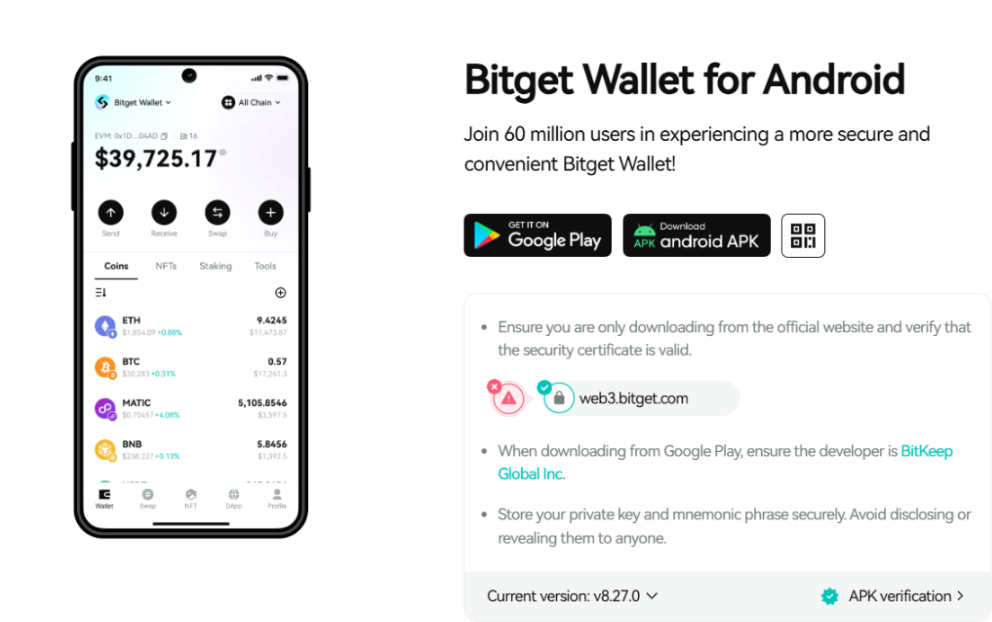
If you don't currently have an account, install the Bitget Wallet app. Register by inputting the required details and confirming your identity.
Step 2: Deposit Funds
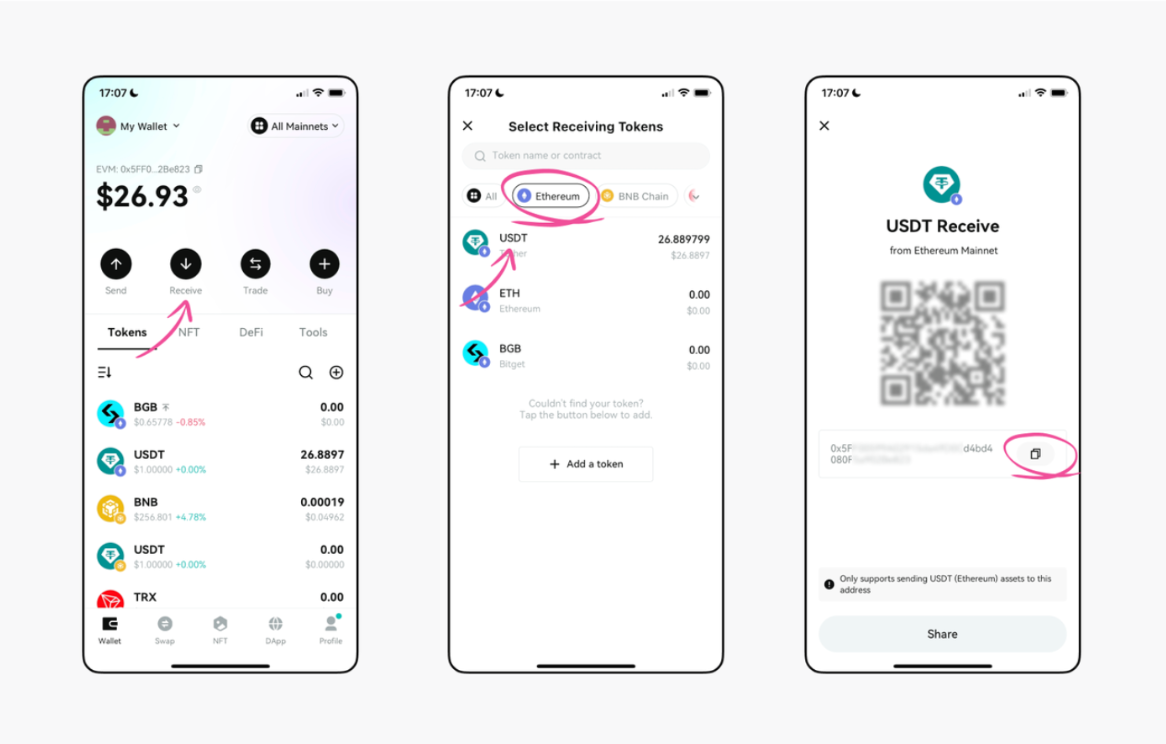
After setting up an account, you must deposit money. You can do this by:
- Transferring Cryptocurrency: Transfer crypto from a different wallet.
- Purchasing Crypto: Utilize a credit or debit card to buy crypto directly from Bitget Wallet, making sure you have sufficient capital for trading Octra (OCT).
Step 3: Find Octra (OCT)
On the Bitget Wallet platform, go to the market area. Search for Octra (OCT) using the search function. Click on the token to access its trading page.
As this token has not been listed yet, please look at the last contract address sent by the project team upon listing of the token.
Step 4: Choose Your Trading Pair
Select your trading pair you would like to deal with, for instance, OCT/USDT.
By doing this, you will be able to exchange Octra (OCT) for USDT or any other cryptocurrency.
Step 5: Place Your Order
Choose whether to carry out a market order—either buy or sell at the prevailing rate—or place a limit order at your desired price. Fill in the amount of Octra (OCT) you want to exchange, then proceed to confirm in order to complete the trade.
Step 6: Monitor Your Trade
Once you have ordered, you can track the status of your order under "Open Orders." Upon completion of the order, you can view your balance to see the newly purchased Octra (OCT).
Step 7: Withdraw Your Funds (Optional)
If you want to transfer your Octra (OCT) or any other cryptocurrency to another wallet, go to the withdrawal section, provide your wallet address, and confirm the transaction.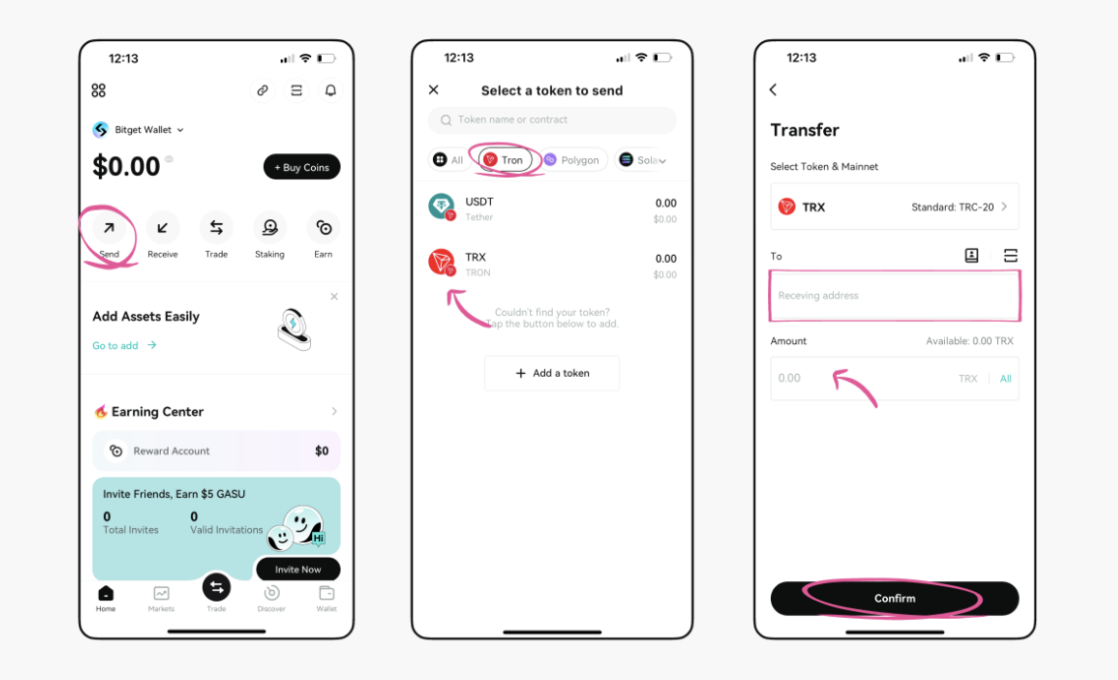
Conclusion
Octra (OCT) brings a new standard to Web3 by enabling encrypted computation, privacy-preserving smart contracts, and secure data processing. Its strong utility and clear technical vision make it a standout project for users looking to benefit from the expanding privacy-tech ecosystem.
Using OCT through Bitget Wallet enhances this experience even further. With secure storage, zero-fee trading, and Stablecoin Earn Plus offering up to 10% APY, Bitget Wallet gives users a simple and efficient way to buy, manage, and interact with OCT. Its fast swaps, multi-chain support, and access to RWAs and memecoins make it the ideal companion for anyone entering the Octra ecosystem.
Manage all your tokens in one beginner-friendly app – download Bitget Wallet today.
Sign up Bitget Wallet now - grab your $2 bonus!
FAQs
1. What is Octra (OCT) used for?
Octra (OCT) is the utility token that powers encrypted computation on the Octra blockchain. It is used to pay for FHE-based compute tasks, deploy privacy-preserving smart contracts, stake for rewards, and participate in governance.
2. How does Octra ensure data privacy?
Octra uses Fully Homomorphic Encryption (FHE), allowing computations to run directly on encrypted data without ever exposing the underlying information. This provides end-to-end confidentiality for AI, DeFi, and enterprise use cases.
3. Where can I store and trade OCT?
You can store and manage OCT using Bitget Wallet, which offers secure asset management, fast cross-chain swaps, zero-fee trading on select assets, and access to DeFi features—making it a convenient choice once OCT becomes transferable.
Risk Disclosure
Please be aware that cryptocurrency trading involves high market risk. Bitget Wallet is not responsible for any trading losses incurred. Always perform your own research and trade responsibly.

 Top Arc Tokens and Memecoins: What’s Trending on Arc Mainnet2026-09-16 | 5 mins
 Circle Arc Mainnet Launch: What Is Arc and Why Does It Matter?2026-09-14 | 5 mins
 Top Robinhood Chain Memecoins 20262026-09-09 | 5 mins



