


Non Custodial vs Custodial Wallet: Key Differences and How to Choose the Right Crypto Wallet

Non Custodial vs Custodial Wallet describes two different crypto wallet models based on who controls the private keys. In a custodial wallet, a centralized platform such as a crypto exchange manages the private keys and security on behalf of users. In contrast, a non custodial wallet allows users to control their own private keys and assets directly on the blockchain.
This difference determines how crypto ownership, security responsibility, and Web3 access work. Custodial wallets emphasize convenience and account recovery, while non-custodial wallets prioritize self-custody and direct blockchain interaction. In this article, we’ll compare custodial vs non custodial wallets, explain their security differences, and help beginners choose the right crypto wallet.
Non Custodial vs Custodial Wallet: Key Differences
The main difference between custodial and non custodial wallets is who controls the private keys. In a custodial wallet, a platform manages security and access, while in a non custodial wallet, users control their assets directly. This distinction affects ownership, security responsibility, and access to Web3 services.
| Feature | Non Custodial Wallet | Custodial Wallet |
| Private key control | User controls keys | Platform controls keys |
| Account recovery | Usually unavailable | Available |
| Security responsibility | User | Platform |
| Web3 access | Full | Limited |
| Suitable for | Advanced users | Beginners |
Non custodial vs custodial wallet security
Security works very differently in custodial vs non custodial wallet security models. Custodial wallets rely on centralized security systems and exchange infrastructure to protect assets. Non custodial wallets rely on private key control, meaning users are responsible for securing their seed phrase and wallet credentials.
Many crypto users consider a self custody crypto wallet safer for long-term storage because funds remain under the user’s direct control rather than with a centralized platform.
Non custodial vs custodial wallet for beginners
For beginners, the custodial vs non custodial wallet for beginners choice often comes down to convenience. Custodial wallets typically offer:
- easy onboarding
- password recovery
- customer support
However, as users learn more about blockchain technology and crypto wallet types, they may transition toward a non custodial wallet to gain full control over their assets and interact with decentralized applications.
Key Takeaways
- Non Custodial vs Custodial Wallet describes two crypto wallet models that differ mainly in private key control and security responsibility.
- A custodial wallet stores private keys on behalf of users and manages account access through centralized infrastructure.
- A non custodial wallet allows users to manage their own keys and operate as a self custody crypto wallet, providing full asset ownership.
- The difference between custodial and non custodial wallet models affects security, recovery options, and access to Web3 services.
- Beginners often start with custodial wallets but may move to non-custodial solutions as they explore decentralized finance and Web3.
Non Custodial vs Custodial Wallet: What Are the Key Differences?
When comparing Non Custodial vs Custodial Wallet models, the main differences involve ownership of private keys, responsibility for security, and access to blockchain services. Each model serves different user needs depending on experience level and intended use.
| Feature Non | Custodial Wallet | Custodial Wallet |
| Private key control | User controls keys | Platform controls keys |
| Account recovery | Usually unavailable | Available |
| Security responsibility | User | Platform |
| Web3 access | Full | Limited |
| Suitable for | Advanced users | Beginners |
Non custodial vs custodial wallet security
Security works very differently in custodial vs non custodial wallet security models. Custodial wallets rely on centralized security systems and exchange infrastructure to protect assets. Non custodial wallets rely on private key control, meaning users are responsible for securing their seed phrase and wallet credentials.
Many crypto users consider a self custody crypto wallet safer for long-term storage because funds remain under the user’s direct control rather than with a centralized platform.
Non custodial vs custodial wallet for beginners
For beginners, the custodial vs non custodial wallet for beginners choice often comes down to convenience. Custodial wallets typically offer:
- easy onboarding
- password recovery
- customer support
However, as users learn more about blockchain technology and crypto wallet types, they may transition toward a non custodial wallet to gain full control over their assets and interact with decentralized applications.
What Is a Non Custodial Wallet?
A non custodial wallet is a crypto wallet where users control their private keys directly. This model gives users full ownership of their assets and allows direct interaction with blockchain networks without relying on a centralized platform.
How Does a Non Custodial Wallet Work?
A non custodial wallet works by allowing users to generate and manage their own private keys directly on their device. Every transaction is authorized by the wallet owner and recorded on the blockchain without requiring approval from a centralized platform.
A non custodial wallet allows users to:
- generate and store their own private keys
- approve transactions directly
- interact with decentralized applications
- maintain full ownership of crypto assets
Because the wallet owner controls the keys, this model is often referred to as self custody.
What Are the Advantages of a Non Custodial Wallet?
A non custodial wallet provides greater independence compared with centralized custody solutions. Since users manage their own private keys, they maintain full ownership and direct access to blockchain networks.
Using a non custodial wallet offers several advantages:
- full ownership of crypto assets
- reduced dependence on centralized exchanges
- direct access to DeFi platforms, NFTs, and Web3 services
- improved privacy and decentralization
These benefits make non custodial wallets particularly popular among experienced crypto users and Web3 participants.
What Are the Risks of a Non Custodial Wallet?
While a non custodial wallet offers full asset ownership, it also places security responsibility entirely on the user. Unlike custodial services, there is no central authority that can recover funds if access credentials are lost.
With a non custodial wallet, users must:
- securely store their seed phrase
- maintain wallet backups
- verify smart contracts and transactions
If the private keys or seed phrase are lost, the assets cannot be recovered.
What Is a Custodial Wallet?
A custodial wallet is a crypto wallet where a third-party service manages private keys and funds on behalf of users. Instead of holding the keys themselves, users rely on a platform such as a crypto exchange or custody provider to secure and manage their assets. These wallets are commonly offered by exchanges to simplify account management, trading, and asset storage.
How Does a Custodial Wallet Work?
In a custodial wallet, the platform stores and manages the private keys associated with the user’s crypto assets. Users access their funds through an account interface, typically using login credentials such as an email and password.
In a custodial wallet, the service provider:
- stores the private keys
- manages transaction security
- provides account recovery options
- allows users to access funds through login credentials
Users control the account interface but do not control the underlying blockchain keys.
What Are the Advantages of a Custodial Wallet?
A custodial wallet is designed to make crypto access easier, especially for beginners who may not be familiar with private key management. Because the platform handles security and infrastructure, users can interact with crypto services without managing technical wallet details.
A custodial wallet offers several conveniences:
- simple onboarding for new users
- password-based account access
- account recovery options
- integrated exchange trading features
For beginners comparing custodial wallet vs non custodial wallet options, these features make custodial wallets easy to start with.
What Are the Risks of a Custodial Wallet?
Although custodial wallets offer convenience, they also introduce certain risks because the platform controls the private keys. Users must trust the service provider to securely store assets and maintain reliable infrastructure.
Potential issues include:
- reliance on centralized security infrastructure
- withdrawal limits or account restrictions
- exposure to exchange hacks or service outages
Because of these risks, some users eventually move from custodial vs non custodial wallet setups toward self-custody solutions.
Examples of Custodial and Non-Custodial Wallets
Real-world wallet examples help illustrate the difference between custodial and non custodial wallet models. Some wallets are managed by centralized exchanges, while others give users full private key control.
Examples of Custodial Wallets
Custodial wallets are typically provided by centralized crypto exchanges that manage private keys on behalf of users.
Examples include:
- Coinbase exchange wallet
- Binance exchange wallet
- Kraken exchange wallet
A custodial wallet example is Coinbase, Binance, or Kraken. These wallets store private keys within exchange infrastructure and allow users to access funds through login credentials.
Examples of Non-Custodial Wallets
Non-custodial wallets allow users to manage their own private keys and interact directly with blockchain networks.
Examples include:
- Bitget Wallet
- MetaMask
- Trust Wallet
A non custodial wallet example is Bitget Wallet, MetaMask, or Trust Wallet. These wallets operate under a self-custody model, where transactions are signed locally and users maintain full ownership of their crypto assets.
Pros and Cons of Non Custodial vs Custodial Wallets
Understanding the pros and cons of custodial vs non custodial wallets helps users evaluate the balance between convenience and control. In a Non Custodial vs Custodial Wallet comparison, the key difference lies in private key control and who is responsible for security. Custodial wallets focus on simplicity and platform-managed protection, while a non custodial wallet gives users full ownership of their assets and direct access to Web3.
Non Custodial vs Custodial Wallet Comparison Table
| Feature Non | Custodial Wallet | Custodial Wallet |
| Private key control | User controls private keys | Platform manages keys |
| Account recovery | No recovery if seed phrase lost | Password or email recovery available |
| Ease of use | Requires crypto knowledge | Beginner-friendly interface |
| Security model | Self-custody security responsibility | Platform security infrastructure |
| Trading access | Requires DEX or wallet swap | Integrated exchange trading |
| Web3 access | Full access to DeFi and dApps | Limited |
| Risk factors | Lost seed phrase or user error | Platform hacks or restrictions |
Is a Non Custodial Wallet Safer Than a Custodial Wallet?
Custodial and non custodial wallets follow very different security models, so the safer option depends on how private keys are managed and who is responsible for protecting them. A custodial wallet places security responsibility on a third-party platform, while a non custodial wallet gives users direct control over their assets and private keys.
Custodial wallet risks
Custodial wallets rely on centralized infrastructure to store private keys and manage account security. This means users must trust the platform to maintain strong protection, operational stability, and reliable access to funds.
Potential risks include:
- exchange hacks
- account freezes or withdrawal limits
- service outages
Non custodial wallet risks
Non-custodial wallets remove centralized custody risk, but they also shift full security responsibility to the user. Because users control the private keys directly, mistakes in wallet setup, backup, or transaction approval can lead to permanent asset loss.
Key risks include:
- losing the seed phrase
- signing malicious smart contracts
- user security mistakes
For users who understand private key management, a non custodial wallet is often considered safer because assets remain under direct user control. However, for beginners who may not yet be comfortable managing seed phrases and wallet security, a custodial wallet can feel safer because it offers recovery options and platform support.
Custodial vs Non Custodial Wallet: Quick Decision Guide
Choosing between a custodial and non custodial wallet depends on your experience level, security preferences, and how you plan to use crypto. This quick comparison helps you decide which wallet model best fits your needs based on security, control, and ease of use.
Choose a custodial wallet if:
- you are a beginner
- you prefer password-based access and recovery
- you mainly trade on centralized exchanges
Choose a non-custodial wallet if:
- you want full ownership of your crypto assets
- you use DeFi or Web3 applications
- you prefer self-custody and direct blockchain access
This simple decision framework makes it easier to choose the right crypto wallet based on usability, security, and control.
Which Wallet Should Beginners Choose?
Choosing the right crypto wallet as a beginner depends on balancing ease of use with security awareness. While both custodial and non custodial wallets have advantages, most new users start with simpler solutions before transitioning to self-custody.
Why do beginners often choose custodial wallets?
Custodial wallets are usually the first choice for beginners because they offer a familiar account setup and recovery system. Users can access their funds using login credentials without needing to manage private keys or seed phrases.
Common reasons include:
- simple onboarding process
- password-based access
- account recovery and customer support
When should beginners should consider a non-custodial wallet?
As users gain more experience, a non custodial wallet becomes a better option for greater control and Web3 access. This type of wallet allows direct interaction with blockchain networks and decentralized applications.
A non custodial wallet is suitable when beginners:
- want full ownership of their crypto
- plan to use DeFi or NFTs
- understand how to securely store a seed phrase
How to Choose the Right Crypto Wallet?
Understanding how to choose the right crypto wallet requires evaluating several key factors, including security, usability, and Web3 functionality. When comparing Non Custodial vs Custodial Wallet options, users should consider whether they prefer the convenience of a platform-managed wallet or the independence of a non custodial wallet with full private key control.
1. Security and Private Key Control
Security is the most important factor when selecting a crypto wallet. The main difference in the custodial wallet vs non custodial wallet model is who manages the private keys that control access to funds.
- Custodial wallet → the platform manages private keys and security
- Non custodial wallet → users manage their own keys and assets
Users who prioritize ownership, decentralization, and long-term asset control typically prefer a non custodial wallet.
2. Ease of Use and Account Recovery
Different crypto wallet types offer different levels of usability and account recovery. Some wallets are designed to simplify the onboarding process for beginners, while others focus on security and self-custody.
When choosing a wallet, consider whether it provides:
- simple onboarding and interface
- account recovery options
- customer support
Custodial wallets generally provide password recovery systems, while non custodial wallets require users to securely manage their seed phrase and wallet backups.
3. Web3 and Multi-Chain Compatibility
Users who want to interact with decentralized applications should choose a wallet that supports the broader Web3 ecosystem. Many modern wallets provide access to multiple blockchain networks and decentralized services.
Key features to consider include:
- access to DeFi protocols
- compatibility with NFT marketplaces
- support for cross-chain asset management
- connectivity with decentralized applications (dApps)
Choosing a wallet with strong Web3 and multi-chain compatibility allows users to fully participate in the growing decentralized ecosystem.
How to Get a Non-Custodial Wallet?
Creating a non custodial wallet usually takes only a few minutes and allows users to take full ownership of their crypto assets. Unlike custodial wallets, this setup ensures that the user maintains private key control and can interact directly with blockchain networks without relying on a centralized platform.
Steps to Create a Non-Custodial Wallet
Setting up a non custodial wallet typically follows a simple process. Most wallet apps guide users through wallet creation and security setup to ensure their assets remain protected.
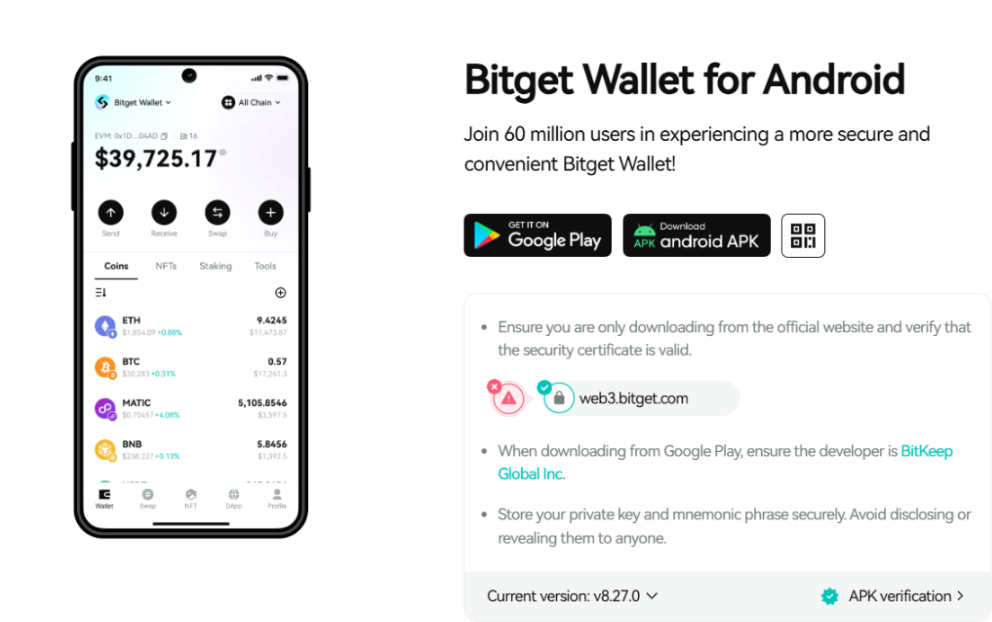
Step 1: Download the Wallet App
Download a trusted non-custodial wallet such as Bitget Wallet, which supports multi-chain asset management and Web3 access.
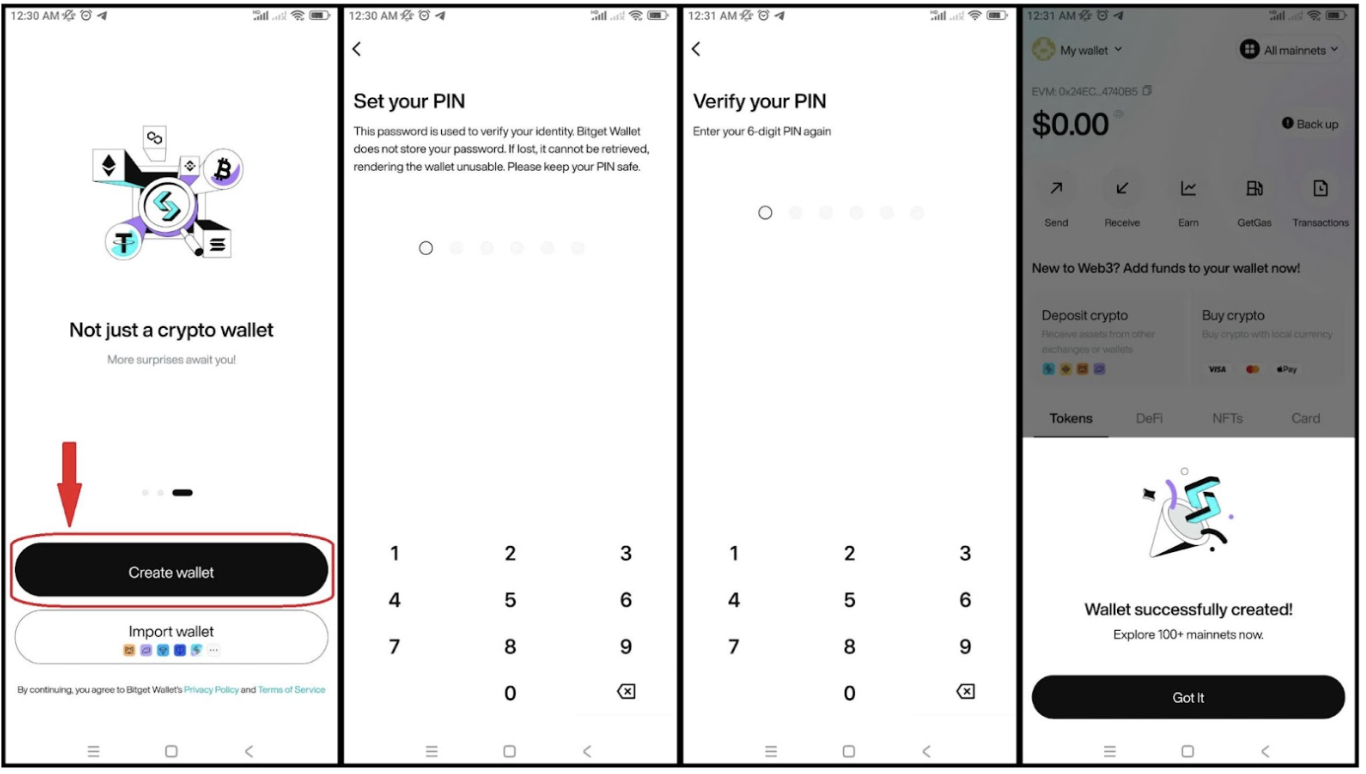
Step 2: Create a New Wallet
Open the app and select Create a New Wallet to begin the wallet setup process.
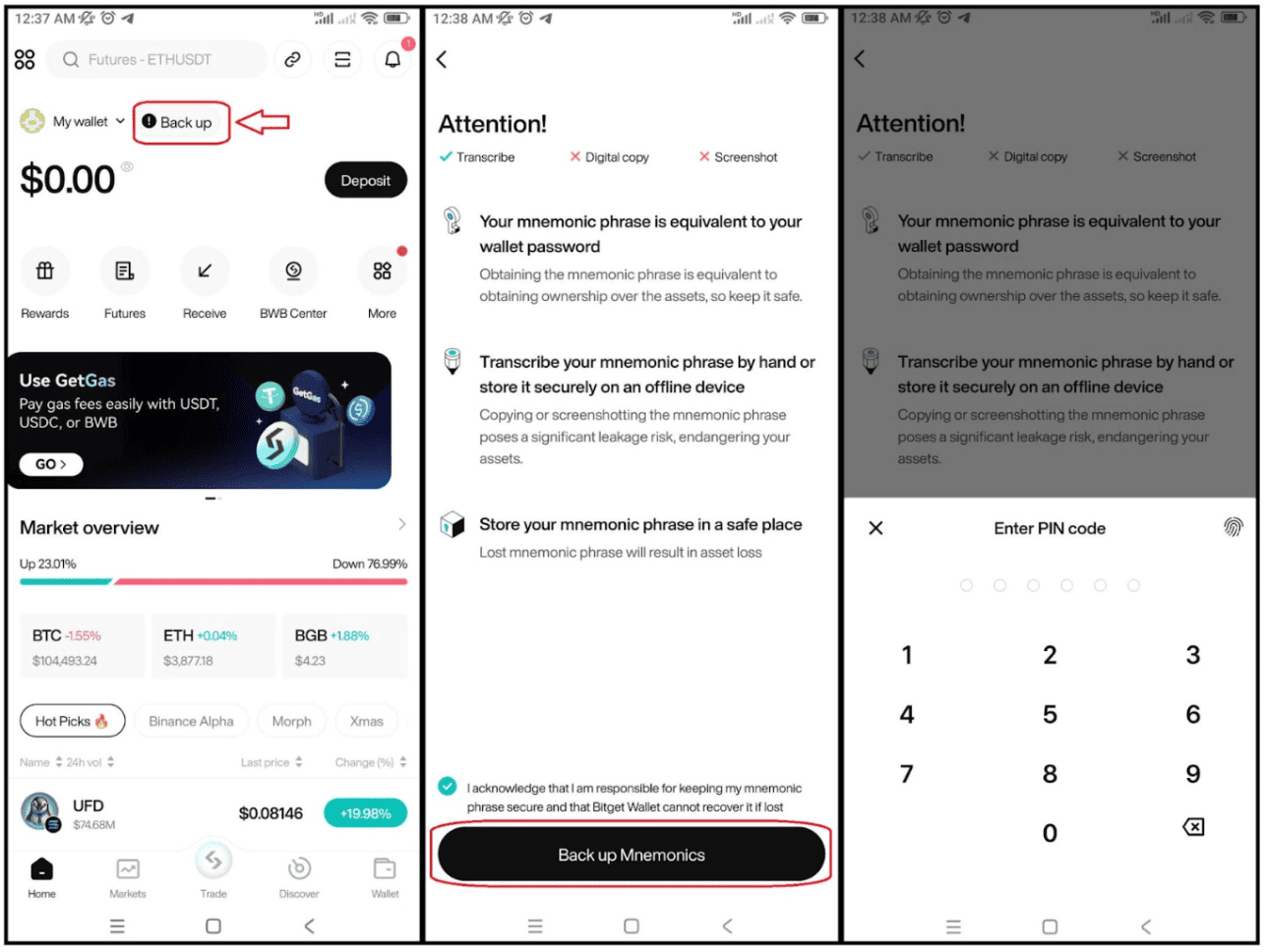
Step 3: Generate and Back Up Your Seed Phrase
The wallet will generate a seed phrase. Write it down and store it securely offline, as it is the only way to recover access to your wallet.
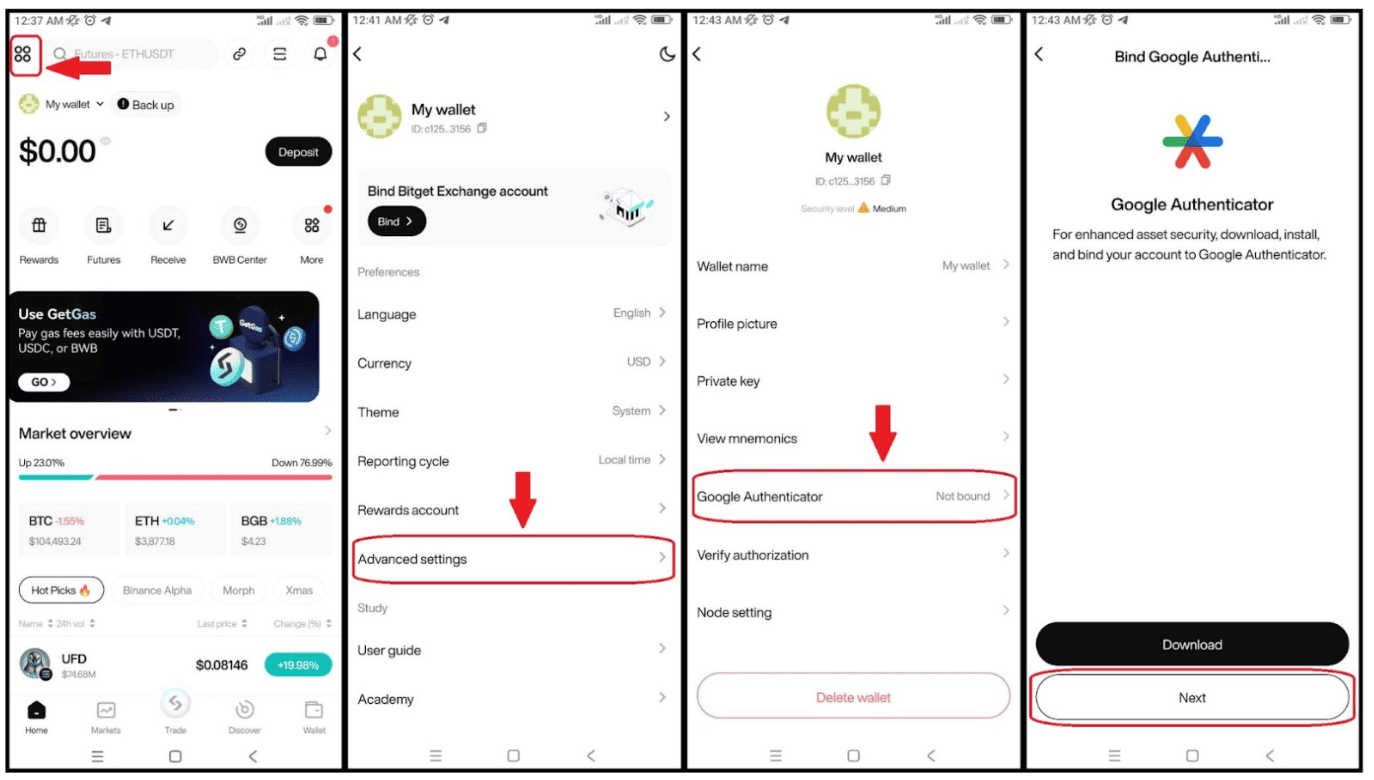
Step 4: Enable Password or Biometric Security
Set a wallet password or enable biometric protection to add an additional security layer to your device.
Step 5: Start Managing Your Crypto Assets
Once the setup is complete, you can begin sending, receiving, and managing crypto assets directly from your wallet.
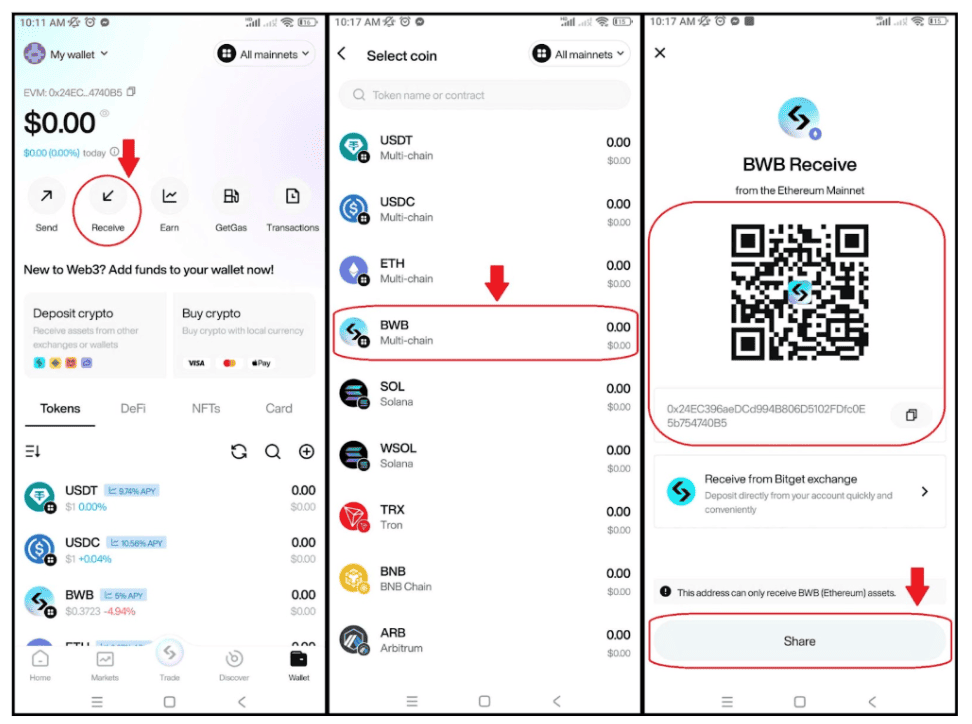
Once the wallet is created, users can access DeFi services, NFTs, cross-chain swaps, and Web3 applications directly from their wallet while maintaining full control over their funds.
Best Non-Custodial Wallet: Bitget Wallet
As more users move toward self-custody, choosing the right wallet becomes an important part of managing digital assets safely. Among modern Web3 tools, Bitget Wallet stands out as a powerful non custodial wallet designed to support trading, payments, and multi-chain asset management in a single application.
Is Bitget Wallet a Non-Custodial Wallet?
Yes. Bitget Wallet operates as a fully self-custodial wallet, meaning users maintain full private key control and the platform does not store or access user funds. Transactions are signed locally on the user’s device, ensuring that only the wallet owner can authorize transfers or interactions with blockchain networks.
This structure follows the core principle behind a self custody crypto wallet, where users retain complete ownership and responsibility for their assets.
- users control their private keys
- transactions are signed locally
- the platform cannot access user funds
Why Bitget Wallet Is Different from Exchange Wallets?
Unlike custodial wallets offered by centralized exchanges, Bitget Wallet is built for direct interaction with blockchain ecosystems. It provides tools that allow users to manage assets independently while still accessing advanced Web3 features.
Key capabilities include:
- multi-chain asset management across major blockchain networks
- decentralized trading and cross-chain swaps
- direct interaction with Web3 applications and dApps
- payment tools and on-chain asset management features
These capabilities make Bitget Wallet a comprehensive non custodial wallet solution for users who want full control of their crypto assets while still accessing trading and Web3 functionality.
Related Reading on Crypto Wallets
Crypto wallets are essential tools for managing digital assets, allowing users to store, send, receive, and interact with blockchain networks. Wallets can be categorized by custody models, supported blockchain networks, and how they manage assets across chains.
The following guides explore crypto wallet fundamentals, custody types, and how modern wallets support multi-chain and cross-chain asset management.
🔹 Crypto Wallet Fundamentals
- What Is a Crypto Wallet: Beginner’s Guide to Digital Assets
- What Is a Custodial Wallet and How Centralized Crypto Wallets Work?
- What Is a Non-Custodial Wallet: Understanding Self-Custody and Private Key Control
- Non Custodial vs Custodial Wallet: Key Differences and How to Choose the Right Crypto Wallet
🔹 Multi-Chain and Cross-Chain Wallets
- What Is a Multi-Chain Wallet: A Beginner’s Guide to Cross-Chain Crypto Wallets
- What Is a Cross Chain Crypto Wallet? A Beginner’s Guide to Multi-Chain Asset Management
- Multi-Chain vs Cross-Chain Wallet: What’s the Difference?
🔹 Real-World Example of Self-Custody
Conclusion
Non Custodial vs Custodial Wallet comparisons ultimately come down to who controls the private keys and how security responsibility is managed. Custodial wallets offer convenience through centralized platforms, making them easier for beginners who prefer simple account management and recovery options. In contrast, a non custodial wallet prioritizes ownership and independence, allowing users to control their assets directly and interact with blockchain networks without relying on a third party.
As the crypto ecosystem continues to evolve, many users are shifting toward self custody crypto wallet models to gain greater control, security, and Web3 access. Solutions like Bitget Wallet make this transition easier by combining self-custody with multi-chain support, trading tools, and Web3 integration in one application.
Download Bitget Wallet to start managing your crypto with full private key control and explore decentralized finance, NFTs, and cross-chain trading directly from your wallet.
Sign up Bitget Wallet now - grab your $2 bonus!
FAQs
1. What is Non Custodial vs Custodial Wallet?
Non Custodial vs Custodial Wallet refers to two crypto wallet models that differ mainly in private key control. A custodial wallet stores private keys on behalf of users, while a non custodial wallet allows users to manage and control their own keys.
2. Which is better, a custodial or non-custodial wallet?
The better option depends on the user’s experience level and security preferences. Custodial wallets offer convenience and account recovery, while non-custodial wallets provide full ownership and decentralized access to blockchain networks.
3. What are the disadvantages of a non-custodial wallet?
The main disadvantage of a non custodial wallet is that users must manage their own security and backups. If the seed phrase or private keys are lost, there is no centralized service that can recover the funds.
4. What does a non-custodial wallet mean?
A non-custodial wallet means the wallet owner controls the private keys and signs transactions directly on the blockchain. This model ensures full ownership of assets without relying on a third-party platform.
5. Who can access funds in a non-custodial wallet?
Only the person who holds the private keys or seed phrase can access the funds in a non custodial wallet. Because there is no central authority managing the wallet, access depends entirely on the user’s control of their keys.
6. What is the difference between custodial and non-custodial wallet security?
Custodial wallets rely on centralized platforms to manage security and store private keys. Non-custodial wallets rely on the user maintaining private key control and protecting their seed phrase.
7. Which crypto wallet should beginners choose?
Beginners often start with custodial wallets because they provide simple onboarding and account recovery options. As users gain experience with crypto wallet types, many transition to non-custodial wallets for greater control over their assets.
8. How to get a non-custodial wallet?
To get a non custodial wallet, download a trusted wallet application and create a new wallet. During setup, generate and securely store your seed phrase so you can safely manage your crypto assets.
Risk Disclosure
Please be aware that cryptocurrency trading involves high market risk. Bitget Wallet is not responsible for any trading losses incurred. Always perform your own research and trade responsibly.

 What Is a Crypto Wallet Address? Examples and How to Find It2026-08-12 | 3 mins
- What Is a Cold Wallet? A Beginner's Guide to Offline Crypto Storage2026-09-25 | 3 mins
- Fintech Wallets vs. Crypto Wallets: What’s the Difference? (2026 Guide)2026-07-24 | 5 mins



