


How to Buy POLY in 2026: A Beginner’s Step-by-Step Guide to Polymarket
How to buy POLY is a growing question among traders tracking potential token launches in the on-chain prediction-market sector. Although Polymarket already supports real-money trading on global events through its existing platform, POLY itself has not yet been officially launched, which makes verification and timing especially important.
Choosing where and how to buy POLY depends on understanding custody, liquidity, and execution risk. In this article, we explain how to prepare for a POLY launch, where POLY may become available, how to buy POLY safely once trading begins, and how to approach POLY price volatility with a disciplined strategy —while highlighting how tools like Bitget Wallet support secure stablecoin storage, hot memecoin trading, and a seamless cross-chain experience for on-chain execution.
Key Takeaways
-
POLY is the widely discussed upcoming token associated with Polymarket and is expected to launch on Polygon.
It is commonly framed as a governance and ecosystem-incentive token tied to an already active on-chain platform.
-
There is no confirmed POLY listing date, contract address, or finalized tokenomics.
Users should verify all launch-related information only through official Polymarket channels.
-
Knowing how to buy POLY safely matters more than trying to buy first.
Contract verification, wallet control, and liquidity awareness are essential once trading begins.
What Is Polymarket (POLY)?
POLY is the anticipated token associated with Polymarket, a well-known on-chain prediction-market platform. If launched, POLY is expected to function primarily as a governance and ecosystem-incentive token, rather than as the core asset required for basic market trading.
Unlike many speculative launches, Polymarket achieved strong usage before introducing POLY, which makes the token closely tied to governance and ecosystem incentives rather than basic platform access.
What makes Polymarket (POLY) different from utility tokens?
POLY stands apart from many new tokens because it is expected to be linked to an already active platform rather than serving as a pure fundraising or narrative asset at launch. Instead of being necessary for basic trading access, POLY would more likely be positioned around governance, incentives, and ecosystem alignment.
- Token role: POLY is expected to function more as a governance and incentive asset than a meme token or payment token.
- Price sensitivity: POLY price will likely depend heavily on launch structure, liquidity depth, listings, and trader sentiment.
- Trading environment: If launched on Polygon, POLY liquidity may initially develop through on-chain markets before broader exchange access expands.

Source: CryptoRank
Is Polymarket (POLY) a scam or just high-risk?
POLY should not be treated as a scam by default, but it should absolutely be treated as a high-risk token opportunity, especially before launch details are confirmed. The biggest dangers are not necessarily the brand behind the idea, but the typical token-launch risks: fake contracts, impersonation tokens, thin liquidity, and hype-driven buying.
Users should be especially careful if any of the following appear before an official launch announcement:
- tokens already claiming to be POLY
- airdrop pages asking for wallet approvals
- unofficial contract addresses
- social posts pushing “early access” or private sale links
A safer approach is to wait for official confirmation, verify the contract address from trusted channels, and review liquidity conditions before trading.
Does Polymarket Have a Token (POLY)?
According to Polymarket’s official help documentation, Polymarket does not currently have a publicly launched token. While many users refer to a possible future token as POLY, there is still no confirmed contract address, tokenomics release, or official launch date.
That means anyone researching how to buy POLY should understand one critical point: there is nothing legitimate to buy yet unless Polymarket officially announces it. Any token claiming to represent POLY before that point should be treated with caution.
Where to Buy POLY?
When users search for where to buy POLY, they are usually trying to understand where legitimate liquidity will appear first once the token launches. For POLY, that may include on-chain trading on Polygon, custodial exchange listings, or wallet-based access through supported swap interfaces.
Availability will ultimately depend on listings and on-chain liquidity, which have not yet been announced for POLY.
Comparison of POLY Buying Methods
| Buying Method | Custody Model | Execution | Control | Recommended For | Main Risks |
| On-chain swap (DEX via wallet) | Non-custodial | On-chain | High | DeFi-native users | Fake contracts, slippage |
| On-chain UEX | Custodial | Platform-managed | Medium | Simpler on-chain exposure | Custodial limits |
| Centralized exchange (CEX) | Custodial | Platform-managed | Low | Beginners, fiat access | Withdrawal restrictions |
Why Many Users Buy POLY With Bitget Wallet?
If POLY launches with primary liquidity on-chain, a non-custodial wallet can make it easier to access the token directly while maintaining control over funds. For users preparing to buy POLY, Bitget Wallet can help with token discovery, self-custody, and cross-chain fund management before and after launch.
What Bitget Wallet Helps With?
✅ Self-custody and asset control Users retain full ownership of private keys and funds, reducing exposure to custodial and platform-related risks.
✅ On-chain swaps with transparent execution Explore over 1M tokens with real-time in-app rankings—discover trending assets early and stay ahead of the market.
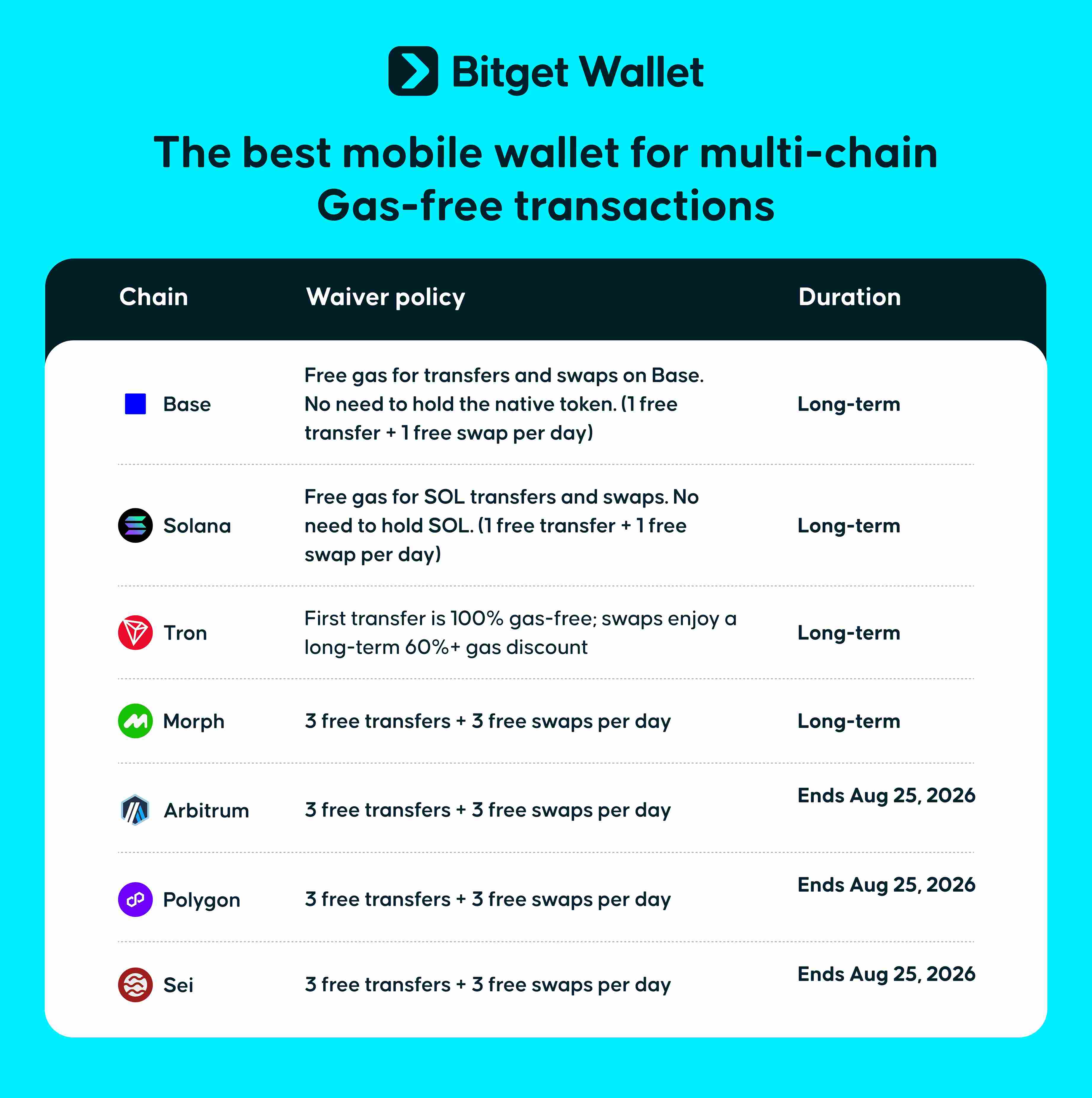
✅ Multi-chain access with cost-efficient execution Bitget Wallet supports 130+ blockchains, including 7 major networks such as Solana, Base, Arbitrum, Polygon, Tron, and more. This allows users to buy, hold, and manage POLY across different ecosystems without being locked into a single chain environment.
On supported networks, users can also benefit from gas-free transactions or long-term gas discounts, helping reduce execution costs when swapping, transferring, or managing assets across chains—an advantage for users who trade frequently or operate across multiple ecosystems.
✅ Flexible post-purchase asset management After buying POLY, users can hold, transfer, or manage assets freely across supported chains without withdrawal limits or third-party restrictions, making it easier to adapt to changing liquidity or market conditions.
Sign up Bitget Wallet now - grab your $2 bonus!
How to Buy Polymarket (POLY) on Bitget Wallet?
Trading Polymarket (POLY) is easy on Bitget Wallet. Follow these simple steps to get started:
Step 1: Create an Account
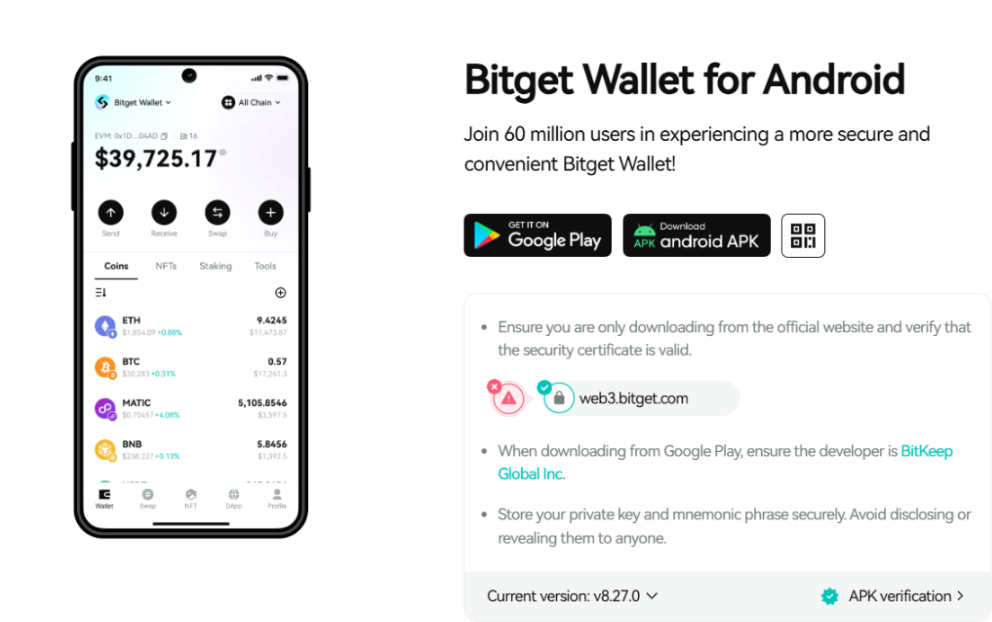
If you don't currently have an account, install the Bitget Wallet app. Register by inputting the required details and confirming your identity.
Step 2: Deposit Funds
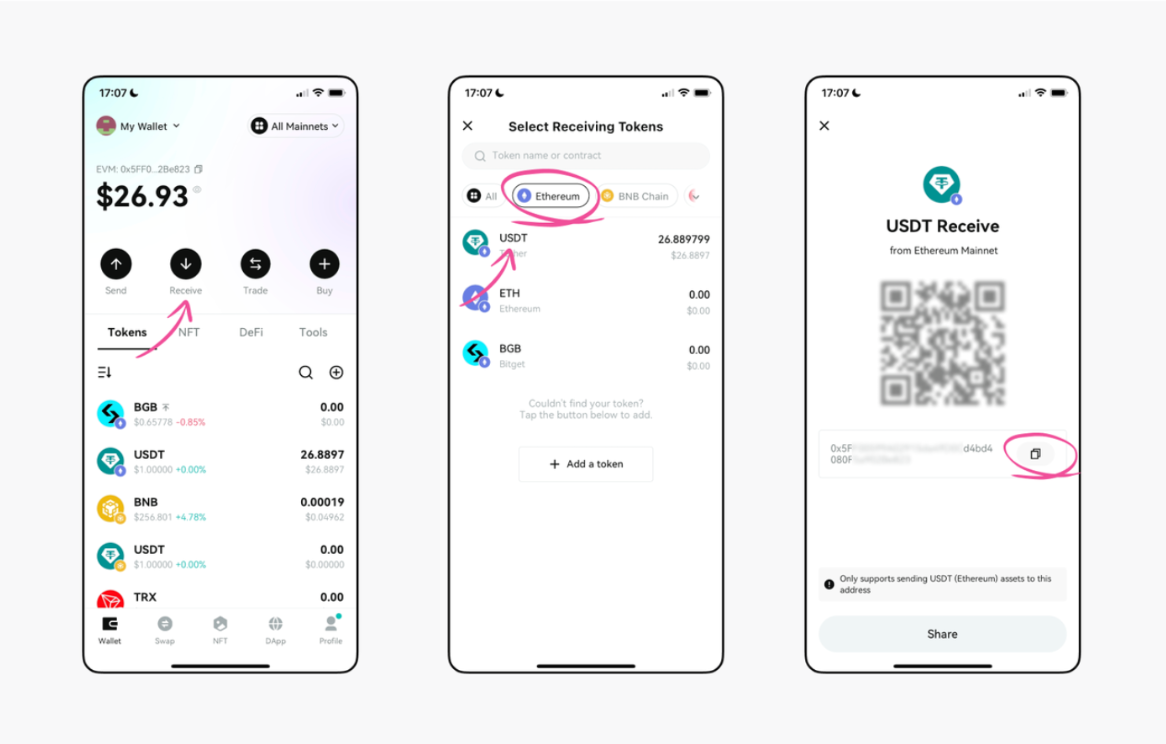
After setting up an account, you must deposit money. You can do this by:
- Transferring Cryptocurrency: Transfer crypto from a different wallet.
- Purchasing Crypto: Utilize a credit or debit card to buy crypto directly from Bitget Wallet, making sure you have sufficient capital for trading Polymarket (POLY).
Step 3: Find Polymarket (POLY)
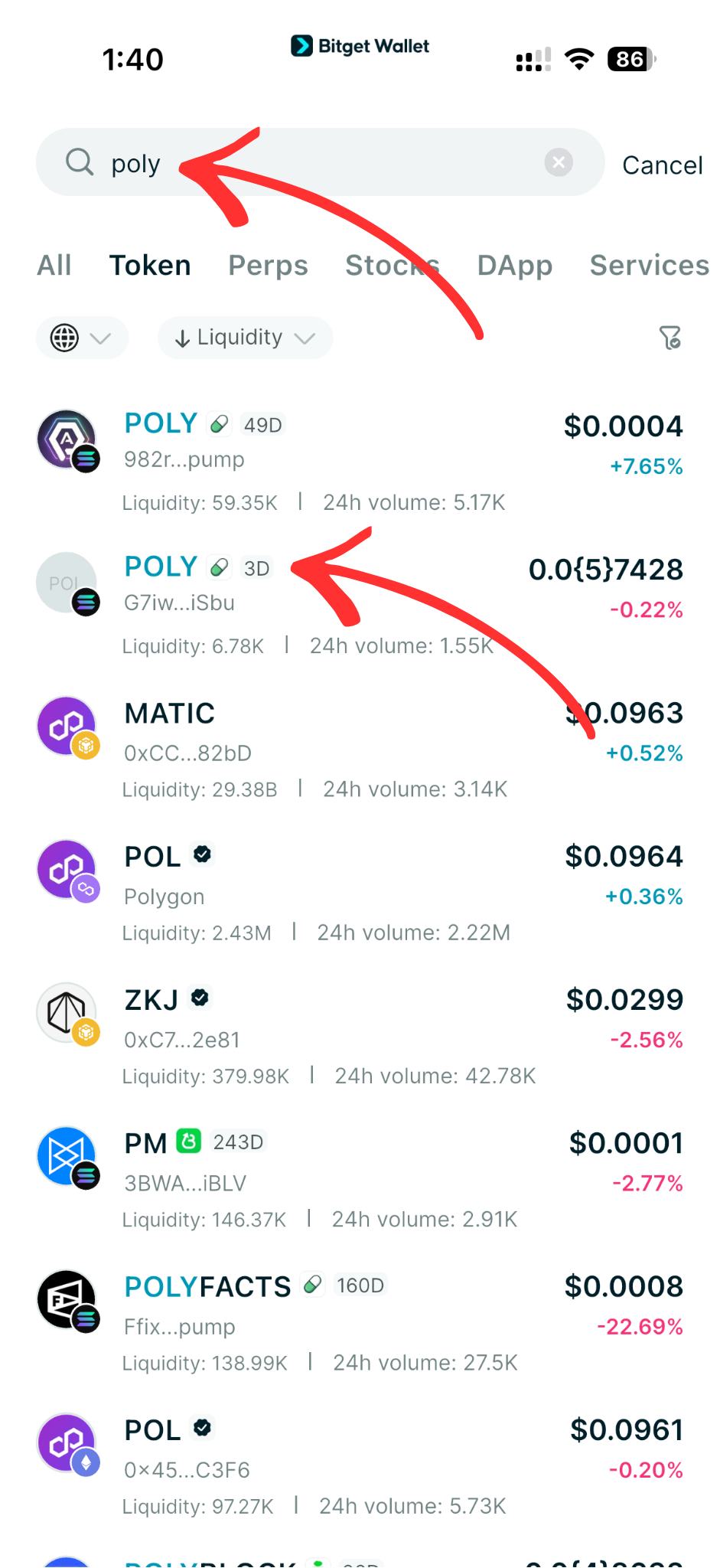
On the Bitget Wallet platform, go to the market area. Search for Polymarket (POLY) using the search function. Click on the token to access its trading page.
As this token has not been listed yet, please look at the last contract address sent by the project team upon listing of the token.
Step 4: Choose Your Trading Pair
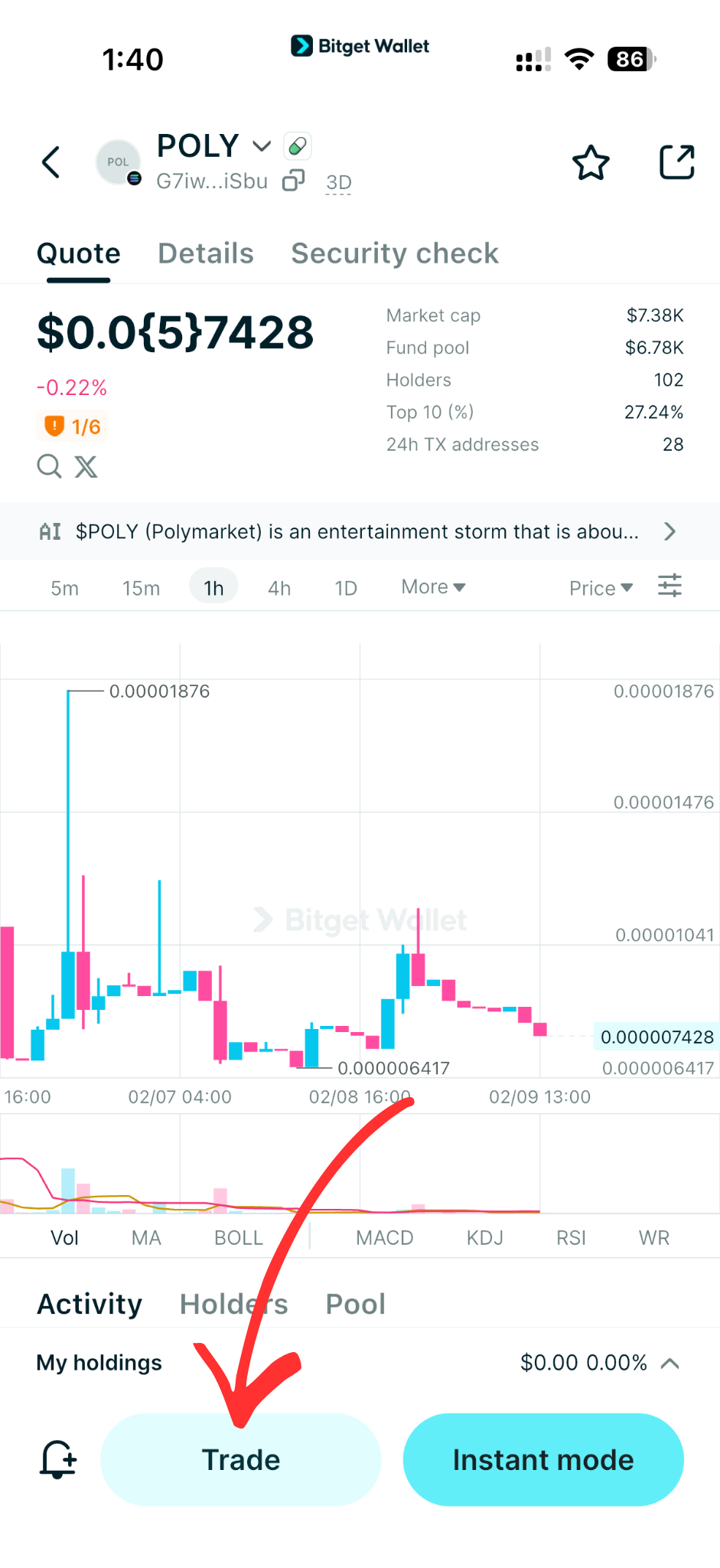
Select your trading pair you would like to deal with, for instance, POLY/USDT.
By doing this, you will be able to exchange Polymarket (POLY) for USDT or any other cryptocurrency.
Step 5: Place Your Order
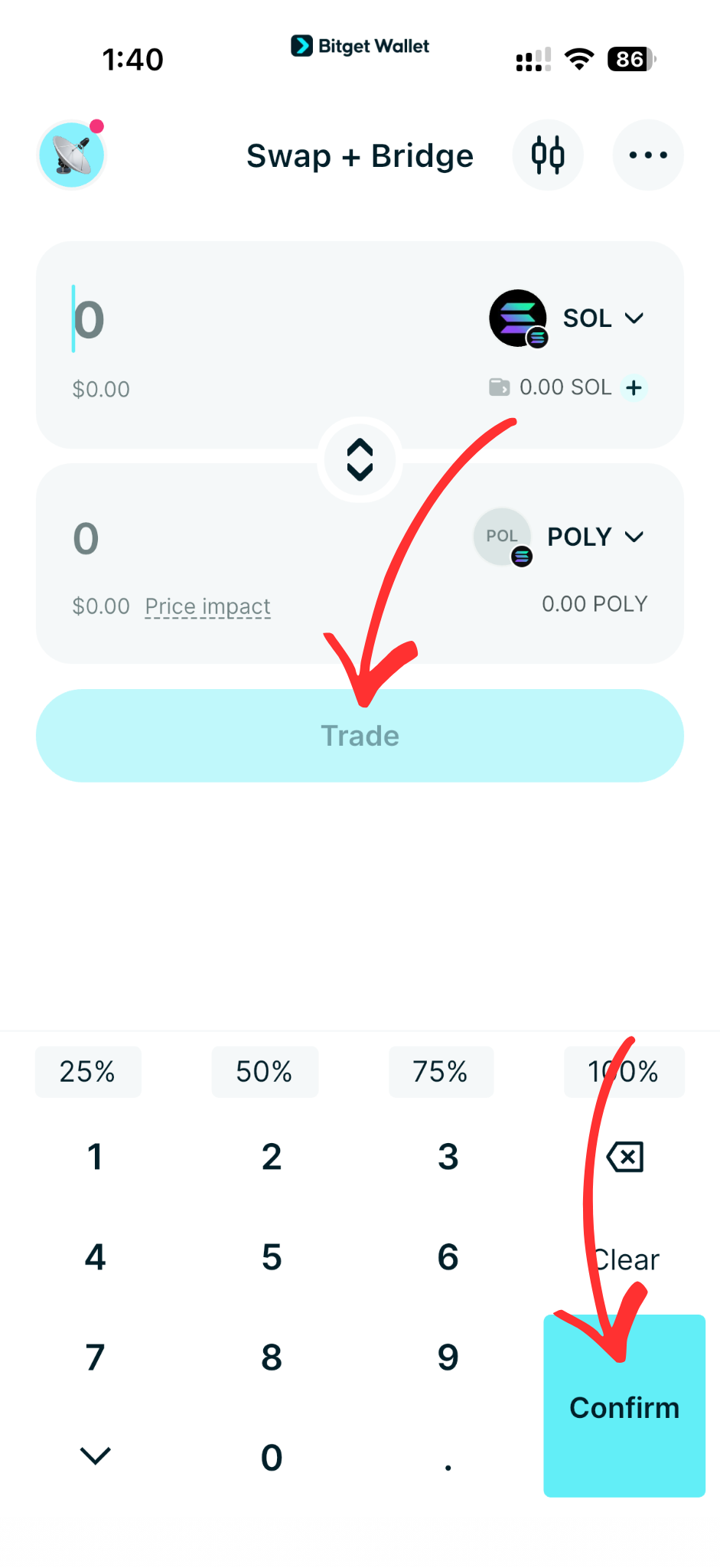
Choose whether to carry out a market order—either buy or sell at the prevailing rate—or place a limit order at your desired price. Fill in the amount of Polymarket (POLY) you want to exchange, then proceed to confirm in order to complete the trade.
Step 6: Monitor Your Trade
Once you have ordered, you can track the status of your order under "Open Orders." Upon completion of the order, you can view your balance to see the newly purchased Polymarket (POLY).
Step 7: Withdraw Your Funds (Optional)
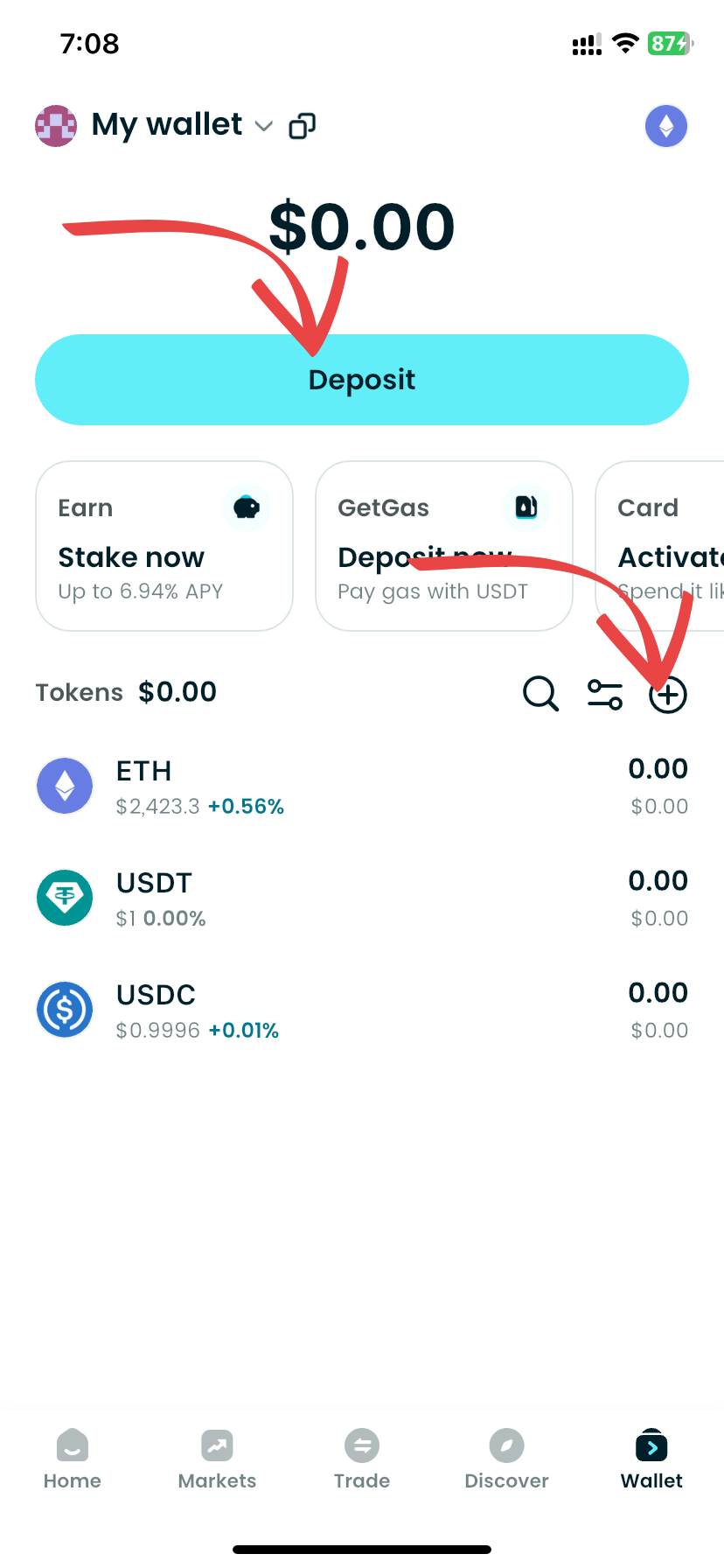
If you want to transfer your Polymarket (POLY) or any other cryptocurrency to another wallet, go to the withdrawal section, provide your wallet address, and confirm the transaction
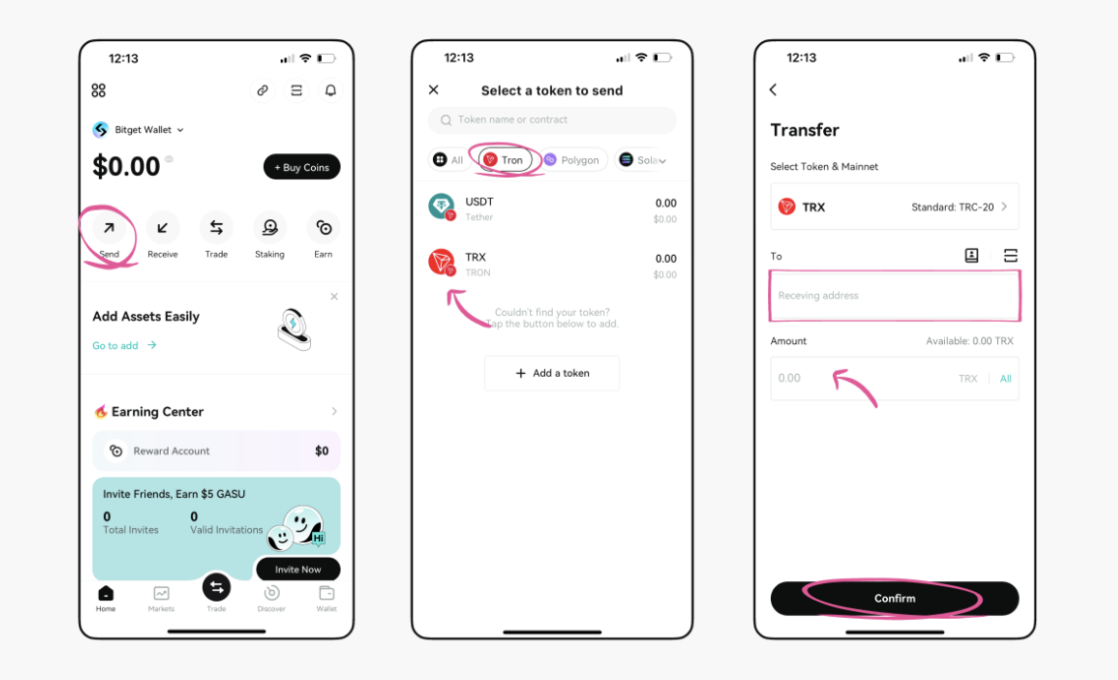
▶Learn more about Polymarket (POLY):
- What is Polymarket (POLY)?
- Polymarket (POLY) Airdrop Guide
- Polymarket (POLY) Listing Date and How to Buy It
What Should You Know About POLY Price Volatility?
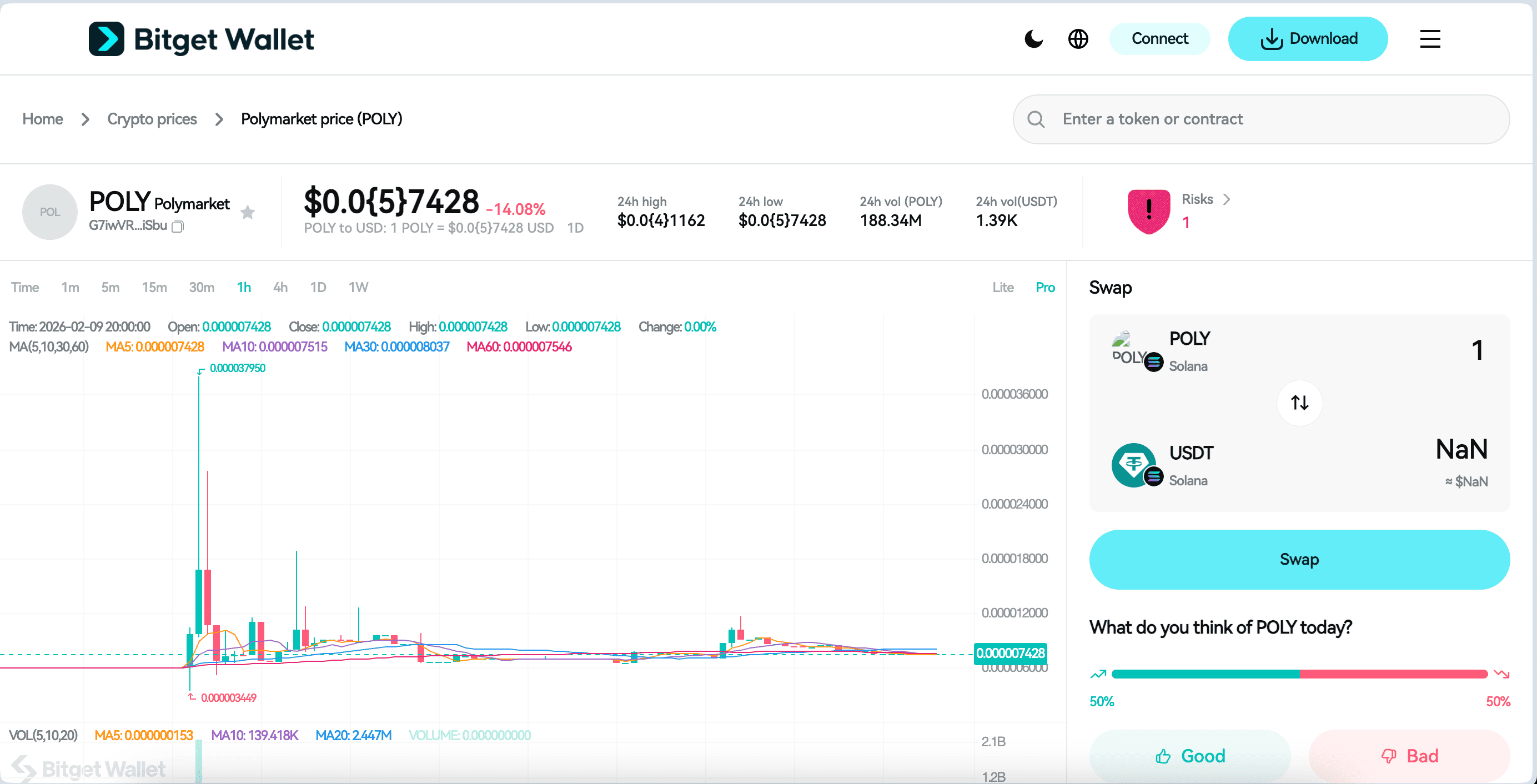
POLY price volatility is likely to be driven less by traditional valuation metrics and more by launch structure, liquidity depth, listing access, and trader sentiment. That makes early price action especially hard to predict.
POLY is likely to experience sharp price fluctuations because it enters the market without long-term price history or established valuation benchmarks. As with many newly launched governance tokens, early trading activity is often influenced by attention cycles, news flow, and speculative positioning rather than measurable fundamentals such as cash flow or protocol fees.
On-chain liquidity and market sentiment play an outsized role in POLY’s volatility. Thin liquidity, concentrated holders, or sudden shifts in trader attention can amplify price movements in either direction. For this reason, volatility should be treated as a risk characteristic to manage, not an opportunity to chase, especially for users without a clear execution plan or risk limits.
POLY Price Prediction: How High Can Polymarket Go?
Market movements, liquidity conditions, and community participation all influence a cryptocurrency’s price. As the planned governance and incentive token of Polymarket, POLY is expected to trade within a scenario-based range shaped by sentiment and on-chain liquidity, rather than fixed fundamentals. If the ecosystem continues to expand and POLY becomes more deeply integrated into the prediction-market and information-market sector, longer-term valuation could improve—but outcomes remain highly dependent on adoption and market structure.
What Affects Polymarket (POLY) Price?
Several factors influence the potential price behavior of Polymarket (POLY):
-
Investor Sentiment:
Early price action is likely to be driven by attention cycles, launch news, and listing announcements, which can amplify short-term volatility without reflecting intrinsic value.
-
Adoption & Demand:
Growth in active traders, governance participation, and ecosystem incentives can support sustained demand over time, especially if POLY becomes central to protocol decision-making.
-
Regulatory Influence:
As a prediction-market platform, Polymarket operates in a sector sensitive to regulatory clarity; changes in compliance frameworks or market access can directly affect participation and liquidity.
Future Price Prospects
If POLY launches successfully and develops deep enough liquidity, broader market participation could support stronger price discovery over time. However, POLY’s valuation would still depend heavily on token design, circulating supply, exchange access, governance relevance, and market sentiment after launch.
Source: Bitget Wallet
Is POLY Crypto Safe to Invest In?
Whether POLY is “safe” depends less on the token itself and more on how users trade, verify information, and manage risk. As a planned governance and incentive token tied to Polymarket, POLY carries risks common to early-stage and sentiment-driven assets, especially around execution and liquidity.
Key risks to be aware of
- Fake or impersonation tokens: Unofficial contracts or phishing links may appear before or after launch; always verify the official contract address from trusted sources.
- Low or uneven liquidity: Early trading phases can have thin liquidity, increasing slippage and volatility.
- Overexposure to volatility: Governance-style tokens can move sharply on sentiment and news, making large positions risky.
- Custodial and execution risk: Using custodial platforms or rushing trades can add withdrawal limits or execution errors.
No speculative crypto asset is risk-free, including POLY. A safer approach focuses on verification, controlled position sizing, and disciplined execution, rather than attempting to time short-term market moves.
How to Approach POLY Volatility With a Smarter Strategy?
Managing POLY volatility requires discipline rather than perfect timing, as price swings are often driven by sentiment and liquidity changes. Users can reduce avoidable losses by focusing on execution quality, position sizing, and verification instead of reacting to short-term market noise. This approach helps build transferable on-chain skills that apply across different tokens and market conditions.
Key practices to follow
- Observe on-chain liquidity behavior to understand slippage and depth before trading.
- Use small position sizes to limit downside during periods of high volatility.
- Set clear capital limits and avoid allocating more than you can afford to risk.
- Prioritize secure execution by verifying contracts and using trusted wallets and interfaces.
Over time, this disciplined approach turns volatility into a learning tool rather than a source of stress. The habits developed—risk control, verification, and execution awareness—remain valuable across the broader on-chain ecosystem, regardless of how POLY performs.
Related Reading on Polymarket Trading
Polymarket is one of the most active decentralized prediction market platforms, allowing users to trade Yes-No contracts on politics, macro events, sports, and breaking news. If you're exploring how Polymarket works and how traders approach liquidity and strategy, these guides provide deeper insights.
🔹 Polymarket Platform Overview
- What Is Polymarket: A Beginner’s Guide to Trading Decentralized Prediction Markets
- Top Polymarket Projects Ranked by Liquidity, Active Users, and Market Impact
- Polymarket Trading Strategies: How to Make Money on Polymarket?
- Kalshi vs Polymarket: Who Is the True King of the Prediction Market in 2026?
🔹 About Polymarket Token
- What Is Polymarket Token (POLY): The Blockchain-Based Prediction Market Backed by ICE and NYSE
- Polymarket Airdrop Guide: How to Participate and Claim $POLY Rewards?
- How to Buy POLY in 2026: A Beginner’s Step-by-Step Guide to Polymarket Token
- Polymarket Listing Launch Date: What Investors Should Know Before $POLY Goes Live
🔹 About Prediction Markets
- What Is a Prediction Market in Crypto and How Blockchain-Based Prediction Markets Work
- Types of Prediction Market: Real Money, Play Money, and Decentralized Systems
- How to Trade Crypto Prediction Markets?
- What Is a Yes No Market: How Investors Trade Probabilities Using Yes-or-No Contracts
- How to Trade on Yes-No Market: A Practical Guide to Binary Prediction Trading
Conclusion
How to buy POLY safely in 2026 starts with understanding custody, liquidity conditions, and execution risk—not reacting to market hype. Although Polymarket has already built a widely used prediction-market platform, the POLY token itself has not yet been officially launched. For this reason, traders should focus on verification, disciplined position sizing, and careful on-chain execution once legitimate trading opportunities appear
Be the first to trade trending on-chain assets with confidence. Bitget Wallet supports secure stablecoin storage, hot memecoin trading, and a seamless cross-chain experience—while offering added benefits such as Stablecoin Earn Plus, which lets users earn up to 10% APY on idle holdings, and zero-fee trading on memecoins and selected RWA U.S. stock tokens.
Trade, store, and explore Web3 seamlessly – beginner-ready with Bitget Wallet.
Sign up Bitget Wallet now - grab your $2 bonus!
FAQs
1. How to buy POLY safely as a beginner?
To buy POLY safely, beginners should first use a non-custodial wallet, wait for the official token launch, and verify the official POLY contract address from trusted sources such as Polymarket announcements. Avoid unofficial links, double-check liquidity conditions, and start with small amounts to reduce execution risk.
2. Where can I buy POLY?
POLY can only be bought after it is officially launched and listed. Depending on availability, this may include centralized exchanges (CEXs) or on-chain swaps via decentralized liquidity pools. The exact buying options will depend on confirmed listings and where POLY liquidity is deployed.
3. Do I need KYC to buy POLY?
Whether KYC is required depends on the purchase method. Centralized exchanges (CEXs) typically require KYC, as users trade through custodial accounts managed by the platform.
In contrast, buying POLY through on-chain swaps using a non-custodial wallet like Bitget Wallet does not require KYC. Users interact directly with decentralized liquidity from their own wallet, without submitting identity information. However, this also means users are fully responsible for security, contract verification, and transaction execution.
4. Is POLY crypto high risk?
Yes. POLY should be considered high risk, especially in its early stages. As a governance and incentive token, its price may be highly volatile and driven by sentiment, liquidity, and attention rather than stable fundamentals.
5. What should I verify before buying POLY?
Before buying POLY, users should verify the official contract address, check on-chain liquidity depth, review holder concentration, and confirm that trading access comes from legitimate platforms. Taking these steps helps reduce the risk of fake tokens, slippage, and avoidable losses.
Risk Disclosure
Please be aware that cryptocurrency trading involves high market risk. Bitget Wallet is not responsible for any trading losses incurred. Always perform your own research and trade responsibly.
 Top Arc Tokens and Memecoins: What’s Trending on Arc Mainnet2026-09-16 | 5 mins
 Circle Arc Mainnet Launch: What Is Arc and Why Does It Matter?2026-09-14 | 5 mins
 Top Robinhood Chain Memecoins 20262026-09-09 | 5 mins



