Bear Market Crypto Then and Now: How 2026 Differs from the Panic of 2022 and 2024

Bear Market Crypto conditions in 2026 look dramatically different from the crypto bear market 2022 collapse and the fragile crypto bear market 2024 recovery. While the Fear and Greed Index has once again plunged into extreme fear territory, echoing past cycle lows, price structure and liquidity behavior suggest a new regime. In 2022, systemic deleveraging triggered cascade-driven capitulation. In 2024, early ETF inflows began stabilizing liquidity, though confidence remained cautious. Now in crypto bear market 2026, Bitcoin trades inside a defined consolidation band rather than a waterfall decline—raising a critical question: is this another capitulation phase, or a structural consolidation within a maturing market?
The distinction matters. Institutional participation, deeper liquidity, and visible whale positioning indicate that this Bear Market Crypto phase may represent recalibration rather than collapse. For investors focused on disciplined positioning and risk management, maintaining full control of assets becomes essential. In periods of extreme volatility, self-custody tools like Bitget Wallet can help secure funds, manage exposure, and navigate consolidation phases with greater confidence.
Download Bitget Wallet for faster cross-chain trending trades, perfect for beginners.
Key Takeaways
- Bear Market Crypto in 2026 is structurally different from the crypto bear market 2022 collapse, with consolidation replacing cascade-driven capitulation.
- The crypto bear market 2022 was defined by liquidity collapse, forced deleveraging, and a panic-driven crypto market bottom.
- The crypto bear market 2024 introduced early ETF flows in bear market conditions, stabilizing liquidity and forming a visible Bitcoin accumulation zone.
- In crypto bear market 2026, Bitcoin trades within a defined Bitcoin consolidation range, while whale accumulation 2026 activity signals long-term positioning rather than distribution.
- An extreme fear crypto cycle reading does not automatically confirm a bottom; structure, liquidity depth, and ETF flows in bear market periods provide stronger confirmation signals.
Bear Market Crypto: 2022 Capitulation vs 2026 Consolidation
This Bear Market Crypto cycle differs fundamentally from prior downturns. While 2022 reflected a liquidity vacuum and disorderly capitulation, 2026 is unfolding inside a defined Bitcoin consolidation range with visible whale accumulation 2026 activity. Structural depth, ETF participation, and institutional liquidity suggest stabilization rather than systemic collapse.
- ETF flows in bear market conditions are stabilizing, reducing liquidity shock risk
- Extreme fear crypto cycle readings do not automatically signal a crypto market bottom
- Bitcoin consolidation range behavior indicates equilibrium rather than panic selling
- Whale accumulation 2026 activity reflects long-term positioning, not distribution
Read More: What Is a Bear Market in Crypto? How Long Will It Last in the 2025 Crypto Downturn?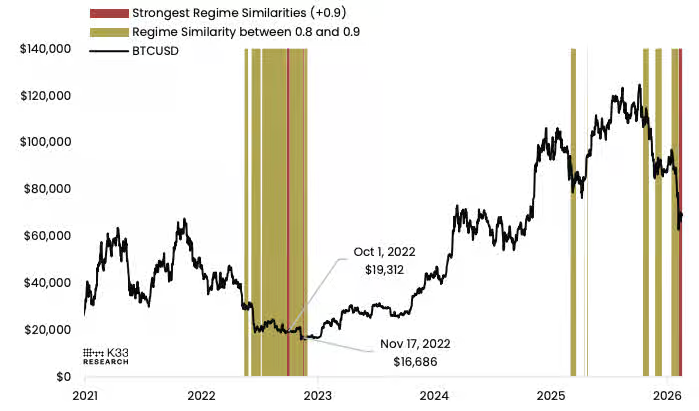
Source: K33
Read More: What Is a Bear Market in Crypto? How Long Will It Last in the 2025 Crypto Downturn?
Crypto bear market 2022 = Systemic collapse
The crypto bear market 2022 was defined by forced deleveraging, cascading liquidations, and a breakdown in market structure. Thin order books amplified volatility, centralized platform failures eroded confidence, and the Fear and Greed Index collapsed into extreme fear territory. This phase marked a classic crypto market bottom driven by panic, insolvency risk, and systemic fragility rather than orderly repricing.
Crypto bear market 2024 = Recovery base
The crypto bear market 2024 shifted from collapse to stabilization. Early ETF flows in bear market conditions introduced regulated liquidity channels, helping restore depth and reduce extreme volatility. Price action transitioned into sideways base formation, creating a visible Bitcoin accumulation zone. Confidence remained cautious, but structural repair replaced crisis dynamics.
Crypto bear market 2026 = Consolidation
The crypto bear market 2026 reflects consolidation rather than capitulation. Despite extreme fear crypto cycle readings, Bitcoin trades within a defined consolidation range, supported by stronger liquidity and whale accumulation 2026 activity. Institutional participation and mature ETF infrastructure suggest recalibration inside a developing cycle, not systemic breakdown.
Crypto Bear Market 2022 Bottom: What Triggered the Capitulation Phase?
The crypto bear market 2022 marked a textbook capitulation event within the broader Bear Market Crypto cycle. The Fear and Greed Index collapsed into extreme fear territory as liquidity dried up, leverage imploded, and market confidence deteriorated simultaneously.
Liquidity Collapse and 70% Drawdown in 2022
Bitcoin declined more than 70% from its cycle high, but the magnitude of the drawdown was only part of the story. The deeper issue was structural fragility. Forced deleveraging cascades triggered automatic liquidations across derivatives markets, overwhelming already thin order books. Without ETF flows in bear market conditions to absorb selling pressure, capital exited rapidly. Centralized platform failures intensified counterparty risk, further undermining trust in market infrastructure. This combination of liquidity vacuum and systemic stress pushed the crypto market bottom lower than valuation models alone would suggest.
Panic Bottom Formation During the Extreme Fear Crypto Cycle
The extreme fear crypto cycle reading of 6 signaled emotional exhaustion. Capitulation was visible through record liquidations, shrinking open interest, and heavy distribution from weaker holders. Long-term conviction temporarily gave way to survival-driven selling. The crypto market bottom in 2022 formed not from gradual repricing, but from disorderly panic, structural breakdown, and forced risk reduction across the ecosystem.
Read More: Bull vs. Bear Markets in Crypto: Understanding Trends in 2025
Crypto Bear Market 2024 Recovery: How ETF Flows Began Structural Healing
The crypto bear market 2024 represented a structural transition within the broader Bear Market Crypto cycle. Early ETF flows in bear market conditions introduced regulated liquidity channels, strengthening market depth and reducing systemic fragility compared to the collapse dynamics seen in 2022.
ETF Launch Era and Institutional Liquidity Support in 2024
The approval and expansion of spot ETFs created a new access point for institutional capital. Unlike the liquidity vacuum of 2022, ETF flows in bear market periods began acting as shock absorbers, improving order book depth and stabilizing price discovery. While volatility remained present, institutional participation reduced disorderly cascades and helped anchor market expectations. This marked the first phase of structural repair.
Base Formation and the Bitcoin Accumulation Zone
Price action during the crypto bear market 2024 shifted from vertical declines to prolonged sideways consolidation. Volatility compressed, leverage levels normalized, and a visible Bitcoin accumulation zone formed between established support and resistance levels. Rather than a panic-driven crypto market bottom, 2024 demonstrated base formation—an early sign that the Bear Market Crypto cycle was evolving from crisis toward recalibration.
Crypto Bear Market 2026 Consolidation: Why This Cycle Is Structurally Different
Why 2026 bear market feels different comes down to structure, liquidity depth, and institutional anchoring. The crypto bear market 2026 is unfolding inside a controlled consolidation phase rather than a disorderly collapse. Despite extreme fear crypto cycle readings, market infrastructure remains intact and capital continues to rotate within defined ranges.
Source: Mudrex
Bitcoin Consolidation Range ($60K–$75K) Explained
Bitcoin is trading within a clearly defined Bitcoin consolidation range between $60K and $75K. Unlike the vertical unwinds of 2022, price behavior now reflects compression and balance rather than forced liquidation. Funding rates remain relatively contained, leverage is less excessive, and volatility spikes are absorbed more efficiently. This range-bound structure suggests equilibrium between buyers and sellers, consistent with mid-cycle recalibration instead of systemic breakdown within the broader Bear Market Crypto environment.
Whale Accumulation 2026 and Long-Term Holder Positioning
On-chain metrics highlight sustained whale accumulation 2026 activity, with large holders adding significant BTC during pullbacks. Weekly additions exceeding 50,000 BTC signal strategic positioning rather than defensive exit. Simultaneously, long-term holder supply continues to trend higher, reinforcing the idea that stronger hands are accumulating into weakness instead of distributing at lower levels.
ETF Flows in Bear Market 2026: Tactical Pullback or Structural Stability?
ETF flows in bear market periods show intermittent outflows, but cumulative inflows remain historically elevated. Institutions appear to be tactically rebalancing exposure rather than abandoning positions. This behavior contrasts sharply with the liquidity vacuum of 2022, supporting the view that the crypto bear market 2026 reflects consolidation within a maturing market structure.
Is 2026 a Crypto Bear Market Bottom or a Consolidation Phase?
Is 2026 a crypto bear market bottom? The extreme fear crypto cycle reading signals sentiment exhaustion similar to prior cycle lows. However, structural indicators suggest consolidation inside a defined Bitcoin consolidation range rather than a full capitulation event typical of earlier Bear Market Crypto collapses.
Fear and Greed Index at 5 Compared with 2022 Capitulation
The Fear and Greed Index hovering near 5 mirrors the emotional lows recorded during the crypto bear market 2022. Yet the underlying conditions differ significantly. Liquidation cascades are smaller, leverage levels are more controlled, and liquidity depth remains intact. Unlike 2022’s systemic fragility, today’s Bear Market Crypto structure shows resilience. Extreme fear alone does not confirm a crypto market bottom; structural breakdown must accompany sentiment collapse to validate capitulation.
Crypto Double Bottom 2026 and Key Bitcoin Support Levels
A potential crypto double bottom 2026 formation is emerging around the $60K support zone. If Bitcoin revisits this level and holds, it reinforces consolidation inside the broader Bitcoin consolidation range. A decisive break toward $55K would stress-test structural support but would not automatically imply systemic collapse. The key distinction is whether selling becomes disorderly—or remains absorbed within a maturing Bear Market Crypto framework.
Read More: Top 8 Investing Strategies for a Crypto Bear Market in 2026
2022 vs 2024 vs 2026 Crypto Cycle Comparison: Capitulation, Recovery, and Consolidation
This 2022 vs 2024 vs 2026 crypto cycle comparison demonstrates how the Bear Market Crypto structure has evolved across three distinct phases. The crypto bear market 2022 reflected systemic capitulation, 2024 introduced structural repair through ETF flows in bear market conditions, and 2026 now shows consolidation supported by stronger liquidity depth, institutional anchoring, and visible whale accumulation 2026 positioning.
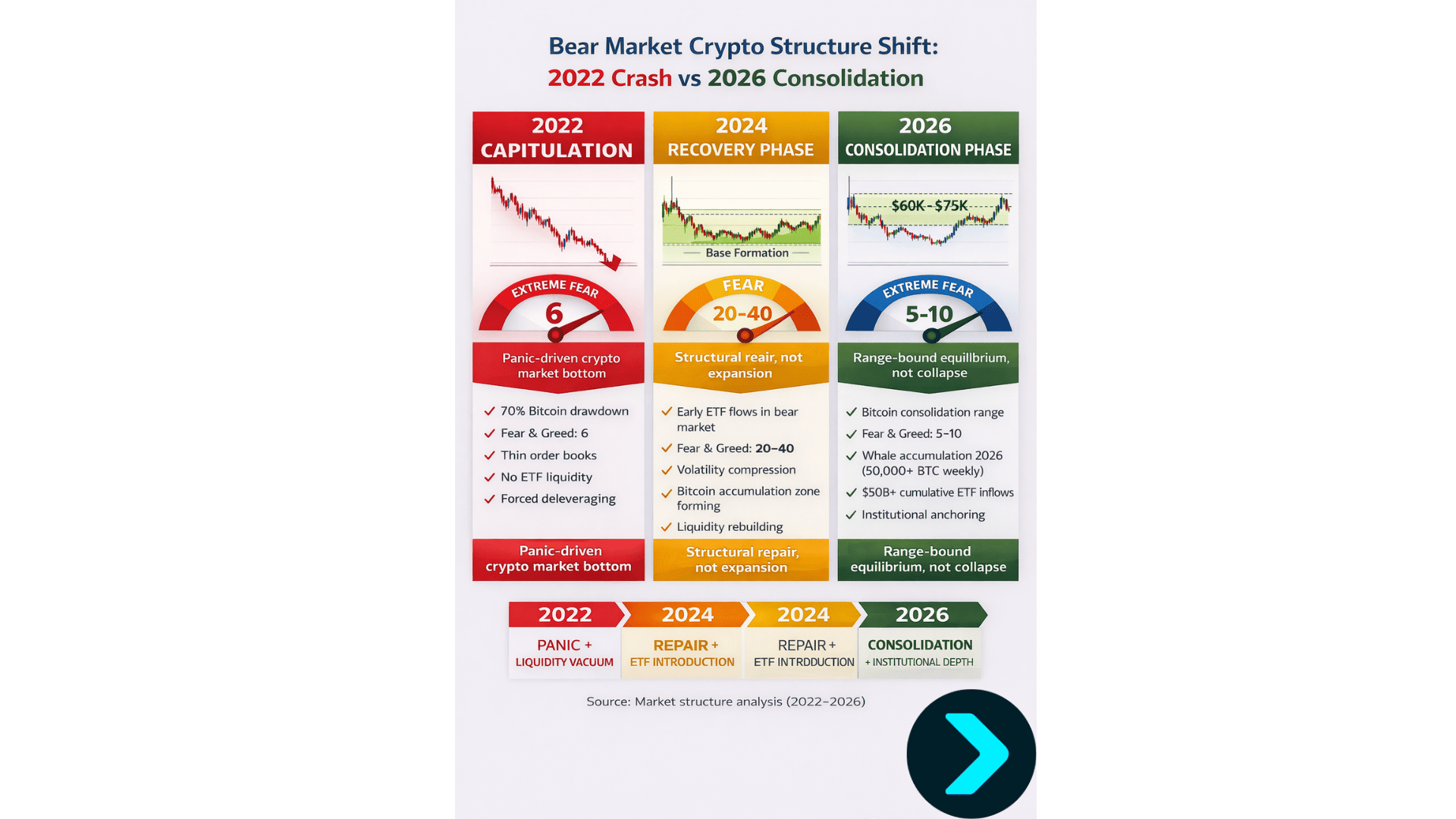
Grand Comparison Table
| Factor | 2022 | 2024 | 2026 |
| Structure | Capitulation driven by systemic deleveraging and cascading liquidations | Recovery phase with base-building and volatility compression | Structural consolidation within a defined range and deeper liquidity support |
| Fear & Greed | Extreme fear at ~6, signaling emotional capitulation and panic selling | 20–40 range, reflecting cautious optimism and rebuilding confidence | 5–10 range, extreme fear sentiment without systemic breakdown |
| ETF Role | None; no institutional liquidity buffer or regulated inflow channel | Emerging spot ETF approvals introducing regulated capital access | Mature ETF ecosystem with sustained inflows and institutional anchoring |
| Liquidity Depth | Thin order books; forced selling overwhelmed bids; exchange failures amplified risk | Improving depth as institutional liquidity slowly absorbed volatility | Strong liquidity; ETF absorption and deeper books reduce cascade risk |
| Whale Behavior | Distribution into rallies; large holders reducing exposure | Neutral to early re-accumulation; selective positioning | Accumulation into weakness; long-term holders expanding supply control |
| Bottom Type | Panic Bottom formed by liquidation spikes and structural stress | Reset Bottom characterized by stabilization and accumulation attempts | Potential Mid-Cycle Floor defined by consolidation, not capitulation |
How to Track Bear Market Crypto Phases in Real Time Using Fear, ETF Flows, and Whale Data
Monitoring Bear Market Crypto in real time requires tracking structural indicators beyond price action. The Fear and Greed Index highlights sentiment extremes, ETF flows in bear market periods reveal institutional positioning, whale accumulation 2026 behavior signals long-term capital deployment, and the Bitcoin consolidation range defines whether the market is collapsing or stabilizing. When extreme fear appears without liquidity breakdown, it often indicates consolidation rather than systemic capitulation.
The Altcoin Season Index complements these signals by measuring capital rotation within the broader market. During a Bear Market Crypto phase, this tool helps identify whether strength is shifting from Bitcoin to altcoins or remaining defensive. A rising index during consolidation suggests internal rotation and accumulation beneath the surface, strengthening the case for structural stabilization instead of collapse.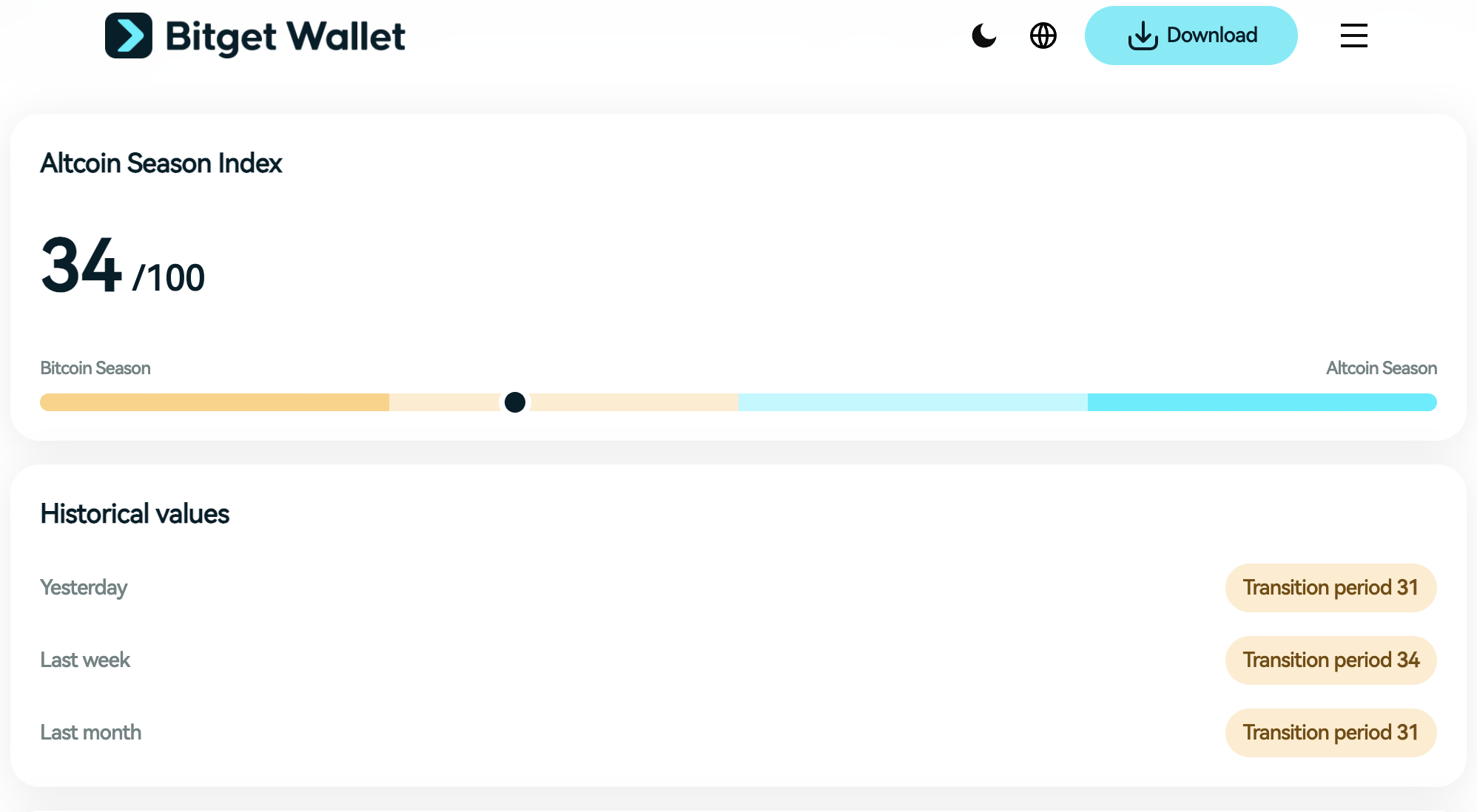
Why Self-Custody Is Critical for Risk Management in Bear Market Crypto Cycles
Bear Market Crypto conditions increase systemic fragility, making self-custody a fundamental risk-management strategy. When liquidity tightens and counterparties face stress, controlling private keys removes exposure to exchange insolvency, withdrawal suspensions, and operational freezes during volatility. Assets are fully controlled by users rather than centralized platforms, making self-custody one of the safest asset management approaches during a bear market.
Counterparty risk historically peaks during downturns, not bull markets. Exchange collapses and forced liquidations reinforce why off-platform control matters. Self-custody also strengthens accumulation discipline — long-term holders are less likely to panic when assets remain securely on-chain and accessible at all times.
Tools like Bitget Wallet combine non-custodial security with active participation features, including Stablecoin Earn Plus (up to 10% APY), early memecoin access before exchange listings, and seamless cross-chain swaps. In a Bear Market Crypto cycle, the ability to trade, store, and earn while retaining full ownership becomes a structural advantage rather than a convenience.
Conclusion — What the Current Bear Market Crypto Cycle Signals for 2026
Bear Market Crypto conditions in 2026 reflect structural evolution rather than systemic breakdown. Unlike prior cycles defined by disorderly liquidation, the current environment shows deeper liquidity, institutional participation, and a defined consolidation framework. Extreme sentiment readings coexist with stable market structure, suggesting recalibration instead of collapse.
In 2022, panic dominated and forced deleveraging defined the crypto market bottom. In 2024, repair began as ETF flows improved liquidity and volatility compressed. In 2026, consolidation prevails — price ranges hold, whale accumulation remains visible, and structural support appears intact.
For investors navigating volatility, infrastructure matters. Bitget Wallet provides self-custody protection, access to stablecoin yield opportunities, seamless cross-chain trading, and positioning tools designed for Bear Market Crypto cycles. Secure control, flexible liquidity, and disciplined accumulation create an advantage when markets test conviction.
Join the hype easily: trade the hottest tokens with Bitget Wallet, no experience needed.
Sign up Bitget Wallet now - grab your $2 bonus!
FAQs
What is Bear Market Crypto?
Bear Market Crypto describes an extended downturn in digital asset markets characterized by lower highs, reduced liquidity, and persistent negative sentiment. It often reflects risk-off positioning and capital preservation behavior across the crypto ecosystem.
Is 2026 a crypto bear market bottom?
Although the extreme fear crypto cycle reading signals sentiment exhaustion, current structure favors consolidation within a defined Bitcoin consolidation range rather than a confirmed crypto market bottom.
How does 2026 differ from the crypto bear market 2022?
The crypto bear market 2022 involved systemic collapse and liquidity breakdown. In 2026, ETF participation, stronger liquidity depth, and visible whale accumulation 2026 activity suggest structural consolidation instead of panic-driven capitulation.
How can investors protect assets during a Bear Market Crypto cycle?
Self-custody reduces counterparty risk during volatile conditions. Using a non-custodial solution like Bitget Wallet ensures full asset control while maintaining access to on-chain markets.
Can Bitget Wallet help during consolidation phases?
Yes. Bitget Wallet enables cross-chain swaps, stablecoin yield access, and secure self-custody, helping investors stay positioned without relying on centralized platforms during Bear Market Crypto volatility.
Risk Disclosure
Please be aware that cryptocurrency trading involves high market risk. Bitget Wallet is not responsible for any trading losses incurred. Always perform your own research and trade responsibly.